You already know the best place to find the hottest bestseller is at the library. But what if you’re looking for an out-of-print masterpiece, an obscure poetry journal, or insight into medicinal plants?
It turns out Cincinnati has way to check out all of that, and more.
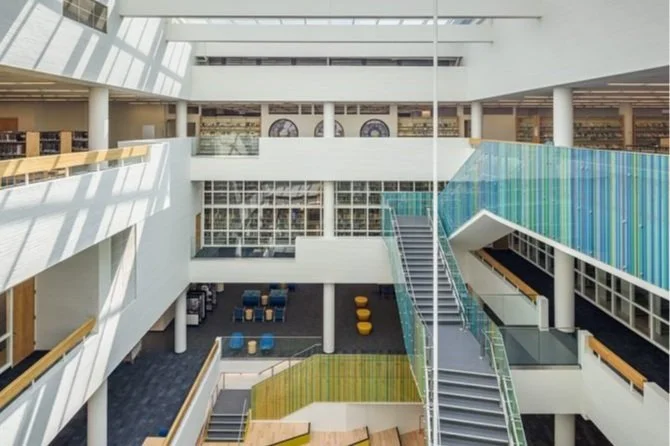
Public Library of Cincinnati and Hamilton County – Main Library
800 Vine St.
https://chpl.org
In 1955, Cincinnati architect Woodie Garbet designed the Downtown Main Library of the Cincinnati & Hamilton County Public Library system, which quickly gained widespread recognition for its progressive, open-plan design. It was dedicated as a living memorial to Hamilton County residents killed in World War I, World War II and the Korean War. Fitted with street-level show windows, brightly lit public floors and open bookstacks arranged to display volumes like retail merchandise, the building looked like the “department store of knowledge” that Director Carl Vitz envisioned.
Today, the library holds more than 9 million items across its system, placing it among the largest public library collections in the United States. Its downtown research holdings include more than 40,000 rare volumes and 23,000 historical photographs, alongside major regional archives. Notable among them are the Cincinnati Enquirer photographic archive comprising 1 million print and negative images from 1945 to 1995, and the Cincinnati Opera archives, which include performances and administrative records from 1883 to 1994.
The downtown complex marked a new chapter in July 2024 with the completion of a $43.4 million renovation. The project revitalized the South Building and street plazas, bringing entrances down to sidewalk grade along Vine Street behind an expansive glass curtain wall. The interior now features modern gathering spaces, updated lighting, a skylit central atrium and an amphitheater-style “social stair” designed to improve public circulation throughout the multi-story facility.
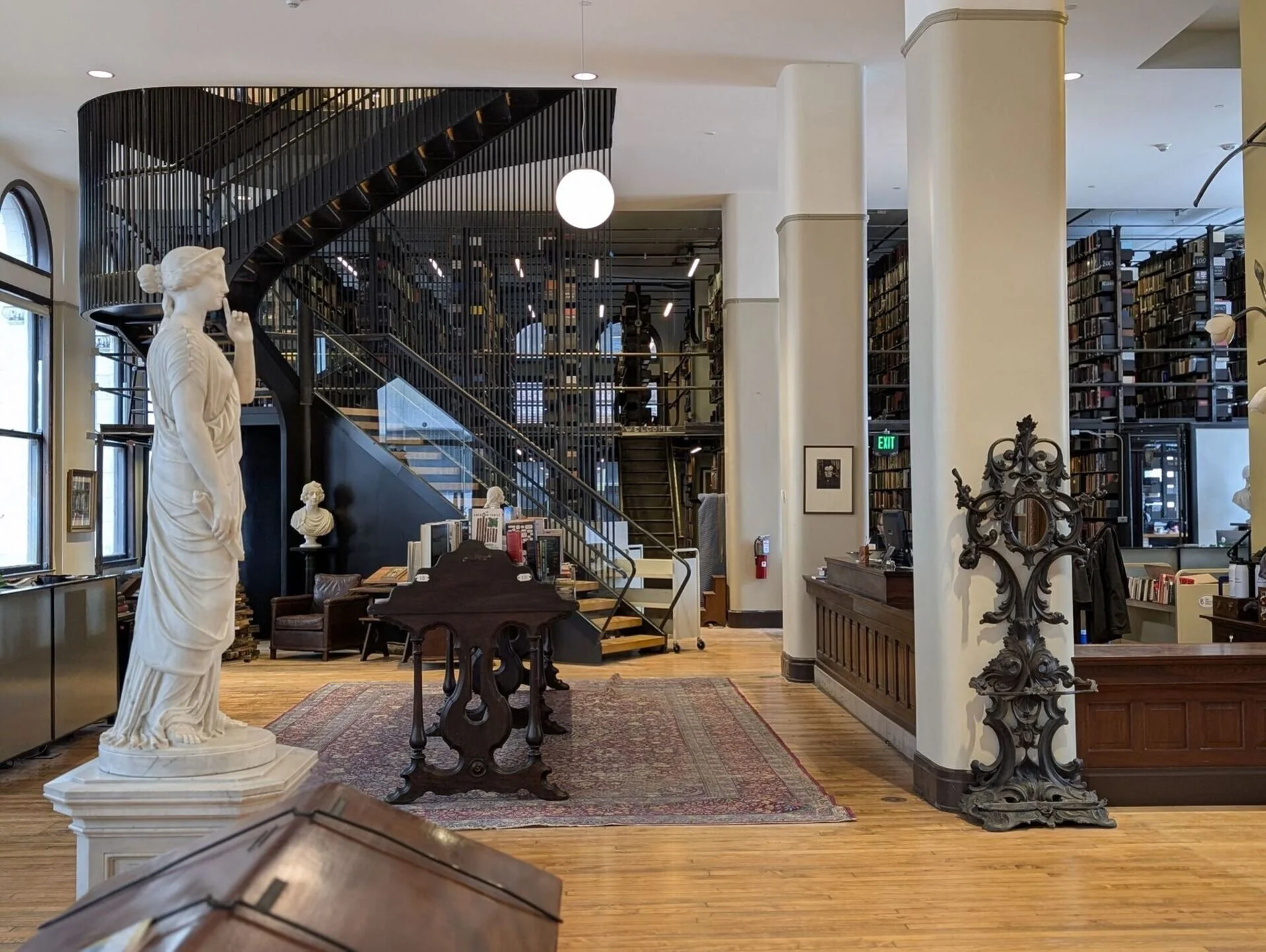
Mercantile Library
414 Walnut St #1100
www.mercantilelibrary.com
In 1835, 45 young merchants pooled $1,800 to buy 700 books, which would become the Mercantile Library of Cincinnati. The library was created as an intellectual haven at a time when public libraries did not yet exist. Operating out of rented downtown rooms before securing its historic home, the membership society quickly grew into a civic hub where members discussed business, politics and literature, bought periodicals from around the globe, and hosted public lectures. The library also served as a technological center for the region, housing the city’s first telegraph machine and securing the telephone number that remains Cincinnati’s oldest continuous landline.
Today, the institution has nearly 80,000 print, audio and digital volumes, with its earliest printed work dating to 1614. The library also includes what is recognized as the city’s oldest public art collection, highlighted by 19th-century marble portrait busts, oil canvases, and historical regional artifacts lining its walls.
The library unveiled a transformation in 2024 following an $80 million redevelopment project by Model Group that converted the surrounding Mercantile Building into residential space. After occupying exclusively the 12th floor since 1904, the library doubled its physical footprint by expanding onto the 12th floor. The renovated interior features modern member gathering rooms, quiet study quarters and a custom grand staircase that visually and structurally connects the two levels.
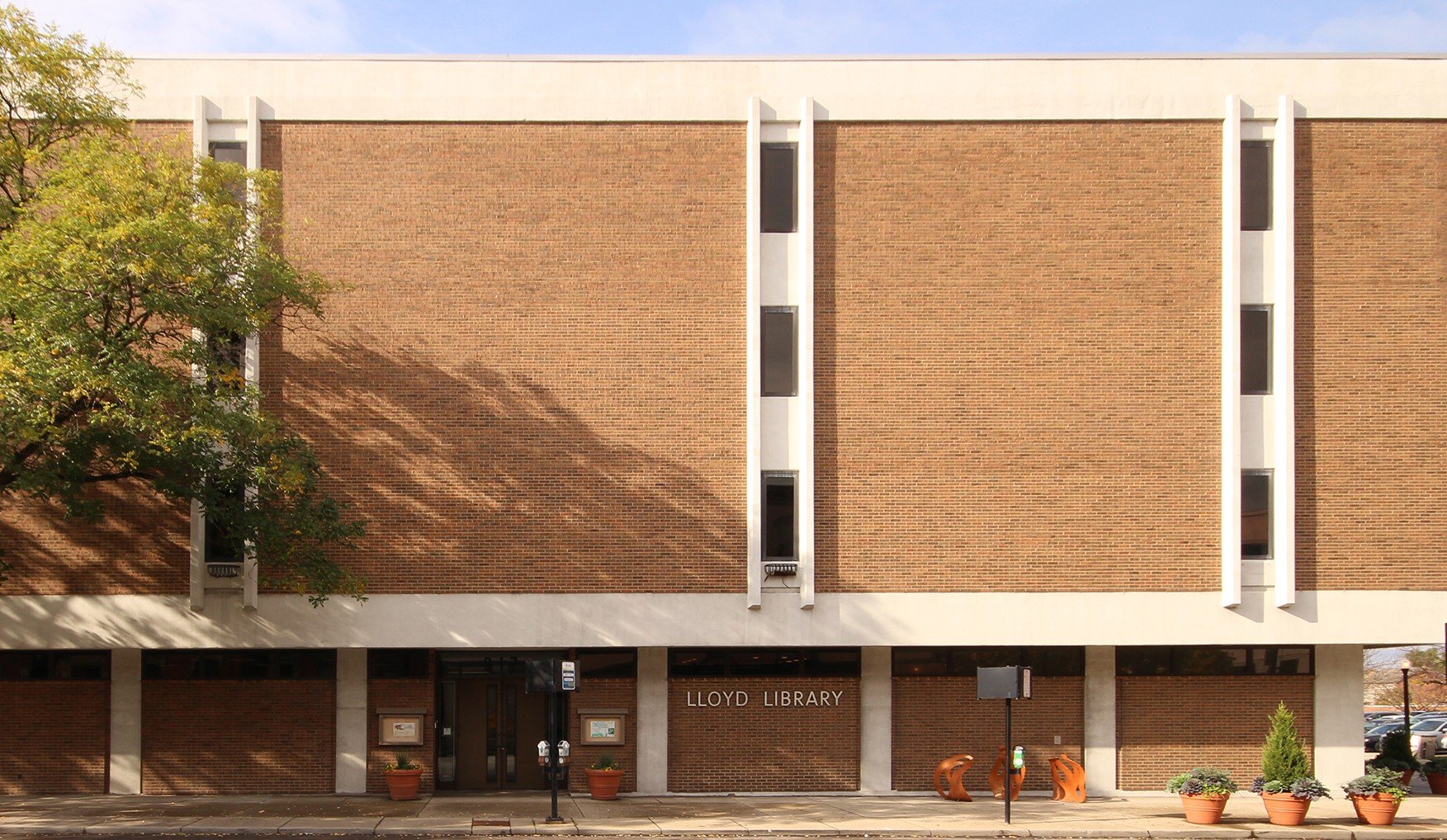
Lloyd Library
917 Plum St.
https://lloydlibrary.org
The collection in the Lloyd Library and Museum originated in the 1870s, when brothers John Uri Lloyd and Curtis Gates Lloyd began accumulating scientific texts to support their careers. John required specialized works on pharmaceutical chemistry to oversee the laboratory at H.M. Merrell and Co., while Curtis focused on botanical and mycological publications. As their personal collection expanded, in 1902 the brothers purchased a building at 224 W. Court St. When their library grew still and they needed more space, that structure was demolished and replaced with a dedicated four-story building, formally establishing the library and museum before the institution moved into its current facility on the site in 1970.
Today, the institution stands as an internationally recognized repository for medicinal botany, pharmacy, natural history, early medicine and scientific illustration. The collection contains roughly 150,000 to 200,000 volumes alongside more than 3,000 museum artifacts and medical instruments. Among its rarest botanical treasures is philosopher Jean-Jacques Rousseau’s personal, hand-annotated copy of a 17th-century plant-based medicinal treatise.
The downtown institution is now undergoing a comprehensive expansion and modernization directed by De Leon & Primmer Architecture Workshop. The architectural redesign is transforming the library’s historically fortress-like exterior into an open, civic-oriented landmark. Planned upgrades include reconfigured interior galleries, improved environmental conditions for rare texts, and dedicated outdoor garden and patio spaces designed to accommodate larger public gatherings and exhibitions.
Elliston Poetry Collection
Suite 646, 6th Floor, Walter C. Langsam Library
University of Cincinnati,2911 Woodside Drive
www.artsci.uc.edu/humanities/english/public-engagement/elliston-collection.html
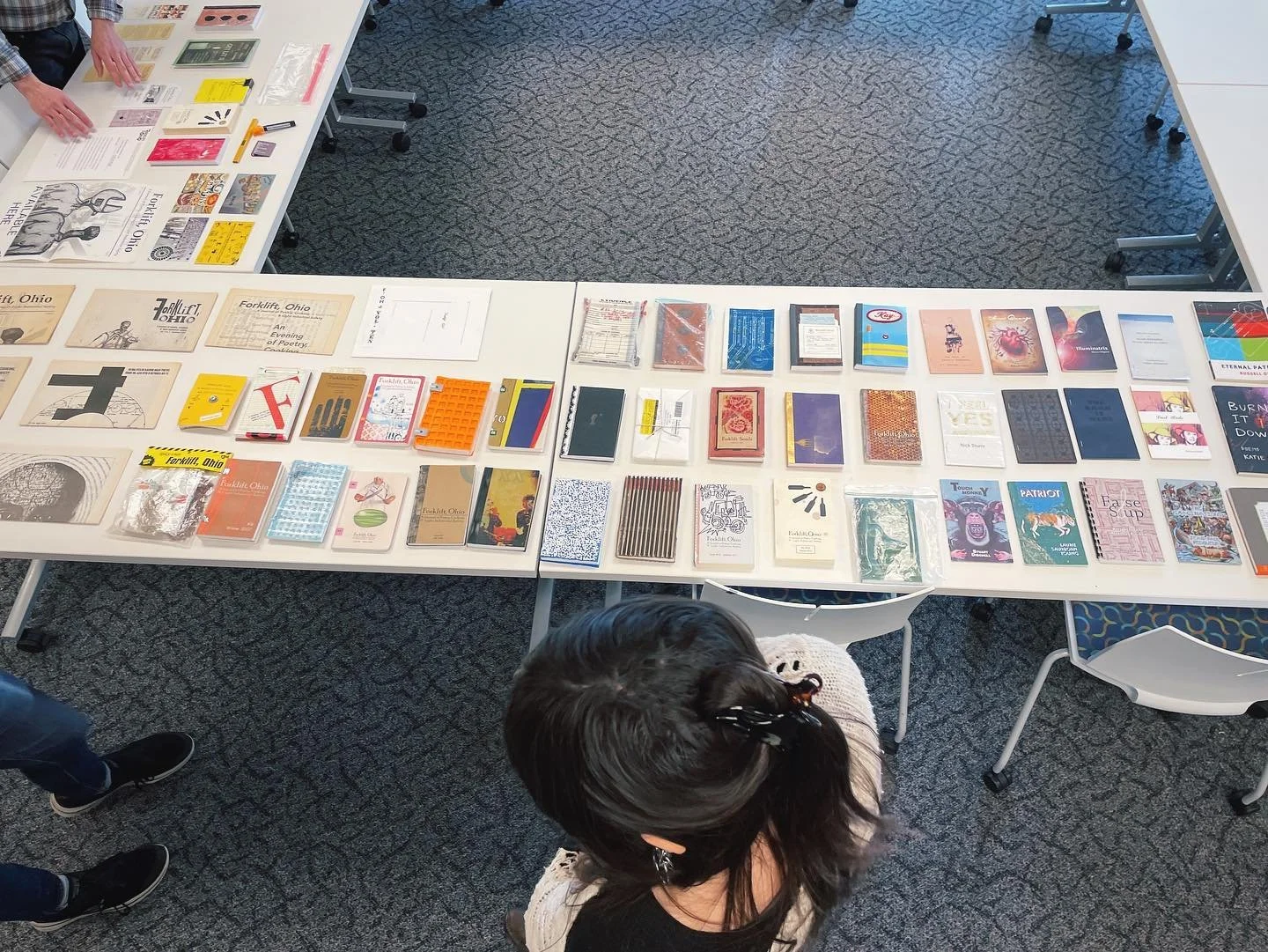
Established in 1946, the Elliston Poetry Room at the University of Cincinnati serves as the university's dedicated repository for 20th-century and contemporary poetry and prose. Operating from Walter C. Langsam Library, the collection has grown to encompass tens of thousands of volumes, distinguished by rare and signed first editions, historic broadsides, and an extraordinary archive of sound recordings from visiting writers that dates to Robert Frost’s landmark campus appearance in 1951.
The room’s research holdings feature poetry volumes, chapbooks, anthologies and translations that span key modern literary traditions. Shelves hold inscribed works, presentation copies and rare first printings representing defining voices from modernism, the Beat generation, the Black Arts Movement, Confessionalism and the New York School, alongside small-press imprints that document emerging and underground movements.
Recent initiatives have centered on the systematic preservation and digitization of the room’s historic audio archives. Curators are converting fragile reel-to-reel and cassette recordings of mid-20th-century craft talks, seminars and live readings into high-resolution digital formats. The digitized files are being integrated into the university’s digital institutional repository, ensuring long-term conservation while expanding access for researchers and the public.
Mary R. Schiff Library
Cincinnati Art Museum, 953 Eden Park Dr.
www.cincinnatiartmuseum.org/visit/library-archives
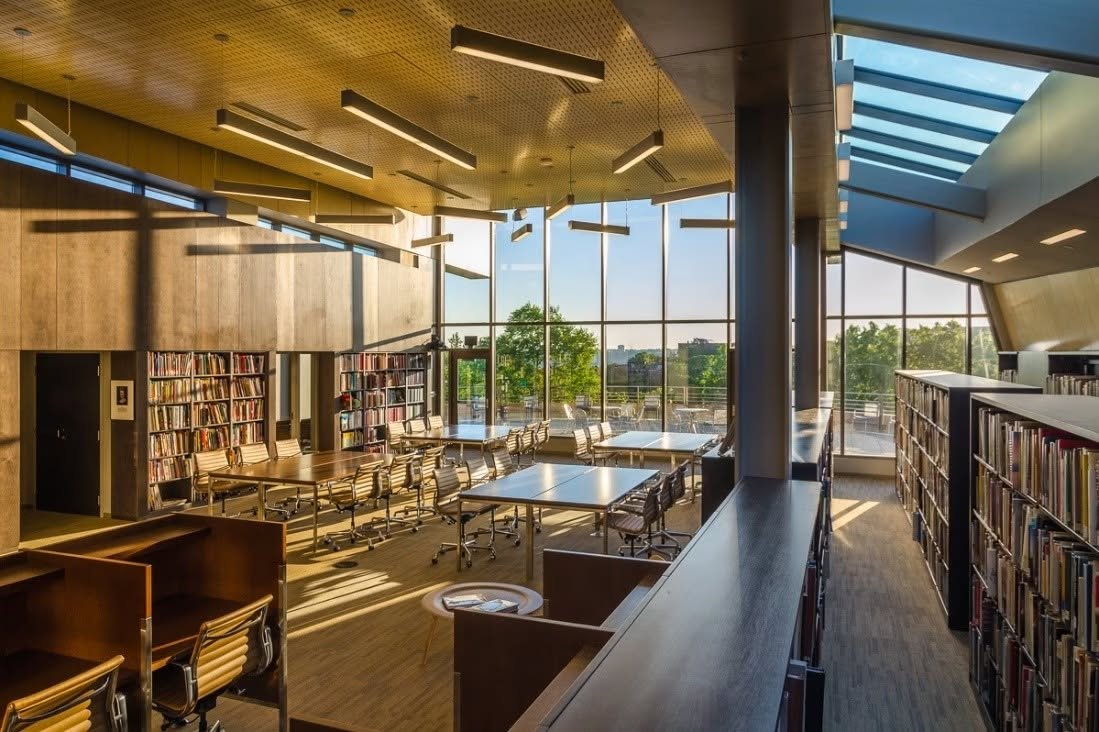
The Mary R. Schiff Library & Archives at the Cincinnati Art Museum traces its origins to 1881 alongside the founding of the Cincinnati Museum Association, initially serving as a collection of reference manuals and exhibition catalogues for the Art Academy of Cincinnati. As both institutions expanded in Eden Park, financier Jacob G. Schmidlapp funded the construction of the neoclassical Schmidlapp Memorial Wing in 1907. Designed by D.H. Burnham & Company in memory of Schmidlapp’s daughter, Charlotte, the wing was created to house the museum’s research collection and plaster sculpture casts, establishing the long-standing research foundation that was later modernized and endowed as the Mary R. Schiff Library & Archives.
Today, the research facility preserves more than 100,000 items documenting 6,000 years of global visual arts history. Beyond extensive art monographs, auction sales records and exhibition catalogues, the archives hold primary source collections showcasing regional and national art history. Among its most distinctive holdings are the original handwritten minutes, financial ledgers, scrapbooks and correspondence of the Women’s Art Museum Association, which document the 19th-century grassroots movement that led to the founding of both the museum and the academy.
The library has expanded access to these historical assets by cataloging archival inventories for the OhioLINK Finding Aid Repository. The integration allows remote scholars, educators and independent researchers to search detailed guides to the museum's primary source materials before arranging on-site visits.
– Olivia Craycraft