Where the Badlands Made a President
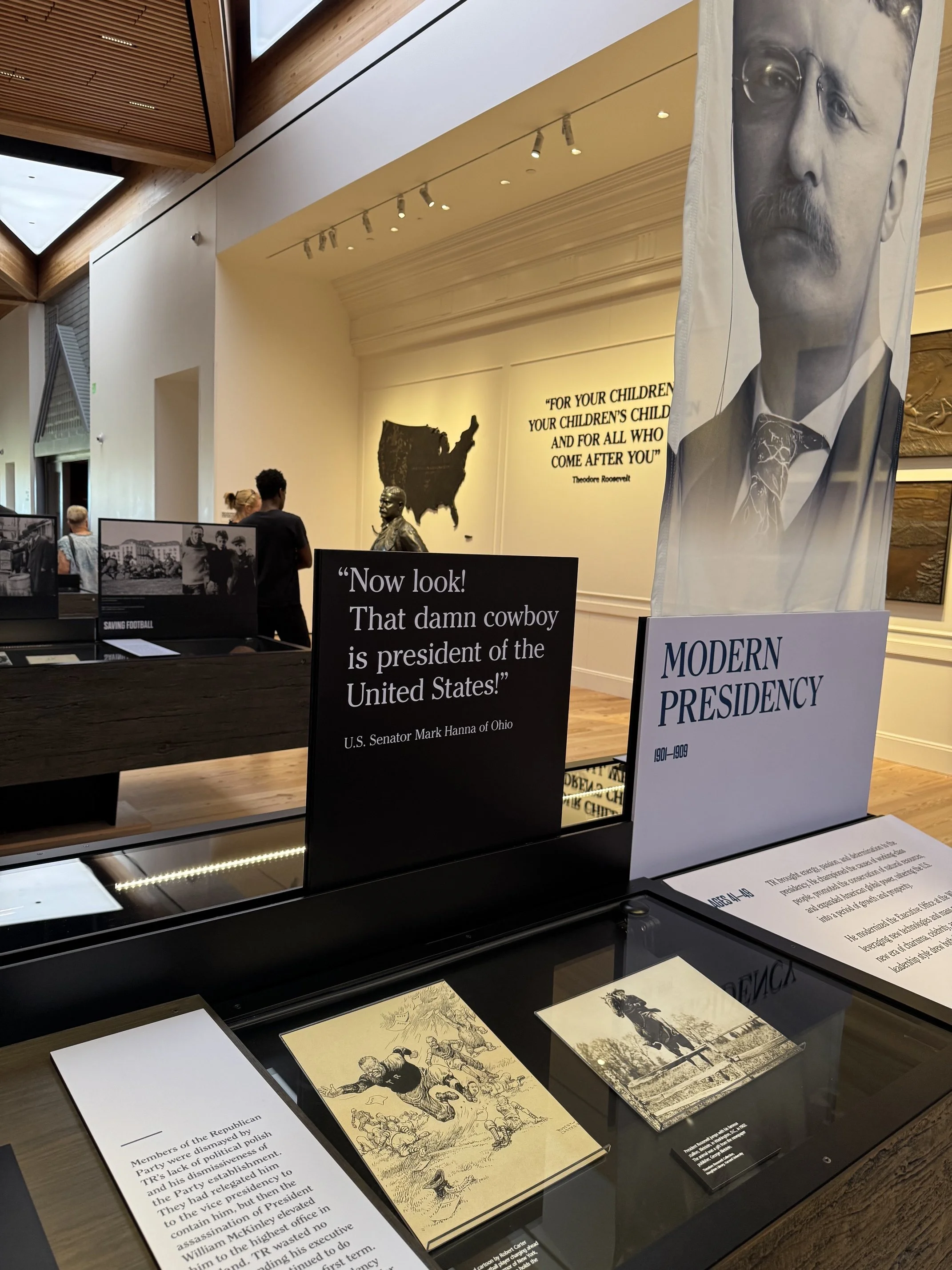
There are places that make you understand a person differently. For Theodore Roosevelt, that place was the North Dakota Badlands. And for travelers, the little town of Medora offers something increasingly rare: a destination where American history, extraordinary scenery and thoughtful innovation come together.
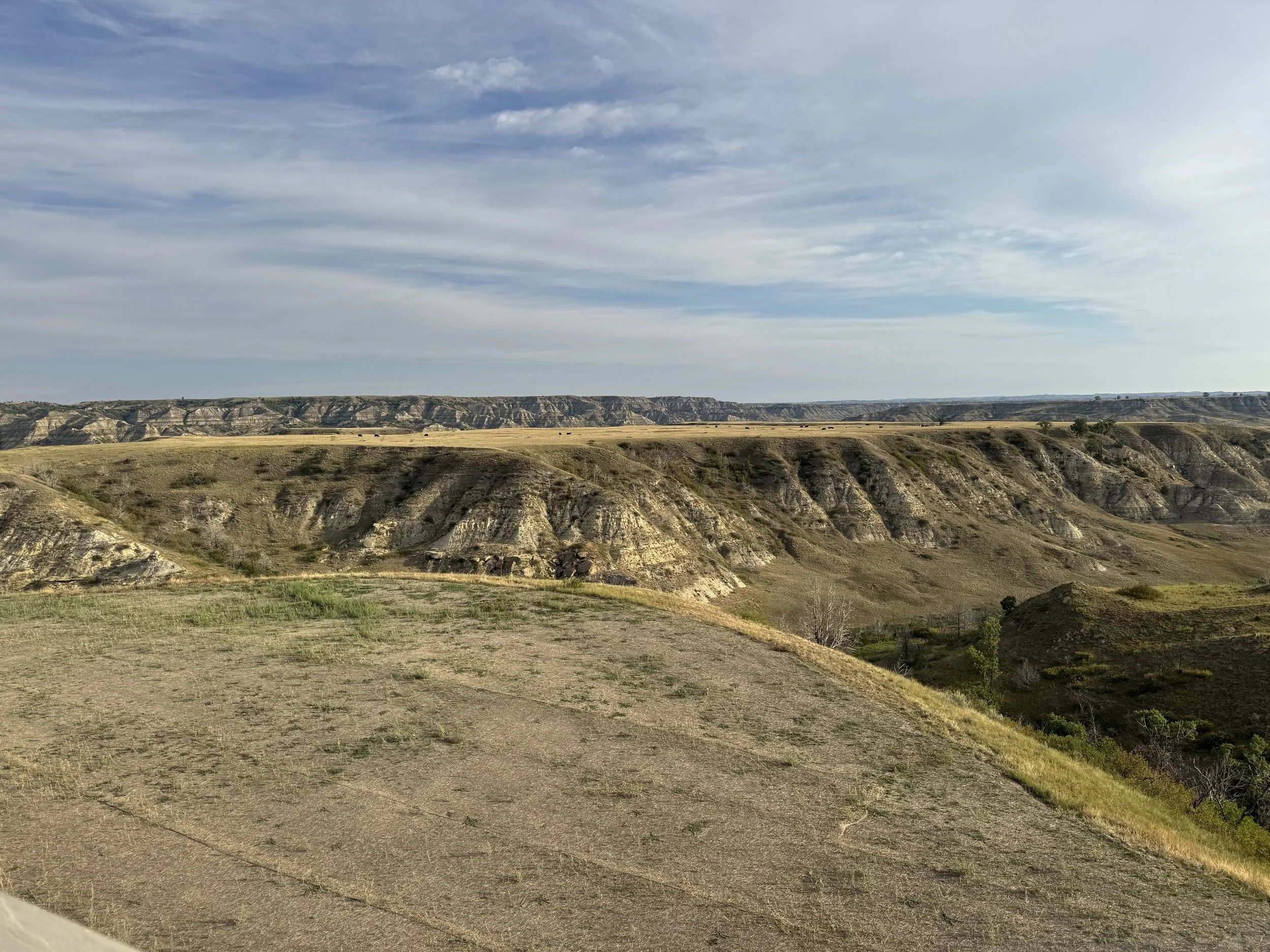
The first surprise is the landscape. Forget the flat prairie you might imagine when you hear North Dakota. Here, the earth rises and folds into striped buttes, deep gullies and wide-open grasslands. The Little Missouri River winds through a world of rugged color and enormous sky. At sunrise and sunset, the Badlands seem to change by the minute. It is dramatic, peaceful and wonderfully unpolished.
That landscape is the reason the Theodore Roosevelt Presidential Library belongs here. Roosevelt first arrived in the Dakota Territory in 1883 to hunt bison and soon invested in ranching. After his wife and mother died on the same day in 1884, he returned west, finding physical challenge, solitude and a renewed sense of purpose. The experience shaped his ideas about character, citizenship and conservation. He later said he would never have become president without his time in North Dakota.
Roosevelt's résumé could fill several museums. A New York assemblyman and reform-minded police commissioner, he became assistant secretary of the Navy, led the Rough Riders during the Spanish-American War, served as governor of New York and then vice president. Following President William McKinley's assassination in 1901, he became the nation's 26th president at age 42. His presidency brought trust-busting, consumer protections and a transformative conservation legacy, including the protection of roughly 230 million acres of public land. His record was also complicated, especially on race, Native Americans and American expansion. The best history makes room for both accomplishment and scrutiny.
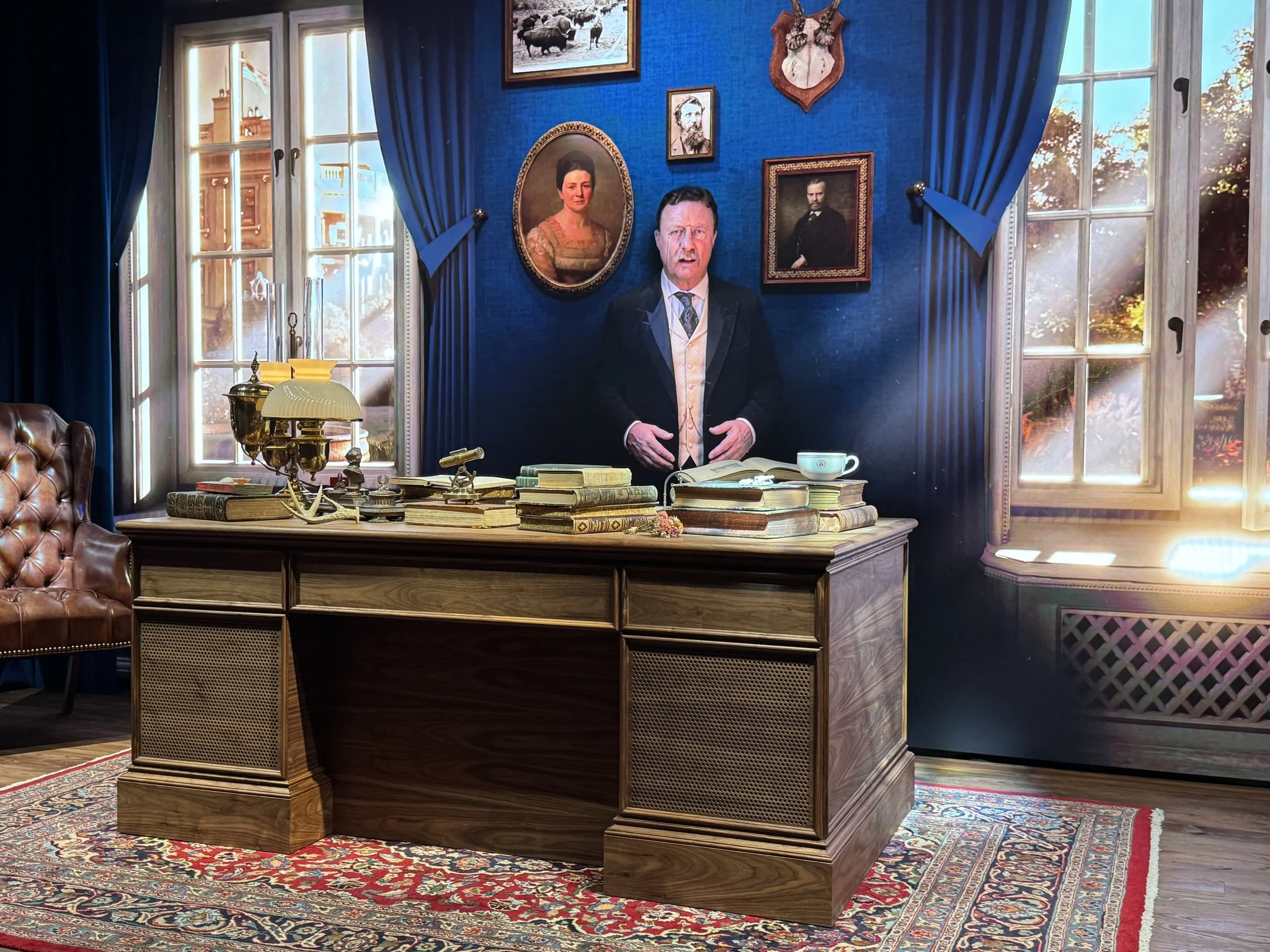
Opened July 4, 2026, the presidential library is anything but a conventional collection of glass cases and plaques. Its immersive galleries combine storytelling, holographic experiences and artificial intelligence to make Roosevelt's life feel immediate. A digital Trailblazer experience personalizes the visit and extends it beyond the building. Technology is not there simply to impress; it invites visitors to explore documents, confront decisions and consider what leadership means today.
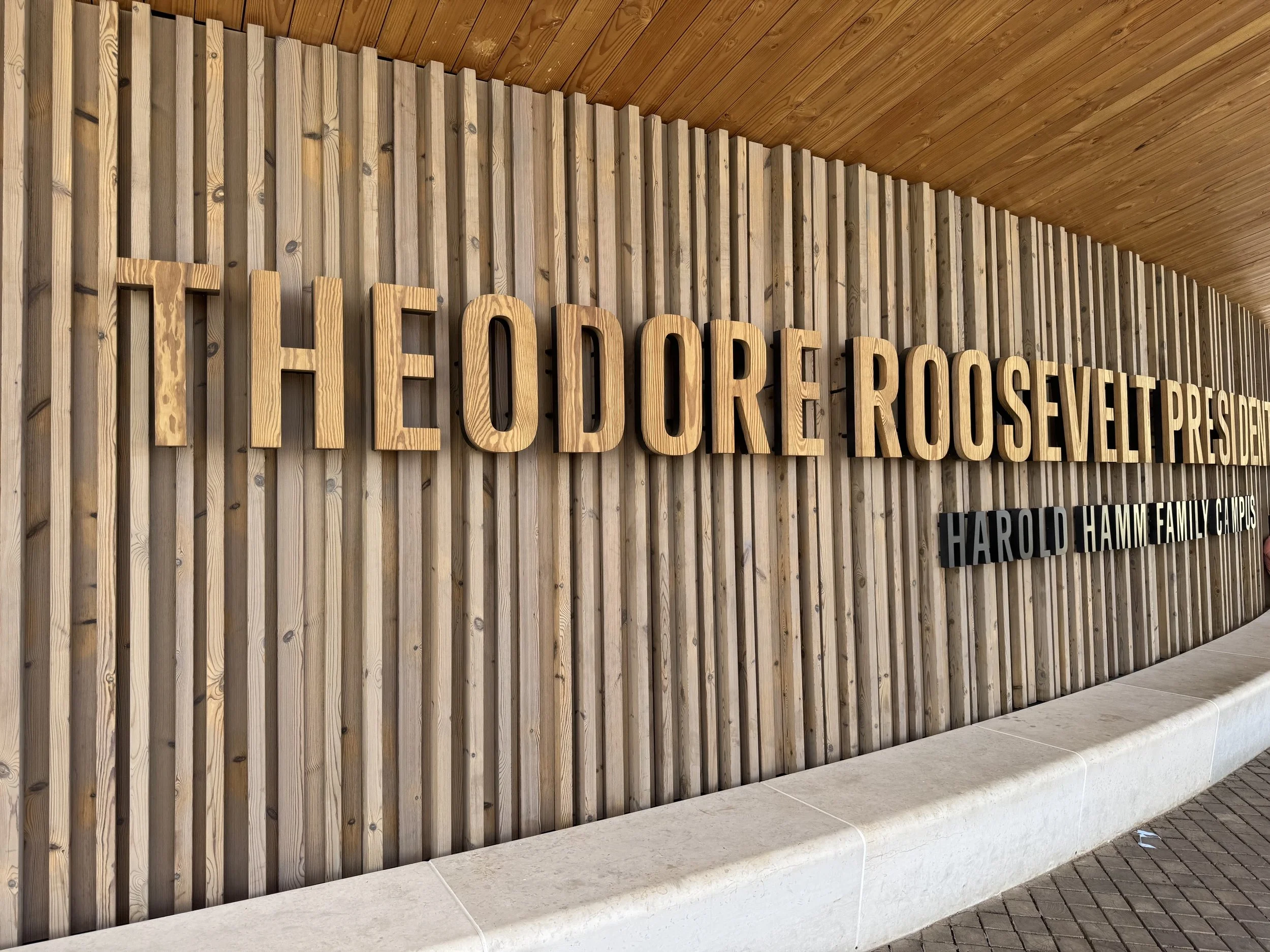
Equally impressive is what happens outside. Designed by Snøhetta, the library seems to emerge from the hillside rather than sit on top of it. Its planted, walkable roof, native prairie restoration, boardwalk and terraces draw visitors back into the landscape. The project is pursuing the demanding Living Building Challenge, with ambitions around energy, water, waste and ecological performance. That is a fitting tribute to a president who understood that preserving America's natural wonders was a responsibility to future generations. The building itself becomes part of the lesson.
Give the library several hours, and leave time to walk the grounds. Then head into Theodore Roosevelt National Park's South Unit, just outside Medora. Take the scenic drive, stop at overlooks and watch for bison, prairie dogs and wild horses from a respectful distance. A short hike on the Wind Canyon Trail delivers unforgettable views of the Little Missouri River. For a bigger adventure, explore a section of the Maah Daah Hey Trail. Check park road and trail conditions before setting out.
Medora adds its own charm. This small western town invites a slower pace, with historic storefronts, shops and summer entertainment, including the open-air Medora Musical. It is easy to build a full weekend around the park, the library and a little time simply watching the light move across the hills.
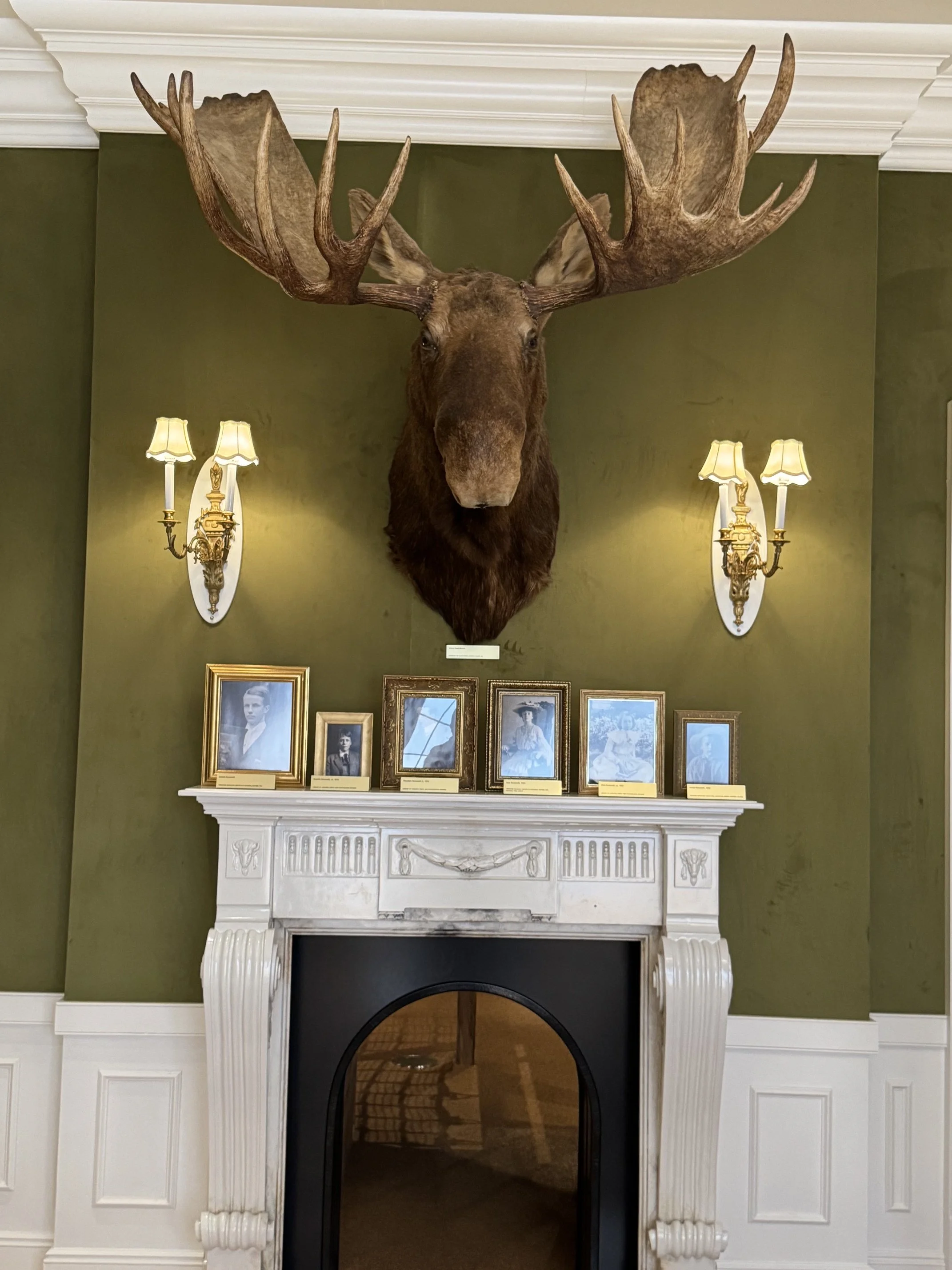
For a stay that fits the story, check into the Rough Riders Hotel in the heart of town. Named for Roosevelt's famous volunteer cavalry, it pairs western character with modern comfort. Its welcoming fireplace, tin ceiling and remarkable collection of books by and about Roosevelt make the lobby feel like a destination of its own. You are steps from Medora's attractions and close to the national park.
Dinner at Theodore's Dining Room, inside the hotel, is a fitting finale. The atmosphere is polished without losing its western personality, and the menu draws on hearty regional flavors, with dishes such as bison osso buco and bacon-wrapped steak among its offerings. Enjoy a relaxed dinner, perhaps a drink at TR's Tavern, and reflect on a day that has taken you from 19th-century ranch country to a distinctly 21st-century museum.
Medora is not a place to rush through. Come for the presidential library, but stay for the Badlands. Roosevelt found a new direction here. More than a century later, this extraordinary corner of America still has the power to change your perspective.
Plan your visit: trlibrary.com | nps.gov/thro | medora.com
– Jackie Reau
A New Hope
Open in June of this year, the Obama Presidential Center is a powerful reminder of the common good that can be achieved by working together and looking forward.
The building and the grounds are firmly rooted in Chicago’s South Side. President Barack Obama started his work as a community organizer in the neighborhood, where he also had his first date with his wife, Michelle, and began his political career.
In the Neighborhood
The neighborhood is an ideal place to stay, with easy walks to coffee shops, restaurants, Promontory Park and the Obama Center. It is oddly flat, a true shock to visitors from Cincinnati.
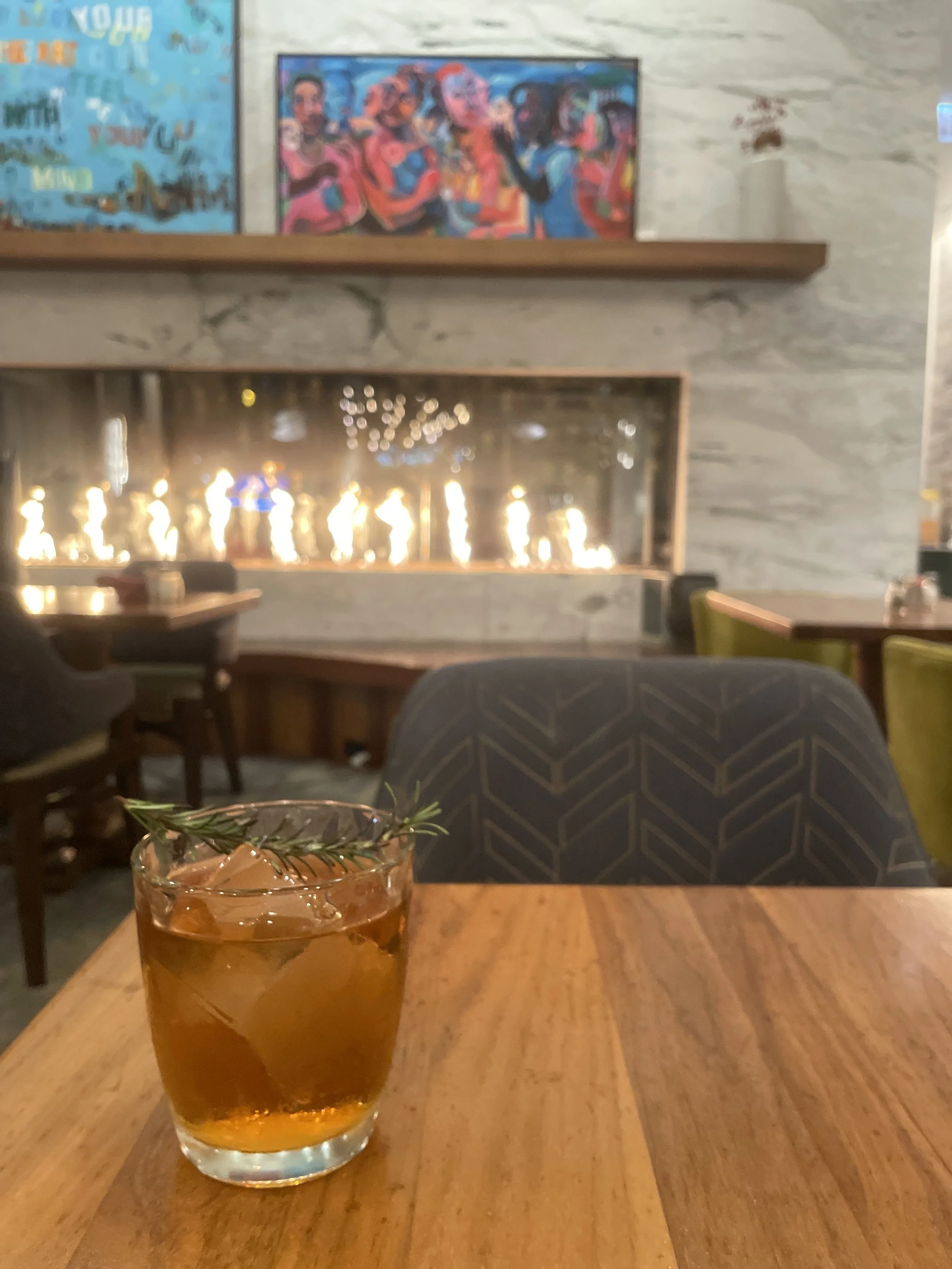
The Sophy Hotel, 1411 E. 53rd St., is a 4-star boutique hotel about a mile from the Center, in Hyde Park. Comfy rooms, huge shower, and in-room record players. Each room has a couple of records with more available to check out from the front desk. The Mesler, the restaurant at the hotel,
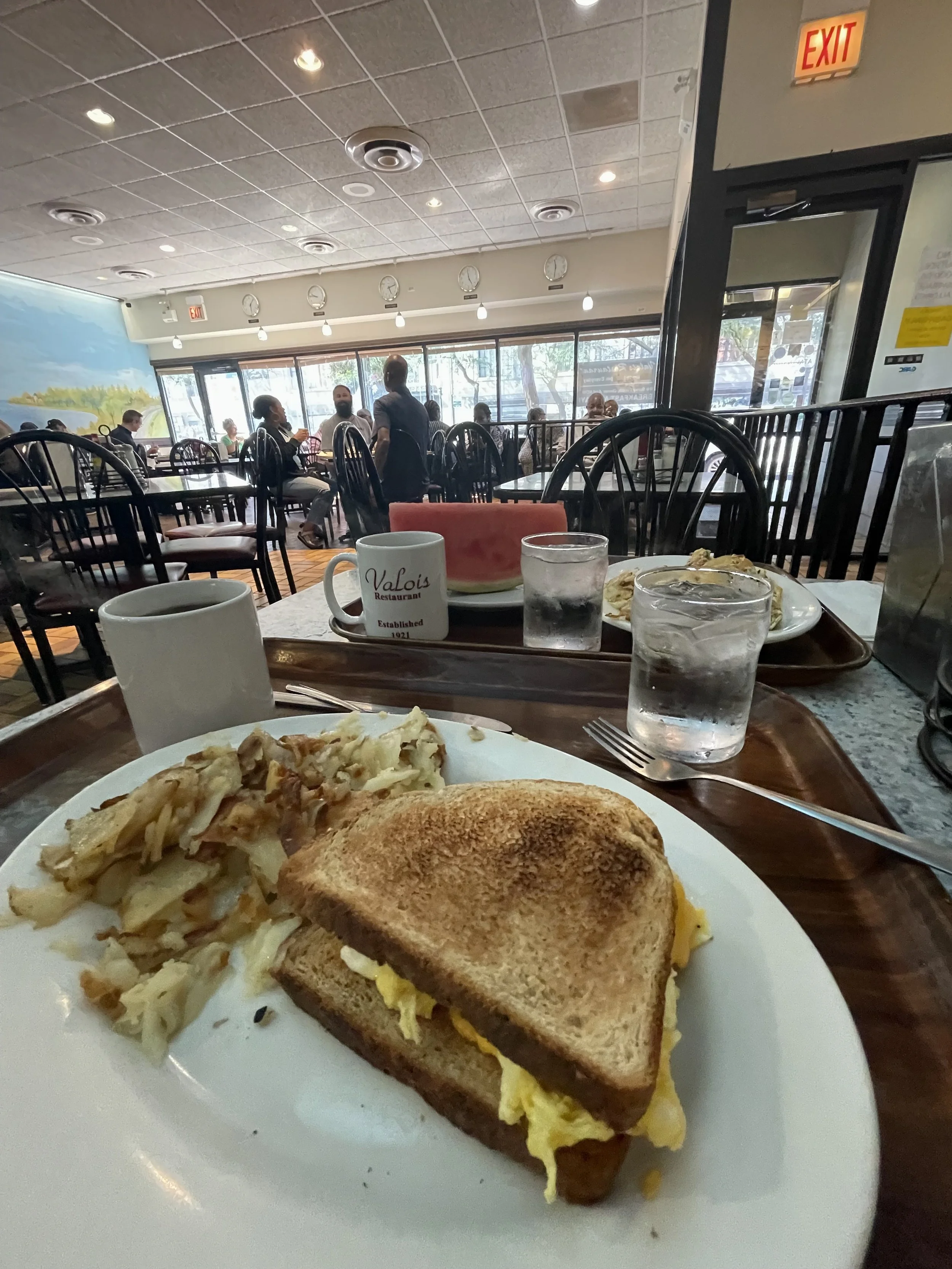
Before heading to the Center, we enjoyed a solid (and cheap!) breakfast at Valois Restaurant, 1518 E 53rd St. A favorite of former president Obama, this old-school Chicago diner features a hand-written sign with some of his favorite dishes, and even a Presidential table. (It’s a regular table with this photo on it.) The hearty egg sandwiches, huge omelets, and strong coffee are good start to any day. FYI, Valois is cash-only.
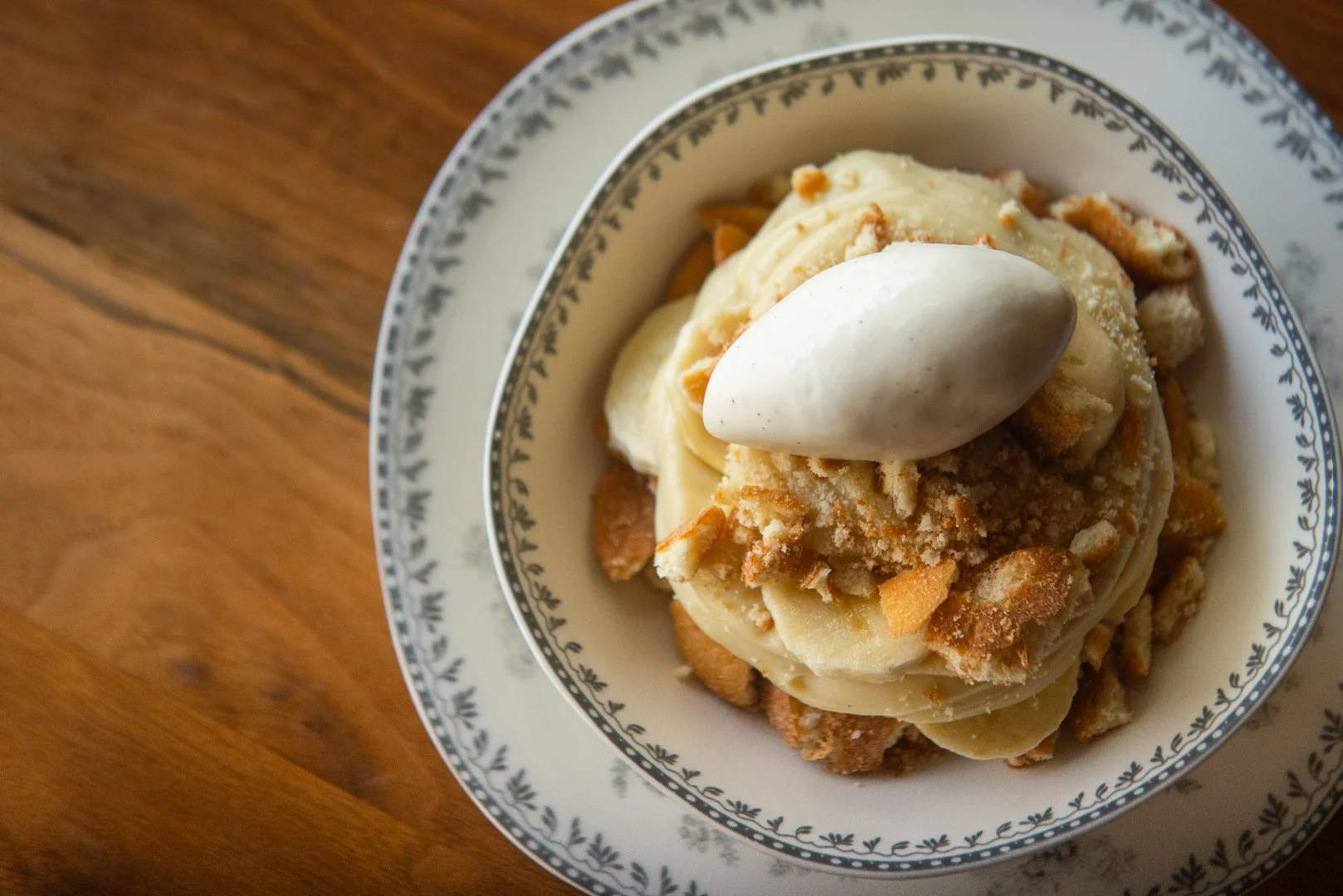
For dinner, don’t miss Virtue, 1462 East 53rd St. Opened by the James Beard award-winner Erick Williams, Virtue offers a sophisticated approach to Southern classics – biscuits with pimento cheese, fried greet tomatoes, and crab etouffee – plus an inspired cocktail menu. Don’t sleep on the banana pudding for dessert! We didn’t make reservations and decided to wait 45 minutes for a bar table. It was worth it!
Getting to the Center
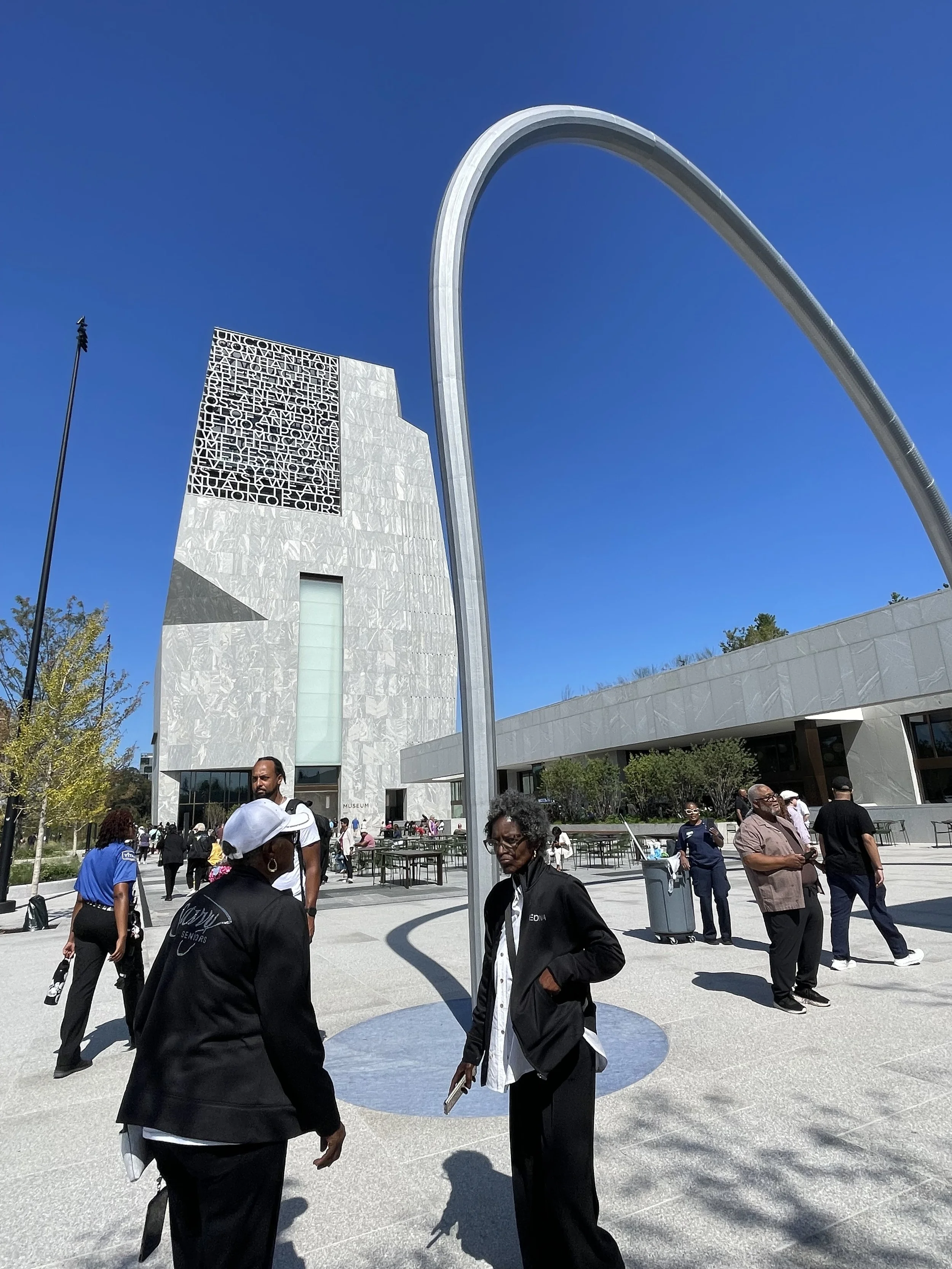
From the Sophy, we took a walk to the Obama Presidential Center, The approach striking building designed by Tod Williams and Billie Tsien Architects.
Tickets can be hard to come by, but the gorgeous grounds are open and free. Even without a ticket you can stroll through the Women’s Garden, visit John Lewis Plaza, check out the Home Court, and enjoy the sculptures throughout the public spaces. The newest branch of the Public Library of Chicago is also there. While it includes a space to read, borrow and enjoy books, the library also has Presidential Reading Room with a collection of books that shaped their lives of President and Mrs. Obama, from biographies to history to novels.
When you enter the building you are immediately met with friendly, helpful greeters, brimming with Chicago loquaciousness, ready to guide you. The Center is eight floors, and as you climb higher, the building acts as a metaphor for Obama’s journey to President and a personal inspiration to continue to look up and move forward.
The museum trip begins not with President Obama’s life but with a level devoted to “Toward a More Perfect Union.” This sets both a figurative and literal ground floor for examining the history of democracy in this country through Emancipation, Women’s Suffrage, and the Civil Rights Movement. Among the artifacts are Frederick Douglass’s pen, letters from the Freedom Riders, and a treasure trove of campaign buttons.
These historic movements act as a framework of what served as inspiration to the Obamas’s careers in public service and their political rise.
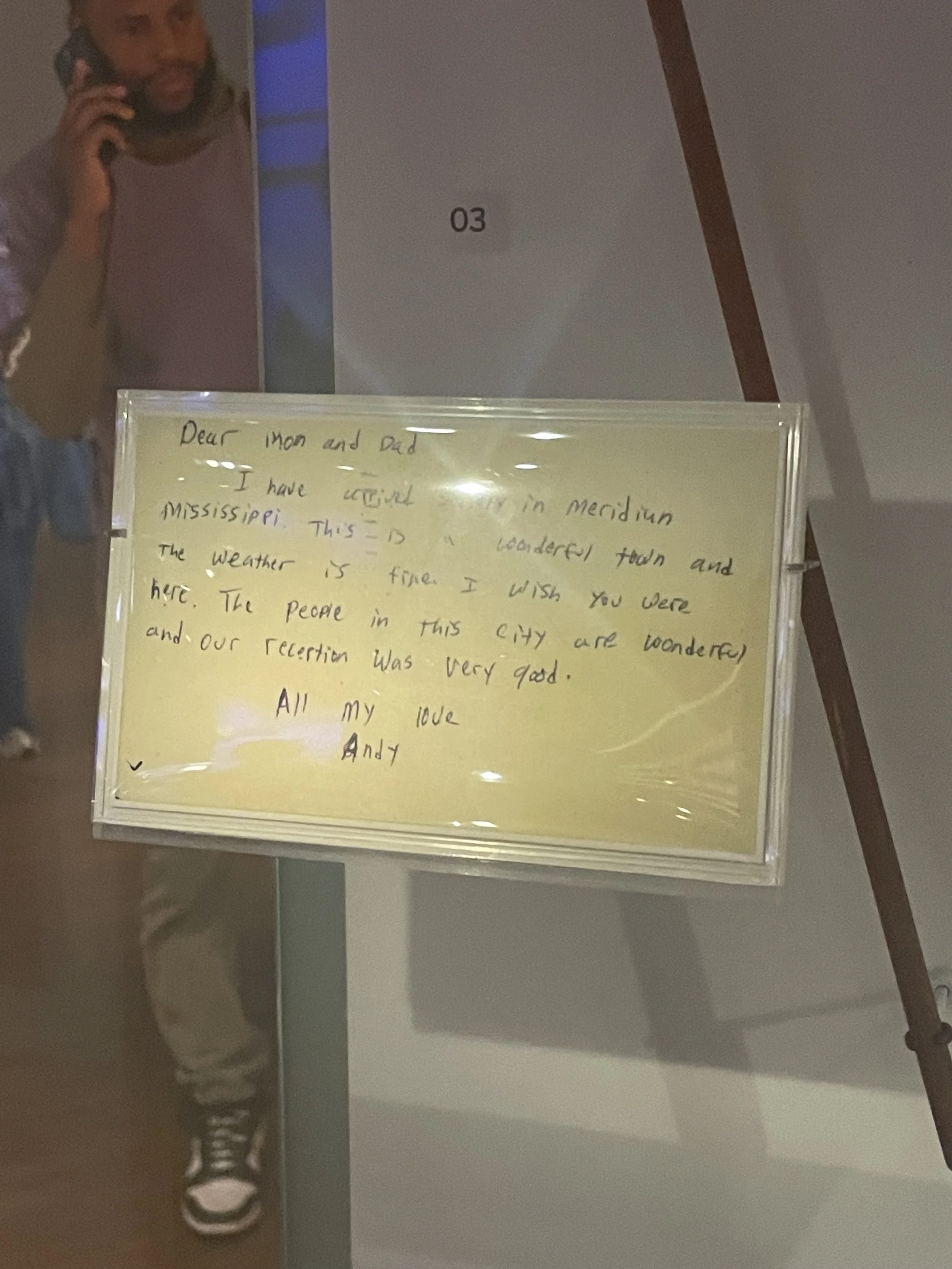
As you move to next level, “Working for the Common Good” you’ll have the opportunity to take in the remarkable eight-story stained glass window “Uprising of the Sun” by Julie Mehretu, as move through museum. See full window as move between layers, also a chance to breath and reflect on themes of each level.
Each level looks at historic and contemporary social movements and the president’s milestones and work in the context our time. From his time in Chicago, to the Senate, and as president, images, memorabilia, and interactive activities tell the sometimes simple, sometimes monumental stories of the Obama family. The building has giant video walls that span the height of the building, which offer a powerful reminder of personal and historic milestones, from the president’s acceptance speech in Grant Park in 2008 to authors reading their work at the White House.
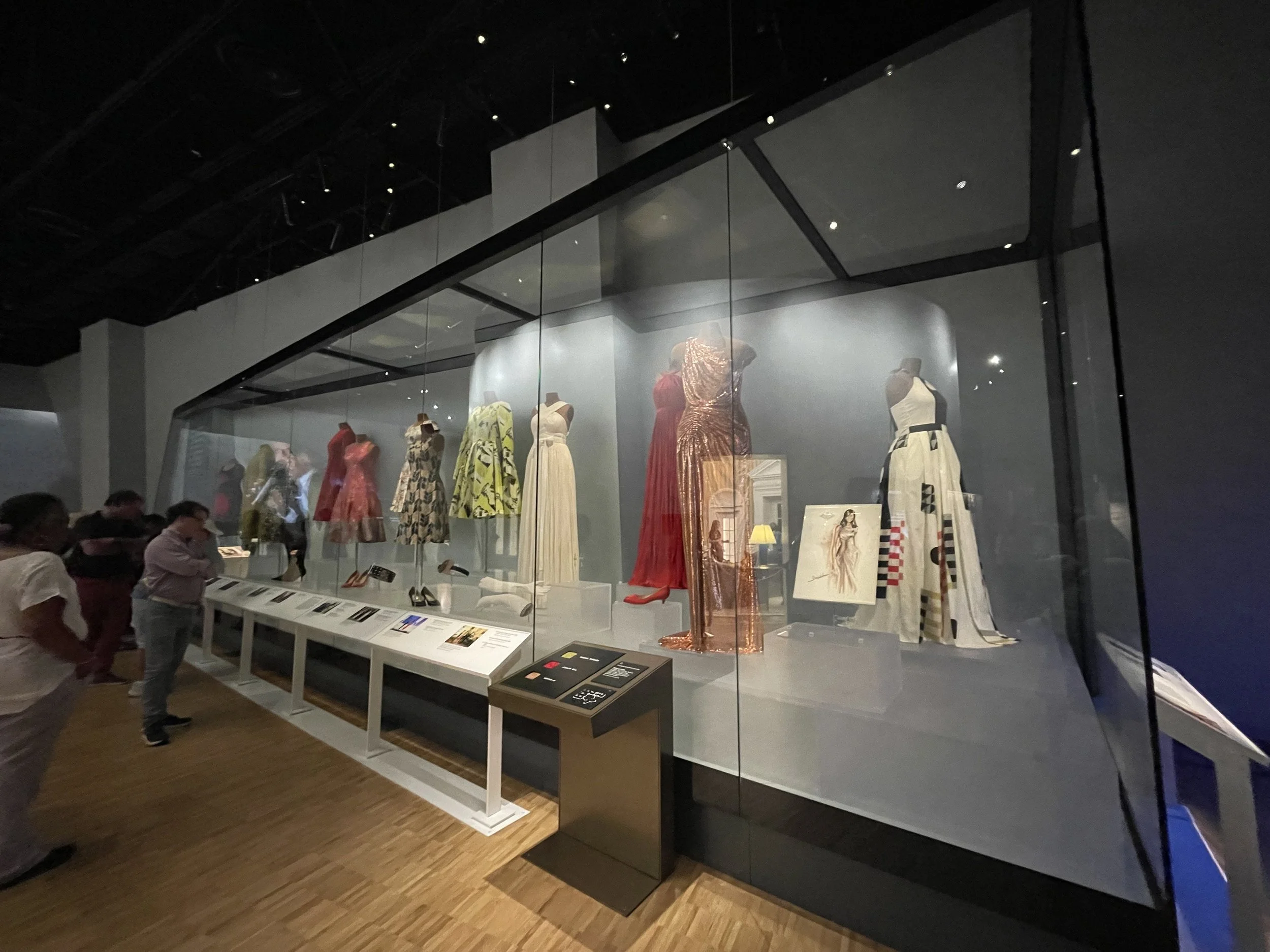
“The People’s House” and “Working for the Common Good” focuse on the Obamas time in the White House. There is a replica of the Oval Office (with a line for pictures!), the many, many gifts given to a president, and timeline of legislative accomplishments. The display of Michelle Obama’s fashion during this time is fun break from the more serious topics, but event here you see the championing of American designers, a thoughtful approach to inclusion, and reflection of the practicality needed for a working mother. That’s not to see it’s not glamorous, too!
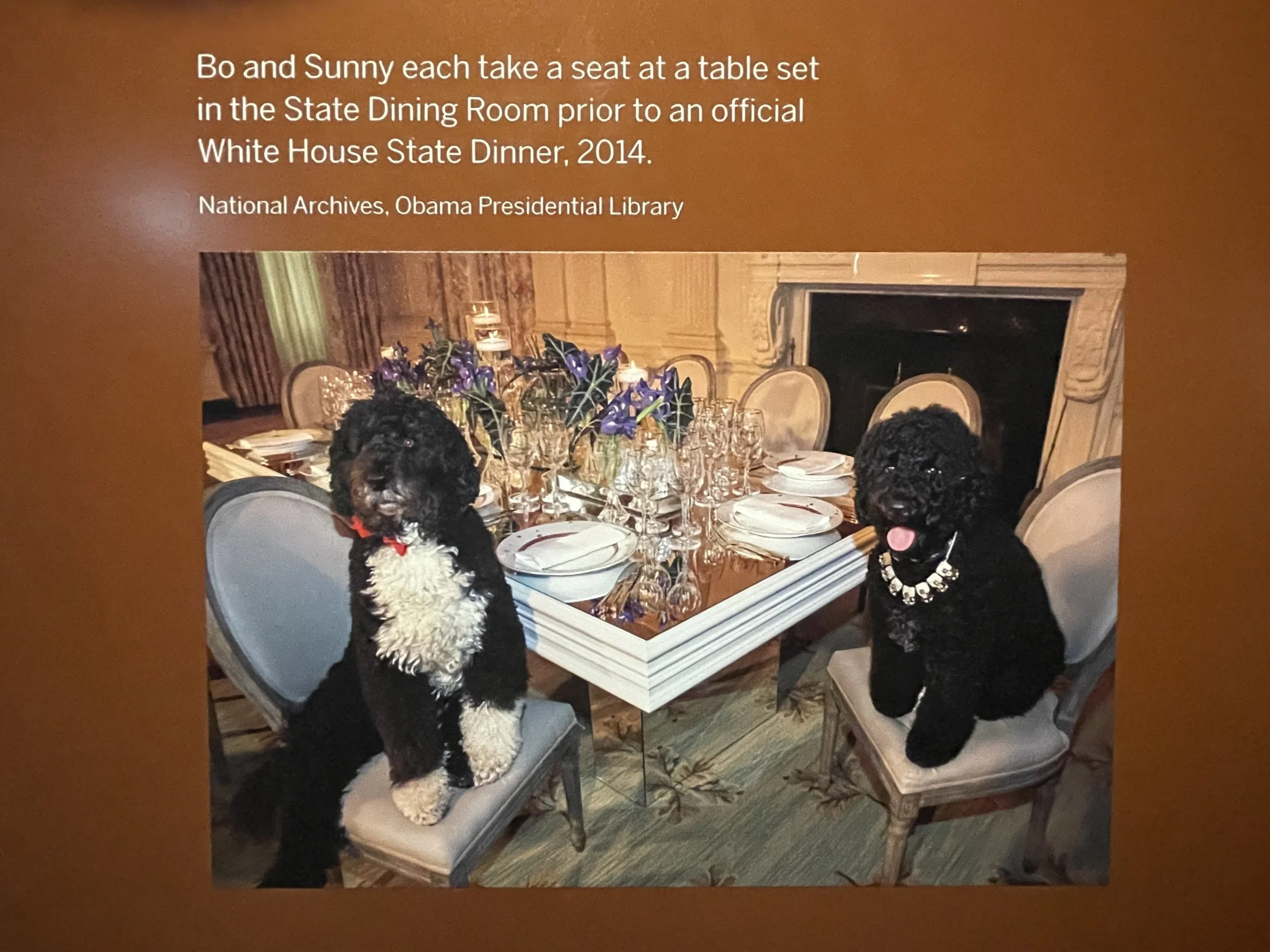
But beyond being about the Leader of the Free World, it’s also an opportunity to look at the Obama family. Sunny and Bo, the family dogs are featured in a fun interactive display which also includes video of famous performances at the White House.
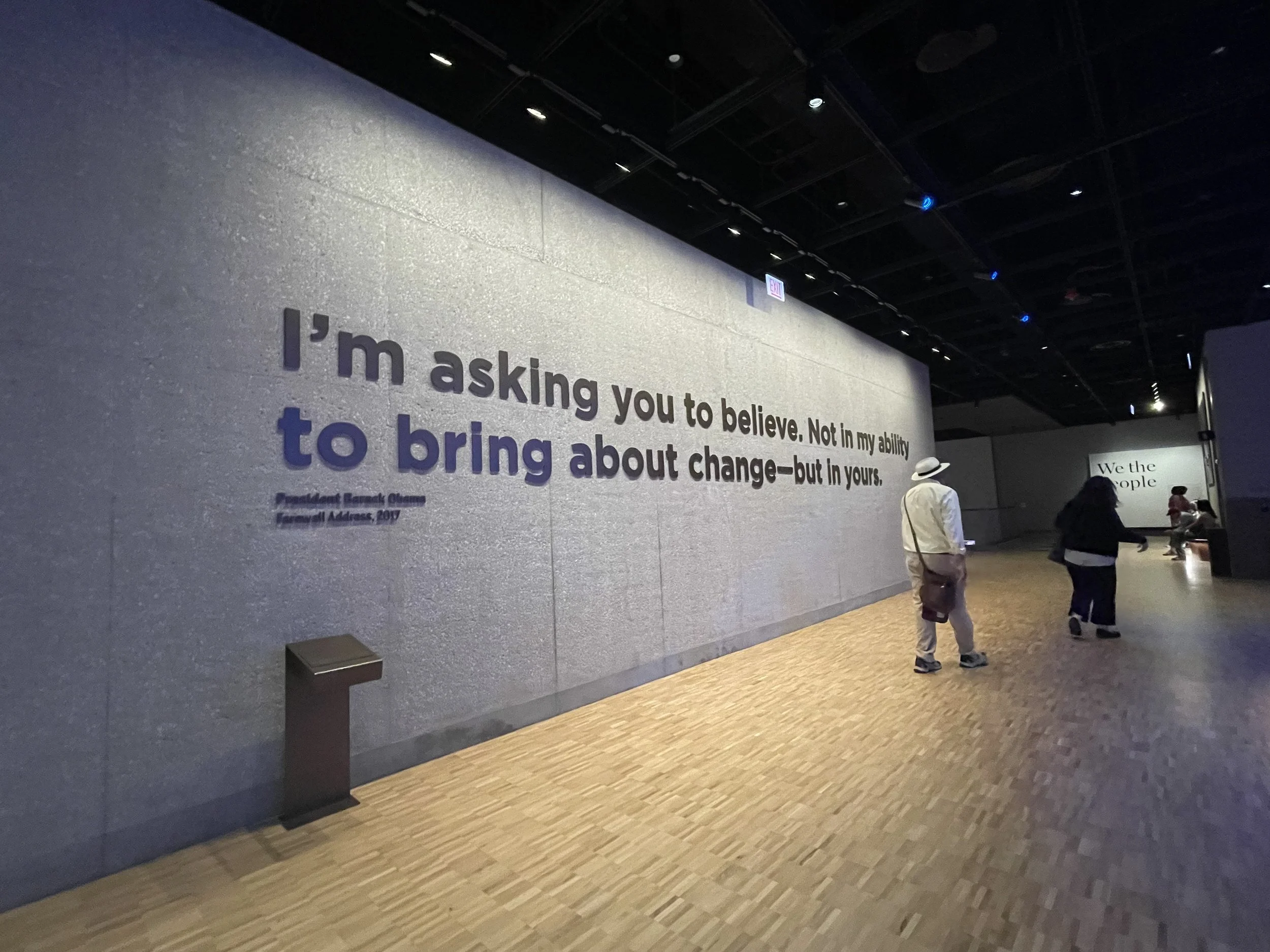
The Center offers a challenge as you make your way to the top level. “We the People” show that the work democracy is never finished. By sharing the stories of ordinary people – just world leaders – who created change and made progress on issues like equal pay and marriage equality. This level also features some of the projects from the White House Science Fair, illustrating that progress and innovation are not limited to the adults in charge.
The museum trip ends in The Nelson Mandela Sky Room. This culmination of the journey offers a view of the city, across the water, and into America, where art, poetry, innovation and progress flourish.
– Tricia Suit