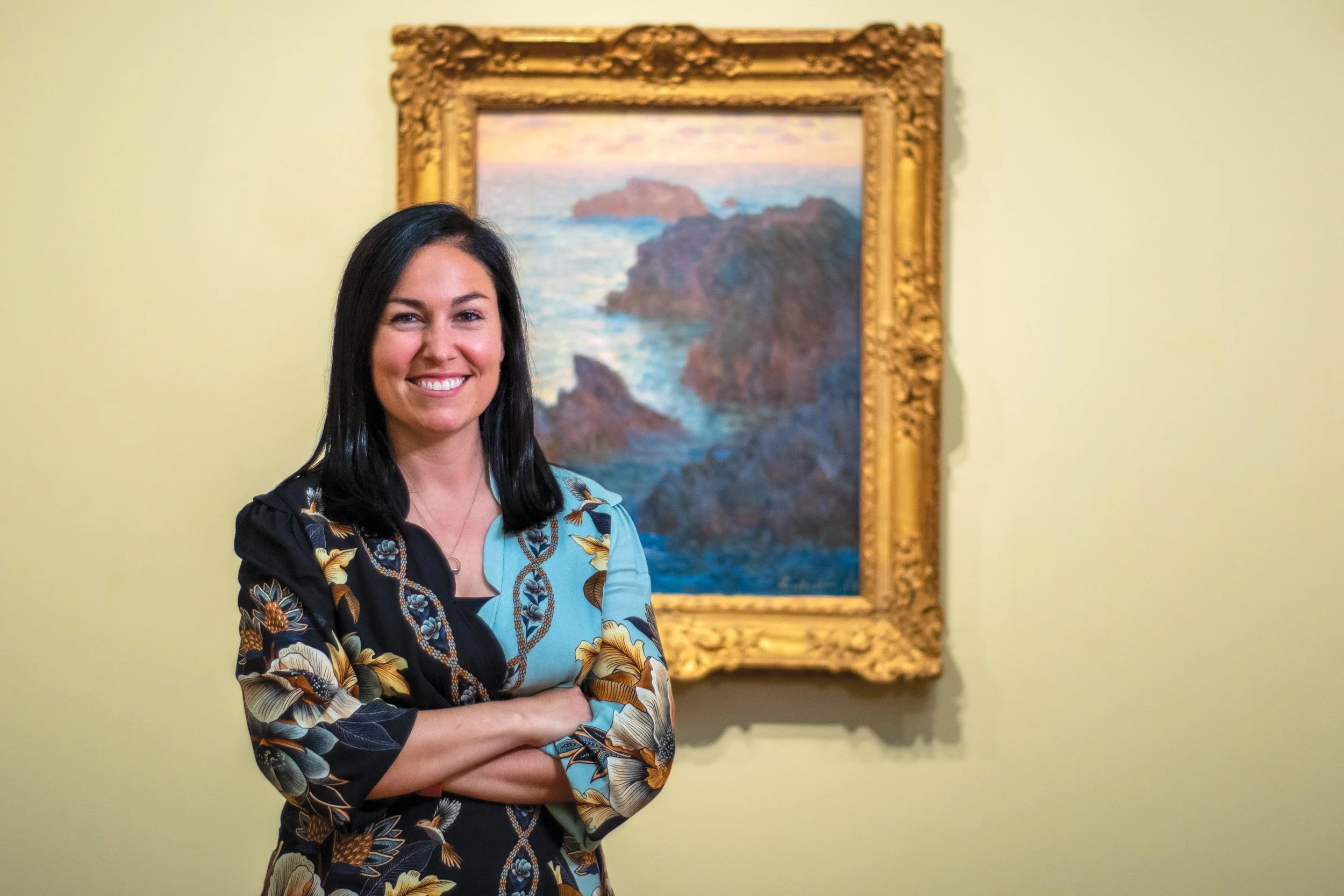
Meet Julie Ribits.
She came to Cincinnati for a professional conference. While she was here, she experienced the city, its museums and its cultural life. She liked Cincinnati enough that she kept watching for the right job opportunity.
Eventually, one appeared.
Today, Ribits is Head Conservator at the Cincinnati Art Museum, overseeing conservation of the museum’s collection and helping preserve works of art for generations to come.
One convention attendee became a Cincinnati resident, employee, taxpayer and participant in our cultural community.
So here is Cincinnati People’s BIG Idea: Let’s find 49,999 more Julies.
Give Creative Companies a Reason to Come
If we’re serious about doubling this economy, marketing isn’t enough.
Cincinnati needs an incentive strategy.
Could Ohio’s film incentives be leveraged more aggressively to create permanent production jobs rather than simply attracting individual shoots?
Could vacant commercial space become subsidized studios?
Could historic tax credits help create creative business districts?
Could artists receive relocation incentives?
Could Cincinnati create a Creative Business Accelerator?
Could companies receive incentives for moving creative headquarters or divisions here?
Could P&G, Kroger and Cincinnati’s extraordinary brand-building ecosystem become a living laboratory where creative startups test products and ideas?
Could our universities build a unified creative talent pipeline?
Those are economic-development questions, not arts questions.
Greater Cincinnati should set an audacious economic development goal:grow our creative economy from approximately 50,000 workers today to 100,000 within five years.
Not simply because we love the arts.
Because it could be good business.
Think Bigger Than Museums and Theaters
When we say “creative economy,” we mean something much larger than traditional arts organizations.
It is the graphic designer building a brand. The musician playing Music Hall on Saturday and recording in the studio on Monday. The architect designing a new neighborhood. The filmmaker shooting a movie in Over-the-Rhine. The content creator building an audience from a studio in Walnut Hills. The software entrepreneur developing technology for concerts. The photographer, fashion designer, illustrator, animator, podcaster, gamer, esports producer, copywriter, curator and industrial designer.
And yes, it is also the dancer, actor, painter, musician and museum professional. These are exactly who Cincinnati needs more of.
Creative people start things. They make things. They challenge conventional thinking. They fill old buildings with new businesses. They create restaurants, studios, festivals, companies and experiences.
And they make a city more interesting.
We Already Have a Head Start
This isn’t a proposal to invent an identity Cincinnati doesn’t have. It is a proposal to capitalize on one we have spent nearly a century building.
Greater Cincinnati consistently ranks among America’s most arts-vibrant large communities. Cincinnati ranks in the top 1% nationally for earned program revenue among arts organizations and the top 2% for compensation of arts workers.
Those are extraordinary economic-development credentials.
ArtsWave-supported research found Greater Cincinnati’s arts and culture sector generated $1.6 billion in economic impact between 2019 and 2022. In 2022 alone, the sector supported 6,518 jobs and generated $15.7 million in tax revenue. Add BLINK that year, and the economic contribution reached approximately $737.7 million.
The same research found something even more remarkable: arts organizations return approximately $42.47 to the regional economy for every $1 ArtsWave invests.
We have already built the infrastructure.
Now what if we scaled it? 50,000 → 100,000
Doubling Cincinnati’s creative workforce sounds wildly ambitious.
Good.
Big civic ideas should make people uncomfortable at first.
But doubling the creative economy cannot mean simply doubling the staffs of museums, orchestras and theaters. It requires thinking about creativity as an industry cluster.
Cincinnati could deliberately recruit and grow:
Advertising + Marketing
Film + Television
Music + Live Entertainment
Design + Architecture
Gaming + Esports
Digital Content + Media
Creator Economy Companies
Creative Technology
Fashion + Industrial Design
Independent Artists + Creative Entrepreneurs
Imagine Creative Economy Districts in places such as Over-the-Rhine, Walnut Hills, the West End, Uptown and Covington with studios, affordable live/work spaces, accelerators, production facilities and incentives for creative businesses.
Imagine Cincinnati becoming the easiest city in America to start a creative company.
Recruit the Convention. Then Recruit the Attendee.
This is where Visit Cincy could play a fascinating role.
Cincinnati should aggressively pursue the national meetings of the people we want living here.
Museum professionals. Designers. Musicians. Filmmakers. Performing arts executives. Conservators. Festival producers. Creative entrepreneurs.
Get them here first.
Then give them an extraordinary Cincinnati experience:
A museum visit
A concert
Dinner in OTR
BLINK
The Cincinnati Ballet
FC Cincinnati
Findlay Market
The Contemporary Arts Center
Then don’t say goodbye when their convention ends. Stay in touch. Show them jobs. Show them houses. Introduce them to employers. Invite them back. Connect entrepreneurs with investors.
Give companies considering relocation an economic-development concierge.
The convention becomes the top of a talent-attraction funnel.
Visit Cincinnati → Experience Cincinnati → Return to Cincinnati → Work in Cincinnati → Build in Cincinnati → Stay in Cincinnati.
Julie isn’t simply a nice story. She could be the prototype.
More Creative People Means More Arts Patrons
There is another important reason to pursue this strategy.
Cincinnati’s arts institutions need their next generation of audiences and donors.
ArtsWave’s economic-impact research projects its Community Campaign could reach approximately $13.5 million by 2027 if current trends continue. But the number of gifts has not returned to its mid-2010s peak.
Recruiting 50,000 creative workers potentially changes that equation.
These are people likely to attend performances, visit museums, discover galleries, support independent artists and introduce their children to creative experiences.
They become ticket buyers.
Subscribers.
Members.
Volunteers.
Board members.
ArtsWave donors.
And eventually major philanthropists.
Instead of asking only, “How do we find more donors for the arts?” ask a bigger question:
“How do we build a region filled with more people who inherently value creativity?”
And more kids who grow up loving the arts The generational impact may be even greater.
Creative people have families. Their children attend Cincinnati schools. They take ballet classes. Learn instruments. Visit museums. Audition for plays. Make films. Paint murals. Design games. Attend concerts.
ArtsWave already identifies “fuel creativity and learning” as one of the objectives of its regional arts strategy.
Imagine connecting economic development directly to that objective.
The child attending a Cincinnati arts program today could become the designer, filmmaker, architect, creative director or entrepreneur Cincinnati recruits tomorrow.
Or better yet, Cincinnati won’t have to recruit her.
She will already want to stay.
The Arts Are Economic Infrastructure
For decades, cities have treated arts and culture primarily as amenities.
You build a strong economy, the conventional thinking goes, and then a prosperous community can afford great arts.
Maybe Cincinnati should reverse the equation.
Great arts help build a great economy. They attract talent. They create tourism. They activate neighborhoods. They generate jobs.They help employers recruit.They make young professionals want to stay.They give families reasons to put down roots.
And they differentiate Cincinnati in a competition for talent where every midsize American city is claiming to be affordable, innovative and a great place to live.
Our arts actually prove it.
Cincinnati Doesn’t Need to Become Austin
Austin has SXSW.
Nashville has music.
Los Angeles has entertainment.
New York has almost everything.
Cincinnati shouldn’t try to become any of them.
Our opportunity may be different – Become America’s most livable creative economy.
A city where talented people can actually afford a house. Where an artist can have a career. Where a creative entrepreneur can build a company. Where world-class cultural institutions are minutes away. Where corporations need creative talent. Where neighborhoods provide inspiration. Where children grow up surrounded by creativity.
And where success doesn’t require a New York or Los Angeles cost of living.
The message becomes wonderfully simple – In some cities, creativity is a dream. In Cincinnati, it’s a career.
The BIG Idea
Imagine Cincinnati in 2031.
There are 100,000 people working in our creative economy.
New companies have moved here.
Creative entrepreneurs have started businesses here.
National conventions bring thousands of creative professionals to experience the region.
Film, media and content production have become meaningful economic sectors.
Our museums, theaters, galleries and performance venues have larger audiences.
ArtsWave has thousands of new donors.
Our tax base has grown.
Neighborhood storefronts are filled.
And tens of thousands more Cincinnati children are growing up believing that creativity isn’t simply something they enjoy.
It can be what they do with their lives.
That’s economic development. That’s talent attraction. That’s tourism. That’s education. That’s philanthropy.
And that’s a Cincinnati worth building – 50,000 creative people today. 100,000 tomorrow.
Why not us?
– Jackie Reau