
Courting Opportunity
The First Serve Tennis and Education Center will expand access to sports, education and mentorship, creating opportunities for thousands of young people across Greater Cincinnati, as Cincinnati Tennis Foundation Breaks Ground on $10 Million Center in Norwood.
A tennis court is 78 feet long and 36 feet wide for doubles. But the opportunities that can begin on that court are immeasurable.
For a child who has never held a tennis racket, it can be the beginning of a lifelong passion. For a student struggling in school, it can lead to a mentor who believes in their potential. For an athlete with a disability, it can become a place where barriers disappear and confidence grows.
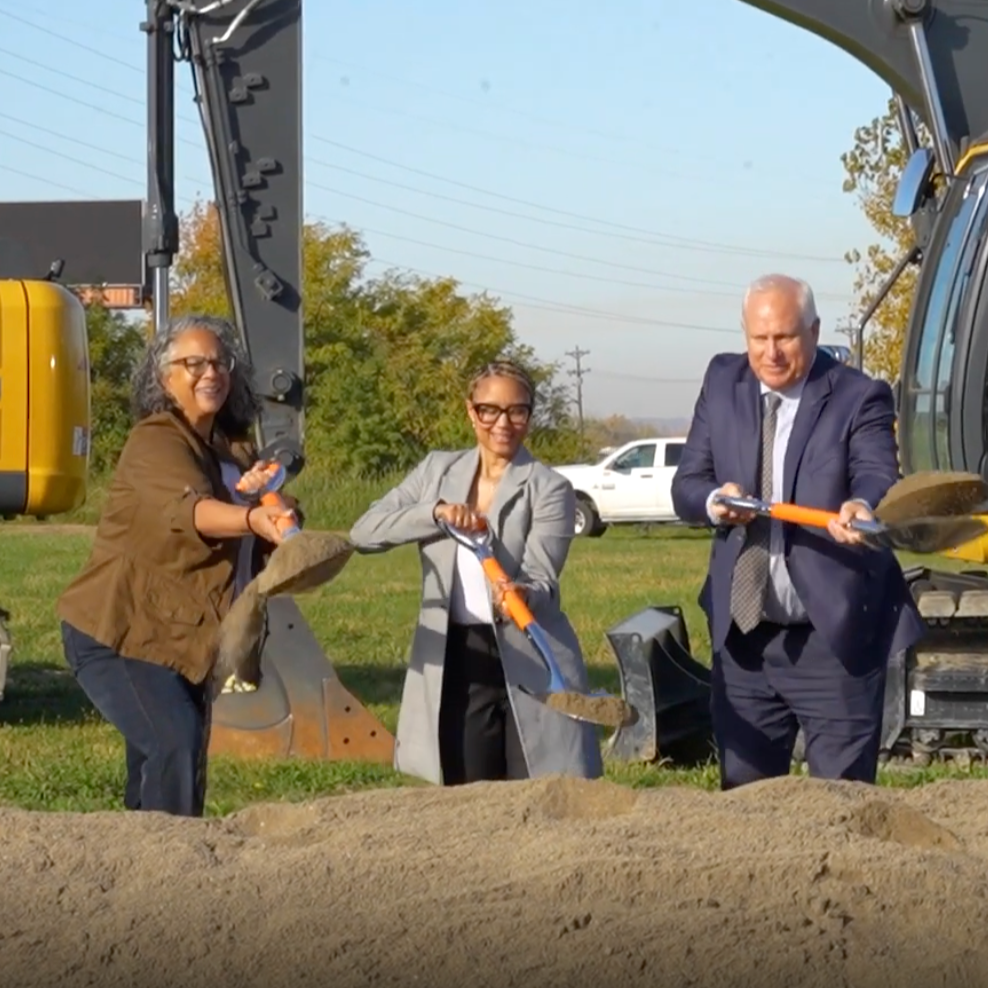
That is the vision behind the First Serve Tennis and Education Center, a $10 million investment in Norwood that officially broke ground on October 28.
Led by the Cincinnati Tennis Foundation, the new year-round campus will combine athletics, education, mentorship and life-skills development in a permanent home designed to serve young people and adaptive athletes throughout Greater Cincinnati.
Construction, led by Neyer, is expected to be completed in fall 2027.
More Than a Tennis Center
The most important part of today's groundbreaking isn't the courts that will be built. It's what will happen inside.
The new center will feature indoor tennis and pickleball courts, classrooms, a community gathering space, a kitchen and fully accessible facilities.
Once open, it is expected to add 800 hours of after-school programming annually, provide academic support, mentoring, nutrition and life-skills education to at least 50 young people daily, and double the number of youth and individuals with physical and intellectual disabilities served by the Foundation each year.
For working families, that means more than access to recreation. It means a safe, supportive environment where children can learn, develop friendships and build confidence.
For Norwood, it means a new community asset bringing families, educators, volunteers and athletes together around a shared purpose.
Closing the Opportunity Gap
The need is significant.
According to data cited by the Cincinnati Tennis Foundation, 75.1 percent of young people in local households earning less than $25,000 do not participate in organized sports.
Children from higher-income families are more than 20 percentage points more likely to play sports than their lower-income peers.
Those statistics illustrate how cost, transportation and access can determine who gets to participate.
The First Serve Tennis and Education Center is designed to change that equation.
And the Foundation already has an impressive record of impact.
In 2025, the organization served 4,715 athletes across more than 30 community sites. Its Cincy Scholars program enrolled 382 students who achieved a 17 percent improvement in reading comprehension during seven weeks of summer programming.
Eighty-eight percent of participants improved in at least two foundational social-emotional development areas.
Perhaps most compelling, 75 percent reported gaining a new trusted adult in their lives.
For a young person, having someone who believes in them can be as important as learning a new skill.
"Every number in our program report starts with a kid who walked onto a court for the first time and decided to stay," said Matthew Dektas, CEO of the Cincinnati Tennis Foundation. "This building is how we keep them."
A Place Where Everyone Belongs
Inclusion is another cornerstone of the project.
The Foundation served 122 wheelchair and adaptive athletes in 2025, with teams ranking second nationally in wheelchair tennis and first in ParaStanding tennis.
The new facility will expand opportunities for athletes with physical and intellectual disabilities, reinforcing a simple principle: Everyone deserves the chance to participate.
A Community Investment in the Future
The project received a transformational $3.5 million cornerstone commitment from First Serve Community Fund, securing naming rights and establishing the organization as the lead philanthropic partner in the Rally for Dreams campaign.
The campaign has also attracted support from local foundations, families, businesses, the USTA Foundation and the Cincinnati Open.
The investment represents more than a new sports facility. It creates the potential for a lasting community institution where education, physical activity and mentorship work together to help young people succeed.
The Cincinnati Tennis Foundation has already helped produce more than 200 NCAA player graduates. But its greatest victories aren't necessarily measured by championships or scholarships.
They can be found in improved reading scores, stronger relationships, increased confidence and young people discovering possibilities they never imagined.
Today's groundbreaking in Norwood is a reminder that the most meaningful community investments are measured by the lives they change.
When the First Serve Tennis and Education Center opens in 2027, its courts will have lines and boundaries. But for the young people who walk through its doors, the opportunities could be limitless.
Learn more or support the Rally for Dreams campaign at www.cincinnatitennisfoundation.org.

Building the Future
The Children’s Theatre of Cincinnati’s home at the reimagined Emery Theater has earned four recent awards recognizing its historic preservation, renovation, and community impact, in collaboration with Terrex Development & Construction and GBBN.
Photos: Phil Armstrong
Sometimes you have to look to the past to imagine the future.
Envisioned by philanthropist Mary Emery and designed by Samuel Hannaford & Sons, the historic theater also served as home to the Cincinnati Symphony Orchestra. Its stage has welcomed figures including George Gershwin, Eleanor Roosevelt, and Dr. Martin Luther King, Jr. After more than 30 years of vacancy, its restoration returns a cherished Cincinnati landmark to active cultural life.
The reimagined Emery Theater earned four awards recently, recognizing its historic preservation, renovation, and community impact. The honors celebrate the transformation of the 1911 landmark into a permanent MainStage home for The Children’s Theatre of Cincinnati (TCT), completed in collaboration with Terrex Development & Construction and architectural firm GBBN.
The five honors are
First Place in the Historic Category, retrofit magazine’s 2026 Metamorphosis Awards. The national awards recognize excellence in renovation and retrofitting. The Emery project will be featured in the magazine’s November/December 2026 awards issue.
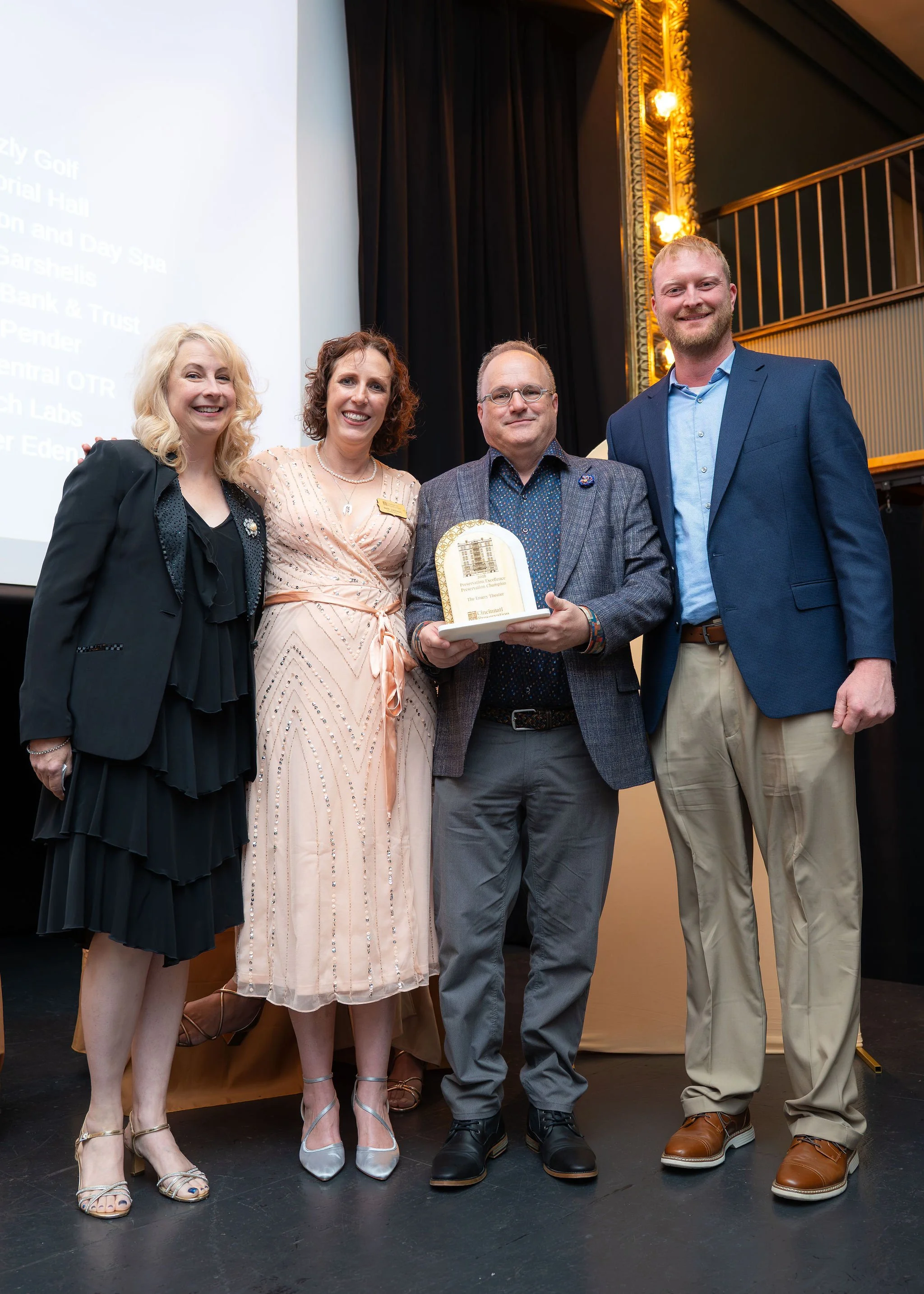
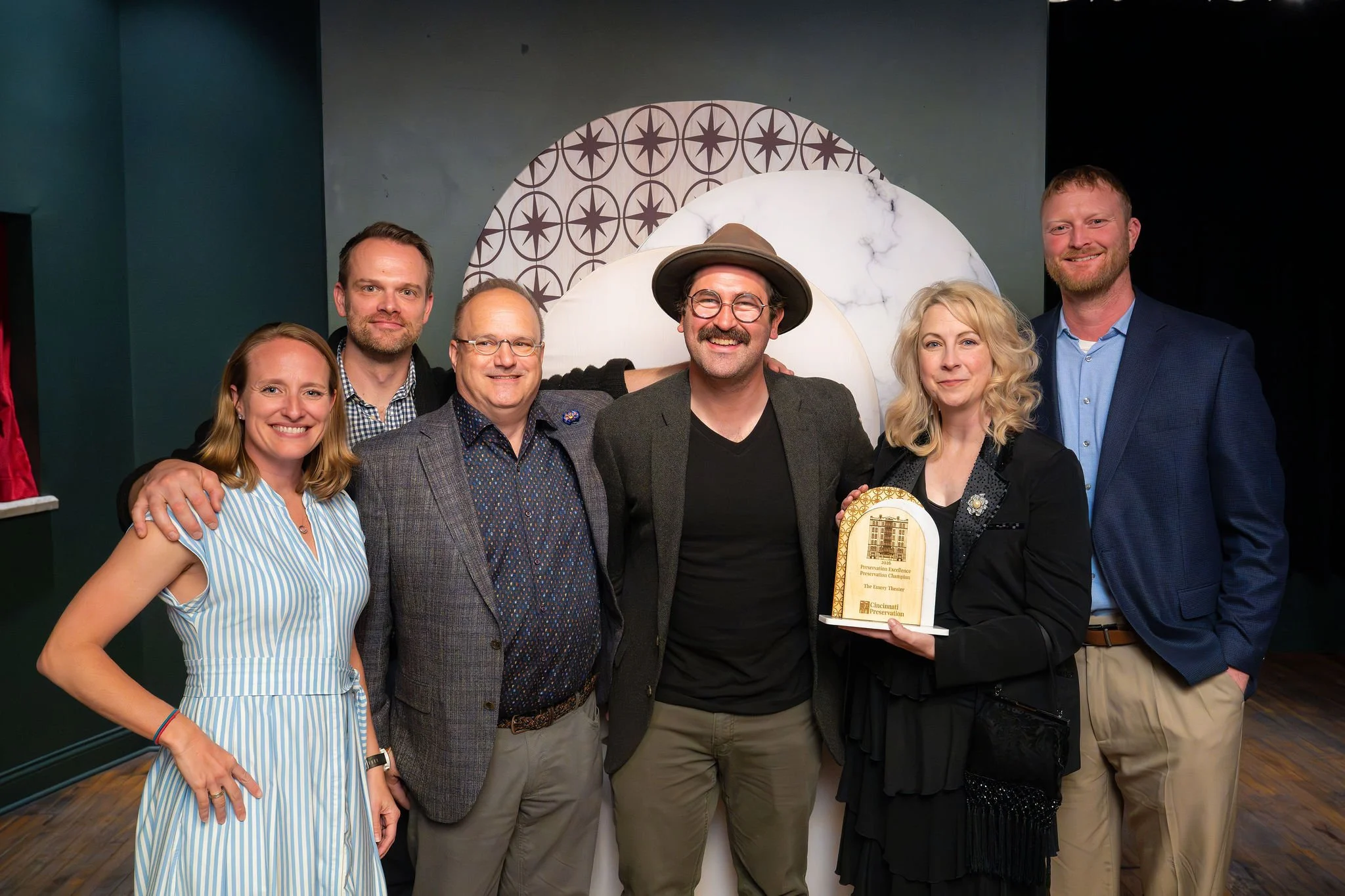
2026 Preservation Champion Award, Cincinnati Preservation. The Emery Theater was honored for its lasting contribution to historic preservation in Greater Cincinnati. The award recognizes the project’s restoration of significant architectural features, creative integration of modern theatrical technology, and improved accessibility, along with its renewed role as a cultural anchor and permanent MainStage home for The Children’s Theatre of Cincinnati.
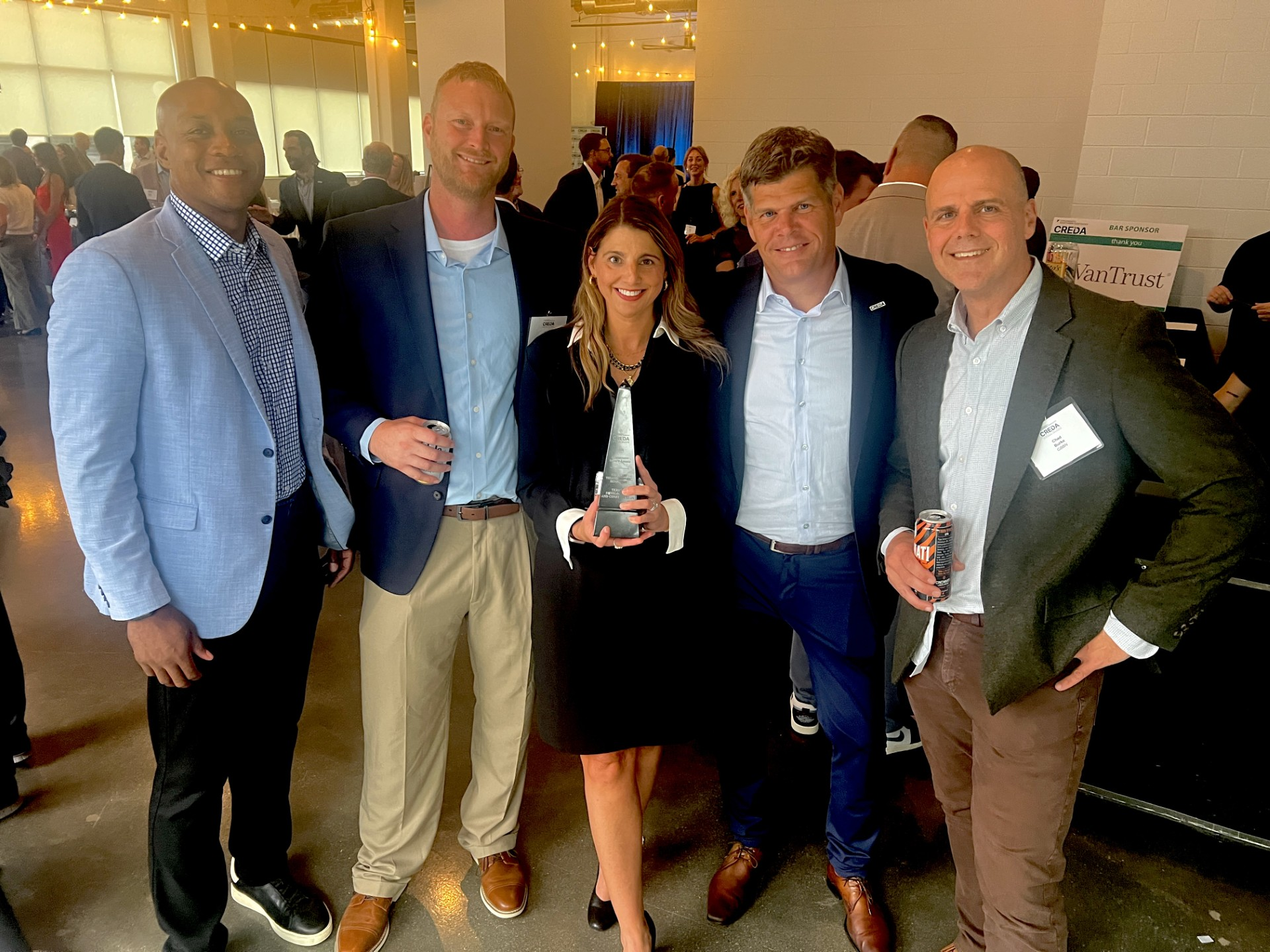
2026 Community Impact of the Year Award, CREDA Cincinnati/Northern Kentucky. The Commercial Real Estate Development Association chapter recognized the Emery Theater at its annual Night of the Stars Gala.
2026 Historic Theatre of the Year Award, Heritage Ohio. The statewide preservation organization honored the Emery at its September 30 awards ceremony at Cincinnati’s Woodward Theatre, recognizing historic preservation, active programming, and community engagement.
2026 State Historic Preservation Office Award. The project has been selected for recognition for its achievement in preserving Ohio’s historic places. The award will be presented Nov. 6 at the Thomas C. Moyer Judicial Center in Columbus.
The reopening in last year marked a homecoming more than half a century in the making. The Emery Theater was TCT’s original performance home before the company moved its MainStage productions to the Taft Theatre in 1969. Returning to the stage where generations of young audiences first experienced live theater reconnects TCT with its history while creating a permanent home for the next generation.
Now the most technologically advanced proscenium-style theater in the country, the reimagined Emery blends theatrical innovation with historic grandeur. The restoration retained ornamental plaster, marble finishes, and grand staircases while integrating new building systems and elevators. A stage lift with a built-in turntable, immersive projection mapping, and a large LED wall expands the possibilities for storytelling within the historic venue.
Celebrating 107 years this season, The Children's Theatre of Cincinnati is the nation’s oldest professional theatre for young audiences and the only professional theatre in the region devoted entirely to children. Through 60-minute MainStage productions at the reimagined Emery Theater, TCT on Tour bringing live theatre into schools across the region, and TCT Academy’s year-round classes and camps, TCT educates, entertains, and inspires more than 100,000 children and families each year, awakening a lifelong love of theatre in the young and the young at heart.
Founded in 2014, Terrex Development & Construction is a Cincinnati-based firm providing development and construction services for commercial, nonprofit, institutional, and community projects. Its team guides clients from early planning through construction, with experience in historic renovations and complex redevelopment projects.
GBBN is an architecture and design firm whose work spans arts and culture, healthcare, higher education, workplaces, and community spaces. Combining creative design with technical expertise, GBBN helps clients create places that enrich people’s experiences and strengthen communities. Its portfolio includes historic restorations and performance venues, including the reimagined Emery Theater.

All Fore Good
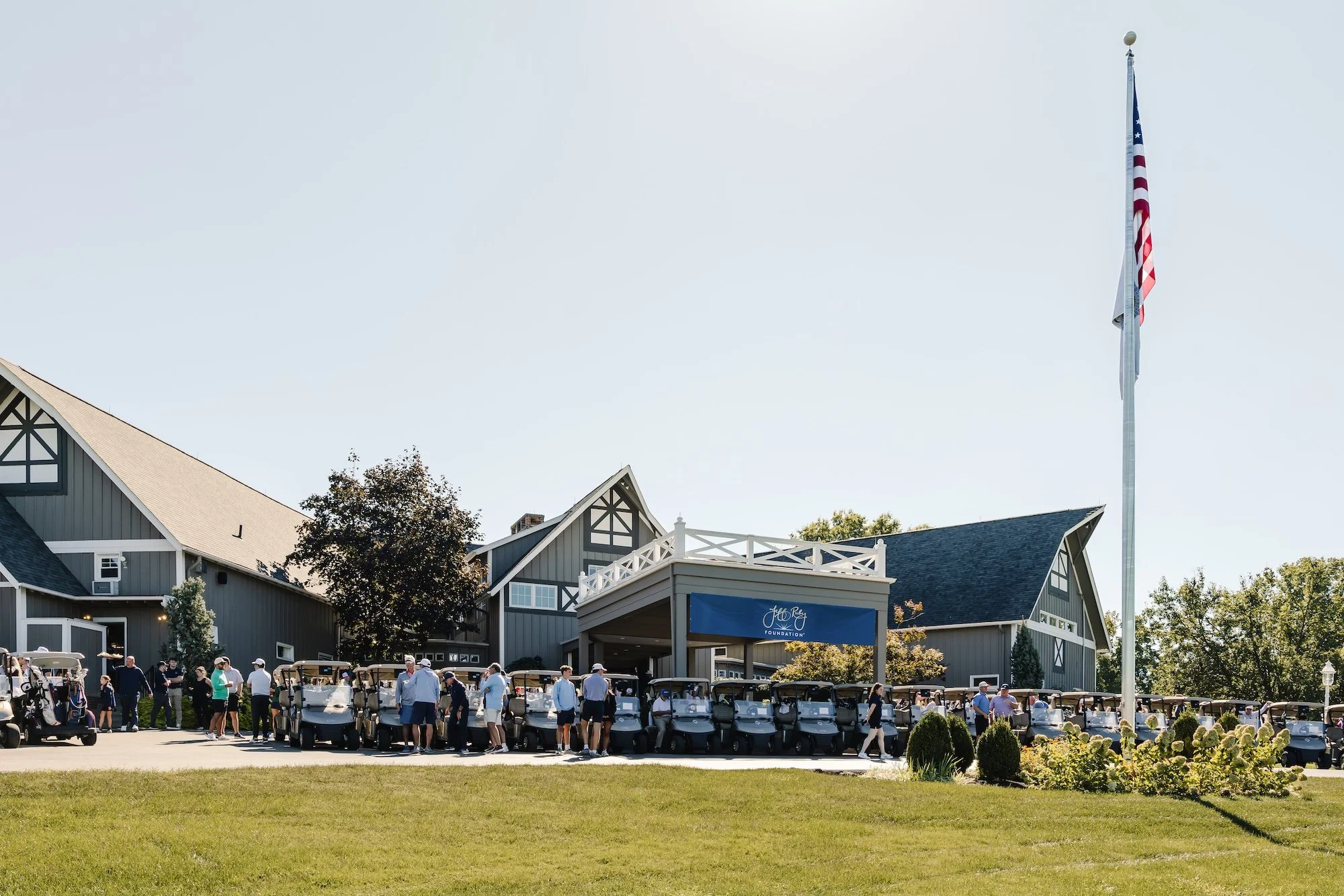
Sometimes a golf outing can take a swing at big issues. The Jeff Ruby Foundation’s Golf Classic raised more than $1.3 million to benefit its mission to support youth-serving organizations across Cincinnati, Columbus, Lexington, Louisville and Nashville

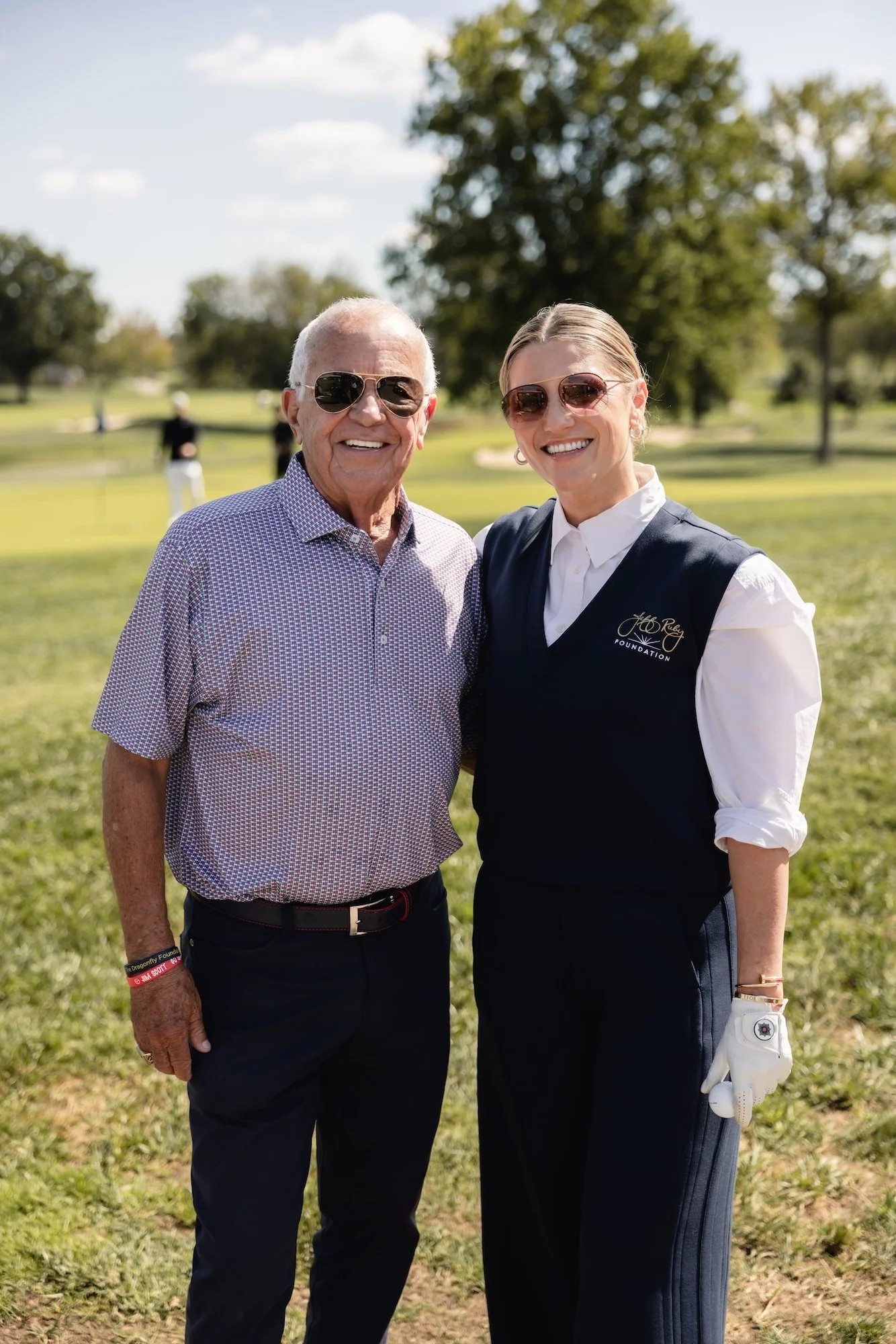
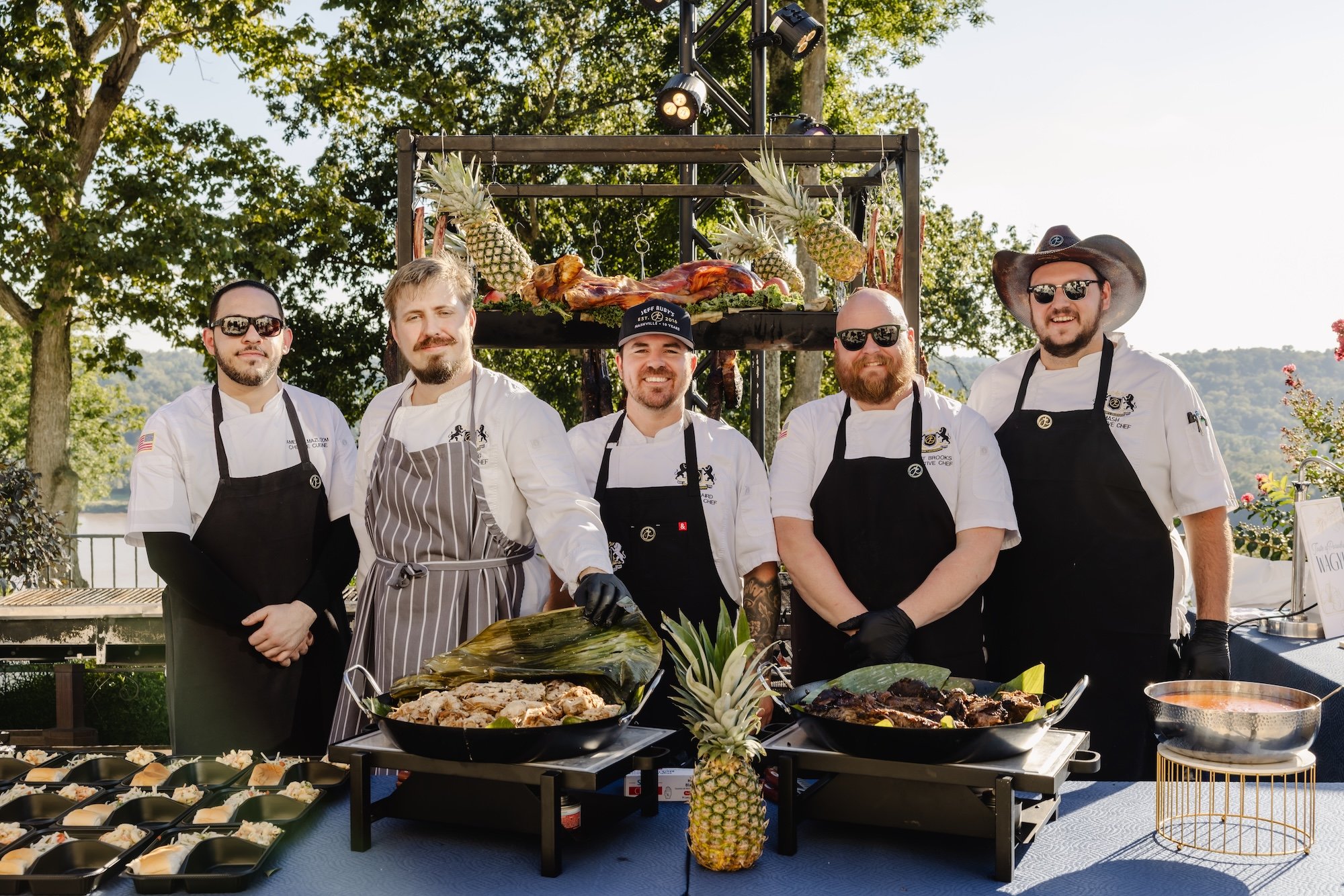
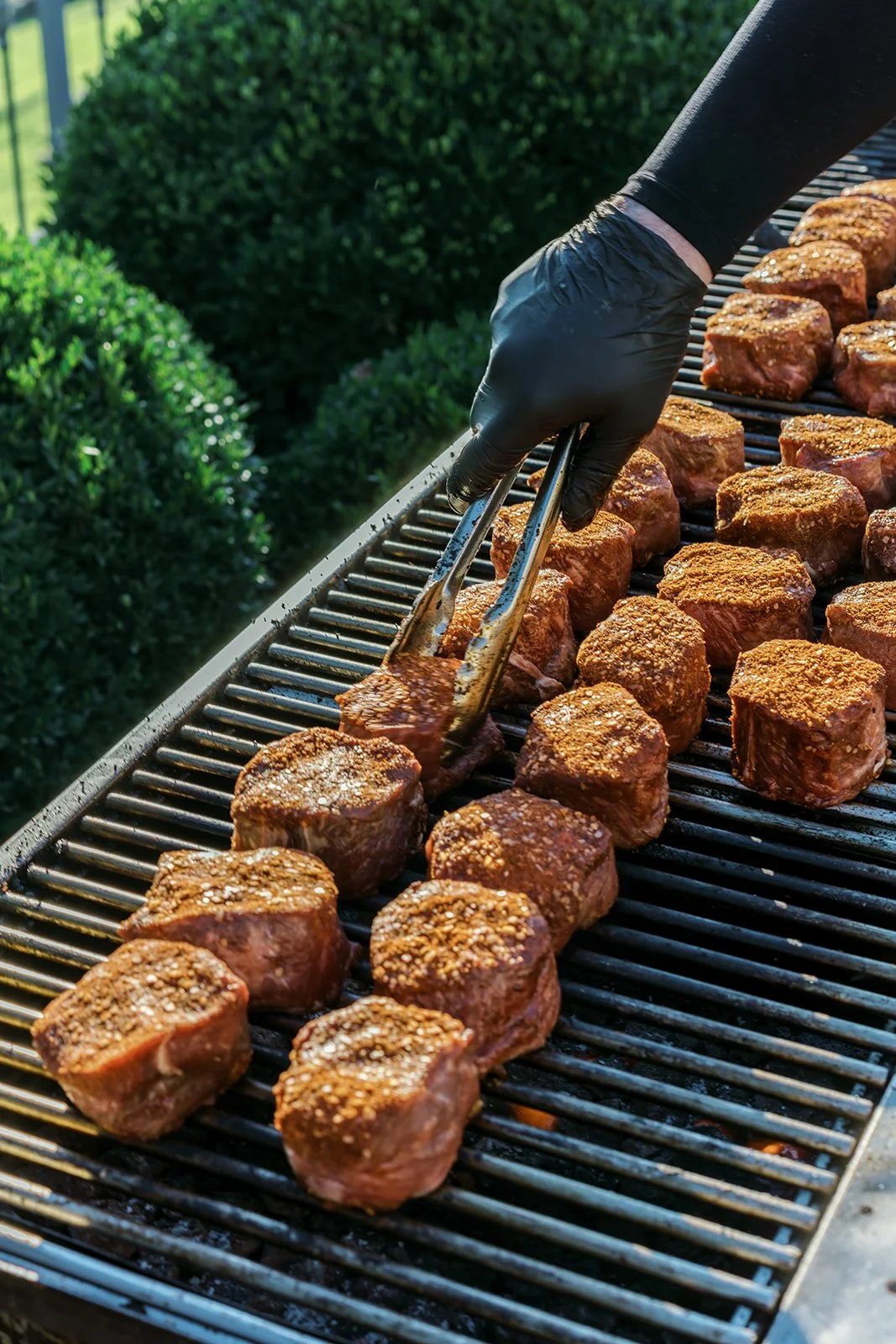
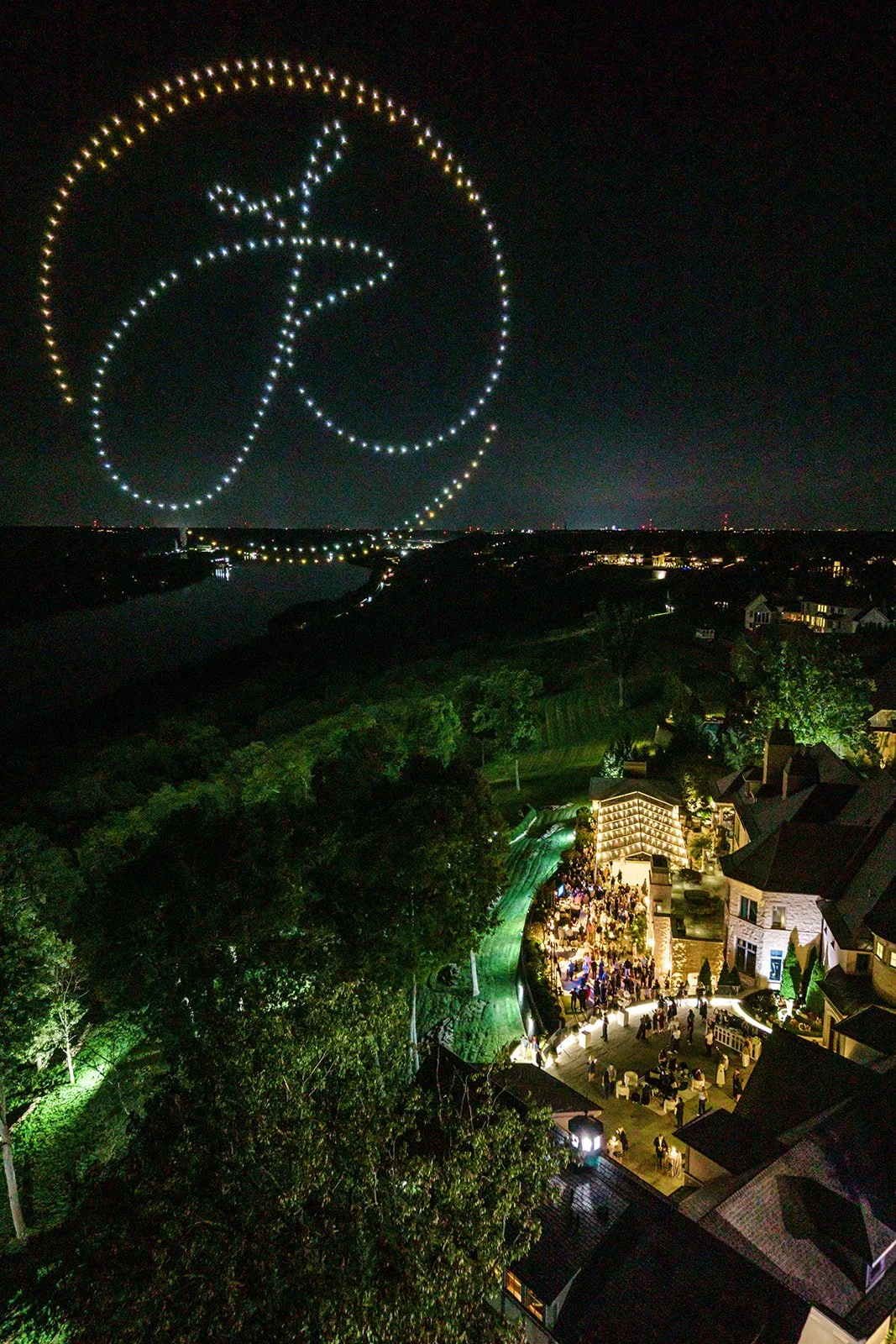
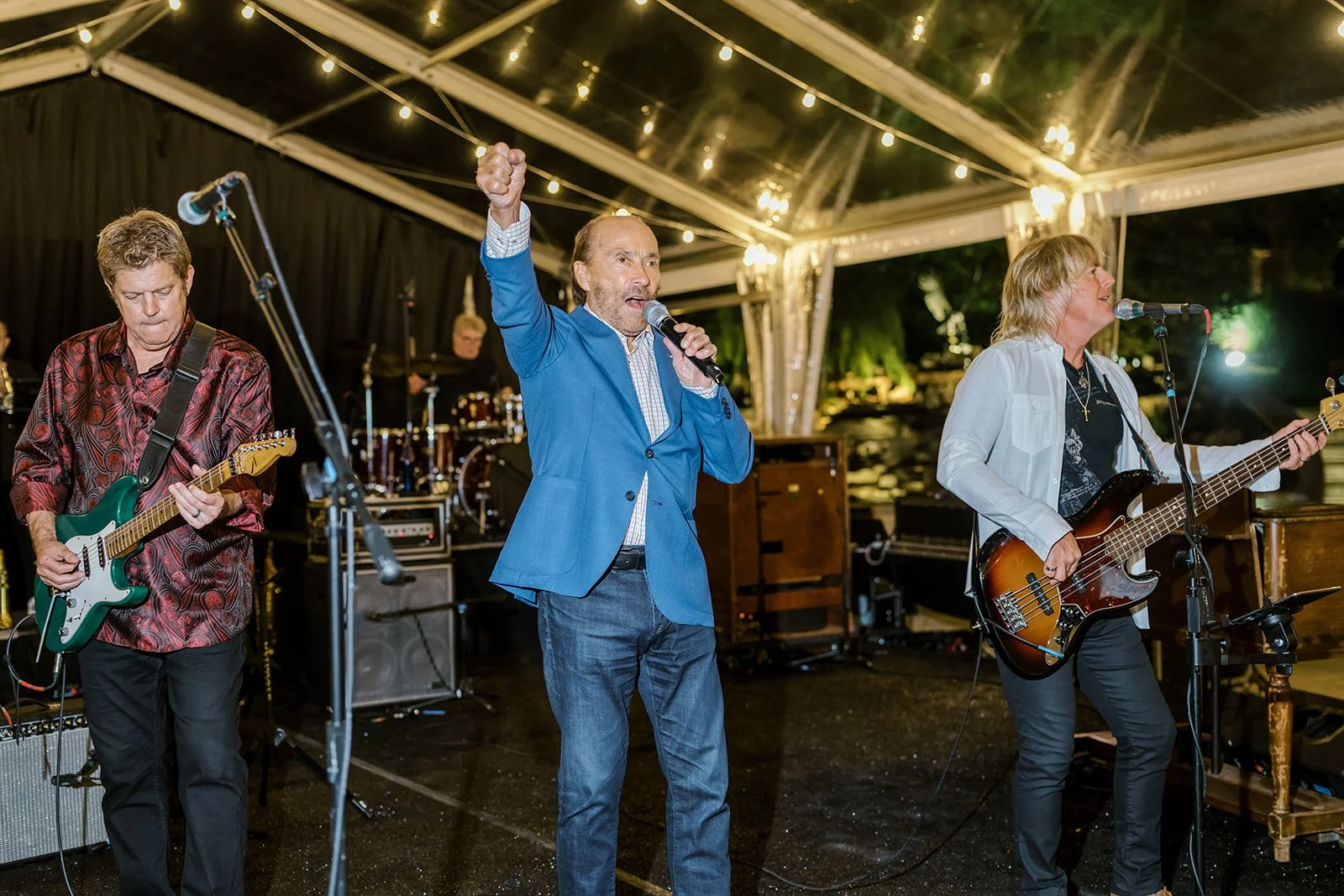
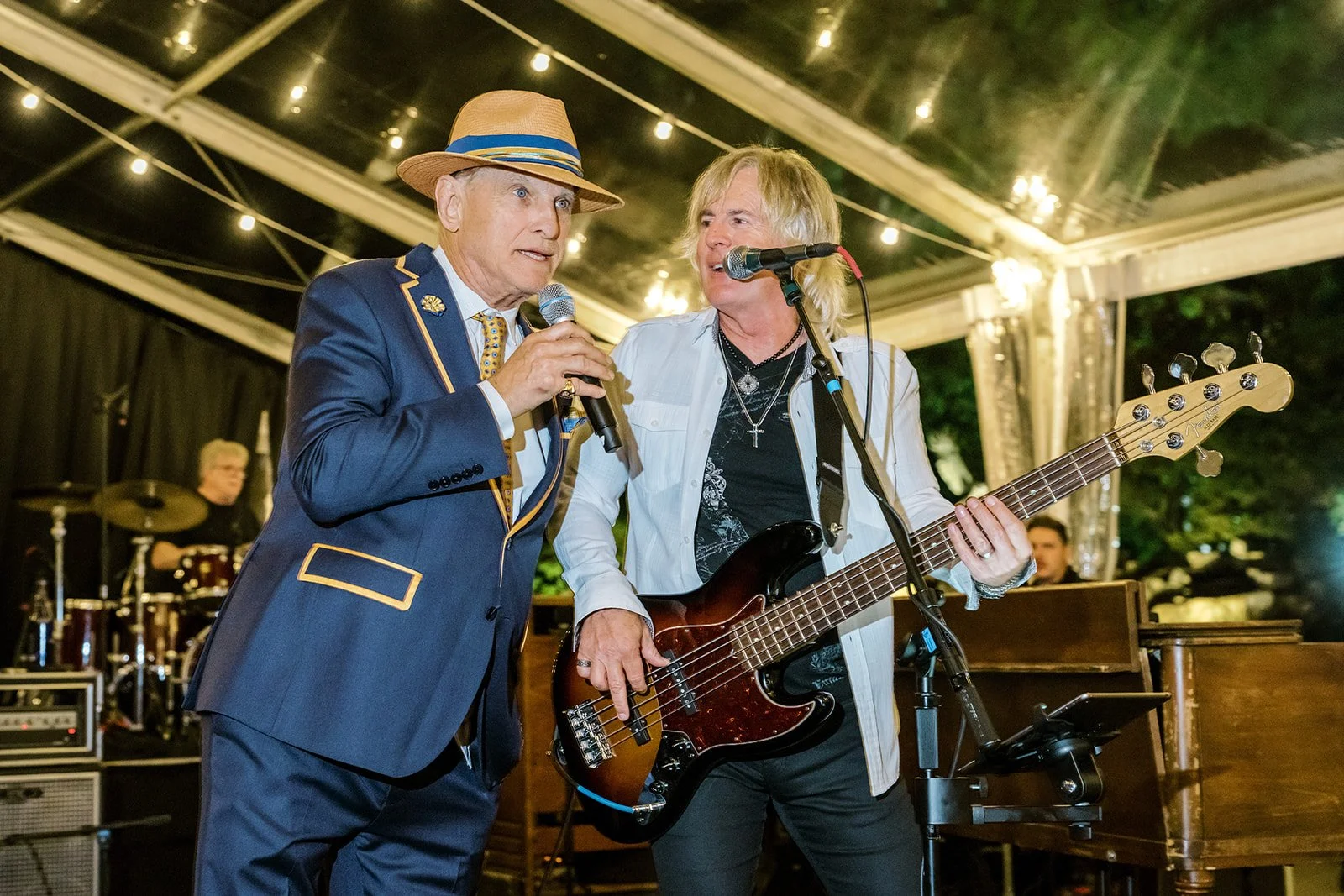
Through a combination of advocacy, direct backing, and community partnerships, the Jeff Ruby Foundation champions long-term, systemic change, including support for initiatives that help young people successfully transition into independent, stable lives. Ultimately, the Jeff Ruby Foundation is committed to creating a world where every child is surrounded by dignity, compassion, and opportunity.
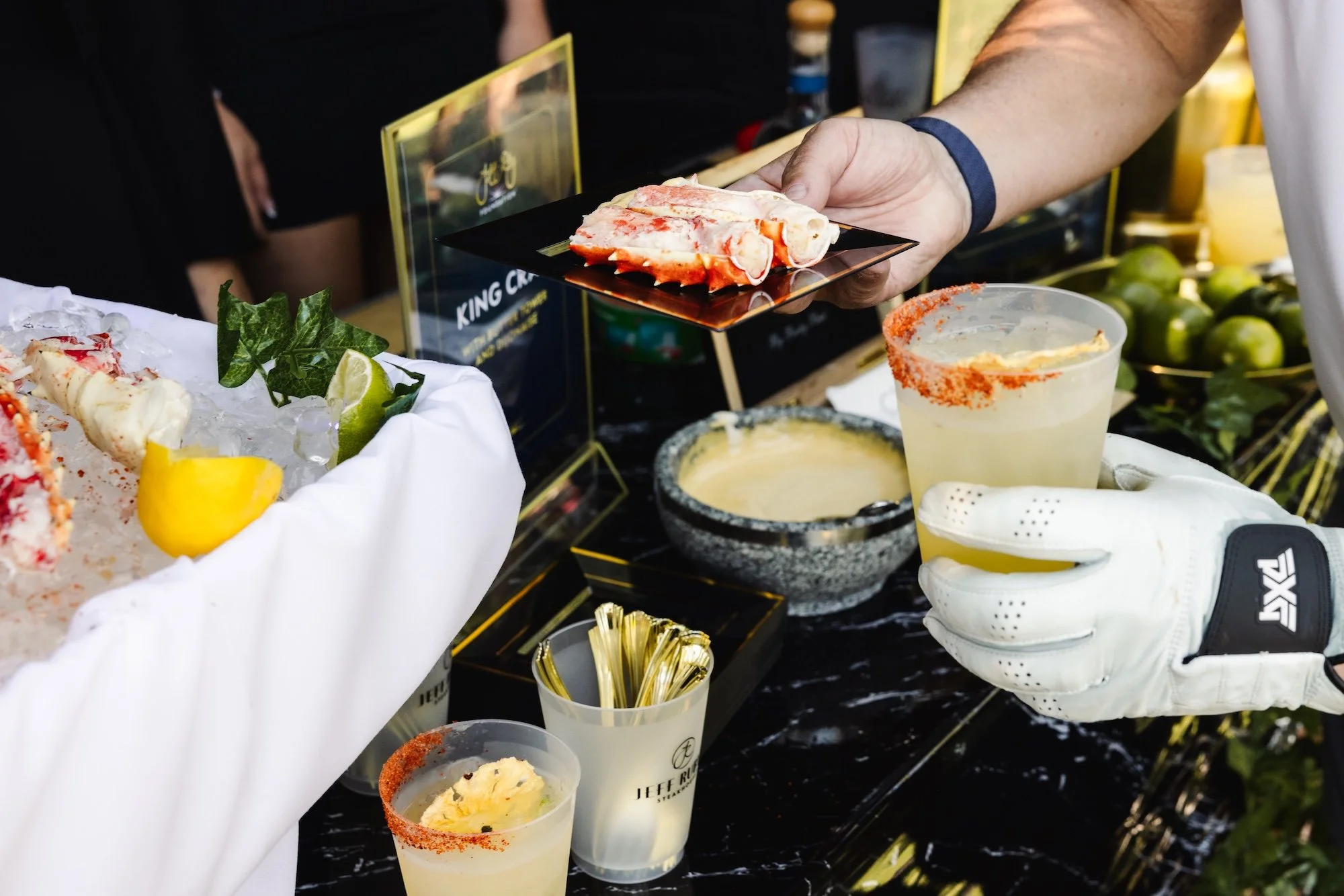
On Sept. 28, the foundation hosted its third annual Golf Classic fundraiser, raising more than $1.3M to support vulnerable youth in the communities Jeff Ruby Culinary Entertainment serves: Cincinnati and Columbus, Ohio; Lexington and Louisville, Kentucky; and Nashville, Tennessee.
“Poverty and instability remain an unfortunate reality across Cincinnati and all the communities we serve,” said Britney Ruby Miller, CEO of Jeff Ruby Culinary Entertainment. “That makes the Jeff Ruby Foundation's mission more vital than ever. We are proud to stand alongside incredible partners in every market who share our vision of providing stability, care, and loving homes for vulnerable youth.”
The Jeff Ruby Foundation partners with organizations in each of its key markets to tackle those challenges head-on. In Cincinnati, beneficiaries include Beech Acres Parenting Center, Big Brothers Big Sisters, Best Point Education & Behavioral Health, Cincinnati Youth Collaborative, Hope’s Closet, Coalition of Care, DCCH Center for Children & Families, NewPath, Bethany House Services, Family Nurturing Center, Cincinnati Public Schools, and Shoes 4 The Shoeless. Additionally, the foundation organizes employee service for the Freestore Foodbank in Cincinnati, Mid-Ohio Food Collective and Alicia’s Closet in Columbus, Second Harvest Food Bank of Middle Tennessee in Nashville, Dare to Care Food Bank and Sunrise Children’s Services in Louisville, and God’s Pantry Food Bank and The Nest in Lexington.
Led by Chairman Dillon Ruby and Executive Director Kelly Keene, the foundation was established through the philanthropic spirit of the Ruby family and is dedicated to supporting vulnerable children and families, including those impacted by the foster care system. Recognizing that many children face poverty, neglect, and instability, the foundation works to ensure they are met with care, stability, and trusted support.
“We were so happy to be back with supporters from all of the communities we serve,” said Dillon Ruby. “Every child deserves a safe, stable place to grow up. Thanks to this community's generosity, we can be there for more kids and families when they need it most.”
The need for this support has never been greater. According to the U.S. Census Bureau, nearly one in seven children in the United States lived in poverty in 2025. Among the most vulnerable are the nearly 340,000 children in foster care nationwide (National Council for Adoption), just 55% of whom graduate from high school, according to the Public Children Services Association of Ohio (PCSAO).
“The extraordinary generosity of this community is something I am always deeply grateful for,” said Kelly Keene, Executive Director of the Jeff Ruby Foundation. “With the support of our event sponsors and community partners, we’re building stronger families and helping every child reach their full potential. I’m excited about the work ahead for our organization and thankful for this unwavering support.”
The Jeff Ruby Foundation was formed in 2018 to drive systemic changes for those impacted by the foster care system. Jeff Ruby’s passion for the foundation stems from his own experience of a troubled childhood that was turned around by an influential force, giving him the guidance he needed to change his future trajectory. Since its founding, the organization has spent years researching and supporting the greatest needs of the foster care system. The foundation raises money to support partner organizations that can offer support and wraparound care for foster families.
To learn more about the foundation and the organizations it supports, visit JeffRubyFoundation.org.

In Our Innovation Era
As StartupCincy Week wraps up its tenth year, the conversation shifts from launching companies to building durable businesses. We look at how to turn Cincinnati’s existing assets into competitive advantages.
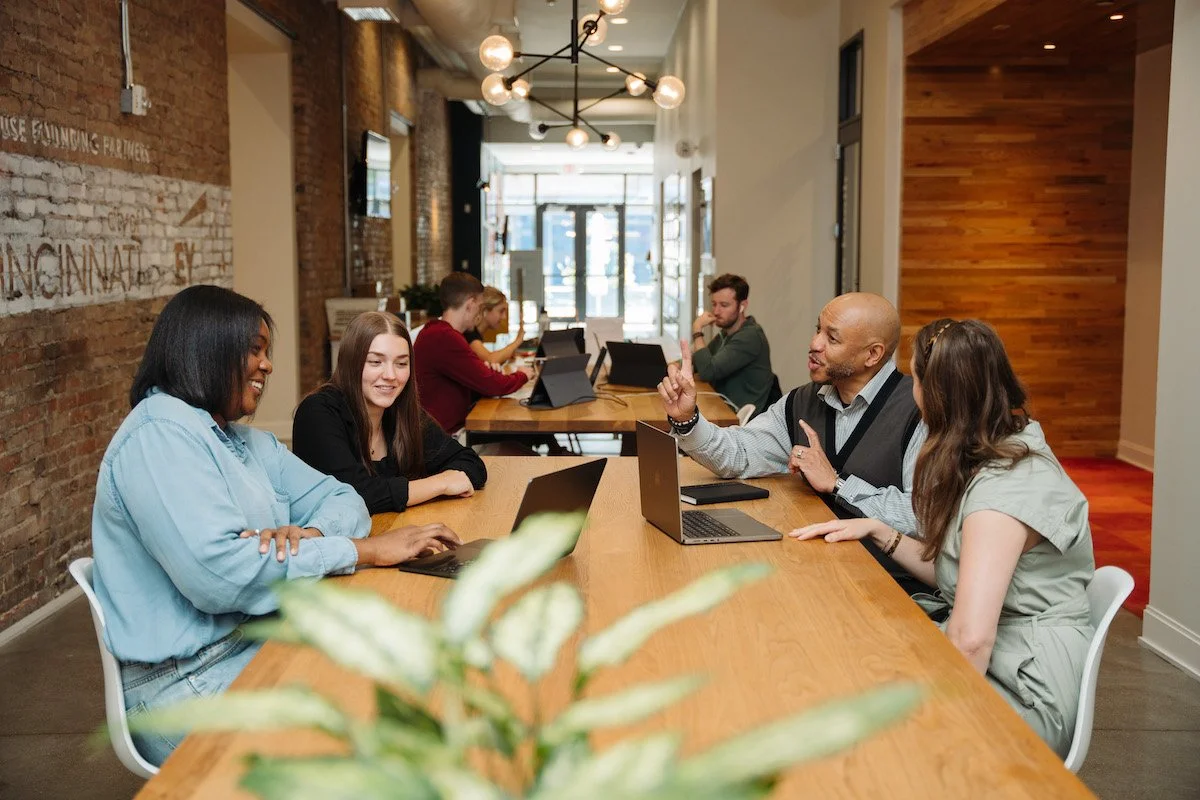
StartupCincy Week offers a revealing look at where entrepreneurship is heading next: AI everywhere, harder technology, new ways to finance growth and a stronger connection between startups and Cincinnati’s existing economic strengths.
For four days in October, founders, investors, students, corporate leaders and creators will gather for the 10th annual StartupCincy Week.
The message running through the week is clear: startup culture is growing up. The conversation is shifting from simply launching companies to building durable businesses, finding customers, deploying technology, accessing capital and turning Cincinnati’s existing assets into competitive advantages.
Here are seven trends Cincinnati People sees shaping the conversation.
AI Is Becoming Basic Business Infrastructure
Artificial intelligence is no longer treated as a futuristic specialty. It appears across StartupCincy Week in sessions on sales, finance, software development, pitch decks, business systems, privacy and intellectual property.
The question for entrepreneurs is no longer whether to use AI. It is where AI can make a company faster, smarter or more productive, and where human judgment still matters.
THE TAKEAWAY: AI literacy is becoming business literacy.
Cincinnati Has a Hard-Tech Advantage
Some of the week’s most interesting programming focuses on robotics, hardware, advanced manufacturing and physical AI.
Cincinnati does not need to imitate Silicon Valley to build important companies. Greater Cincinnati and Ohio already have engineering talent, manufacturers, research universities, supply chains and potential corporate customers. The opportunity is to turn those legacy strengths into next-generation businesses.
THE TAKEAWAY: Cincinnati’s next breakout company may come from a factory floor or laboratory, not just a laptop.
3. Universities Are Becoming Startup Factories
The University of Cincinnati and its 1819 Innovation Hub appear throughout the agenda in conversations about talent, technology transfer and commercialization.
Universities are increasingly expected not only to educate students and conduct research, but also to help turn ideas and intellectual property into companies. StartupCincy Week’s student programming reinforces the point by giving young founders direct access to the entrepreneurial ecosystem.
THE TAKEAWAY: The distance between campus and company is shrinking.
4. Venture Capital Is Only One Path
Startup culture once seemed to have a standard playbook: raise venture capital, scale quickly and pursue a large exit. This year’s agenda presents more options, including traditional lending, microloans, grants, crowdfunding, bootstrapping and franchising.
A strong entrepreneurial economy needs high-growth technology companies, but it also needs profitable companies that employ 10, 50 or 100 people.
THE TAKEAWAY: Success does not require every entrepreneur to build the same kind of company.
5. The Line Between Startup and Small Business Is Blurring
Food entrepreneurs, retailers, creatives, restaurants and franchise operators appear alongside technology founders.
Small companies can now access automation, analytics, sophisticated marketing and software capabilities that once required much larger organizations. At the same time, startups increasingly build products for traditional businesses.
THE TAKEAWAY: The future of entrepreneurship may matter as much on Main Street as it does in a venture-capital portfolio.
6. Storytelling Is Becoming More Valuable, Not Less
One of the unexpected themes in an AI-heavy agenda is storytelling.
Founders still have to convince someone to buy a product, join a company, invest money or believe in an idea. As technology makes it easier for everyone to produce more content, clarity, credibility, originality and trust become more valuable.
THE TAKEAWAY: In an AI economy, being unmistakably human may become a competitive advantage.
7. Cincinnati Itself Can Become the Platform
Perhaps the biggest idea of the week is bigger than any individual startup.
Sessions examine city government as a testing ground for innovation, compare Ohio’s entrepreneurial ecosystems and connect startups with economic development, talent and placemaking.
Cincinnati’s competitive advantage comes from connecting institutions that already exist: universities producing talent and research, corporations becoming customers, investors providing capital, entrepreneurs creating companies and a region capable of attracting people who want to build here.
THE TAKEAWAY: Cincinnati does not need more disconnected startup programs. It needs a stronger flywheel connecting the assets it already has.
From Startup City to Builder City
StartupCincy Week is celebrating its 10th anniversary at a moment when Cincinnati’s entrepreneurial conversation appears to be changing.
A decade ago, much of the work centered on creating an ecosystem: accelerators, investors, gathering places, networks and visibility. The next phase is about what that ecosystem produces.
Cincinnati already has globally significant consumer companies, major health systems, universities, manufacturers, designers, marketers, engineers and investors. The challenge now is connecting those assets so more ideas become companies, more companies find customers and capital, and more successful businesses remain in the region.
The first decade of StartupCincy helped build a startup community. The opportunity for the next decade is bigger: turn that community into an economic engine.

Driving Ahead
Jeff Wyler started with $10,000, one Chevrolet dealership, and a customer who finally walked through the door on Day Four. The growth is incredible, but the succession story is remarkable.
When Jeff Wyler opened his first Chevrolet dealership on Nov. 1, 1973, business wasn’t exactly booming.
For four days, not a single customer walked through the door. Then someone finally did.
“I wasn't going to let that person out,” Wyler recalls with a laugh. “We sold him a car.”
By the end of that first month, the fledgling dealership had sold 22 vehicles.
More than five decades later, that one-showroom operation has grown into the Jeff Wyler Automotive Family, with 30 franchises, 60 dealerships in more than 35 locations and multiple collision centers.
That journey from a small Chevrolet store to one of the region's most recognizable family businesses is being celebrated in 2026 as the Jeff Wyler Family is inducted into the Goering Center Family Business Hall of Fame.
But the numbers tell only part of the story.
The more enduring lesson may be how an entrepreneur learned to build a company that could grow beyond its founder and how a family learned to have the difficult conversations necessary to prepare that company for another generation.
Starting With $10,000 and an Entrepreneurial Bet
Wyler didn't grow up surrounded by entrepreneurs. In fact, he says he was in college before he even knew what the word meant.
“I was a freshman or a sophomore in college before I heard the word entrepreneur,” Wyler recalls. “I had never heard it before.”
His father and stepfather worked for large corporations. Owning a business wasn't part of the world he knew growing up.
But entrepreneurship would ultimately define much of his life. Wyler grew up in subsidized housing in Greenhills. In 1973, he scraped together $10,000 to open that first Chevrolet dealership.
In the beginning, being the owner meant doing virtually everything.
“You’re the daily operator and you’re there opening the door, closing the door, working in the service department, working in the sales department,” Wyler says.
Eventually, however, an entrepreneur who wants to grow faces a different challenge. He has to stop doing everything himself.
“As you grow, then you have to be able to entrust people to do their jobs,” Wyler says.
That transition helped turn a dealership into an enterprise.
Growing Up in the Family Business
For Jeff’s son, David Wyler, the dealership was part of childhood. His earliest memories include spending Saturdays there with his father, helping prepare for sales meetings and simply being around the employees.
Then, as a high school senior in 1991, David sold his first car, a Chevrolet Lumina. He was hooked.
But Jeff Wyler says an important distinction helped shape the family's approach to the next generation: his children weren't expected to join the company. They wanted to.
That included David and Jeff’s son-in-law, Scott, who joined the business more than three decades ago and brought legal and finance experience to the organization. Today, David and Scott have assumed significant leadership responsibilities as the company moves into its next chapter.
For Jeff, that transition required perhaps one of the most difficult skills for any successful founder: letting go.
The Conversation Every Family Business Needs to Have
About a decade ago, the Wyler family began seriously addressing succession.
They had seen what could happen to family businesses when those conversations didn't take place early enough. So they started talking.
Not all of those discussions were comfortable.
“Some of these conversations that we had years ago, they probably weren't easy,” David says. “They probably weren't comfortable for everyone.”
But avoiding the subject would have been worse.
David credits his father with being willing to take the first step and clearly communicate with his children about what would happen in the future.
“You know, that's the one thing, being able to communicate as a family and everybody knowing their role moving forward to Gen Two or Gen Three,” he says.
It's a lesson with implications far beyond the automotive industry. Founders spend decades thinking about how to start, operate and grow businesses. Preparing those businesses to thrive without them requires a different kind of leadership. It means creating a succession plan before it's needed. It means giving the next generation genuine responsibility.
And it means having conversations about ownership, leadership and expectations while everyone is still able to participate in them.
Building More Than a Business
The Jeff Wyler story also demonstrates another way family businesses can create impact: by creating entrepreneurs themselves.
Over the years, employees who learned the business inside the Wyler organization have gone on to start companies and become automobile dealers themselves. For a man who once didn't know anyone who owned a business, that ripple effect carries special meaning.
Wyler says entrepreneurship turned out to be “a wonderful way to live your life,” and helping other people pursue that path became part of his own experience. After more than 50 years, his perspective on what he built also sounds less like a balance sheet and more like a life story.
“The fact that I’ve been able to start here 50 years ago and all the wonderful people I've met, got to do a lot of things that everybody would really want to do and been able to do it with a smile and have the support of my family.”
That’s an appropriate legacy for the Goering Center Family Business Hall of Fame.
The Jeff Wyler Automotive Family began with $10,000, one Chevrolet dealership and an owner who waited four days for his first customer. The bigger accomplishment may be that, more than half a century later, the company is preparing not for its ending, but for its next generation.
That is the difference between building a successful business and building a family business designed to last.

I’ll Drink to That
As the 50th Anniversary of Oktoberfest Zinzinnati returns to the riverfront, Ohio’s $3.4 billion craft beer economy is confronting declining consumption, rising costs and a fundamental change in what it means to be in the beer business.
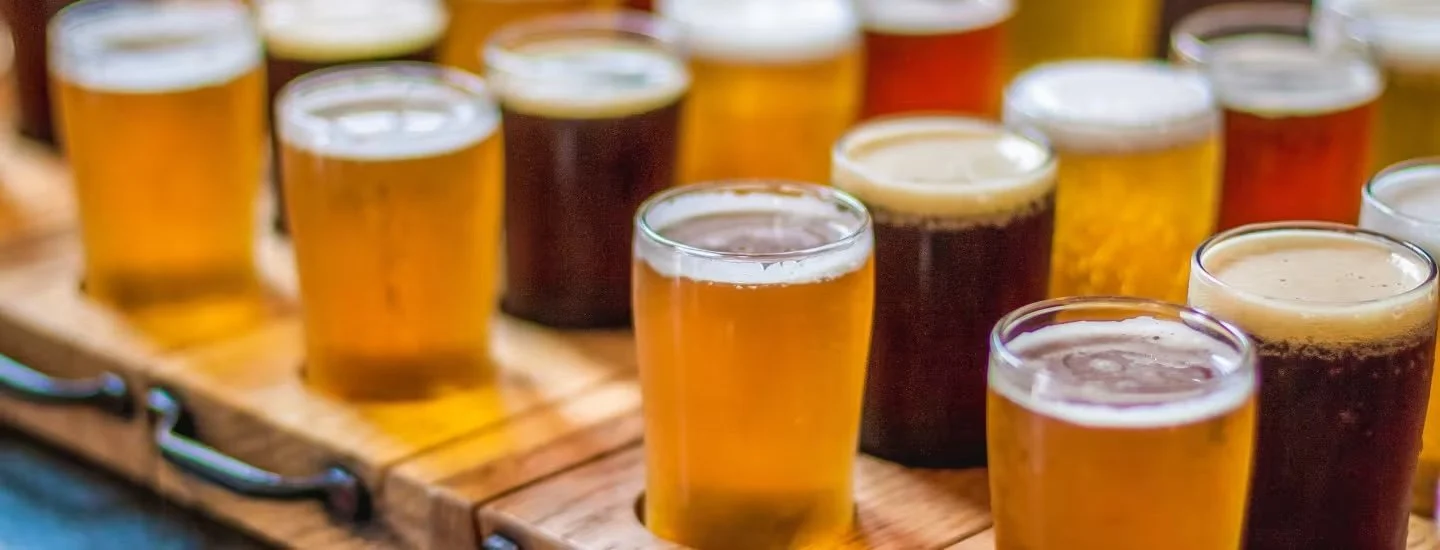
THE BUSINESS OF OHIO BEER BY THE NUMBERS
$3.37 billion: Economic impact of Ohio craft beer in 2025
#6: Ohio’s national ranking for craft beer economic impact
403: Craft breweries operating in Ohio in 2025
Nearly 1.3 million barrels: Craft beer produced in Ohio in 2025
#4": Ohio’s national ranking for craft beer production
$71.8 billion: Economic contribution of craft beer nationally in 2025
415,000+: U.S. jobs supported by the craft brewing industry
13.4%": Craft beer’s approximate share of U.S. beer volume in 2025
Nearly 25%: Craft beer’s share of U.S. beer retail dollars
4% decline": Change in U.S. craft beer production in 2025
5.7% decline: Change in the overall U.S. beer market by volume
800,000+:Attendance at last year’s Oktoberfest Zinzinnati
50 years: Oktoberfest Zinzinnati’s history in Cincinnati
For the next four days, Cincinnati will make a compelling argument that beer is about more than what’s inside the glass.
Oktoberfest Zinzinnati returns to Sawyer Point and Yeatman’s Cove, Sept. 17-20, marking the 50th anniversary of a festival. More than 800,000 people attended last year’s celebration, making Cincinnati’s event the largest Oktoberfest celebration in the United States.
There will be beer, of course.
But there will also be food, music, costumes, competitions, tourists, hotel stays, and thousands of people gathering together along Cincinnati’s riverfront.
That’s an apt metaphor for what’s happening to the beer business itself. While the American beer industry is getting smaller, the business around beer is getting more interesting.
Ohio Beer Is a $3.4 Billion Business
Craft beer isn’t a niche Ohio industry anymore.
According to the Brewers Association’s latest state data, Ohio’s craft beer industry generated approximately $3.37 billion in economic impact in 2025, sixth highest among the 50 states.
Ohio had 403 craft breweries and produced nearly 1.3 million barrels of craft beer, ranking fourth nationally in production. That puts Ohio ahead of most of the country in an industry that contributed approximately $71.8 billion to the U.S. economy in 2025 and supported more than 415,000 jobs nationwide.
Those numbers include more than beer coming out of fermentation tanks. The economic impact extends through distributors and retailers and includes the food, merchandise and other products sold at breweries and brewpubs.
In Cincinnati, that economic ecosystem is particularly visible.
Breweries have become neighborhood anchors, tourism destinations, restaurants, event spaces, entertainment venues and gathering places.
Beer is the product, but increasingly, the experience is the business.
The Craft Beer Boom Has Grown Up
For years, the craft beer story was about growth.
More breweries. More brands. More taps. More styles. More production.
But that era is changing.
Craft beer production in the United States declined approximately 4 percent in 2025, according to the Brewers Association, following several years of contraction.
The broader beer market performed even worse, declining approximately 5.7% by volume. Yet something interesting happened inside those numbers.
Craft beer actually increased its share of the beer market slightly. Craft represented roughly 13.4% of U.S. beer volume in 2025 but captured nearly 25% of retail beer dollars.
That’s a significant distinction.
Consumers may be drinking less beer, but they’re still willing to spend for beer they perceive as distinctive, local or worth experiencing.
The Ohio Craft Brewers Association describes the change as craft beer moving from a pioneering industry into an established one. That’s a more useful way for businesses to think about what’s happening.
Craft beer didn’t disappear. It matured.
403 Breweries Means 403 Small Businesses
There is another important number behind Ohio’s beer economy: 403. That’s how many craft breweries the Brewers Association counted in Ohio in 2025.
Each one represents a business that must pay employees, buy ingredients, heat and cool buildings, maintain equipment, market products and convince customers to keep coming back.
And the economics have become harder. Raw materials cost more. Labor costs more.
Energy costs more. Real estate costs more. Tariffs and supply-chain disruptions create additional uncertainty. Consumers are also watching discretionary spending more carefully.
In 2025, for the first time, brewery closings outnumbered brewery openings in Ohio, according to the Ohio Craft Brewers Association. That isn’t necessarily evidence that Ohioans have stopped loving craft beer.
It may instead be evidence that making great beer is no longer enough to make a great beer business.
Today’s successful brewery also needs expertise in hospitality, finance, marketing, programming, events and customer experience.
Great beer has become the price of admission. What happens around the beer increasingly determines whether customers return.
The Taproom May Be More Important Than the Six-Pack
Consider the difference between buying beer at a grocery store and drinking one at a neighborhood brewery.
A six-pack competes primarily on product, price, packaging and shelf space. A taproom can sell something much larger – whether that’s dinner, live music, trivia, a running club, or a special event – a connection to a community.
The Brewers Association found that craft beer’s retail dollar sales proved more resilient than production volume partly because consumers continue shifting toward higher-value on-site purchases at taprooms and brewpubs.
That makes breweries part of a much larger trend in consumer spending. People aren’t simply buying product, They’re buying experiences worth leaving home for. Few cities demonstrate that better than Cincinnati.
Cincinnati Was Built for the Beer Experience
Beer isn’t simply another consumer category here. It’s part of Cincinnati’s identity.
The city’s German immigrant history helped create a brewing culture that became intertwined with its neighborhoods, architecture and economy.
Today’s brewery scene has translated that history for a new generation. The result is an unusually marketable combination: authentic history plus contemporary hospitality.
And once a year, Oktoberfest Zinzinnati turns that combination into a massive consumer event. Last year’s festival drew more than 800,000 people. To put that number into perspective, that’s roughly equivalent to filling Paycor Stadium more than a dozen times.
Those visitors don’t simply buy beer – they park, they eat, they shop, they stay in hotels – creating an influx of consumers in Cincinnati’s urban core.
That makes Oktoberfest more than a beer festival, it makes it a tourism, hospitality, sponsorship and economic-development platform.
Sources: Brewers Association, Ohio Craft Brewers Association and Oktoberfest Zinzinnati. 2025 industry data represents the most recent available figures.

Who is WhoDey Nation?
Take a look at the business behind Cincinnati’s biggest fan base! Some 1.3 million local people calling themselves, but how does Who Dey Nation drive the local economy.
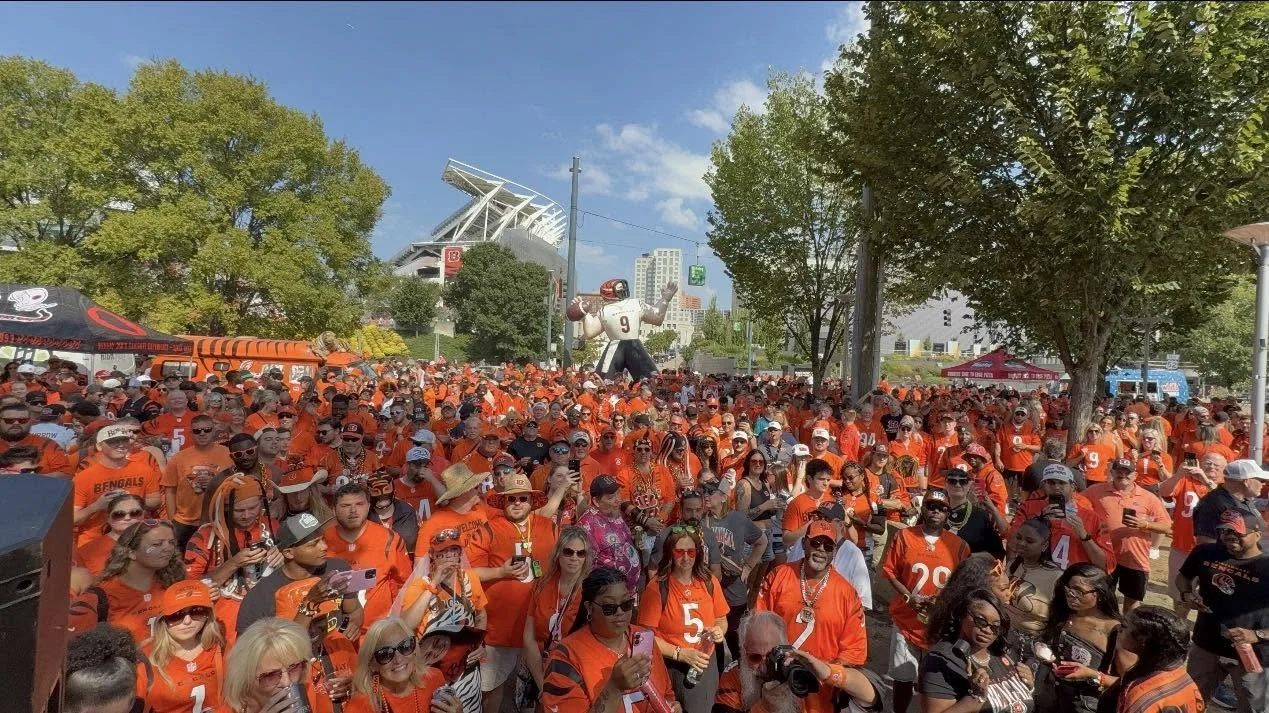
Photo: Bengal Jim’s “Before the Roar” Tailgate Experience
WhoDey Nation by the Numbers
1.31 million
Greater Cincinnati adults who identify as Bengals fans
67.4%
Percentage of the Greater Cincinnati adult market that follows the Bengals
Nearly 696,000
Avid Bengals fans
Nearly 286,000
Adults who attend Bengals games
Nearly 50/50
Gender split among Bengals game attendees
63.2%
Game attendees who purchase NFL logo apparel
73.8%
Bengals attendees who also attend Reds games
2.5X+
Greater representation of $250,000+ households among Bengals attendees
compared with Greater Cincinnati adults overall
3X+
Greater likelihood that Bengals attendees follow FC Cincinnati
Nearly 4X
Greater likelihood that Bengals attendees are Cincinnati Cyclones fans
Nearly 3X
Greater likelihood that Bengals attendees visit Over-the-Rhine
2X+
Greater likelihood that Bengals attendees go to paid concerts
2X+
Greater likelihood that Bengals attendees attend Broadway in Cincinnati shows
85% more likely
Bengals attendees who spend $5,000 or more annually on vacations compared with the overall market
Nearly 60%
Avid Bengals fans who make charitable donations
Source: Nielsen Scarborough PRIME Lingo, Cincinnati, OH, 2026 Release 1. February-July 2025/September 2025-February 2026. Analysis prepared by Game Day Communications.
There may be no more powerful consumer brand in Greater Cincinnati than two words: Who Dey.
The Bengals host the Tampa Bay Buccaneers Sept. 13 in the annual “Open in Orange” game, beginning a home schedule filled with marquee matchups and national television appearances. But one of the most interesting Bengals stories this season may have nothing to do with Joe Burrow's passing yards, Ja'Marr Chase's catches or the AFC North standings.
It is the business of Who Dey Nation.
New Nielsen Scarborough consumer research commissioned by Game Day Communications provides a detailed look at the size, demographics, interests and spending habits of Bengals fans.
The research identifies approximately 1.31 million Greater Cincinnati adults as Bengals fans, representing 67.4% of the adult market. Within that enormous audience are approximately 696,000 avid Bengals fans and 286,000 adults who attend Bengals games.
That's not simply a fan base – It is one of Cincinnati's largest consumer markets.
And the closer fans get to Paycor Stadium, the more valuable that audience becomes to businesses.
The Bengals Ticket Buyer May Surprise You
Among avid Bengals fans, about 61% are men. But among people who actually attend Bengals games, the gender gap nearly disappears, with men representing approximately 52% of attendees.
The stadium audience also becomes younger. Millennials are about 50% more likely to be represented among Bengals attendees than they are among Greater Cincinnati adults overall.
At the same time, adults 70 and older are substantially less represented among game attendees.
Education rises too. Adults with bachelor’s degrees are more than 80% more likely to be represented among Bengals attendees than in the overall Cincinnati adult population.
Then comes perhaps the most important number for marketers.
People living in households earning $250,000 or more are more than two-and-a-half times as likely to be represented among Bengals game attendees as they are in the Greater Cincinnati adult population overall.
That changes the business conversation.
The Bengals fan watching every Sunday and the Bengals customer buying a seat at Paycor Stadium aren't necessarily the same consumer.
Paycor Stadium Is Becoming a More Premium Experience
That audience profile comes at an important time for the Bengals. The 2026 season brings extensive improvements to Paycor Stadium as part of the multi-year renovation program following the new stadium lease between Hamilton County and the Bengals. The improvements include transformed club lounges and suites, upgraded concessions, renovated restrooms, a redesigned Bengals Pro Shop, improved wayfinding and infrastructure improvements.
The Bengals are also expanding premium inventory, including approximately 2,000 new club seats. The people attending Bengals games aren’t simply passionate football fans. They are disproportionately represented among Cincinnati’s affluent, educated and experience-driven consumers. That makes Paycor Stadium valuable not only to the Bengals, but also to companies trying to reach those consumers.
Bengals Fans Are Cincinnati Sports Fans
One of the most striking findings is how much Bengals fandom overlaps with Cincinnati's other sports properties.
Among Bengals game attendees, 73.8% also attend Cincinnati Reds games. Bengals attendees are also more than three times as likely as the average Cincinnati adult to follow FC Cincinnati and nearly four times as likely to be Cincinnati Cyclones fans.
That suggests an important sports-business opportunity. The competition isn't necessarily Bengals versus Reds versus FC Cincinnati.
The bigger opportunity is building relationships with Cincinnati residents who love live sports and live experiences.
A highly engaged Cincinnati sports fan can buy Bengals tickets in the fall, Reds tickets in the summer, FC Cincinnati tickets throughout the soccer season and Cyclones tickets in the winter.
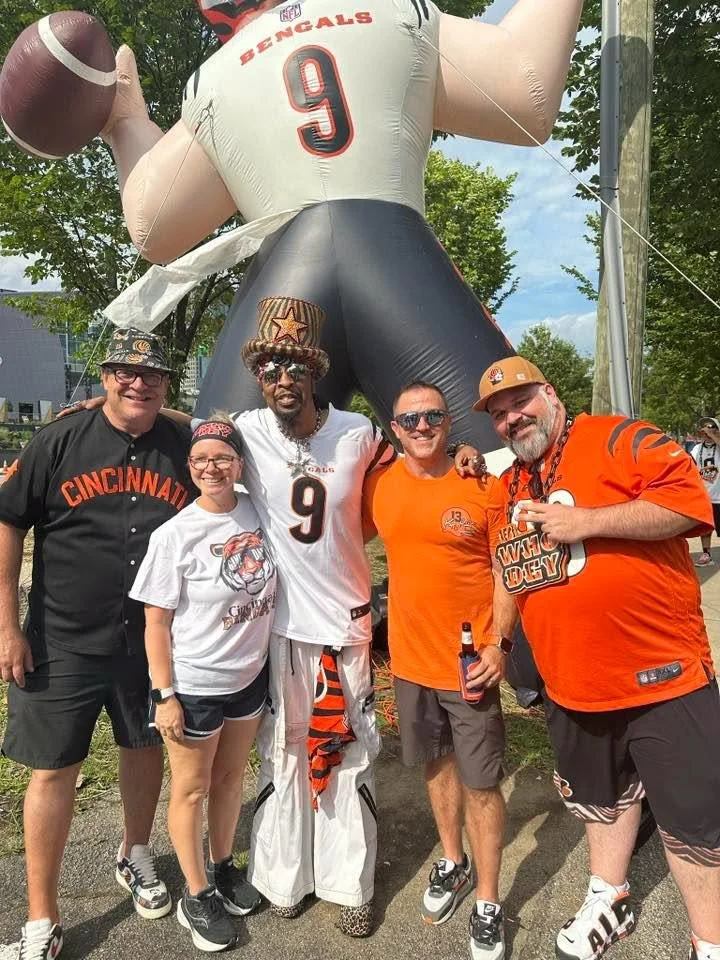
Photo: Bengal Jim’s “Before the Roar” Tailgate Experience
Who Dey Nation Is a Merchandise Business
The Bengals logo is also big business. Nearly 44% of avid Bengals fans purchase NFL logo apparel. Among people who attend Bengals games, that number climbs to 63.2%, meaning nearly two out of every three attendees purchase NFL-branded clothing. And their retail activity goes far beyond jerseys and hats.
Bengals attendees are significantly more likely than the average Cincinnati adult to shop at major retailers including Target, Costco, Best Buy and The Home Depot. They're also more likely to visit Cincinnati Premium Outlets and Kenwood Towne Centre.
Perhaps most interesting for Cincinnati's urban core, Bengals attendees are nearly three times as likely as the average local adult to visit Over-the-Rhine.
That's an important economic connection. The Bengals economy doesn't begin at kickoff or stop when fans leave Paycor Stadium. It extends into restaurants, bars, retail stores, parking facilities, entertainment districts and hotels throughout the region.
The Tailgate Is a Marketplace
Some Bengals consumer behaviors probably won't surprise anyone.
Nearly 70% of avid fans grill or cook outdoors.
Sports-bar usage increases as Bengals engagement increases.
Pizza restaurants are popular.
Skyline Chili has a strong connection with the audience.
And beer remains part of the football experience.
But even within those categories, the research reveals important differences.
Michelob Ultra performs strongly across Bengals fans, avid fans and game attendees. Blue Moon is particularly popular with the stadium audience, with Bengals attendees more than two-and-a-half times as likely as the average Cincinnati adult to consume the brand.
White Claw tells an even more interesting story. Its popularity is relatively ordinary among avid Bengals fans but jumps dramatically among people who attend games, who are more than twice as likely as the average Cincinnati adult to consume it. High Noon also performs strongly across the Bengals audience.
For marketers, the lesson is simple: there isn’t one Bengals consumer. Different segments of Who Dey Nation have different tastes, habits and purchasing power.
The Bengals Fan Is Also a Traveler
The Bengals travel to Madrid to play the Atlanta Falcons Nov. 8, and the consumer research suggests international football may be a particularly good fit for Cincinnati's most engaged fans.
Bengals attendees are 85% more likely than the average Cincinnati adult to spend $5,000 or more annually on vacations. They’re also more than twice as likely to use Hilton properties and nearly twice as likely to fly United Airlines. Foreign travel, premium hotels and all-inclusive resorts become more common as Bengals engagement increases.
That makes the Bengals audience attractive to airlines, hotels, destinations, credit cards, luggage companies and other travel brands.
And Madrid provides an opportunity that didn't exist a generation ago: Cincinnati businesses activating around Who Dey Nation thousands of miles away from Cincinnati.
Football Fans Are Live-Event Fans
Here's another finding that challenges stereotypes.
People attending Bengals games don’t spend all their entertainment money on sports. They’re more than twice as likely as the average Cincinnati adult to attend paid concerts. They’re also more than twice as likely to attend Broadway in Cincinnati series performances and approximately 90 percent more likely to attend live theater.
That makes the Bengals attendee more than a football consumer. They’re a live-experience consumer. That’s significant for Cincinnati's concert venues, theaters, festivals, restaurants, museums and attractions.
The household willing to spend hundreds or thousands of dollars on Bengals experiences may also be buying concert tickets, Broadway subscriptions, restaurant dinners and weekend trips. Sports, arts, dining and travel are all competing for a portion of the same experience economy.
Who Dey Nation Can Be a Force for Philanthropy
The Bengals platform also reaches deeply into Cincinnati's philanthropic community.
Nearly six in 10 avid Bengals fans are charitable donors.
Military and veterans causes perform particularly well across the Bengals audience. Healthcare, education and social-service organizations also connect strongly with portions of Who Dey Nation.
That creates opportunities for sponsors and nonprofits to think beyond traditional sports marketing. For Cincinnati’s corporate community, that combination of sports, consumer engagement and philanthropy can be especially powerful.
The NFL has evolved into one of America's most sophisticated entertainment businesses, and Cincinnati provides a fascinating example of how far the economics extend beyond television ratings and ticket sales.
Every Bengals home game creates a business opportunity for restaurants, bars, retailers, hotels, sponsors, advertisers, media companies and entertainment venues.
But the research points to something bigger – There isn’t one Who Dey Nation.
There is the enormous universe of approximately 1.31 million Bengals fans.
Within it is an avid core of nearly 700,000 people.
And within that group is an especially attractive audience of approximately 286,000 Bengals game attendees who tend to be younger, more affluent, more educated and highly interested in sports, dining, shopping, travel and live entertainment.
That distinction matters to any company trying to market through Cincinnati sports. Don't simply ask whether your customer is a Bengals fan. Ask what kind of Bengals fan they are, what else they love and where else they spend their money.
Because in Cincinnati, understanding Who Dey Nation may be one of the most valuable pieces of consumer intelligence a business can have.
– Jackie Reau

Cool Customers
With the spending power of Cincinnati’s arts patrons, arts sponsorship is more than corporate citizenship. It can be smart business.
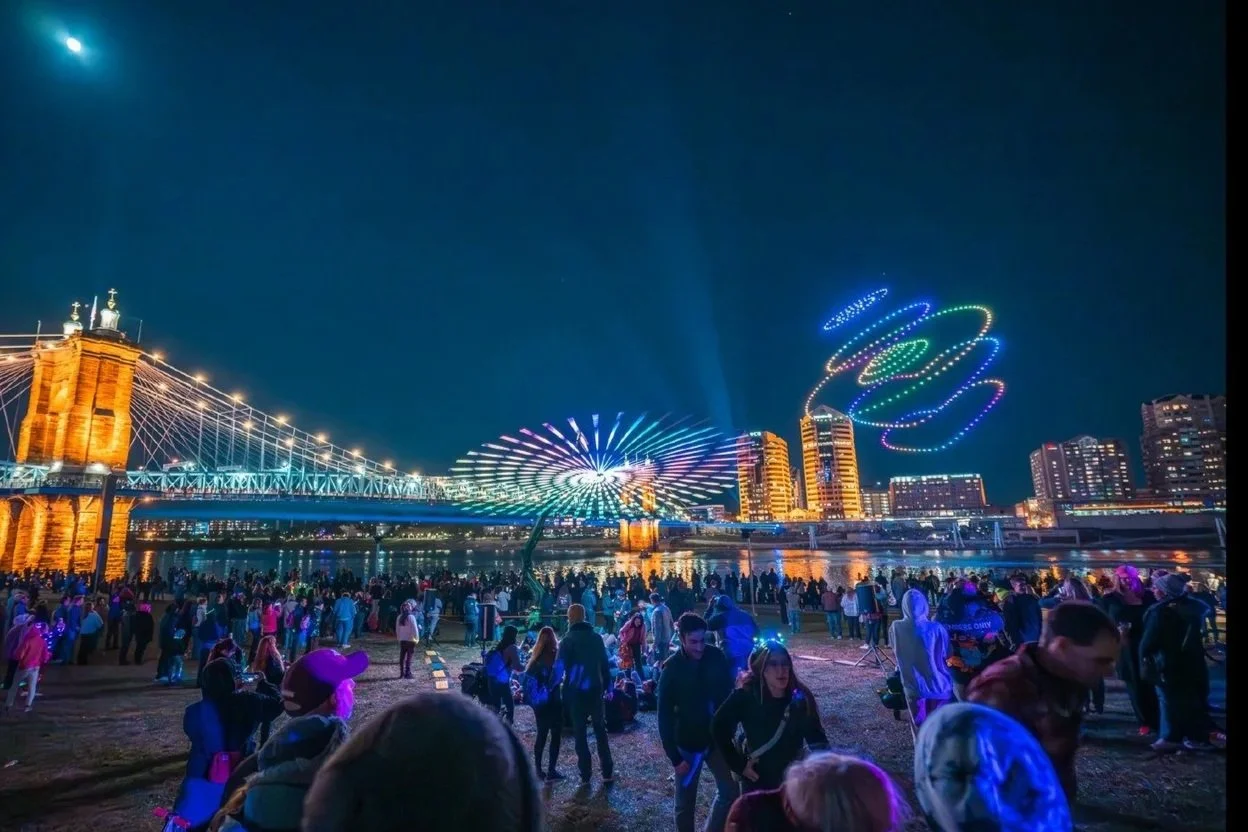
Cincinnati companies have supported the arts for generations because it is good for the community.
But there is another reason to invest: the people who engage with the arts are attractive consumers.
An Audience Intelligence Study created by Game Day using Nielsen MRI-Simmons consumer data for Greater Cincinnati examined the demographics, lifestyles, media habits and purchasing behaviors of local arts patrons and philanthropists.
The takeaway for marketers is compelling. Arts audiences include affluent, educated and active consumers who dine out, travel, invest, buy cars, consume media, volunteer and give.
They Have Spending Power
Among the arts patrons studied, 33% have household incomes of $150,000 to $249,999 and another 18% have incomes of $250,000 or more.
The concentration is even greater among arts philanthropists: 33% are in the $150,000 to $249,999 range and 26% are at $250,000 or more.
Affluent arts audiences
But income is only part of the story. How this audience spends its money is where the business case gets interesting.
They Dine, Travel and Participate
Arts patrons are about twice as likely as the Cincinnati market average to be upscale restaurant consumers. Arts philanthropists index at 329, or more than three times the market average.
Arts philanthropists are also more than twice as likely to be vacation big spenders, charitable donors and volunteers.
That makes arts sponsorship relevant to far more than cultural organizations. Restaurants, hospitality brands, travel companies, consumer products and retailers all have a reason to pay attention.
Think about a night at a performance or cultural event. The economic transaction doesn't necessarily begin and end with a ticket. There may be dinner, drinks, transportation, parking, shopping and entertainment. The arts can be a catalyst for consumer spending across Cincinnati.
They Buy and Invest
The audience is also attractive to higher-consideration categories.
Arts patrons significantly over-index among consumers planning higher-priced vehicle purchases.
The research also identifies affinities with premium automotive brands.
Financial services may offer an even stronger sponsorship case. Arts philanthropists index at 235 for financial planners, 283 for estate-planning services and 415 for stockbrokers.
An attractive audience for financial services. For banks, wealth managers, insurance companies, law firms and financial advisers, the arts offer access to consumers they already spend significant marketing dollars trying to reach.
They’re Younger Than You Might Think
The stereotype of the arts patron as primarily older doesn't match the audience studied.
Millennials ages 30 to 44 represent 37.7% of arts patrons, the largest generation in the profile. Gen Z adults account for another 22.8%. Together, the two generations represent more than 60% of patrons studied.
That's important for companies trying to reach their next generation of customers, employees and community leaders.
Stop Buying Logos. Start Building Experiences.
Perhaps the biggest opportunity is to rethink what an arts sponsorship actually is.
The traditional model has been: Company investment → logo + tickets + hospitality
The new model should be: Audience intelligence → brand alignment → experience → content → engagement → measurable results
An automotive company could create a VIP transportation experience.
A financial institution could sponsor conversations about collecting, philanthropy and legacy.
A restaurant could build dinners around performances.
A technology company could create immersive experiences.
A real estate company could connect architecture, design and neighborhoods.
The best sponsorship doesn't interrupt the arts experience. It makes it better.
Purpose + Profit
There is still a powerful civic reason for companies to support Cincinnati's arts.
Arts investment introduces children to creativity, supports artists, strengthens neighborhoods, attracts visitors and makes Cincinnati a more appealing place for talented people and companies.
But purpose and profit don't have to compete.
Cincinnati's arts audience is dining. Traveling. Investing. Buying. Volunteering. Giving. Raising families. And participating in the community.
So perhaps the next sponsorship conversation shouldn't begin with: “Will your company support the arts?”
It should begin with: “Would your company like to build a relationship with some of Cincinnati’s most valuable consumers?”
Supporting the arts is good for Cincinnati. The data suggests it can also be very good for business.
– Jackie Reau

Solid Footing
Though Team USA is out of the running, there are still plenty of World Cup games to see! Check out a road trip report from the Colombia v. Ghana match in Kansas City.
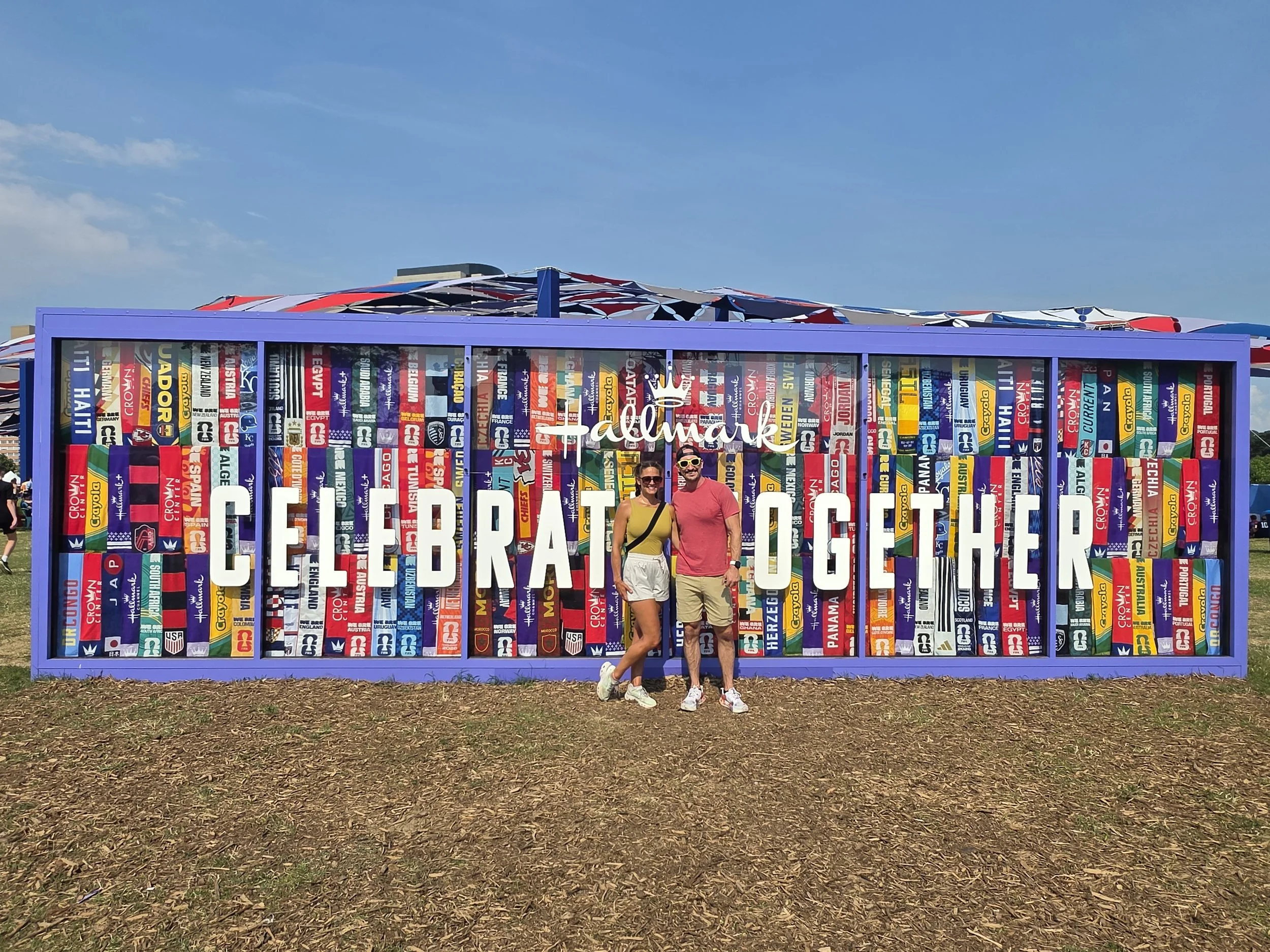
Road trip? Check.
A brunch omelet built for a 12-hour day? Check.
Seventy six thousand Colombia fans turning an NFL stadium into Bogotá West? Biggest check of my life.
When my wife handed me tickets to the FIFA World Cup Round of 32 match between Colombia and Ghana at Arrowhead Stadium, I did not ask what they cost. Some questions are better left unanswered. What I can tell you is what the trip was worth, and the answer is everything.
The Drive Out
Kansas City sits about nine hours from Cincinnati, which sounds brutal until you break it up the right way. We pulled off in the Missouri Ozarks to knock out the state's highest point at Taum Sauk Mountain, hiked out to Mina Sauk Falls, and wandered the giant granite boulders of Elephant Rocks State Park. If you ever make this drive, build in the detour. Your legs will thank you after all that windshield time.
We met up with one of my wife's longtime friends who was also attending the match. The two of them worked in sports together years ago, so the group chat energy was already at a World Cup level before we hit the Kansas state line.
We stayed near the Overland Park Convention Center, a move I would recommend to anyone chasing a knockout round match in the future, even in other cities or countries. Embrace. The rooms were cheaper than downtown, and the official World Cup transportation was so well run that we never missed a beat.
Match Day Morning

We started with an Uber down to City Market, and if you have ever spent a Saturday at Findlay Market, you already know the feeling. Picture Findlay expanded a few blocks in every direction. Open air stalls, produce, meats, tacos, the self-proclaimed world's largest soda selection at KC Soda Co, and plenty of spots to grab a drink while you people watch.
From there it was a one block walk to The Farmhouse on Delaware Street. They quoted us 30 minutes for a table, so we grabbed a drink at the bar and were seated in about 10. The brunch delivered. My omelet was exactly the fuel I needed for the long, hot day ahead.
We walked Delaware to Main and landed in the Power & Light District, where the KC Live block party felt like a supersized version of 4th Street Live in Louisville. Flags from every nation hung overhead while Australia and Egypt battled into penalty kicks on the big screen, with Egypt pulling it out at the end. The crowd around us was almost exclusively decked out in Colombian yellow, and the roar for every PK told you exactly how the evening was going to sound.
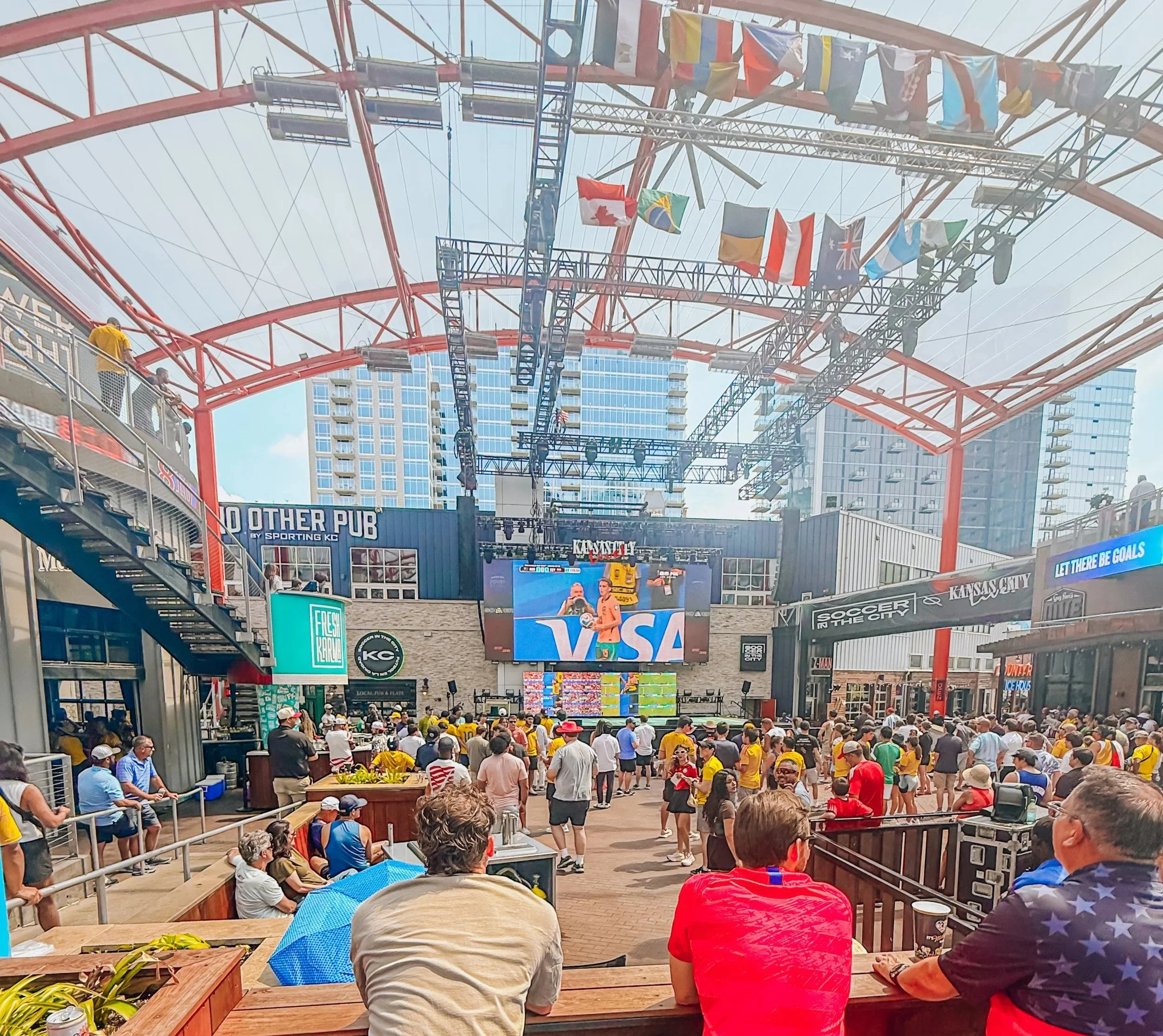
The Fan Fest
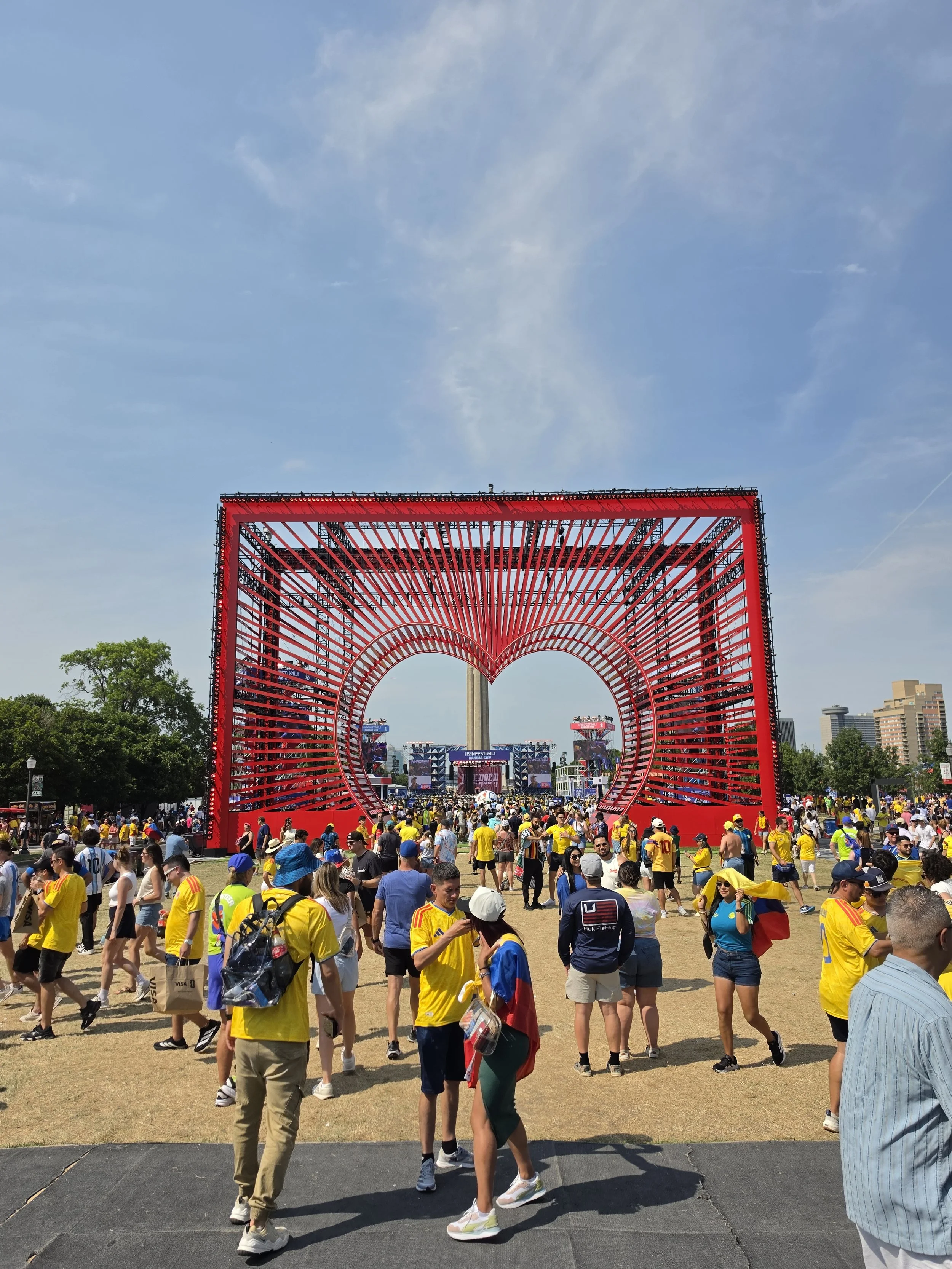
One more short ride brought us to the official FIFA Fan Festival on the grounds of the National WWI Museum and Memorial, where a massive red heart sculpture framed the Liberty Memorial tower and thousands of fans danced through the afternoon heat. If I have one honest critique of the entire trip, it was the nearly mile long walk just to reach the fan fest entrance. In July. With the sun bearing down. Once inside, though, the energy erased the complaint. DJs, drinks, food, scarf walls, and a sea of yellow jerseys as far as you could see.
From there we caught our official shuttle to Arrowhead. Considering the sheer number of people moving at once, the process was smooth and efficient, and the air conditioned ride was a genuine respite. The lots outside the stadium held even more activations, with music, drinks, and misting stations pushing the party right up to the gates.
Inside Arrowhead
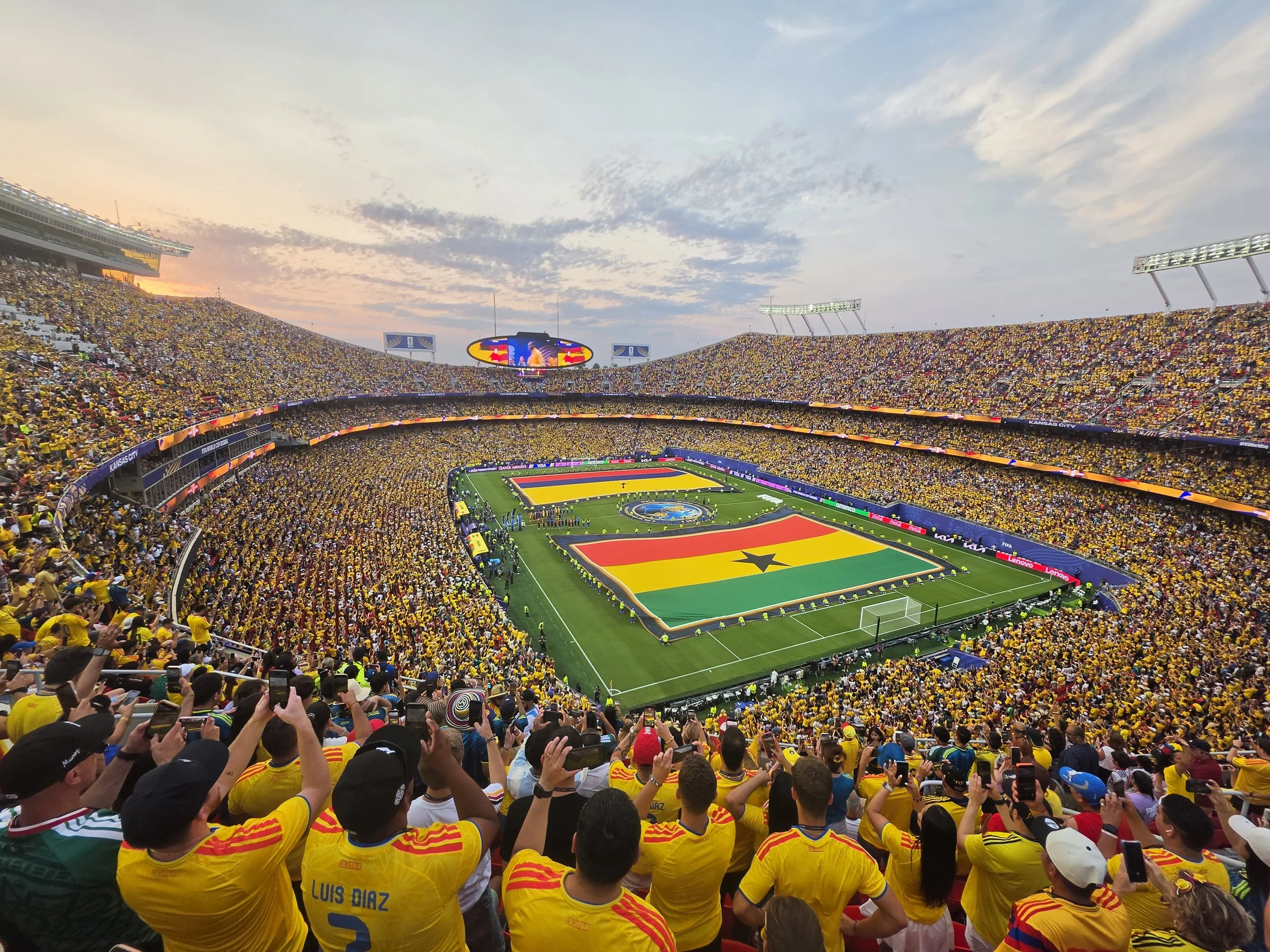
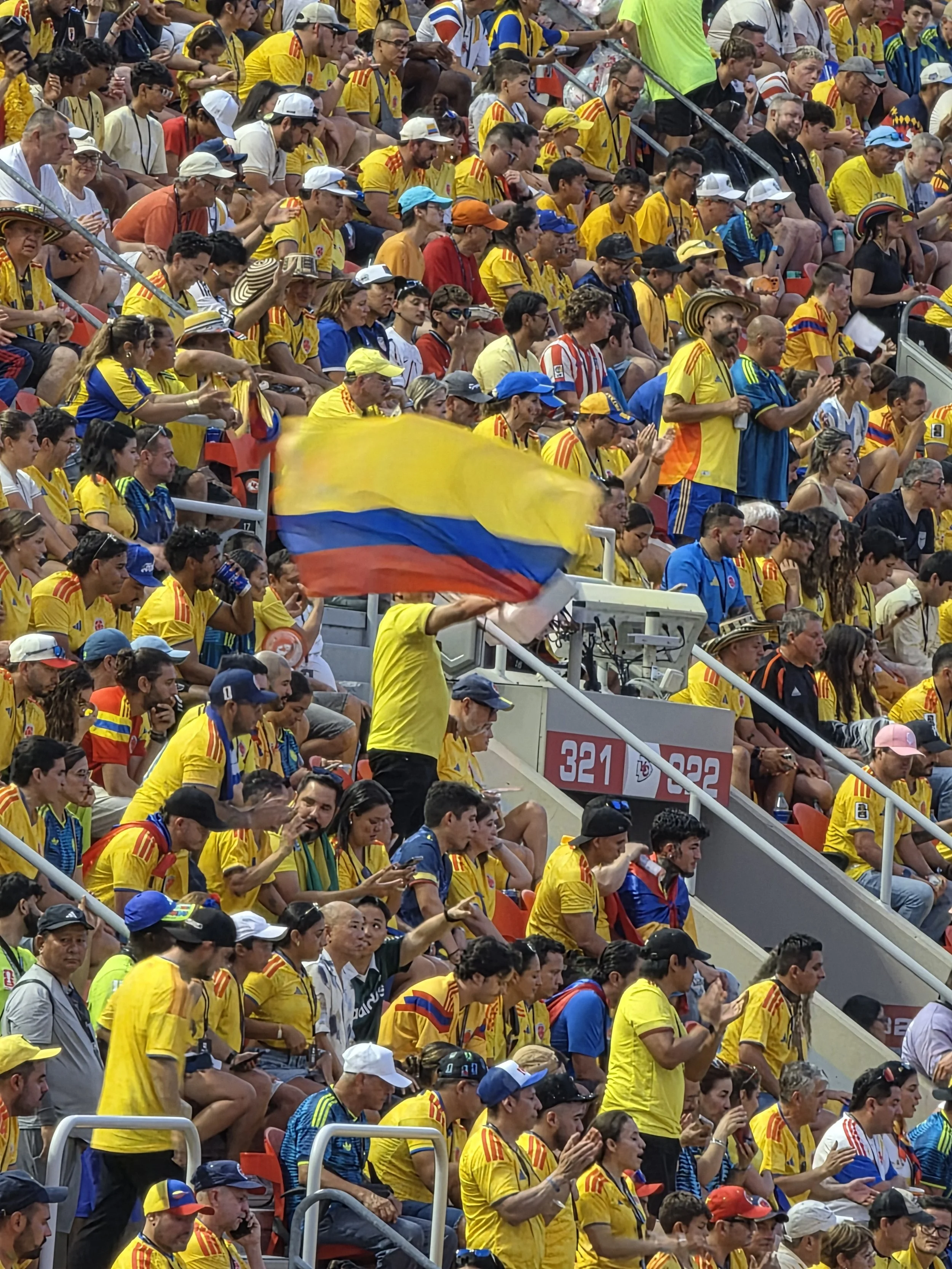
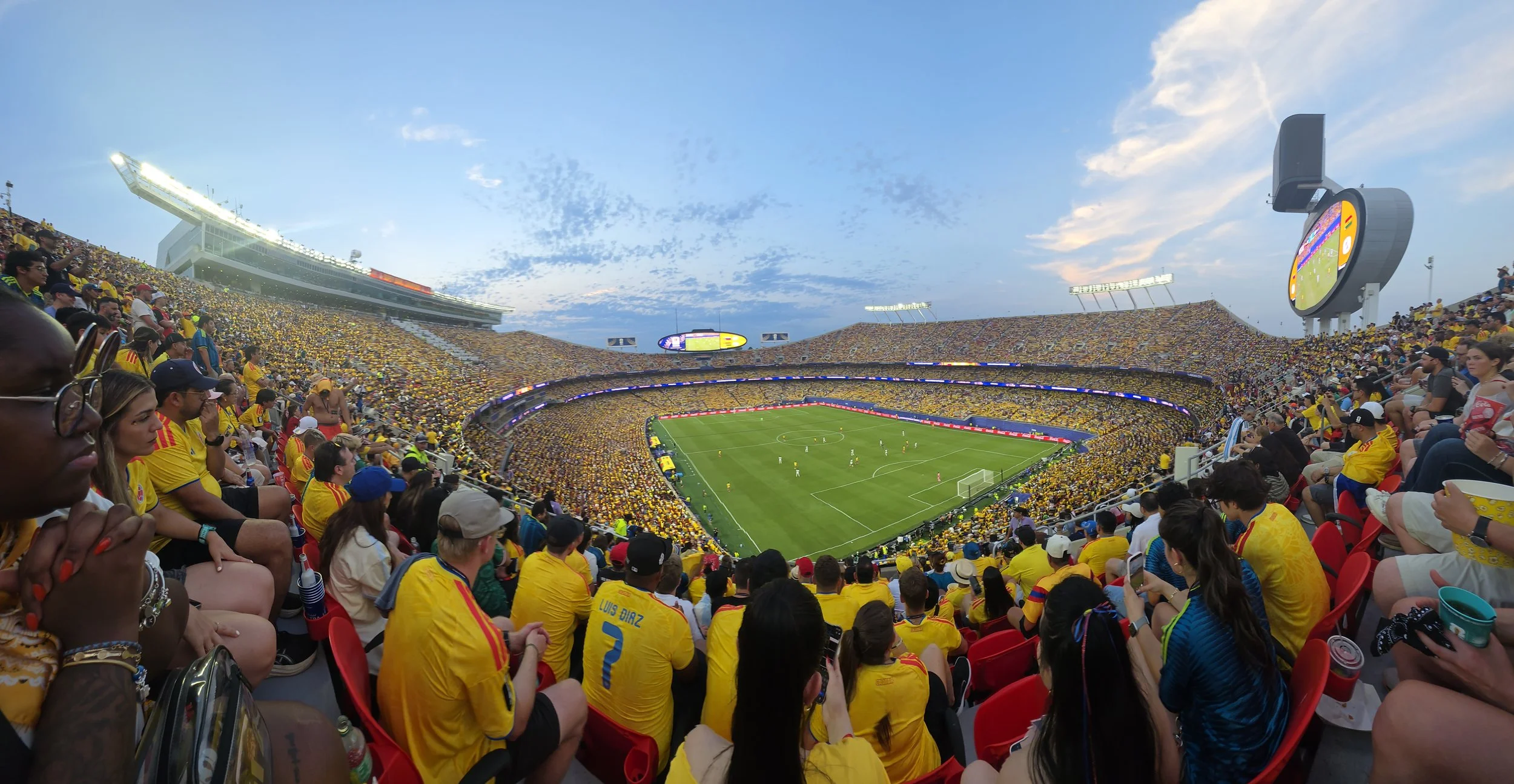
Our seats were in the nosebleeds, and I would not have traded them. The view was immaculate. Arrowhead holds 76,416 people, and I am convinced 76,000 of them were wearing Colombia yellow. The temperature never really dipped below 85, but as the sun set, the purple and pink sky against all that red and yellow was astounding.
I had no dog in this fight. It did not matter. You could not help but get swept up in the Colombian movement. Hearing thousands upon thousands of fans belt out their national anthem on the eve of my own country's birthday was something to behold. The chant that never stopped all night was “Vamos, vamos, Colombia, que esta noche tenemos que ganar,” which translates to “Come on, come on, Colombia, we have to win tonight.”
They did. Jhon Arias flicked home a Luis Suárez cross in the 14th minute, and the yellow wall never let Ghana breathe. The Black Stars failed to put a single shot on target all night. One goal was all Los Cafeteros needed to punch their ticket to the round of 16.
The heat inside was no joke. About halfway through the second half I took a five minute break to refill water and grab a cold towel. Misting stations were scattered around the concourse, though I think FIFA could have done a better job with water stations for a night that hot. Stadium food ran expensive, as expected, but the bacon cheeseburger with burnt ends mac and cheese was worth every Kansas City penny. I stuck mostly to water with a Guinness or two mixed in, my usual, while my wife cooled down with a frozen margarita.
And honestly, world soccer felt right at home in an American football stadium.
The Verdict
Kansas City and Cincinnati are similar in a lot of ways, from the river city bones to the barbecue smoke in the air. The biggest difference is that their professional stadiums sit well outside the downtown core, which made the organized transportation essential. The city nailed it. The volunteers and FIFA staff were nothing short of incredible, kind, courteous, and pleasant at every single checkpoint.
KC's hosting duties are done, so anyone chasing the rest of this tournament will need to pick a new city. My advice is simple. Take full advantage of the official transportation, stay a little outside the core to save money, hydrate like it is your job, and get to the fan fest even if the walk tests your patience. A World Cup on American soil happens once in a generation, and for one sweltering night in Kansas City, I got to stand inside the middle of it, surrounded by yellow.
– Jarrett Baston

Capital Idea
With the end of school and the start of summer vacation head out for an affordable and fun family getaway to Indianapolis or Columbus.
At the end of May, the conversation turns to the same handful of places. The beach. The lake house. Your aunt you only talk to because she has a jet ski.
One place nobody talks about Columbus. That is the thing about Columbus. Ohio’s capital has been quietly building one of the most interesting cities in the Midwest for two decades and somehow gets credit for none of it. The food scene rivals cities twice its size. The neighborhoods have actual character. The beer is genuinely good.
Or you can look in the other direction and “Go West” with a one-tank trip to Indianapolis. This time of year, you’ll find patios full, kitchens fired up, breweries pouring, you’ll find that Indiana's capital has been hiding in plain sight.
Whether you take I-754 to Indy or I-71 to Cbus, it will be one tank of gas, zero checked bags, and pure weekend.
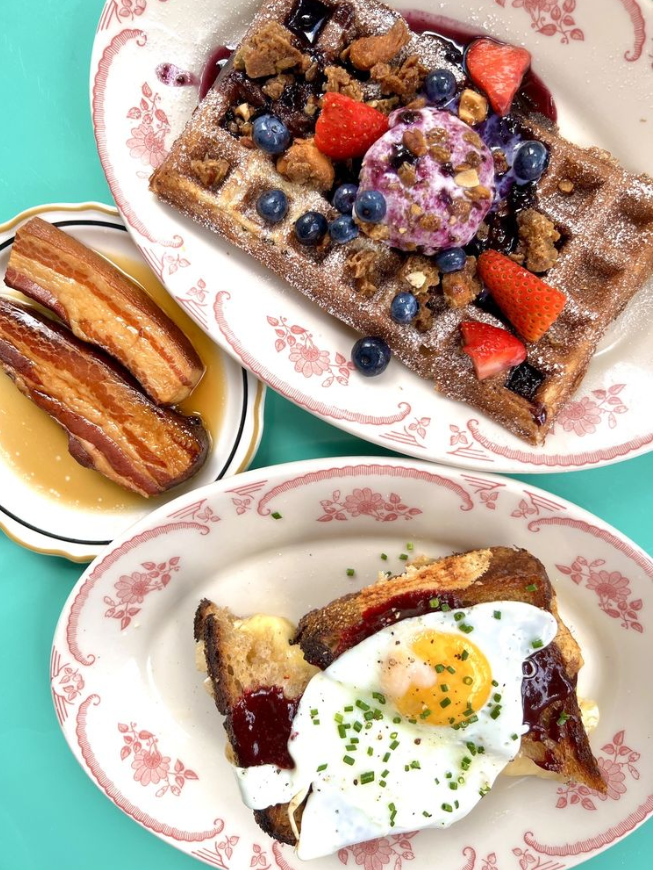
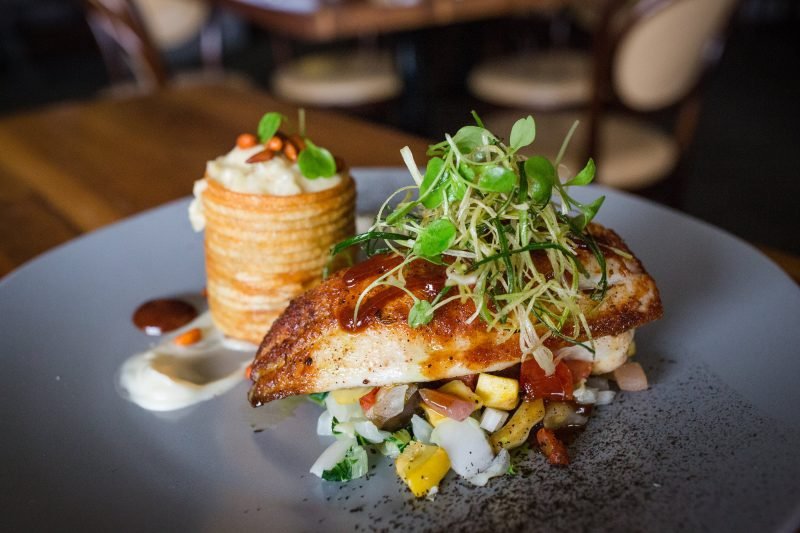
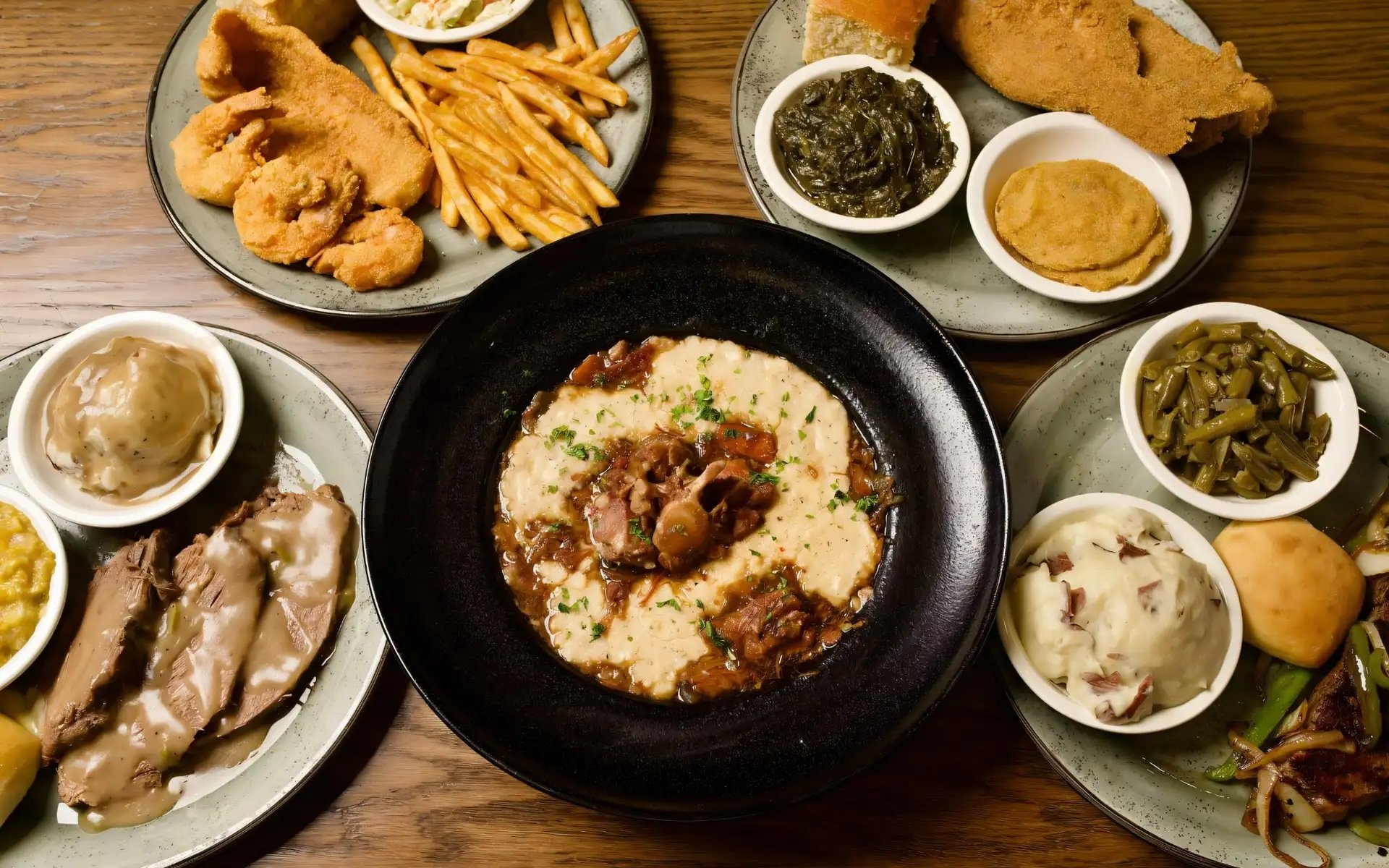
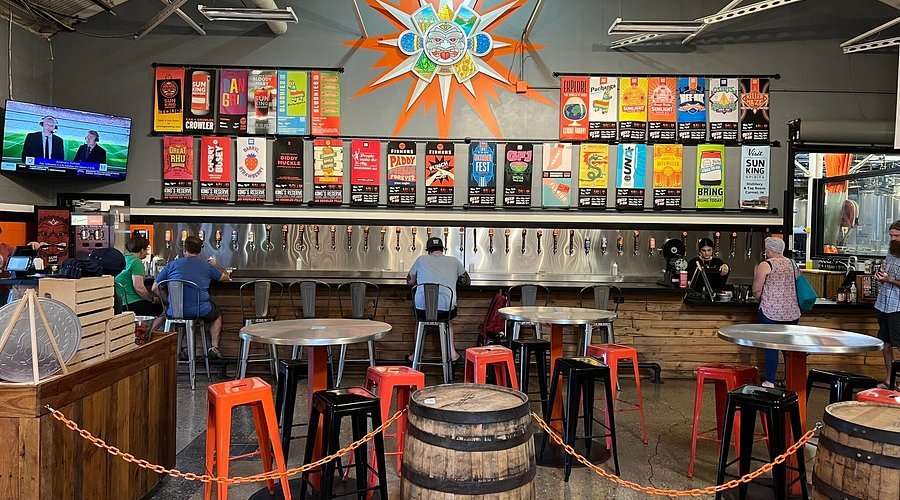
Sleep Here. Not There.
Hotels fill fast in May. Indianapolis is not a city that apologizes for selling out, especially during race month and during Fever season.
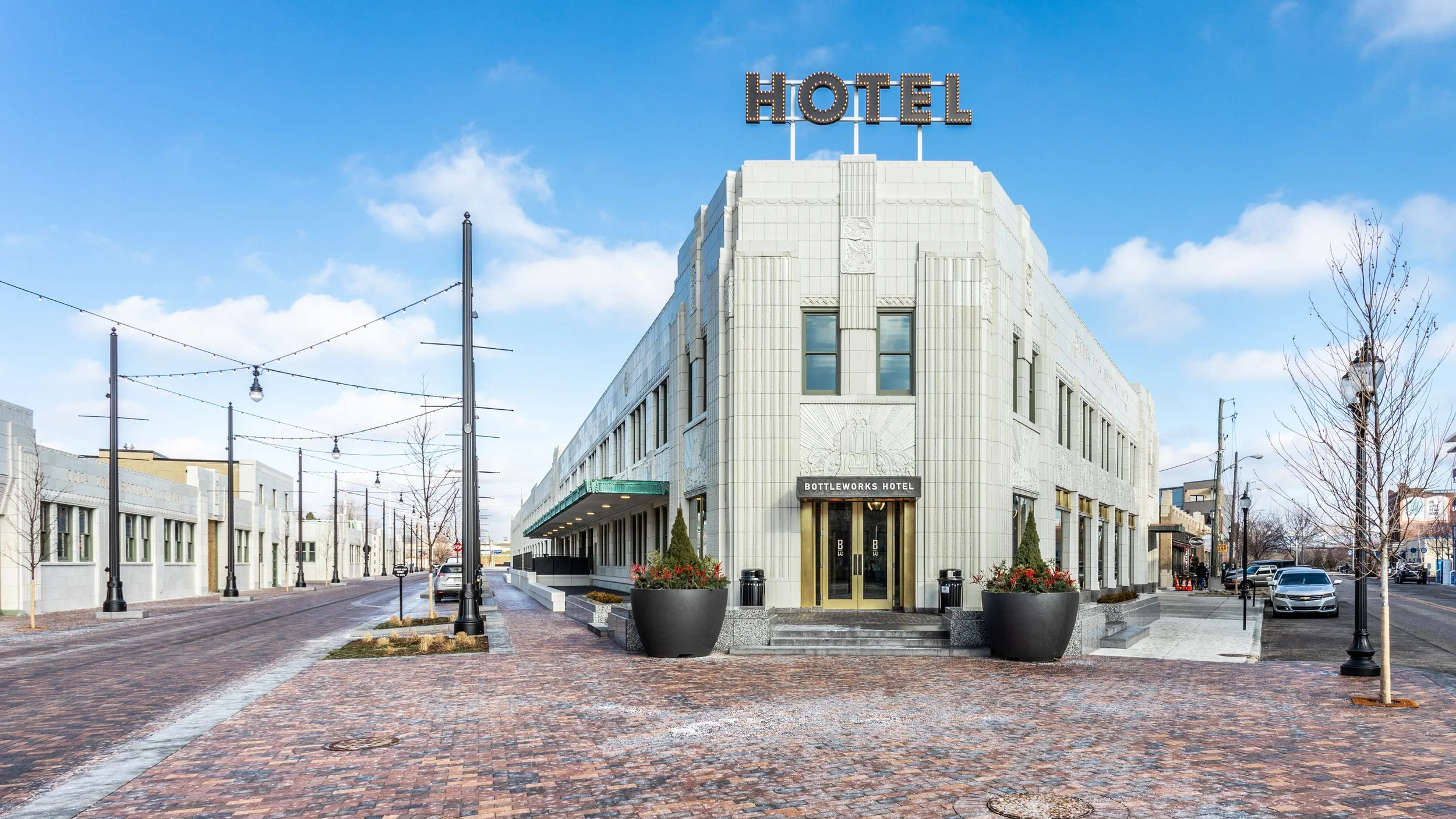
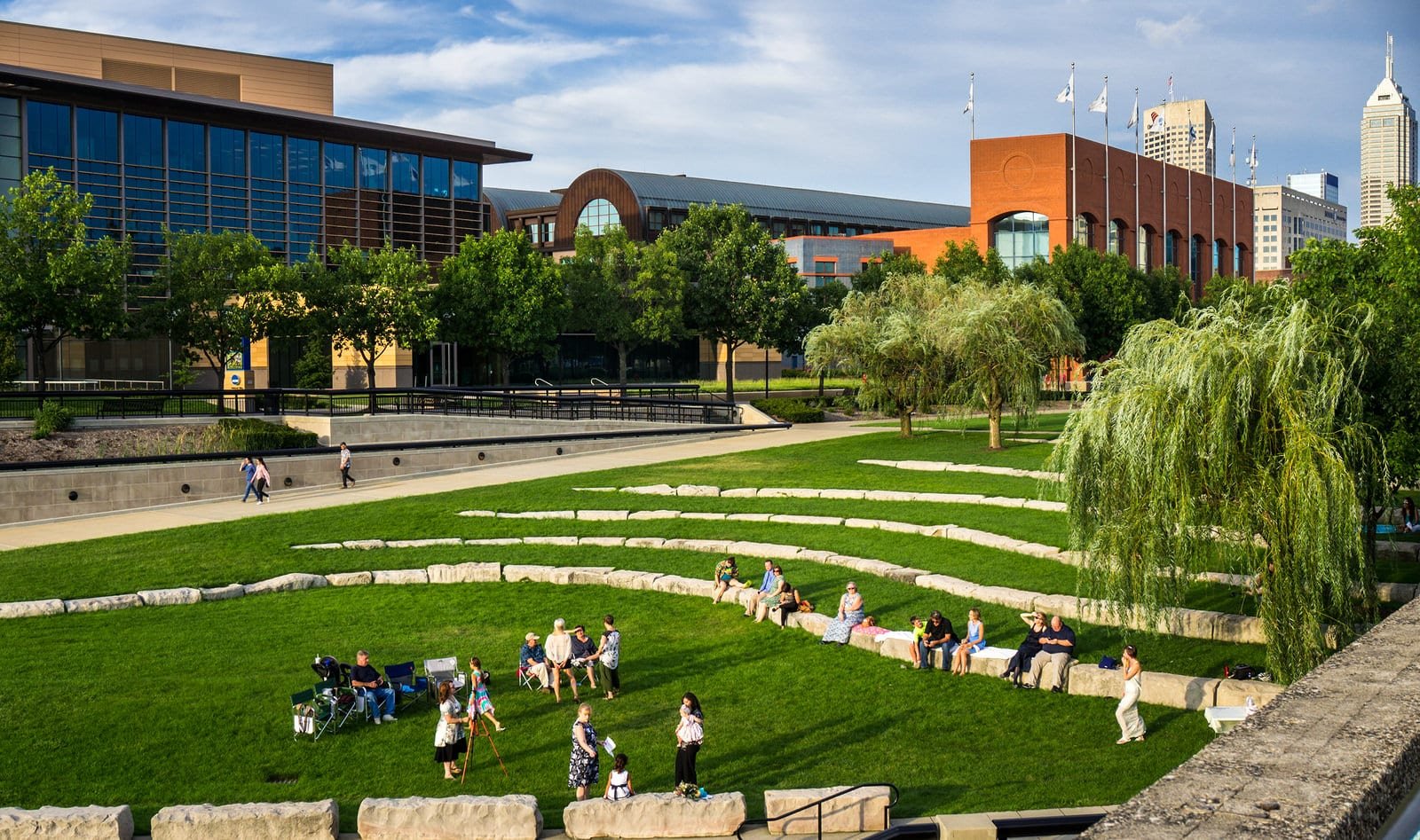
The Bottleworks Hotel wins the weekend on location alone. Housed in a converted Coca-Cola bottling plant in the Bottleworks District on Massachusetts Avenue, the property puts you at the center of the most walkable entertainment corridor in the Midwest. Your hotel IS your neighborhood. Every bar, every restaurant, every duckpin bowling lane within stumbling distance.
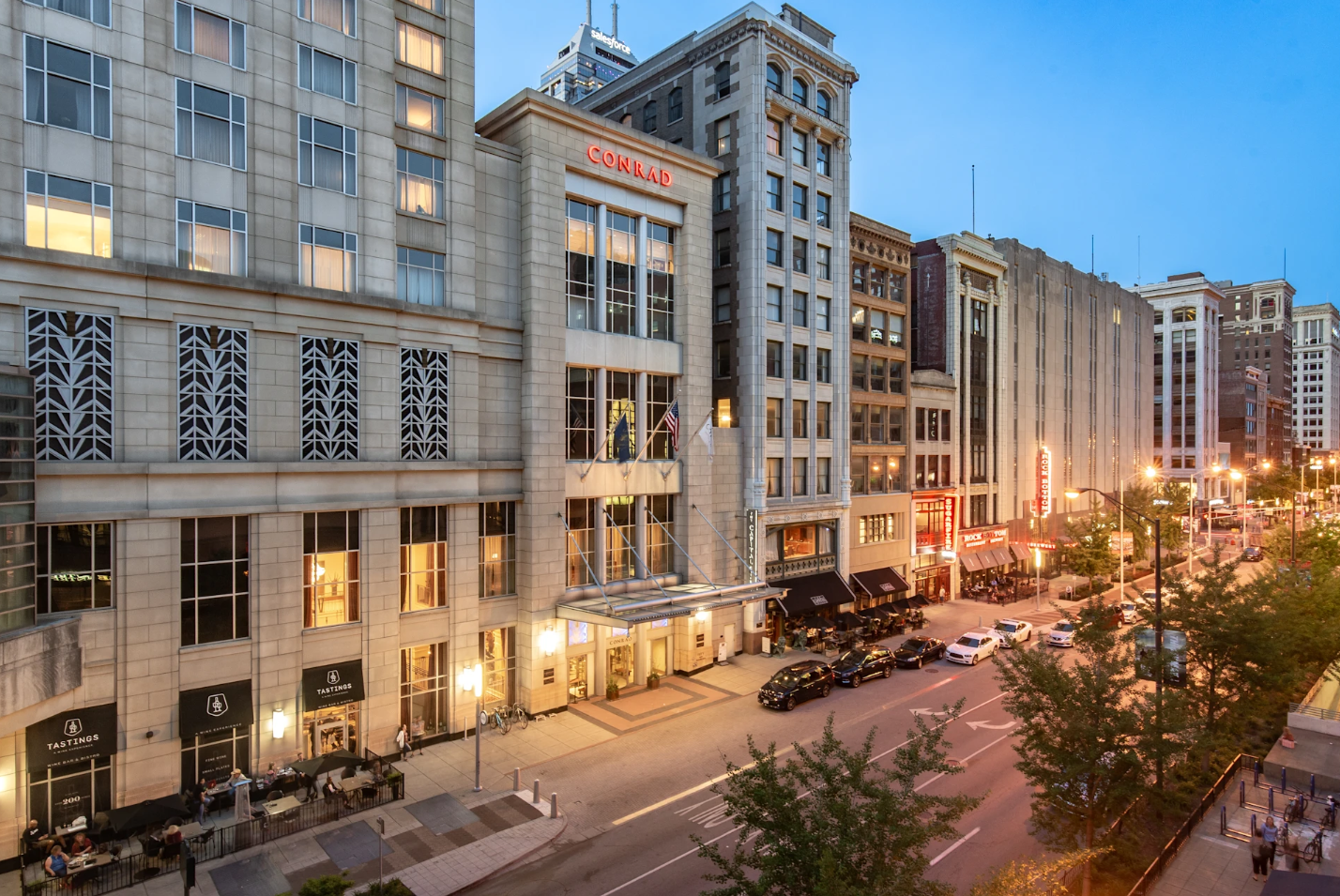
If you want downtown luxury with cultural bona fides, the Conrad Indianapolis operates its own fine art gallery with works by Picasso and Warhol, and has the only hotel spa in the Mile Square. The Tastings wine bar on the ground floor is exactly as civilized as it sounds.
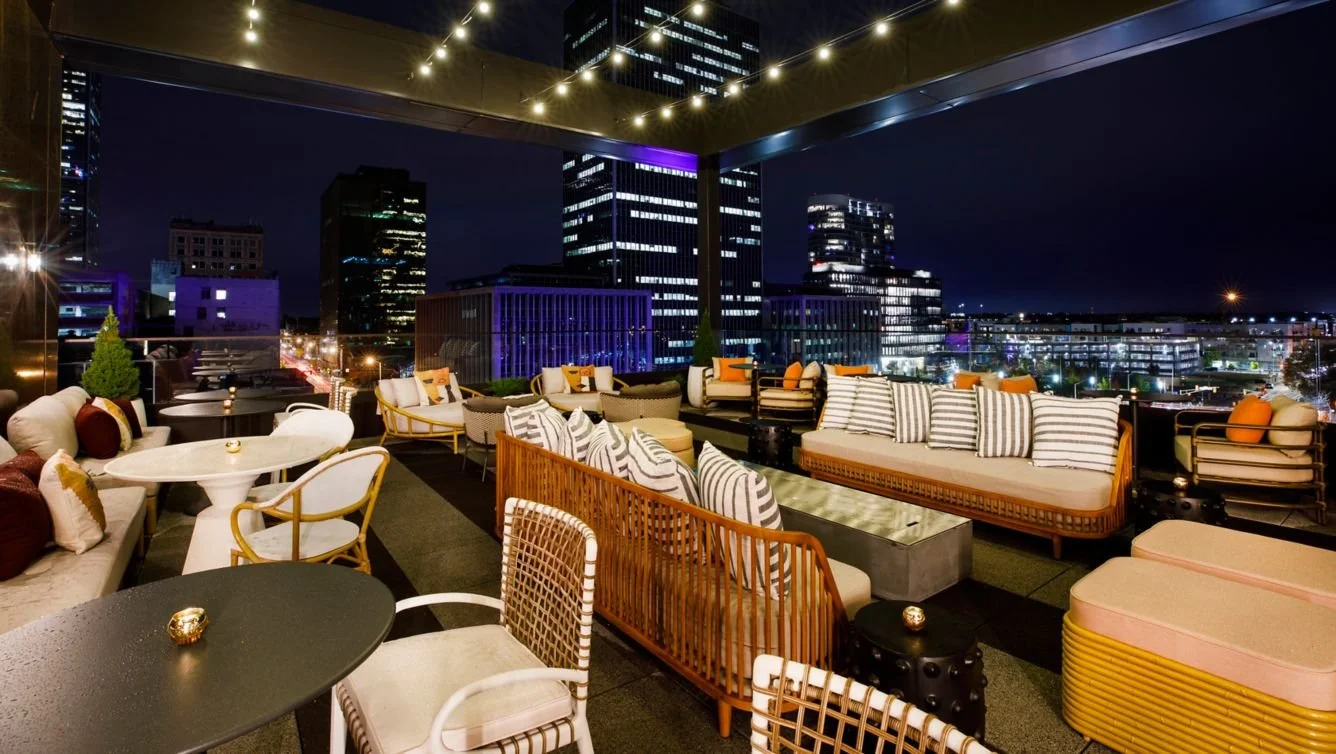
Hotel Indy is the wild card worth taking. A retro-modern property that leans hard into midcentury cool, with terrazzo floors, warm woods, vintage brass fixtures, and a rooftop bar that gives you the city on a platter. It is part of Marriott's Tribute Portfolio, which sounds corporate until you walk through the lobby and feel whatever the opposite of corporate is.
Eat Like You Drove Two Hours for This
Indianapolis has been quietly assembling one of the most interesting dining scenes in the Midwest, and the rest of the country has been slow to notice. Memorial Day weekend in late May is prime season for outdoor dining, which means every patio in the city is firing on all cylinders.
Start with Milktooth in Fletcher Place. Brunch here is a civic event. The menu operates at a register where “inventive” is an understatement, the kind of cooking that makes you want to narrate the bites to the table next to you. Go early. The line is part of the ritual.
For dinner with genuine ambition, Oakley’s Bistro on the northside has been serving polished American cuisine for more than two decades and still manages to feel current. The prix-fixe tasting menu is the move, and yes, the shrimp corndog that once beat Bobby Flay on national television is exactly as smug and delicious as that sounds.
Kountry Kitchen on North College Avenue is the best soul food in the city by a consensus that does not require a committee. Collard greens, fried catfish, the kind of lunch that resets the afternoon entirely.
For cocktails and the best view of Monument Circle in the city, Astrea sits on the 11th floor of the InterContinental, with small plates from one of Indy's best culinary minds. The view is so specifically, unapologetically Indianapolis that you will feel briefly territorial about a city you just drove to.
One more: the Indiana breaded pork tenderloin sandwich. It is a crispy, oversized breaded pork cutlet, often comically bigger than the bun, served with lettuce, tomato, pickles, and mayo. You will find versions at diners and breweries across the city. Order it somewhere. This is not negotiable.
This Round Is on Indiana
Indianapolis has more craft brewery credibility than most people realize, and it is concentrated in the kind of neighborhoods that reward walking.
Sun King Brewery is the OG. When Dave Colt and his partners rolled the first kegs out the door in 2009, Sun King became the first full-scale production brewery in Indianapolis since Indianapolis Brewing Company closed in 1948. It earned the first craft brewery distinction in the city, and the beer has kept pace with the mythology.
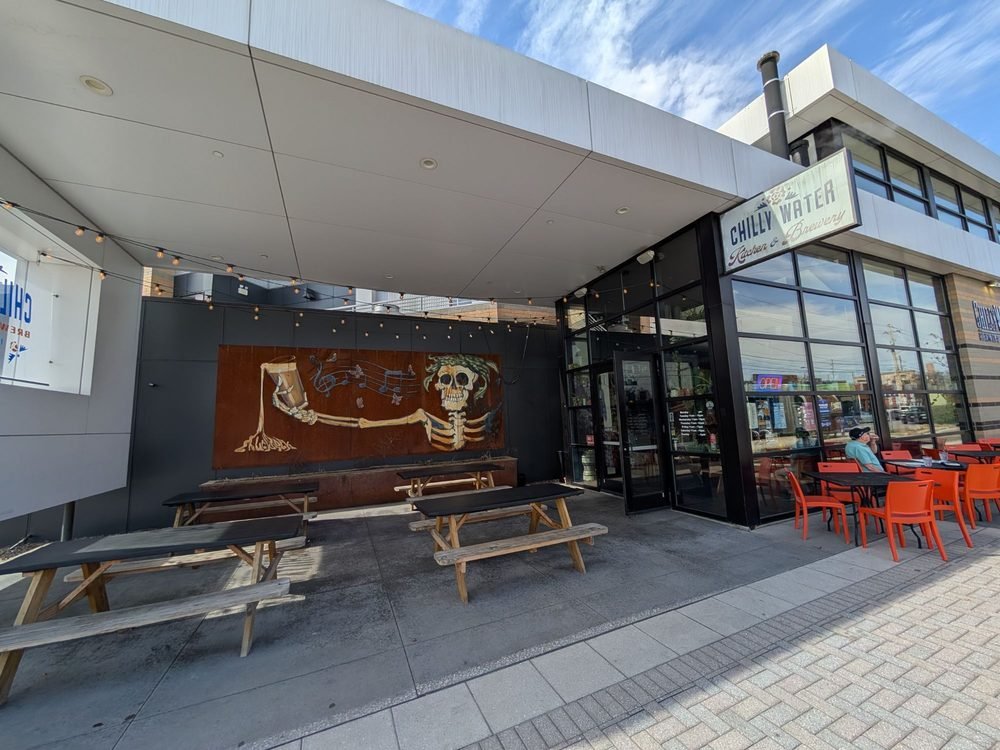
Chilly Water Brewing Company is the serious drinker's move. Indiana Brewery of the Year, Indiana State Fair Brewers Cup Best in Show, a pilsner called Built to Last that earns the name. Order it cold.
In Fountain Square, Bier operates as a German-inspired beer hall with a rotating selection of European and American craft beers, many difficult to find anywhere else. The patio in late May is a genuinely good place to be alive.
For spirits, Hotel Tango Distillery on Virginia Avenue is a veteran-owned operation crafting bourbons and whiskeys in a Fletcher Place tasting room that also pours zero-proof options. The story behind the brand is worth asking about.
Cocktail people should know Ball and Biscuit in the Herron-Morton neighborhood, a dimly lit, intimate bar where the bartenders are actual craftspeople rather than social media influencers in aprons.
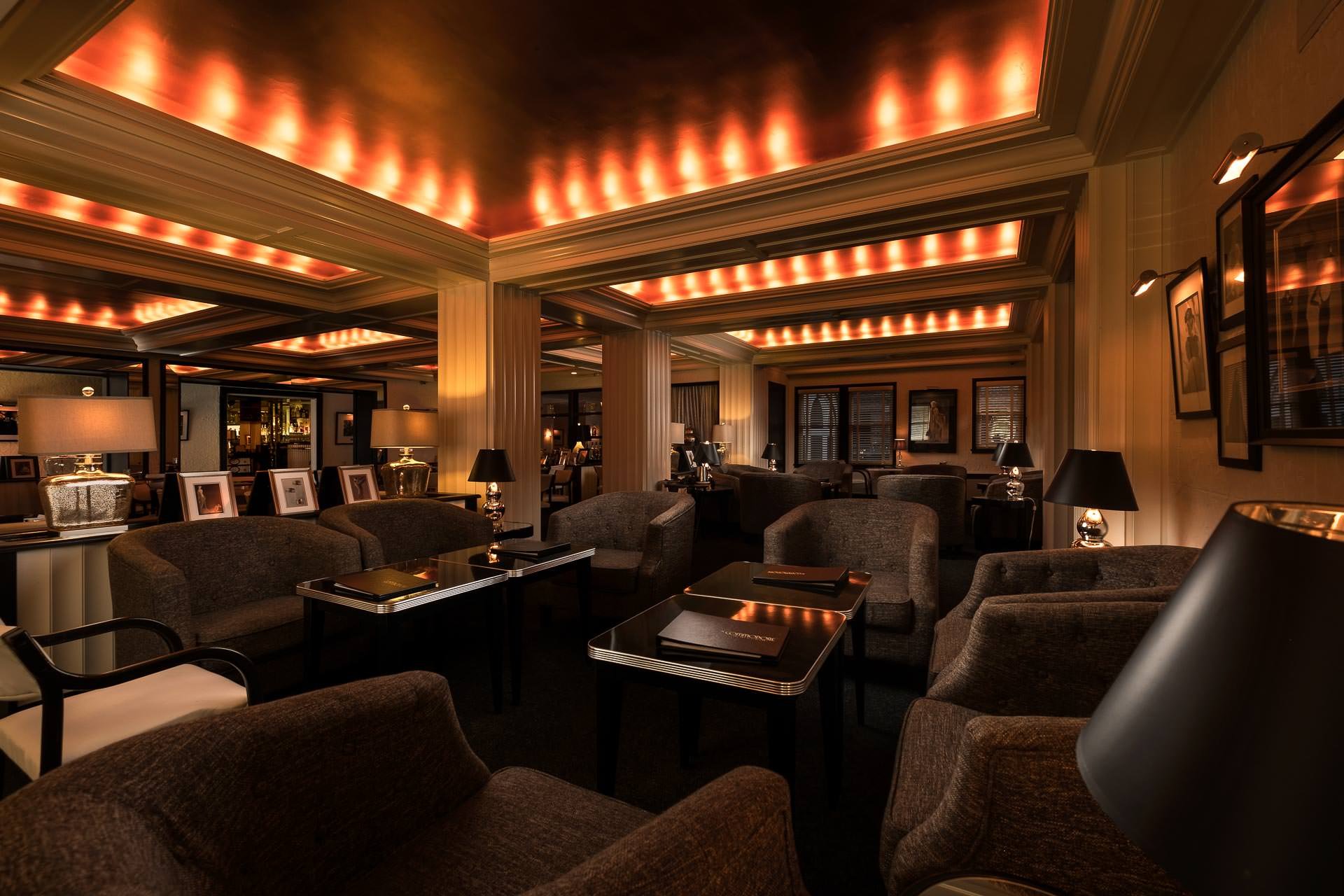
End any long Saturday night at The Commodore in Fountain Square. Art deco bones, classic cocktails, the kind of dim lighting that makes everyone look slightly more interesting than they are. A very good place to close a very good day.
The neighborhood breakdown, for the record: Fountain Square runs bohemian and artistic; Broad Ripple leans lively and loud; Mass Ave is chic and curated; Downtown covers the full spectrum. Pick a neighborhood, walk it, and stay in it.
Leave the Car. Use Your Feet.
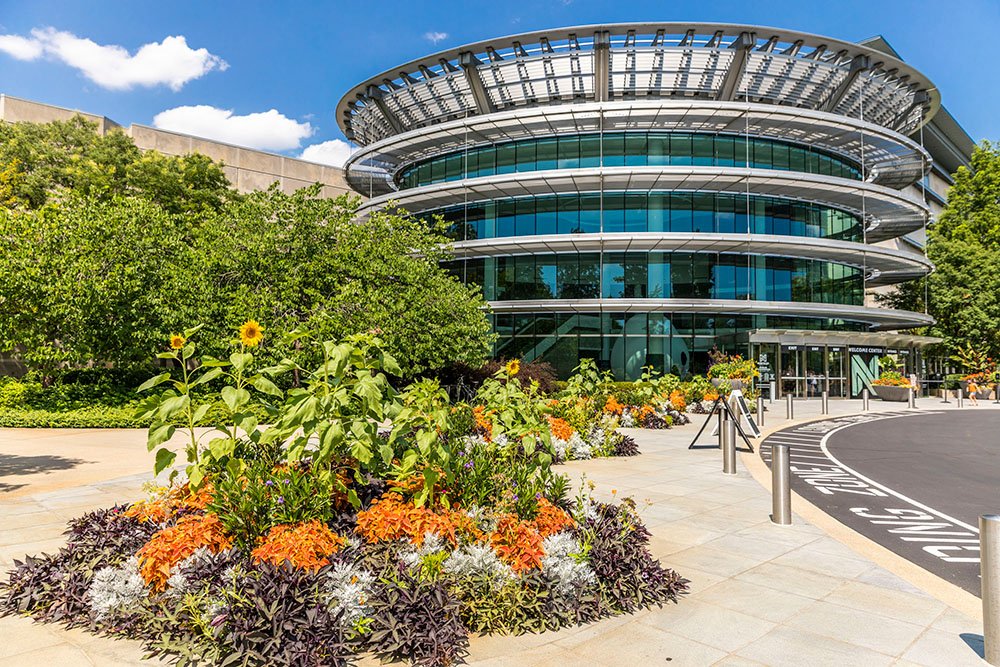
Newfields is the most underrated cultural institution between Chicago and Columbus, and that is a bold claim made with full confidence. The 152-acre campus houses the Indianapolis Museum of Art, 40 acres of gardens, a National Historic Landmark estate, and the Virginia B. Fairbanks Art and Nature Park, which is open daily from dawn to dusk and free to the public. Late May means the gardens are at their most theatrical. Plan for three hours. Stay for five.
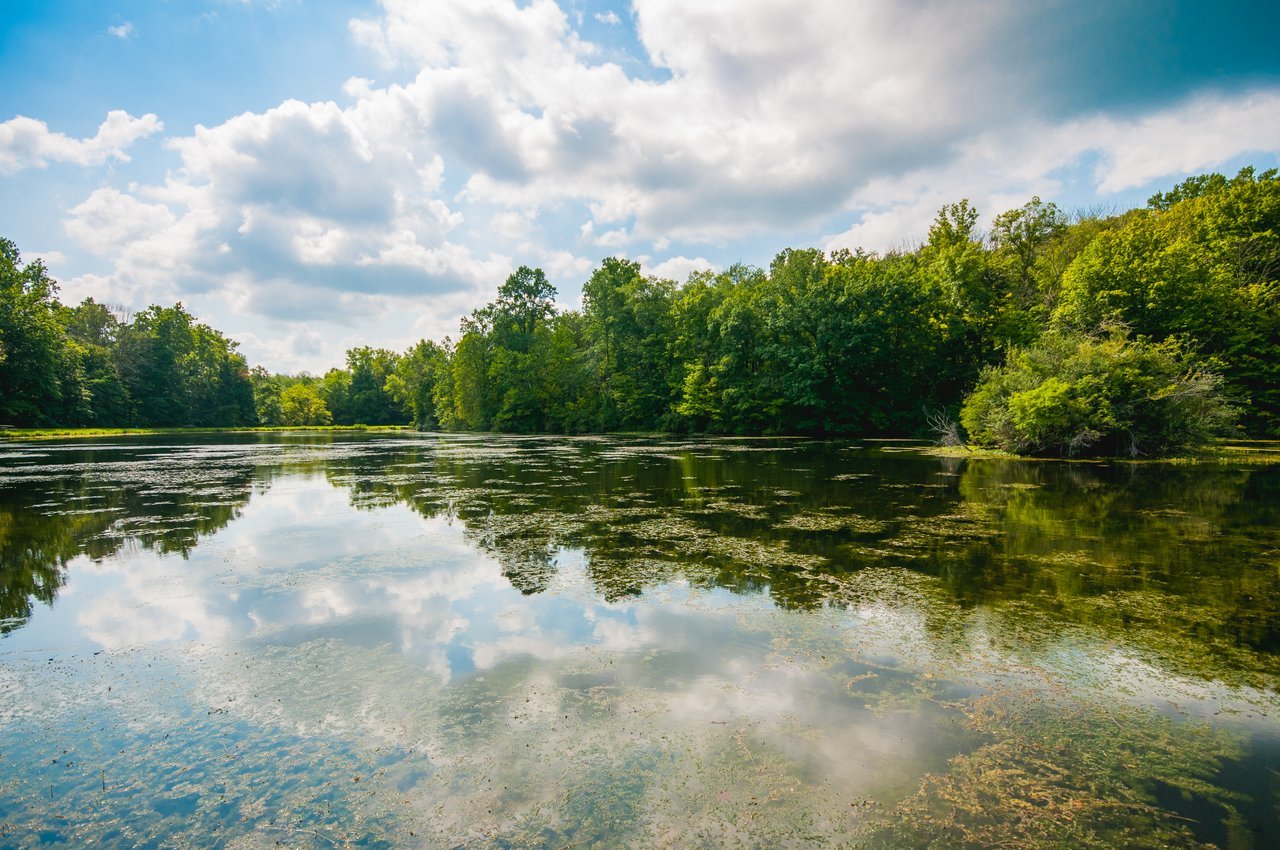
Eagle Creek Park covers 3,900 acres and a 1,400-acre lake, making it the sixth largest city park in the country. For trail runners, cyclists, rowers, and anyone who needs to sweat off Friday night's dinner, this is the play. The scale of it will surprise you.
The Monon Trail runs 28 miles of rail-trail across Central Indiana, threading through neighborhoods that tell you something true about a city. Rent a bike, pick a direction, stop when something interesting appears.
The Bottleworks District deserves its own afternoon. The former Coca-Cola factory complex now contains bars, a movie theater, duckpin bowling, pinball, a fitness boutique, and The Garage, a 30,000-plus square foot food hall showcasing the best of local culinary entrepreneurship. It is the kind of urban development project that makes a city feel like it figured something out ahead of schedule.
White River State Park and the Canal Walk put green space and river paths right at the center of downtown, adjacent to the Eiteljorg Museum of American Indians and Western Art and the Indiana State Museum. Walk it on Sunday morning before the weekend crowds fully arrive.
Why You’re Going
Indianapolis in Summer is a city that has earned the weekend. The drive from Cincinnati is flat, fast, and puts you downtown before the afternoon slips away. I-74 west to I-465 north to downtown, roughly two hours depending on your lead foot and how seriously you take speed limits in Ohio versus Indiana.

Wake Up Where the Fun Is
Columbus has three neighborhoods worth anchoring yourself to, and the one you pick shapes everything else about the weekend.
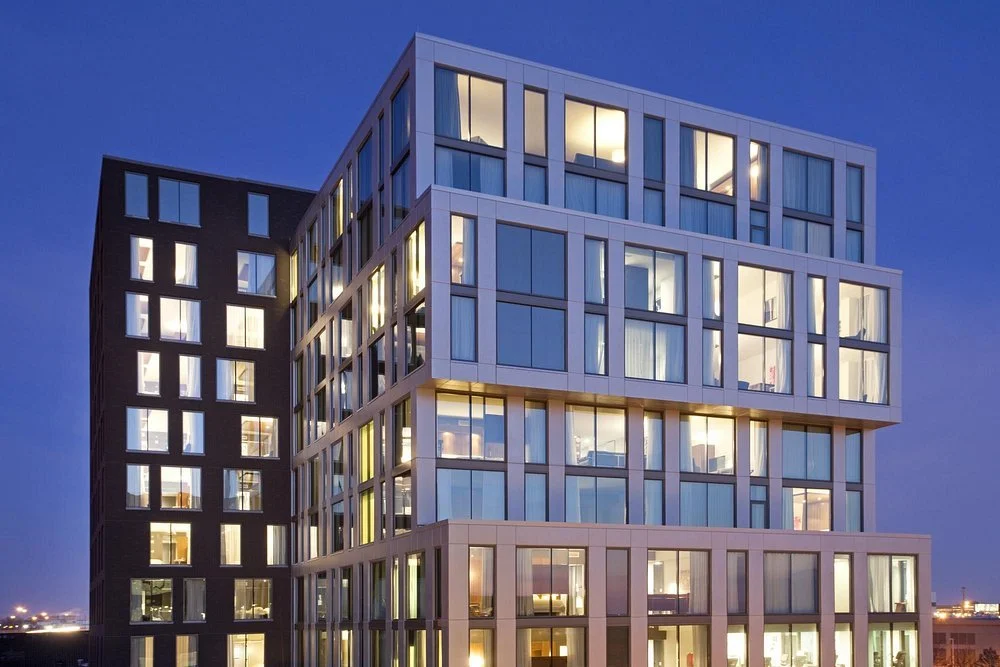
Le Méridien Columbus, The Joseph in the Short North is the easy answer and the right one. The hotel doubles as an art museum, with rotating exhibitions throughout the building and a permanent collection that makes the lobby worth standing in for a few minutes before you go anywhere. The Short North puts everything within walking distance, which in Columbus means galleries, restaurants, bars, and the kind of block-by-block energy that makes a city feel alive.
Hotel LeVeque is the case for downtown. The building is an Art Deco landmark from 1927, a forty-seven-story tower that still anchors the Columbus skyline and still earns a second look from anyone who walks past it. The rooms are updated without losing the character of the bones. The rooftop bar delivers the city on its best terms.
If you want to stay inside the neighborhood you came to explore, the German Village Inn puts you on brick streets, surrounded by nineteenth-century architecture and the best restaurant block in the city. It is a small property. Book early.
Feed Your Trip
Columbus takes its food seriously in ways that haven't fully registered with the rest of the country yet. That's your advantage. Reservations are still gettable. Tables are still walkable. The cooking is as good as anywhere.
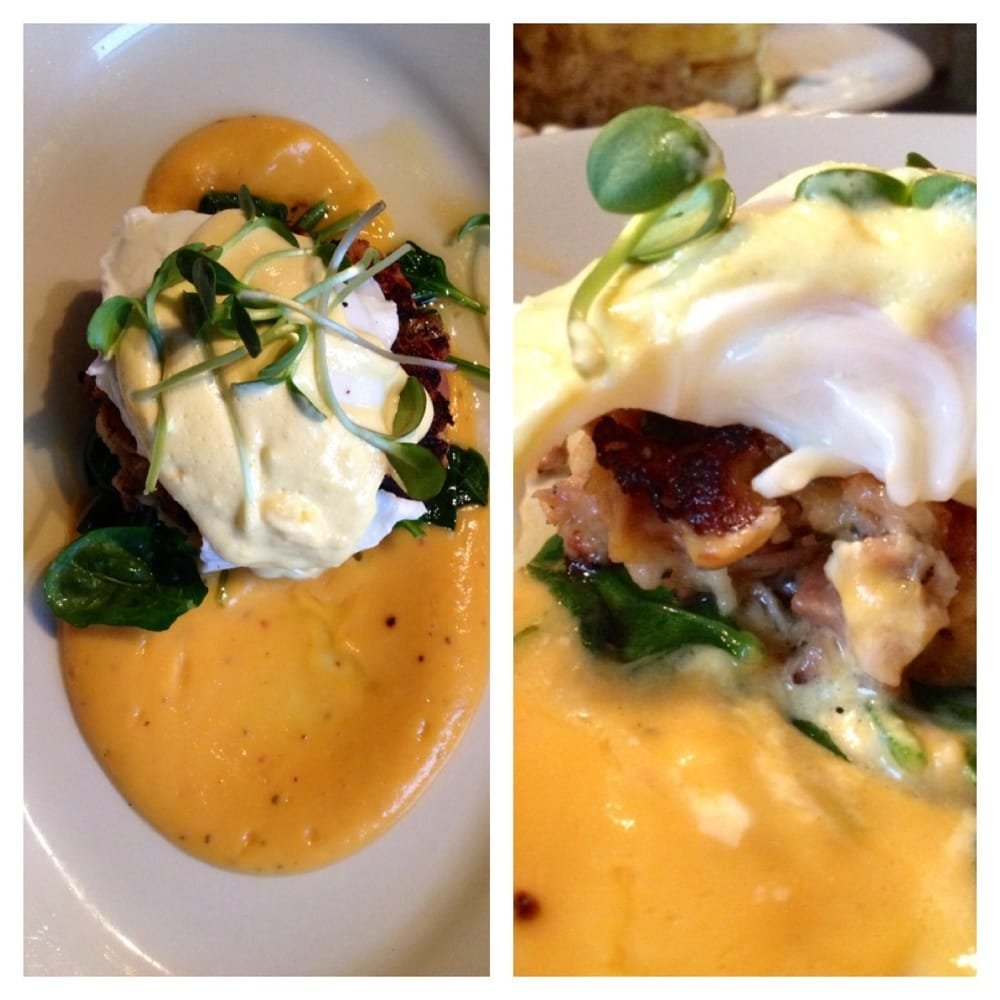
Start with Skillet in German Village for the weekend's first breakfast. Farm-to-table is an overused phrase, but at Skillet it is the operating system, not a marketing angle. The menu changes with the seasons, the portions are honest, and the stuffed French toast with locally grown strawberries and Ohio maple is the kind of thing you talk about on the drive home. The place is small and fills fast on weekend mornings. Get there early or expect to wait on the sidewalk.
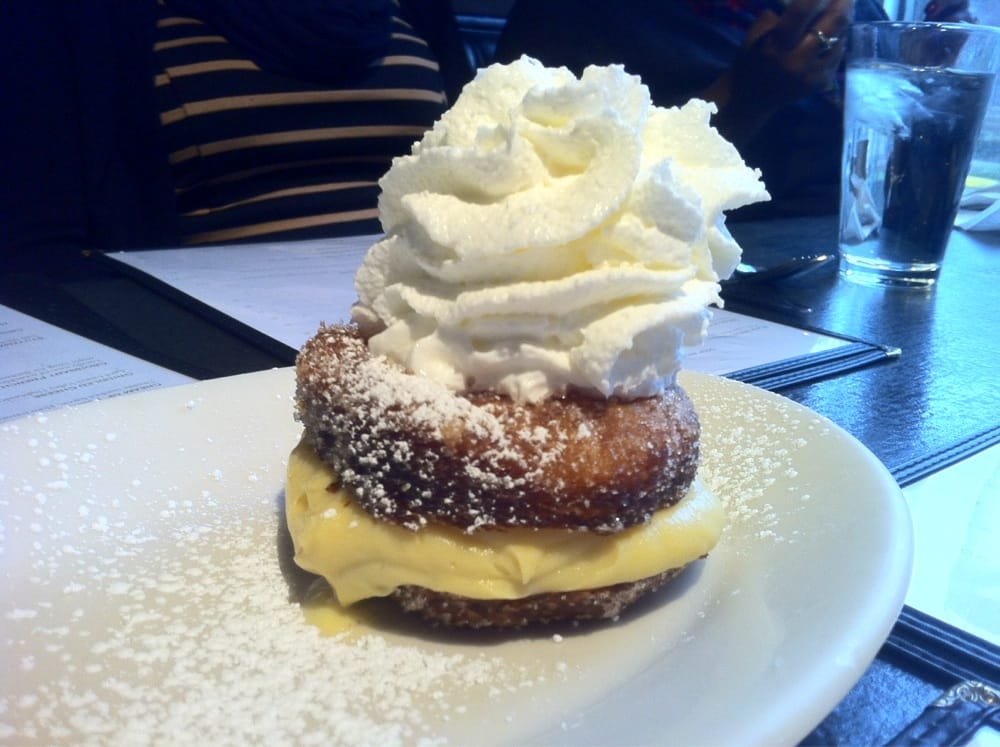
Schmidt’s Restaurant und Sausage Haus is a Columbus institution that has been feeding people in German Village since 1967, built on a meat-packing legacy that goes back to 1886. The sausage platters and Bahama Mama are as good as the reputation suggests. It was featured on Man v. Food for a reason. The jumbo cream puff is non-negotiable. Order it. You are on vacation.
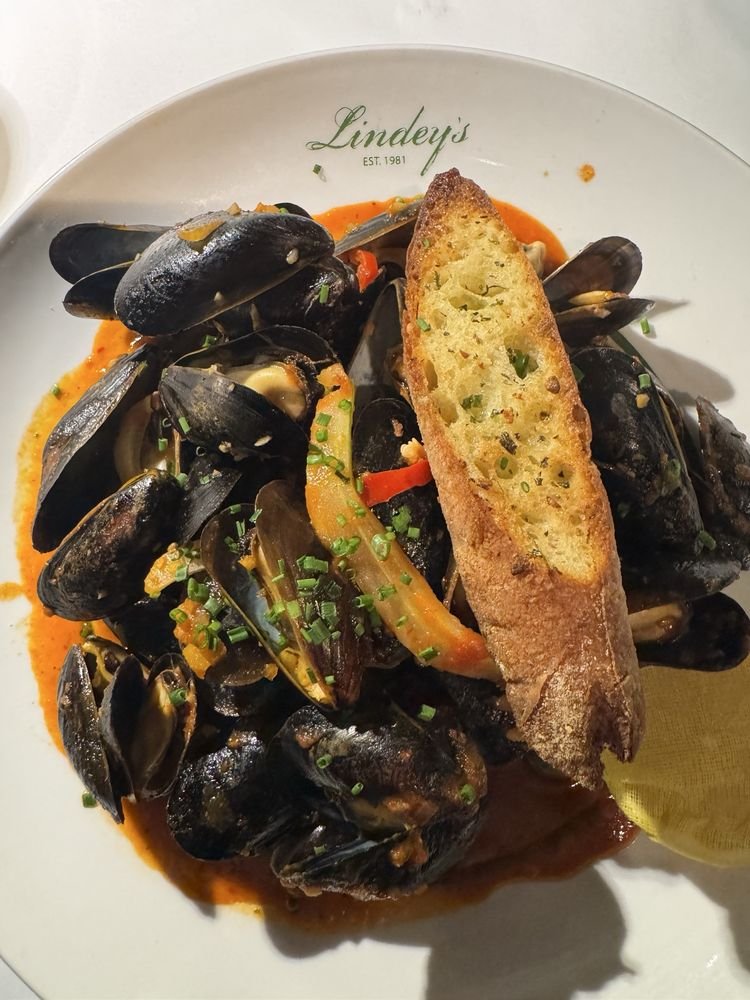
For dinner that earns the occasion, Lindey’s in German Village has been one of Columbus's top restaurants since 1981 and has appeared in the Washington Post, the New York Times, and USA Today, and it still delivers. The outdoor courtyard was voted one of the top 100 patios in America by OpenTable. Memorial Day weekend in late May means that patio is firing on all cylinders. Go for happy hour. Stay for dinner. Order the farm board.
Barcelona Restaurant brings a Spanish tapas sensibility to German Village in a setting that somehow works completely: dim light, a serious bar, and a patio that won Best Patio in Columbus and makes the case for eating outside every night you are in town.
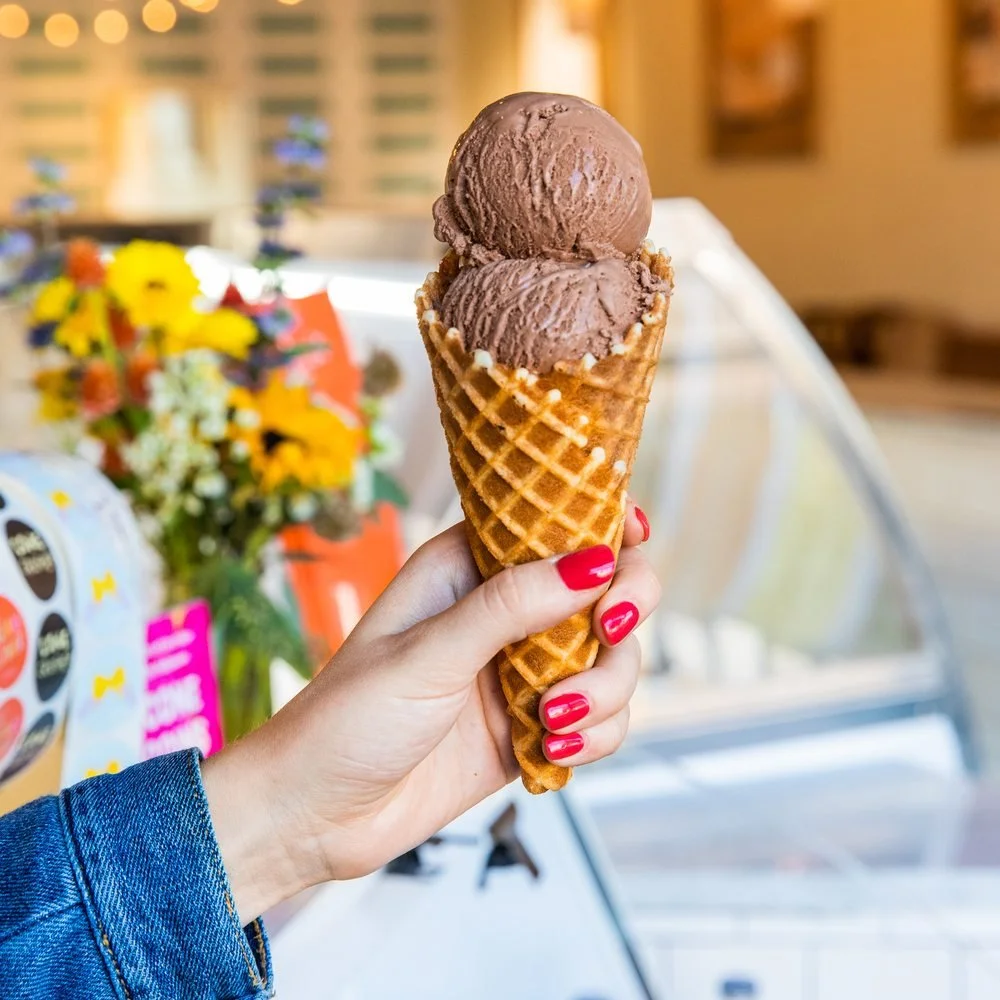
For something lighter and local, Jeni’s Splendid Ice Creams was founded in Columbus. Jeni Britton got her start inside North Market and built one of the most recognized ice cream brands in the country from a stall. The German Village scoop shop on Mohawk Street is the right place to end an afternoon. The Brambleberry Crisp flavor, if it is in season, is all the argument you need.
Drink Like a Local
Columbus has been ranked a top-five beer city in the country, and that ranking holds up once you start walking through it.
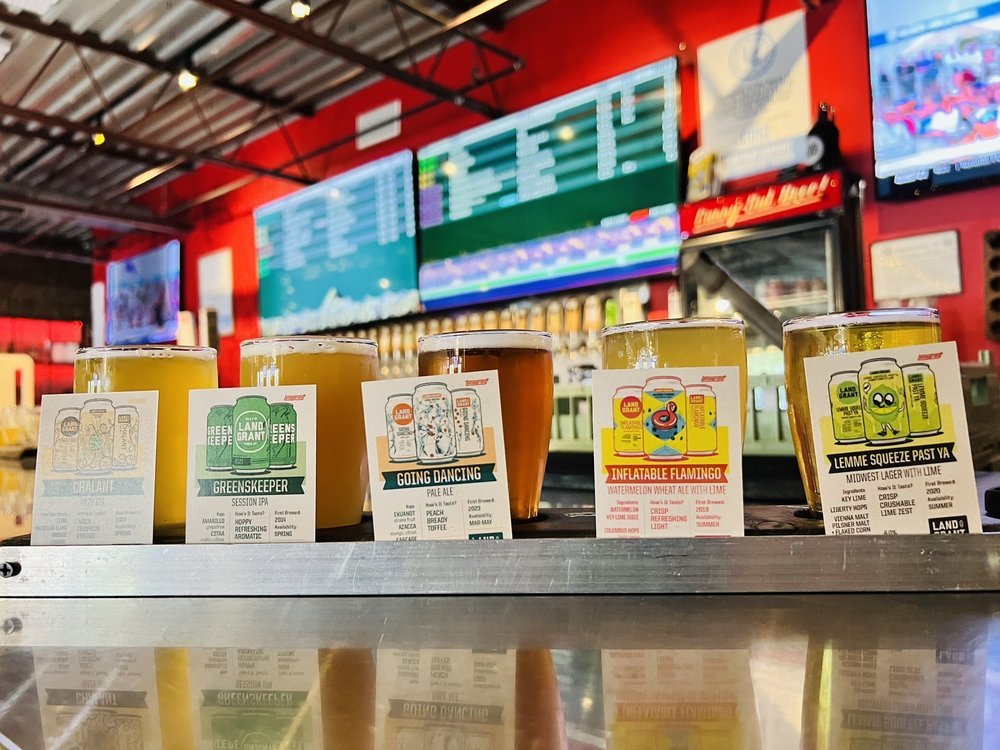
Land-Grant Brewing Company in Franklinton wins the weekend and has won Columbus Underground's Best Brewery vote five years running. The brewery occupies a massive former industrial space that once built elevator systems for newspaper production facilities, and it has been transformed into the best outdoor beer campus in the city. Food trucks rotate through. Live music runs on weekends. The beer, including a rotating cast of IPAs, lagers, and sours, is serious. Memorial Day weekend the Franklinton patio is exactly where you want to be on a Saturday afternoon.
Seventh Son Brewing Co. in Italian Village has been converting skeptics into craft beer believers for nearly a decade. The taproom is the kind of place where a good bartender will talk you through the list and you will leave having tried something you would never have ordered on your own.
North High Brewing in the Short North runs roughly two dozen house beers on tap at any given time, with a food menu solid enough to anchor the evening. It sits at the center of Columbus's most walkable nightlife corridor, which makes it a natural starting point for whatever the night turns into.
For cocktails, Cobra in German Village opened in 2022 and was immediately named one of the top ten nominees for Best New Cocktail Bar in the Central United States by the Tales of the Cocktail Foundation. The bar leans Asian-American in its food and drink program, runs late, operates first-come, first-served, and is exactly the kind of place a city's bar scene gets built around.
For something brand new: Cure in downtown Columbus opened in 2025 inside a converted historic building and won Best New Bar in Columbus that same year. Coffee shop by day, cocktail bar by night, with a seasonally rotating menu and the kind of raw-space aesthetic that makes you feel like you found something before everyone else did. Which, at this point, you still have.
The City Has All The Pieces
Franklin Park Conservatory and Botanical Gardens is the first stop on Saturday morning and the best argument for Columbus in May. The 88-acre campus sits two miles east of downtown and houses thirteen acres of biomes, outdoor gardens, a permanent Chihuly glass collection, and seasonal exhibitions including Blooms and Butterflies, which runs through summer and puts you inside a live butterfly garden among hundreds of exotic species. It is the kind of place that stops a conversation and replaces it with just looking.
Schiller Park in German Village is where the neighborhood gathers. The 23-acre park features a pond, walking paths, and a performance amphitheater where the Actors' Theatre of Columbus runs free outdoor performances every weekend from Memorial Day through Labor Day. Sunday evening, blanket on the grass, performance going, is a complete Columbus experience in under two hours.
The Scioto Mile strings together seven riverfront parks and the Promenade, a wide paved pathway with gardens, benches, and shaded swings that lines the river through downtown. Bicentennial Park features a 15,000-square-foot interactive fountain, which runs hot on a Memorial Day weekend afternoon. Walk it Sunday morning before the rest of the city wakes up.
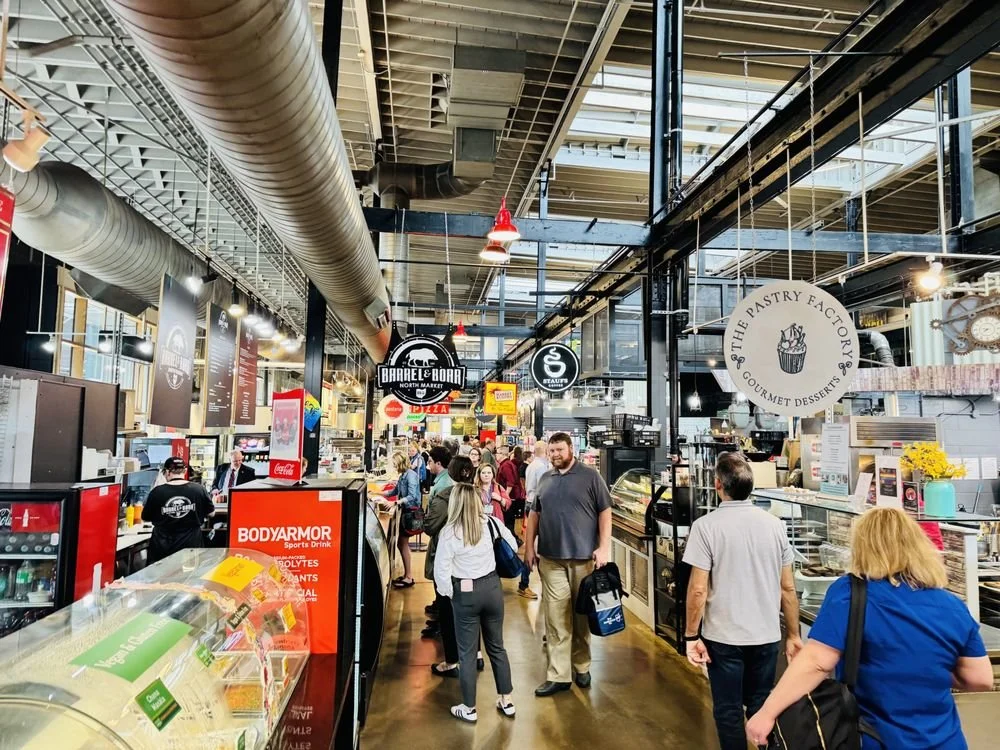
North Market has been operating as a public market in Columbus since 1876. The indoor market hosts local vendors, farmers, bakers, and food producers, and is open Saturday mornings in a way that makes it the ideal first stop of the weekend before you have figured out what the day is supposed to be. Bring cash. Plan to leave with more than you intended to buy.
The National Veterans Memorial and Museum on the west side of downtown is the most singular institution in Columbus and one of the most significant veterans' memorials in the country. Memorial Day is its moment. The museum offers free admission on Memorial Day, with a Remembrance Ceremony at 10 a.m., a Gold Star Family Candlelight Vigil on Sunday, and programming throughout the weekend honoring veterans and their families from all eras and branches. Whatever else is on the itinerary, this one earns its place.
Just Go
Columbus in May is a city at the exact right temperature. The patios are open. The parks are green. The beer gardens are fully operational. The restaurants are not yet in summer tourist mode. And the drive from Cincinnati is shorter than the average Ohio State football delay.
– Jarrett Baston

The ‘Phin-ish Line
Need a break from the wintry gloom? Join the Bengals in Miami, whether you go to the game or just spend a day at the beach, we’ve got 3-Ways to enjoy the trip.
After a tough loss at home in below freezing temps, your Bengals are going on a much-needed trip south for their final away game. Specifically, to Miami to take on Tua and the Dolphins. Maybe warm weather and a change of scenery is all they need to right some wrongs. If you’re headed down there and escaping this gloomy weather, I am jealous, but here’s some recommendations to make sure everything stays sunny on your trip.
Die hard
If you’re a true die-hard fan sticking with the Bengals until the very end, the city applauds you. Unlike Paycor Stadium, the Dolphins configuration makes things a little tricky as the stadium is about 30 minutes north of downtown Miami. But if you’re truly here for football first and the beach second, check out the Hard Rock Hotel. Beyond being shaped like a guitar and conveniently located only 10 miles from Hard Rock Stadium, they also offer a free shuttle service to the arena. You’ll be free to tailgate as hard as you want with transportation fully covered! Maybe that’ll make the game more enjoyable (sorry).
Past beaches and 80°F Decembers, there is another thing Miami has that Cincinnati knows nothing about: professional basketball. Although the Heat are on the road this weekend, the Kaseya Center still offers all-access tours. You’ll be able to get an exclusive look at where fellow Ohioan LeBron James called home after he broke the hearts of Clevelanders 15 years ago. The Center offers three tours a day, running every hour from 1 ti 3 p.m. You’ll get a tour of the home locker room, practice facilities, arena lounges and more.

While you’re still in the city, grab dinner at American Social for some great views of the Miami River and of all the bowl games going on this weekend. AmSo is an elevated sports bar right on the water serving up American classics along with Florida seafood, so they’ll give you the best of both words in terms of entertainment and menu.
On the bandwagon
With postseason hopes out the window for yet another year, it’s normal to be a little checked out from all things football. In that case, try the Moxy Miami South Beach to be by the ocean and in the heart of the iconic South Beach. With complimentary bikes to get all around and a rooftop lounge, the Moxy has your Miami experience covered. It’s even within walking distance to the hotel where the infamous chainsaw scene from “Scarface” was filmed for all you movie buffs.
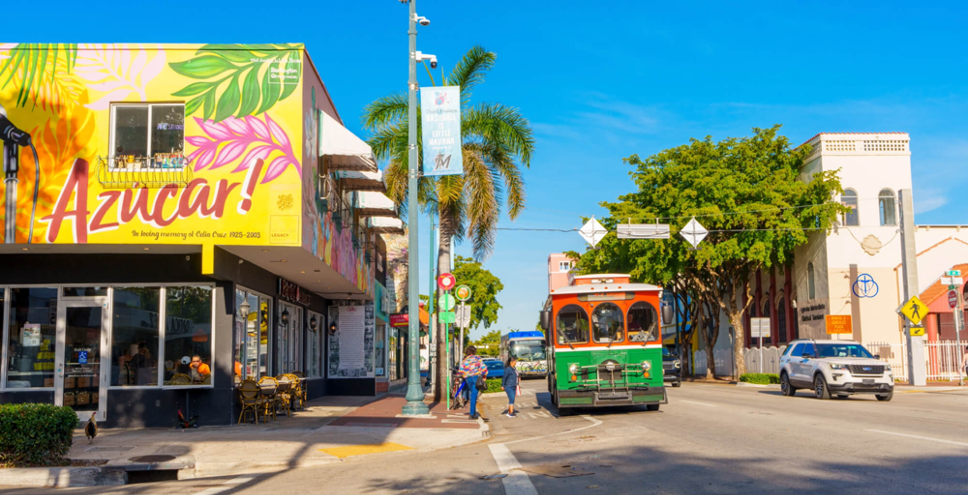
After you’ve had enough beach time, check out Little Havana for a one-of-a-kind experience. Named after Cuba’s capital, the neighborhood is a major part of what makes Miami such a dynamic cultural destination. Walk along the vibrant Calle Ocho and you’ll find bakeries, fruit stands, cigar shops, rum bars and Latin-inspired restaurants. To get the full picture, head to Versailles for dinner. Hailed as the “world’s most famous Cuban restaurant,” Versailles has welcomed everyone from Beyonce to George W. Bush on its way to becoming a Miami staple. Try Cuban classics like croquetas or vaca frita or go with an authentic Cuban sandwich. Either way, a trip to Miami isn’t complete without Versailles.
Along for the ride
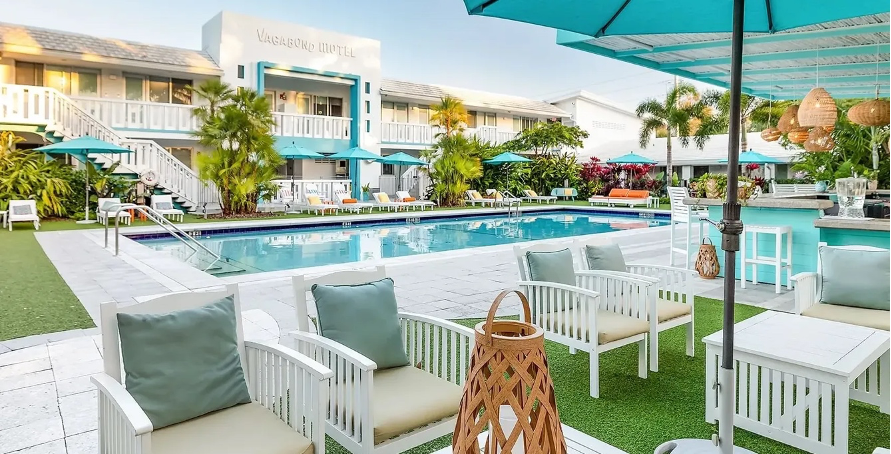
If your idea of sports on this vacation looks more like volleyball and Frisbee on the beach rather than Bengals football, that’s all right too!
Check in to the stylish Vagabond Hotel to start your trip with retro beachy vibes. Housed in a fully restored 1950s motel, the Vagabond is a stunning example of the city’s own tropical architectural style, Miami Modern. Plus, the rooms are perfectly themed with Mid-Century Modern décor. All the pops of color will be a major departure from our current midwestern dreariness! Once you’re all settled in, grab some seafood at Joe’s Stone Crab. Famous for serving Florida Stone Crab claws (as the name implies), Joe’s has been around for over a century and made its mark as a legendary Miami eatery. It has even been designated as a Miami Beach historic landmark.
Going to the beach is a given when in Florida, so look into checking out the Everglades for some different outdoor fun. The Everglades National Park is just under an hour away and is like nowhere else in the world. The best way to experience the one-of-a-kind ecosystem firsthand is through an airboat tour. While there are many options to choose from, locals recommend touring with Tigertail or Buffalo Tiger. Both are Miccosukee run and take you through Miccosukee tribal lands widely unavailable to the general public. They prioritize education on the wildlife you’ll see and conservation efforts on the surrounding nature as opposed to any touristy gimmicks.
All that and you’ll get to enjoy the nice weather at the stadium as well. Even if the game doesn’t go our way, at least it’s not -6°F.
– Meredith Ruhland

Hitting the High Mark
Ready for a Snow Dey? If you're heading north to see the Bengals take on the Bills, check out our recommendations to make sure you won’t be “winging it” for your weekend in Buffalo!
After that thrilling victory against the Ravens on Thanksgiving, your Bengals are back on track and also back on the road. This time, they’re heading up north to face Josh Allen and the Bills. Thankfully, Joey B has returned to make this another round of a must-see QB rivalry.
Going to the game? Here are some recommendations to make sure you won’t be “winging it” on your weekend in Buffalo!
Die Hard Fan
If you’re willing to visit Buffalo in winter to see a 4-8 Bengals team, you’re in this category! With that being said, Buffalo can be tricky to navigate, with the stadium in a suburb 20 minutes away. To split the distance, consider staying in the Hampton Inn Buffalo South/I-90. It may not be the most scenic, but it will definitely allow you to get to the game early so you can kick it with the Bills Mafia all afternoon. Just be wary around their tables!
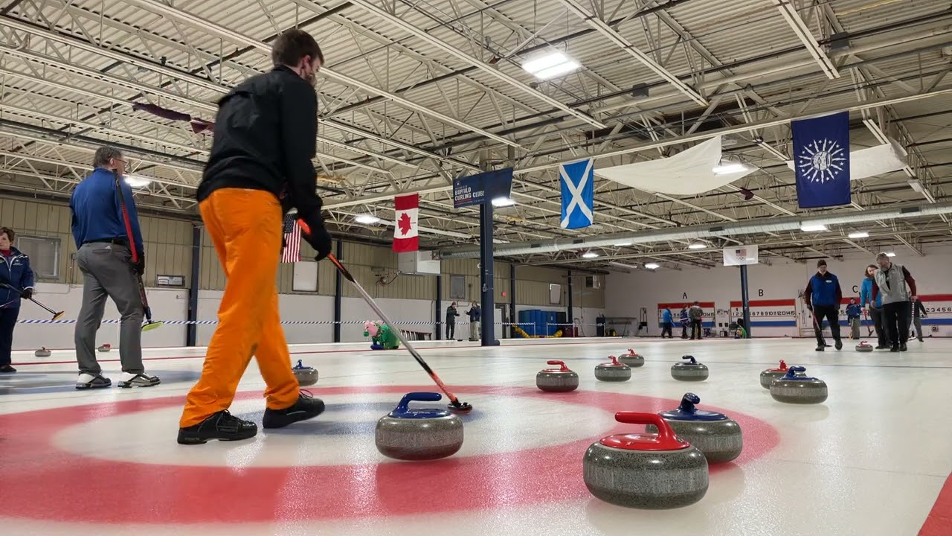
Buffalo does winter big, including winter sports. It may be daunting to hit the slopes if you don’t ski or snowboard, but luckily there is another sport to try: curling. If you’re anything like me, you’ve clicked play on the Olympics at a random hour only to be met with a game of curling. You probably thought to yourself “Wow, this looks easy, I think I could do it!” At the Buffalo Curling Club, you can test that theory. For $35 per person, you can take their 2-hour Learn to Curl class. And with the 2026 Winter Olympics coming soon, there’s no better time to try it! Once you’re all curled out, head to the famous Bar-Bill to warm up with authentic Buffalo wings. Bar-Bill is the only Josh Allen approved wing joint with the word around town that he orders 40 every time he eats there. So, before the Bengals try to beat him on the field, you could see if you can beat him at eating wings. (Although 40 seems like quite the challenge!)
On the bandwagon
If you’re back on the bandwagon because of last week’s big win (or because of Burrow coming back), I don’t blame you. Cincinnati sports teams always know how to get our hopes up. But regardless of what happens on the field, Buffalo is still a cool city to explore. A great home base for your trip would be the Edward Hotel. Built in 1910, the hotel was once part of Buffalo’s historic Millionaire’s Row, the richest street in the country. Now, it serves as a gorgeous boutique hotel offering the best of old-world opulence and modern style. Once settled in, you’ll be living lavish and ready to take on the town.
The most iconic spot near Buffalo needs no introduction. Niagara Falls. The famous falls are only a half hour drive away on the US side. Or, if you got your passport handy, drive that same amount and see them from the Canadian side, which many say is the superior experience. Either way, you’re not getting that view back in Ohio.
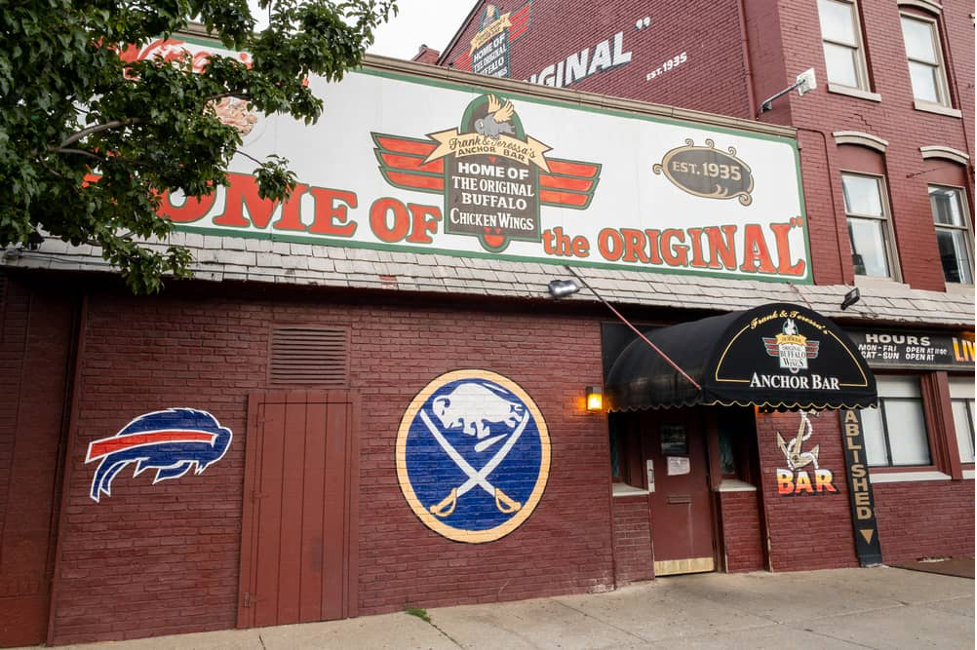
Once you’ve crossed that off your bucket list, you can head downtown to try the original Buffalo wing at Anchor Bar. If you don’t know the story, Buffalo wings are called Buffalo wings because of the city, not the animal. The Anchor Bar on Main Street is where they were invented after the mother of a bartender deep fried chicken wings that were normally used for a soup stock pot. The Anchor also has a gift shop that can't be beat, featuring ridiculous wing related items like a foam hat, wing print bandana and an extremely realistic neon orange chicken wing keychain. Who doesn’t need one of those!
Along for the ride
If you’re not that much of a sports fan or have gotten your heart broken by one too many Cincinnati sports teams, I understand. You’ll want to stay at the Richardson Hotel for a truly unique experience. It originally served as the Buffalo State Asylum for the Insane throughout the 1900s but has now been renovated to create a one-of-a-kind picturesque stay. The hotel is filled with gorgeous architecture and is housed on the 40-acre Richardson Olmsted Campus which is designated a National Historic Landmark.
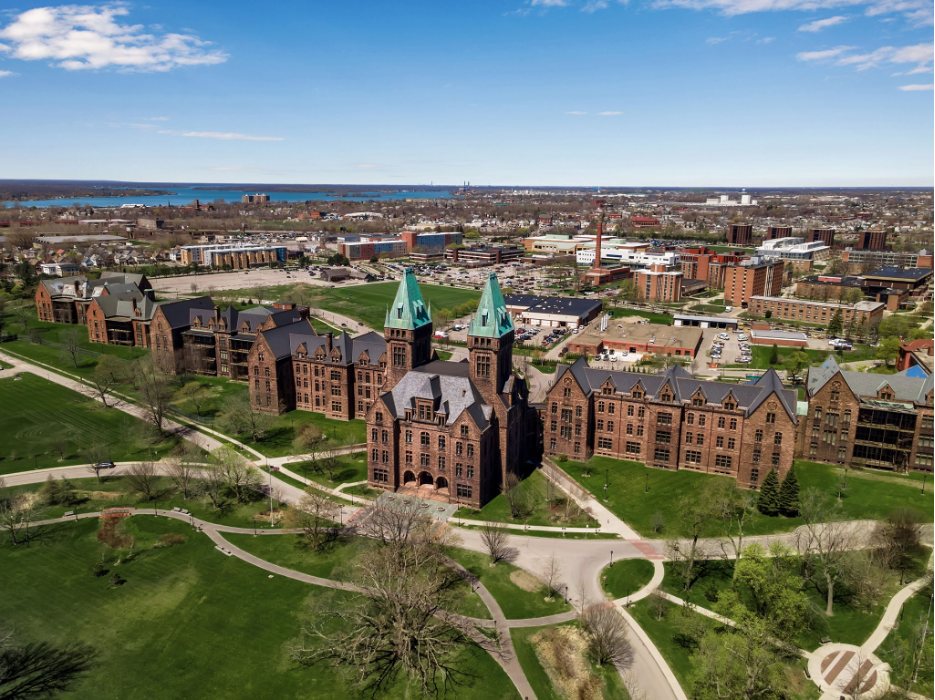
The Richardson is also just steps away from Buffalo’s AKG Art Museum that houses works by legendary artists like van Gogh, Dali, Jackson Pollock and Frida Kahlo. Founded in 1862, The AKG is the sixth-oldest public art institution in the United States. Beyond the vast collection of important works, the AKG is also unique for their Creative Commons, a large interactive space featuring countless LEGOs to build with. Keeping with the historic theme, Gabriel’s Gate is a cool, old school wing spot in Buffalo’s quirky Allentown district. So old school that there isn’t even an official site. But they have been serving the city for over 50 years, so they have to be doing something right! Plus, the Jonas Brothers stopped in last month if you needed another cosign. Afterwards, you can wander Allentown (unless you’re sick of historic architecture already).
Hopefully, Sunday’s game ends up like the Bengals’ snowy playoff victory over the Bills in 2023. Maybe without all that snow considering all of you making the trip.
– Meredith Ruhland

Steel Your Heart
The Bengals are on the road, facing the Steelers in a historically heated division rivalry. Check out what to do in Pittsburgh, if you’re brave enough to make the trip!
After a lengthy home stretch, your Cincinnati Bengals are back on the road. This Sunday, they head to Acrisure Stadium to face the Pittsburgh Steelers in a historically heated division rivalry. If you’re brave enough to venture to Pittsburgh for the game and become the most hated in a room of 68,000, here are some suggestions on what to do the rest of the time you’re in the Steel City.
Diehard Fans
As a diehard fan, a great home base while invading enemy turf for the weekend is the Residence Inn by Marriott Pittsburgh North Shore. It’s within walking distance of the stadium formerly known as Heinz Field and looks out directly toward PNC Park. Once you’re all set up there, it’s time to explore. Guessing you already know way too much about the Steelers due to the Bengals many blunder years in this rivalry, so check out the Heinz History Center for a broader view of Pittsburgh sports along with general history of the city. The museum is six full floors of artifacts with the second and third dedicated solely to sports. Plus, these historic exhibits will be perfect to get you prepped for Sunday’s ancient QB matchup of Joe Flacco vs. Aaron Rodgers aka “Unc Bowl II”!
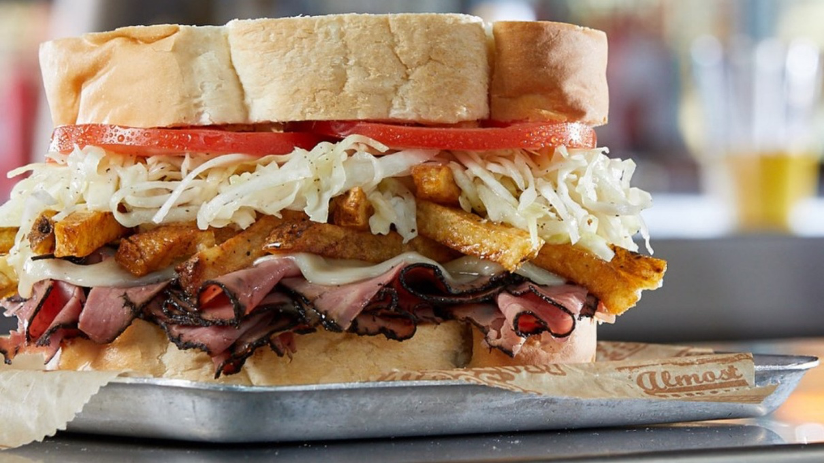
If you’re still craving more knowledge, another bit of Pitt history can be found at Primanti Bros. With locations in almost every part of town, their sandwiches have become cultural icons of the city. Primanti’s signature move is to put French fries on the sandwich which seems odd, but we can't really talk since we put chili on top of spaghetti. Hey, maybe we have more in common with Pittsburgh than we think! (Until Sunday, that is.)
On the bandwagon
If you’re on the bandwagon, staying at the Wyndham Grand Pittsburgh Downtown hotel will put you within range of the stadium, but not too close to where you’d get heckled by Steelers fans for the entire duration of your stay. It also comes with nice views of the Monongahela and Allegheny Rivers and direct access to Point State Park. Once checked in, take one of the three bridges across the Allegheny to visit the National Aviary. While the other major Pennsylvania city may be known for their birds in the sports world, Pittsburgh is home to the only independent indoor nonprofit aviary in the entire country. Unlike your typical zoo, the National Aviary allows you to get close and personal with rare birds as you walk amongst them in specially built habitat rooms. You could even feed a penguin while there!
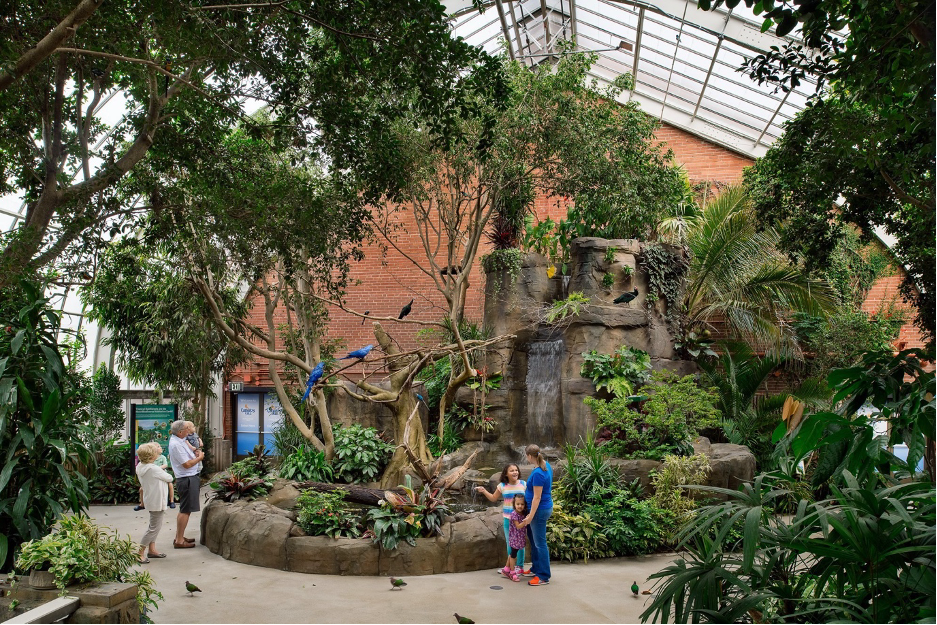
Cross the Monongahela River on the opposite side and grab dinner and drinks at Bigham Tavern for an authentic neighborhood bar feel. While you’re over there, ride the Duquesne Incline to take in some picturesque views of the city and the rivers. Also called a funicular, an incline is a short railway system up a steep slope. (Cincinnati had them back in the day.) The Duquesne Incline in particular takes you up to Mt. Washington for a spectacular overlook. With the sun setting earlier and earlier every day now, you’ll be sure to see some beautiful city lights.
Along for the ride
If you’re just joining for the vibes on this trip to Pittsburgh, consider staying at the Homewood Suites by Hilton Pittsburgh Downtown. This will put you right by the Strip District, one of the city’s coolest neighborhoods. Once an industrial area, the Strip has since transformed into a lively market with street vendors, delicious restaurants and iconic shops. You can shop ‘til you drop (and then some), stopping in funky stores like Mon Aimee Chocolat, Posman Books and Hot Haute Hot. With so many vendors and small-bite restaurants along the way, your meals could consist of several separate courses.
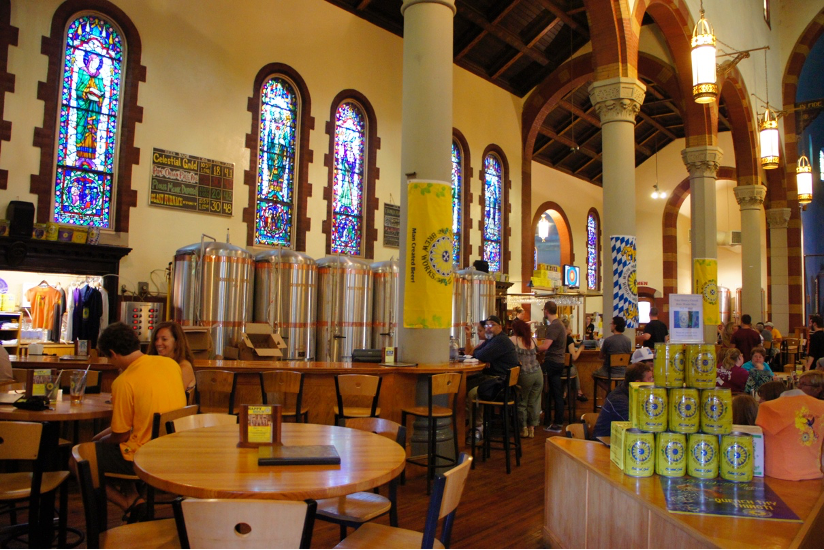
The area is also known for its unique breweries with one of the most eclectic being The Church Brew Works. This brewpub opened in 1996 as the first and only brewery in the country to be housed in a former church. While the exterior may be the selling point, their beer lives up to the hype as well with a few of their offerings winning the gold medal at the Great American Beer Festival in 2019.
As a Cincinnati fan, a distaste for all things Pittsburgh because of sports is totally understandable. But if you separate the city from the team, you’ll see that there is a lot to love. Except on Sundays, of course.
– Meredith Ruhland

Yes, Cheese
Week six finds the Bengals at storied Lambeau Field, with Joe Flacco leading the way against Green Bay.
Week six of the NFL season brings the Bengals out to Wisconsin for a late afternoon matchup against the Green Bay Packers this Sunday, with Joe Flacco stepping in as Bengals QB for the first time. Unlike most pro sports cities, Green Bay is only home to around 100,000 residents, making it a unique destination for sports fans. While the city may be small, there is still plenty to see, so pack your bags and follow our guide to learn how to get down in Titletown!
DIEHARD FANS

If you’re headed to Green Bay as a diehard fan, you’ll certainly be among other likeminded individuals as the city lives and breathes football. Check in to the Hilton Garden Inn Green Bay to find your people as it is only a short walk from Lambeau. On that walk, you’ll pass right by Lambeau’s Johnsonville Tailgate Village where you can begin your festivities by catching some live music before the game. You can head that same way on your off day to reach the Packers’ Hall of Fame, a must-see as the Packers have one of the richest histories in all of sports. Tickets for the hall of fame cost $23 and the average individual spends 60 to 90 minutes inside on a self-guided tour.
Once you’ve learned enough about Packers history, stop by Kroll’s West on the opposite side of Lambeau to learn some Wisconsin food history. The restaurant has been a Green Bay neighborhood staple for over 80 years and has received cosigns from Packers legends like Brett Favre and Bart Starr. Get acquainted with Wisconsin delicacies like cheese curds and make sure to try Kroll’s famous Butter Burger. After all that walking, you don’t need to worry about eating healthy anyways!
On the Bandwagon

If your life doesn’t revolve around football but you still want to experience the magic of Lambeau Field, don’t worry, as Wisconsin certainly has other charms as well. Staying at the Aloft Green Bay will place you slightly away from the football fanaticism and also right by the Fox River. Speaking of scenery, you can drive a little over an hour away to bask in the beautiful autumn colors of Door County and the Door Peninsula. Take part in classic fall festivities like apple picking, go on a hike or drive through the scenic foliage.
When talking about Wisconsin, we would be remiss if we didn’t mention beer, given the state’s reputation as one of the highest beer-consuming states per capita. A great spot to grab a pint is Badger State Brewing. They boast a broad selection of beers, seltzers, ciders and seasonal releases leaving no doubt that you will be able to find something you like. They also serve up signature thick crust pizza and fresh cheese curds to pair with your beverage of choice and get fully immersed in Wisconsin culture.
along for the ride
If the Bengals are somewhat of an afterthought in your travel plans, consider staying in Milwaukee for the duration of your vacation and only spend gameday in Green Bay. There are even shuttles that run from city to city that you could take depending on your car situation.

Check in to the historic Pfister Hotel that may or may not be haunted to get a true, one-of-a-kind Milwaukee experience. Assuming the ghosts don’t get you, check out the Miller Brewery Tour to get a behind-the-scenes look at one of the world’s largest brewing companies. Tickets are $20 and the experience consists of a 75-minute indoor/outdoor guided walking tour that teaches the company’s history while also showing the high-tech production lines used today. Oh, and there are free samples.
Milwaukee is home to numerous great food options; just make sure you save some room for their famous frozen custard afterwards. Looking exactly like a 1950s drive-up diner, Leon’s Frozen Custard is one of the coolest and most famous spots to indulge. They keep it simple with only a few flavor offerings, but those flavors are promised by them to be the “finest and freshest available anywhere,” and their 80 years in business speaks truth to that.
After planning to make the most of Green Bay and Wisconsin, let’s hope our Bengals can send the Packers packing Sunday.
– Meredith Ruhland

Leafing the Station
All aboard for Fall foliage, as the Ohio Rail Experience, part of the Cincinnati Scenic Railway, for its annual scenic ride along the Ohio River this weekend.
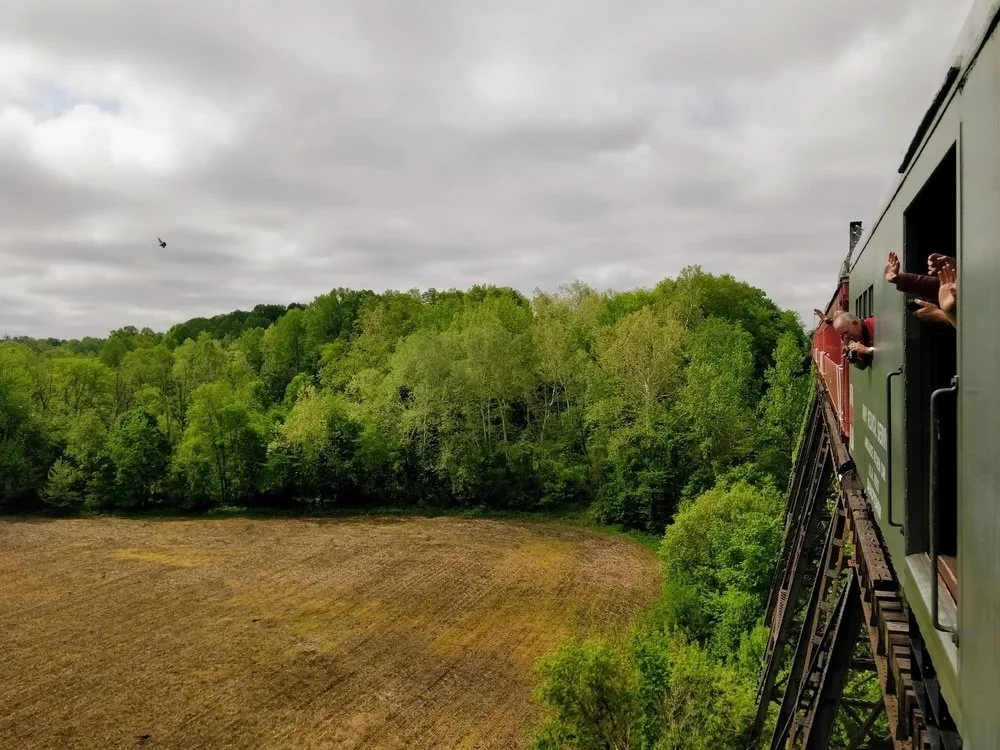
North Bend Flyer
Sunday, Oct. 5, 11 a.m. and 2 p.m.
Trip Duration: 2 Hours
Pricing: Adults: $25; Seniors & Children:$20 -
Boarding begins 30 minutes prior to departure time from 229 Idaho St., Cincinnati, OH 45204
For more info visit www.ohiorailexperience.com.
All aboard for a scenic trip from Cincinnati to Perfect North Slopes and back with the Ohio Rail Experience!
If you’re looking for a perfect Fall activity that checks all the boxes? (relaxing, scenic, and fun for all!) – don’t miss this this once-a-year opportunity to enjoy a lovely two-hour train ride with the historic Ohio Rail Experience (ORE).
This route was originally built for the Cleveland, Cincinnati, Chicago and St. Louis Railway, also known as the Big Four Railroad.
These train trips are a unique opportunity to experience the golden age of rail in a casual, family friendly atmosphere. Passengers ride in vintage railcars pulled by a historic diesel electric locomotive. ORE trains have open window coaches from the 1930s. Climate controlled deluxe coaches from the 1940s and ‘50s are also available.
Just like in the past, full concessions are available, with a wide array of options for purchase in the Queen City Tavern car.
ORE is a part of Cincinnati Scenic Railway (CSR), a nonprofit organization that operates the Lebanon Mason Monroe Railroad. ORE excursions are operated in partnership with local historical societies, the Lebanon Mason Monroe Railroad, and the Cincinnati Railway Company.
This route was originally built for the Cleveland, Cincinnati, Chicago and St. Louis Railway, also known as the Big Four Railroad. In 1906, the Big Four was acquired by the New York Central Railroad, which operated it as a separate entity until around 1930. The Big Four's lines were later incorporated into Penn Central in 1968 with the merger of New York Central and the Pennsylvania Railroad. Penn Central declared bankruptcy in 1970, and in 1976 many of Big Four's lines were included in the government-sponsored Conrail.

Solid as a Rock
The Bengals look to bounce back from a tough loss on this week’s Monday Night Football matchup. If you’re heading to Denver, you'll find lots to do in thie scenic sports town.

For this week’s Monday Night Football matchup, your 2-1 Bengals look to get back on track against the 1-2 Denver Broncos after a tough loss versus the Vikings. If you’re heading out to the game, great choice as Denver is one of the most scenic sports towns in the whole country. So, once you’ve made it to the Rocky Mountains and shaken off that altitude sickness, here are some plans to keep your spirits Mile High all weekend long no matter what Monday’s game may bring.
Diehard Fan
If you are still yelling “Who Dey” loud as ever despite the result of last game, you might just be a die hard. In that case, you want to stay at the Courtyard by Marriott Denver Downtown West as it is the closest hotel to Mile High Stadium you can possibly book. Seriously, it’s one minute away. This gives you plenty of time before the game to walk around the parking lot tailgates in your Bengals gear and get booed by the hordes of Broncos fans!

If you’re looking for allies though, head over to the Ballpark District and visit MST Denver, an official Bengals bar. Here you can grab drinks and feel close to home with their house-made Grippo’s-inspired dry rub wings (and maybe also find someone to commiserate with about last Sunday). While you’re in the area, consider a tour of Coors Field, home of the Rockies. The tour is rated by many online as one of the best stadium tours in pro sports, lasts 70-80 minutes and runs at 10 a.m., 12 p.m. and 2 p.m. daily. Tickets can be purchased here, although we understand if you don’t want to see any more purple at the moment.
On the Bandwagon:

Bought these tickets pre-Burrow injury and are now feeling a little fair-weather? Don’t worry as there is still so much to see in Denver! SpringHill Suites by Mariott Denver Downtown will put you at the heart of it all with direct access to downtown, the stadium and the Union Station light rail to get around town. One of your first stops could be over at the Denver Botanic Gardens as the city’s scenic appeal is not just limited to the surrounding mountains. It’s ranked as one of the top five botanic gardens in the country and provides a 24-acre oasis in the city. Besides, what’s a trip out west without a little nature?
Much like Cincinnati, Denver is a renowned brewery city. If all that walking in the gardens made you thirsty and/or hungry, head over to Cerebral Brewing’s Congress Park taproom to enjoy an extensive variety of beers and a meal from local food trucks. Or if you’d prefer to grab something closer to the hotel, look into Little Machine for high-quality drinks in a high-quality environment.
Along for the ride:

Ordered a vacation with a side of a Bengals game? Check in to the Catbird Hotel to get yourself situated in the quirky RiNo neighborhood, short for River North Art District. Here you can find visual artists, furniture makers, craft distillers and brewers, coffee roasters and some of the best restaurants in the city. Hop Alley fits that last category as it has been a RiNo staple for over ten years, serving modern adaptations of Chinese classics in a unique hip-hop inspired environment.
While Denver is a great city, one of the best things you can do while there is get out. Specifically, get out of downtown and immerse yourself in the surrounding nature. An easy way to do this is to visit the iconic Red Rocks Park and Amphitheatre. The amphitheatre is fully open to visitors until 2:30 p.m. on event days so you can experience a bit of music history as you’re taking in the beautiful scenery. While it is best known as one of the most legendary concert venues in the world, Red Rocks also doubles as a mountain park with several hiking and biking trails to explore. Just make sure you’re back before kickoff.
Now all that’s left to do is root for the Bengals! May the best orange team win!
– Meredith Ruhland

The Backup Plan
It’s a battle of the backups as the Bengals and QB Jake Browning tackle fellow backup Carson Wentz, but we’ve got ideas to make your trip to Minneapolis first-rate
If you’re heading to Minnesota this weekend to catch the Bengals on the road against the Vikings, you might want to have more on the itinerary than just hanging out at the Mall of America. Or, if you originally planned on getting outdoorsy in your spare time and are now facing a dreary forecast, you might need a few more ideas.
So, in honor of our backup QB Jake Browning facing off against fellow backup Carson Wentz, here are a couple of backup plans to make sure you make the most of your Minneapolis experience.
Diehard Fan
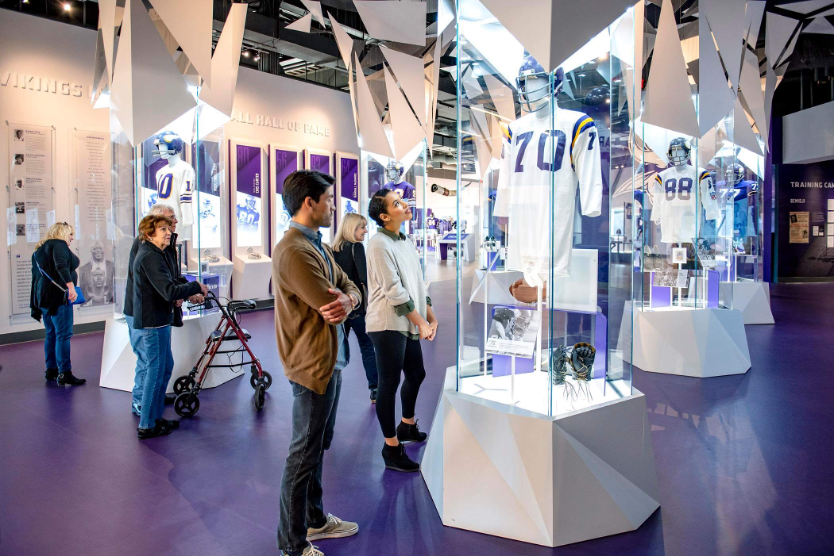
Courtesy Minnesota Vikings Museum
If you’re interested in knowing thine enemy for Sunday, take a short trip out to the Vikings Museum to learn the team’s history through interactive exhibits, a 360-degree video theater, and hundreds of artifacts. If the present is more your speed, the Vikings offer immersive tours of U.S. Bank Stadium. The public tour lasts 90 minutes and gets you into the locker room, premium clubs and suites, field area and interview rooms among other insider areas. You could also opt for the Ultimate Touchdown Tour which lasts 120 minutes and includes a unique look into gameday preparation in addition to everything in the public tour.
Once you’ve successfully blended in with the Minneapolis populace, head over by Target Field to The Loon Café for food, drinks and an authentic Twins gameday experience at the locals’ favorite sports bar. Not only are the Twins in town this weekend, but they’re also playing the Guardians so you can root against Cleveland! The enemy of your enemy can be your friend, until Sunday that is.
On the bandwagon:
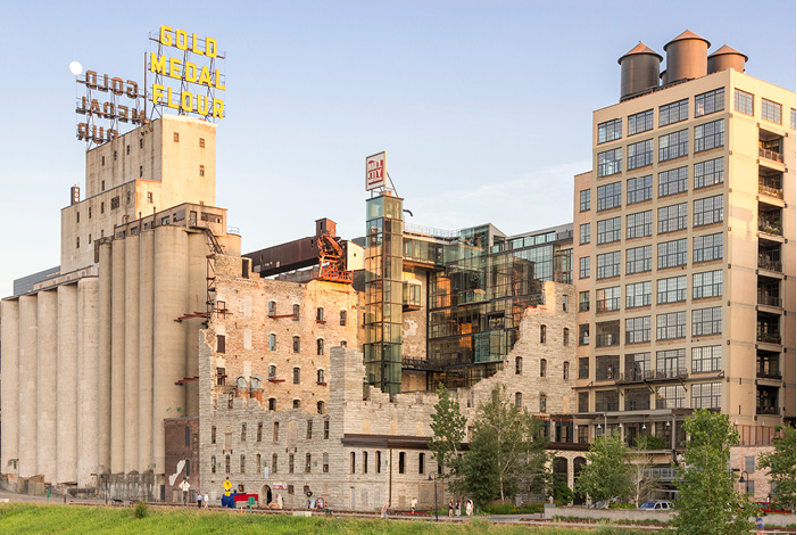
Courtesy Mill City Museum
Looking to explore what downtown has to offer beyond sports? Check out the Mill City Museum for an in-depth look at how Minneapolis was once the flour mill capital of the world with eight levels of interactive exhibits all set within the striking ruins of a 19th century mill. To sweeten the deal, they also have free baking samples from their test kitchen and panoramic views of the Mississippi River and St. Anthony Falls from the observation deck.
MPLS prides itself on being a foodie city, so be sure to check out the local cuisine. In particular, Spoon and Stable is a staple for the high-end side of things. Housed in a former horse stable from 1906 and led by James Beard award-winning chef Gavin Kaysen, the restaurant offers a French twist on American classics. If you’re looking for something completely unique, go to Hell’s Kitchen. And no, not that Hell’s Kitchen, Gordon Ramsay has no affiliation. In fact, this restaurant came first. Here, they promise “damn good food” and live music in a quirky underground space. Their menu ranges from classic Minnesotan Walleye to all-day breakfast and everything in between. You could even stop in for brunch before the game to get your day started with their iconic Bloody Mary and Mimosa bar!
Along for the ride:
If you’re in MPLS as a way to get out of town for the weekend, we’ve got you covered! Check out the North Loop side of town for a vibrant, bustling and walkable neighborhood home to taprooms, boutiques and world-class eateries all along a section of the Mississippi Riverfront. Stop in The Monte Carlo while you’re there to experience one of Minneapolis’ landmark restaurants originally established in 1906. Serving steaks, seafood and their famous chicken wings in a fully retro environment, it is sure to be a crowd pleaser.
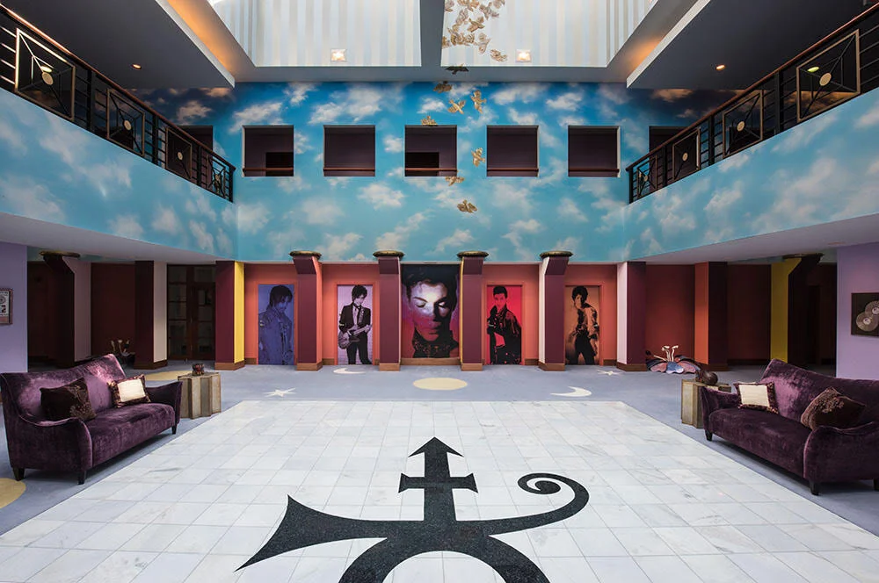
Courtesy Paisley Park
Want a break from downtown? Head to the suburbs to see iconic Minneapolitan musician Prince’s Paisley Park. Step inside the vision of one of the most talented artists of all time as you tour this 65,000 square foot complex that once served as Prince’s home, recording studio and production facility. Tours last 90 minutes and provide guests access to view artifacts from Prince's personal archives, including iconic concert wardrobes, awards, instruments, artwork, motorcycles and more. Just make sure all that purple does not turn you into a Vikings fan come Sunday.
So, if your original plans get hampered this weekend, do not fear as these backups will ensure your Minneapolis trip is just as great as what you first had in mind. Now hopefully we will say the same for the Bengals performance come Sunday.
– Meredith Ruhland

Head for the Hills
With a long weekend ahead, it's the perfect chance to take a little me (or us!) time. Hocking Hills is a great destination to refresh and renew.

Hocking Hills blends scenic trails, cascading waterfalls, and charming inns all within a short drive from Cincinnati. From family excursions to romantic getaways and girls trips, it’s a perfect spot to get back to nature. Among the well-known geological landmarks are Old Man’s Cave, Cedar Falls, Rock House, Cantwell Cliffs, and Whispering Cave. But quaint shops, restaurants with casual and classic dishes, and natural charm make it a must-visit spot.
Get some sleep
We rented the best AirBnb I’ve ever stayed in! A stunning, perfectly cozy A-frame house in Nelsonville, Ohio. It’s a short drive to popular Hocking Hills destinations, grocery stores, and wineries! And just a few minutes of SR 35.
The house had everything we needed and more! A hot tub welcomed us after a long day of hiking and adventuring, a yoga studio was available for stretching and soothing sore muscles, and the coziest lounge area downstairs, complete with a flat screen TV, comfy couches and a fireplace wa perfect for the ultimate in relaxation.
Can’t miss
Hikes! Don’t miss Old Man’s Cave and the loop. It took us 45 minutes on a late winter day in early March, and that’s only because it was a bit icy.
The next day we soothed our sore muscles in a Sauna Pod. It had a beautiful view of the surrounding forest, and made for a great afternoon of relaxation. (You can also stay at their A-frame houses on site, with a sauna pod just steps away.)
The Dish
58 West. This place was so great, we ate here twice!! I loved the Steakhouse Cobb salad. They have vegan and gluten free options, too.
Getting there
Hocking Hills is just under two hours from Cincinnati – Straight up 71, then head east on SR 35.
Hot Tips
The off-season in Hocking Hilils is kinda quiet. We didn’t hate that, though. You just have to be flexible.
On our last day, we stopped at a local flea market, grabbed lunch at a nearby cafe, made our way to our sauna pod, and then ordered in from our favorite new restaurant (58 West!).
– Lauren Artino

Red All Over
Enjoy the last splash of Summer with a family getaway to enjoy the rugged beauty and quiet moments of Red River Gorge.
In Kentucky’s Daniel Boone National Forest, Red River Gorge offers rugged beauty, geological wonders, and quiet moments that feel far from the everyday rush. On a recent trip, I found that the Gorge is about more than where you hike. It is also about where you sleep, what you eat, and how you let the rhythm of the wilderness guide your pace.
Get Some Sleep
We camped along the edge of Clifty Wilderness and the Red River Gorge Geological Area at a back-country site. You will need a parking pass if you go this route, and we purchased ours at the Shell station in Slade, Kentucky. The setting delivered seclusion, a small natural bridge within walking distance, and the sound of a creek and waterfall nearby. At dusk, the sun dropped behind the hills and our fire became the only light, creating a calm that stayed with me long after we left.
For those who prefer other accommodations, the area offers a range of options. Sage & Cedar and Cozy Creek have charm and comfort for couples or small families. The Amazonia Treehouse and the cliff-perched Cliff Dweller provide unique stays with memorable views. Cliffview Resort and Lodge offers large cabins, modern amenities, and hot tubs that work well for romantic getaways or group trips. Natural Bridge State Resort Park features lodge rooms and cottages with easy trail access.
Can’t Miss!
For a first visit, Natural Bridge or Sky Bridge is a must. These sandstone arches are easy to reach and offer sweeping views. Other highlights include Chimney Top Rock, Double Arch, Courthouse Rock, and the Auxier Ridge Loop.
We stayed near Rock Bridge, which is both scenic and easy to reach. The trail follows a creek and passes through shaded forest. It is a relaxing hike with enough beauty to make it memorable without the need for long climbs.
The Dish
While we always bring our own food when camping, Miguel’s Pizza in Slade is legendary! Known for fresh toppings like spinach, feta, sun-dried tomatoes, and roasted garlic, Miguel’s also serves pasta dishes and breakfast burritos. The setting is casual, with hikers and climbers sharing tables and swapping stories.
Other notable options include Red River Rockhouse for grass-fed burgers, burritos, and fish tacos, Daniel Boone Coffee Shop for biscuits and gravy before an early hike, and Thatcher Barbecue Company for slow-smoked ribs and live music at the Pit House.
Getting There
From Northern Kentucky, we took I-75 through Lexington, then I-64 to Winchester, and followed the Bert T. Combs Mountain Parkway into the Gorge. The drive took about one hour and 45 minutes. On the way back, we chose Route 27, which added about 30 minutes but offered a scenic drive through hills, farmland, and forest.
Hot Tips
When visiting Red River Gorge, it helps to pack light, even for overnight, back-country camping, because you will not need as much as you might expect. Choose your trail based on the type of experience you want – Clifty Wilderness offers solitude, while more central Gorge spots attract larger crowds. Plan for quiet nights by staying farther from popular trailheads, where the evening feels more like yours alone.
Above all, slow down. The Gorge is not a checklist but a place to linger and fully take in the surroundings.
Waking up to the sound of water in Clifty Wilderness, standing on Natural Bridge with the valley below, and hearing trail stories at Miguel’s are the kinds of moments that define the Gorge. It is a place to look, breathe, and keep exploring.
– Jarrett Baston

Roll on In
Looking for a summer break that won’t break the bank? Head up I-75 for a trip to Dayton to check out the newest Pins Mechanical, with duckpin bowling, arcade games, and more.
Nothing says summer fun like a good old-fashioned roadtrip!
Looking to get out of town? (But not too far out). Just head up I-75 to Downtown Dayton!

Pins Dayton has officially opened its doors and inside you’ll find a sleek, modern atmosphere perfect for gathering with friends and families.
With a wide selection of craft beers, innovative cocktails, and delicious appetizers, it’s the perfect spot to unwind after a long day. Bringing a crowd? Pins can handle that!
The top floor features a dedicated bar, indoor and outdoor spaces, and of course, pinball machines. Need to get back downstairs, but in a fun way? Take the slide to the first floor and meet your friends for a game of life-size beer pong (minus the beer in red solo cups!).
Pins is named for its duckpin bowling – think bowling, but shorter lanes and smaller pins/balls. You’ll find eight lanes, plus pinball machines, and more games.
Pins Mechanical
416 E. First St, Dayton, OH 45402
More at pinsbar.com.
Whether you're a fan of games or simply looking for a great place to relax and socialize, Pins Dayton delivers, with stylish ambiance, friendly staff, and top-notch entertainment.


