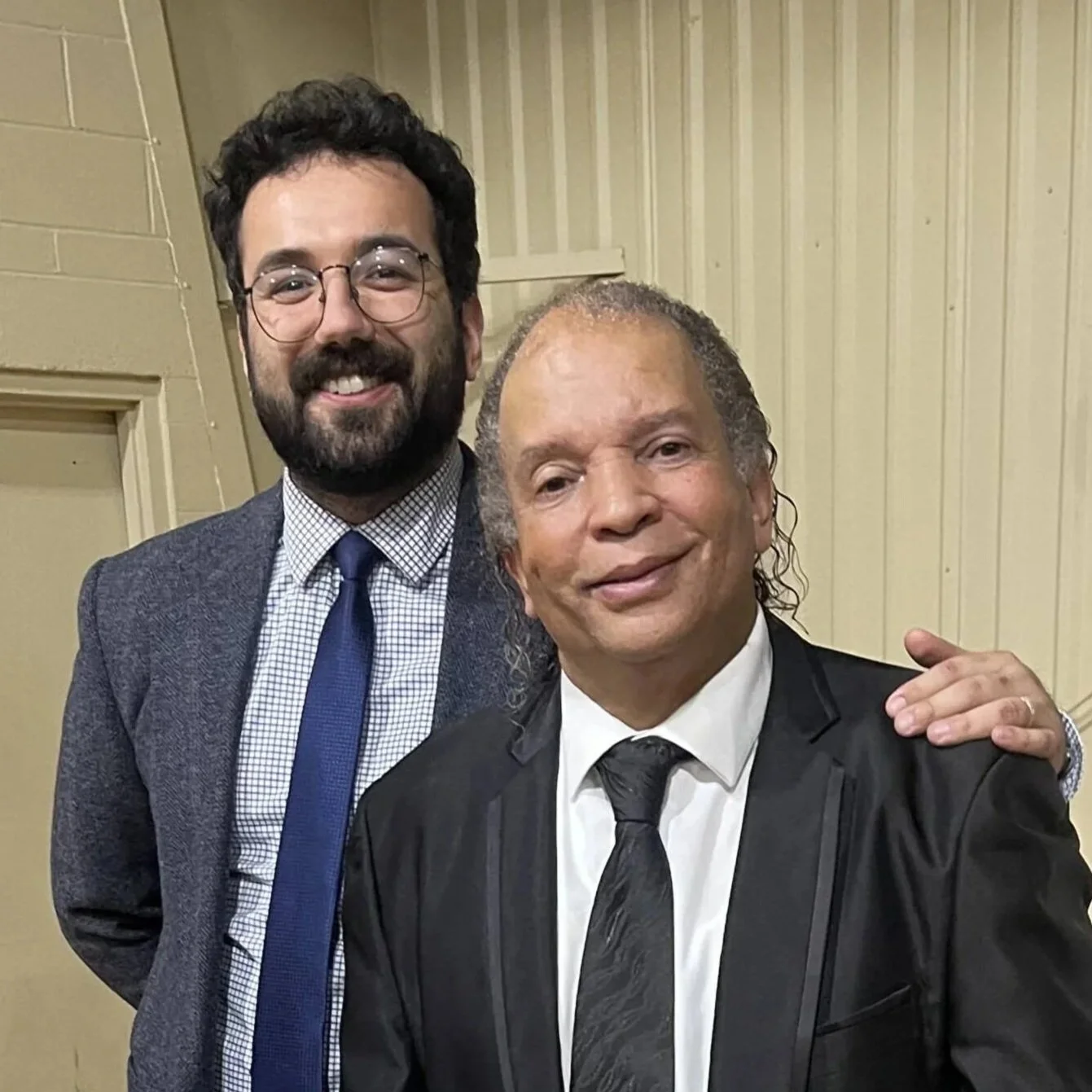
Ali Rizvi and Rev. Todd E. O’Neal
Pay-What-You-Can Dinner at Garden of Joy
This Friday, Nov. 20 is French Night, from 5–8 p.m. with quiche, soup, ratatouille, and crème brûlée, and celebrate Chef Juliette’s birthday.
Pay-what-you-can dinners are held every other Friday at Garden of Joy, with the next one on Friday, Dec. 4.
During the school year, the program serves as free after-school education open to students ages 12 to 20 or kids enrolled in grades 7 through 12. Each day concludes with a group meal they call “family dinner.” This summer, Garden of Joy also ran two sessions structured around rotating learning stations designed to build practical skills, confidence, and community
More at www.gardenofjoyculinary.org
As you’re planning your menu and making your list for Thanksgiving, you’re likely thinking about sentimental favorite dishes that you make every year. But how and where you learned to cook is also an important ingredient.
When you sit down with family and friends around a communal table, in celebration of that first Thanksgiving, you’ll be expressing the importance of how sharing a meal creates community.
An organization in Clifton takes those ideas and puts them into action every day.
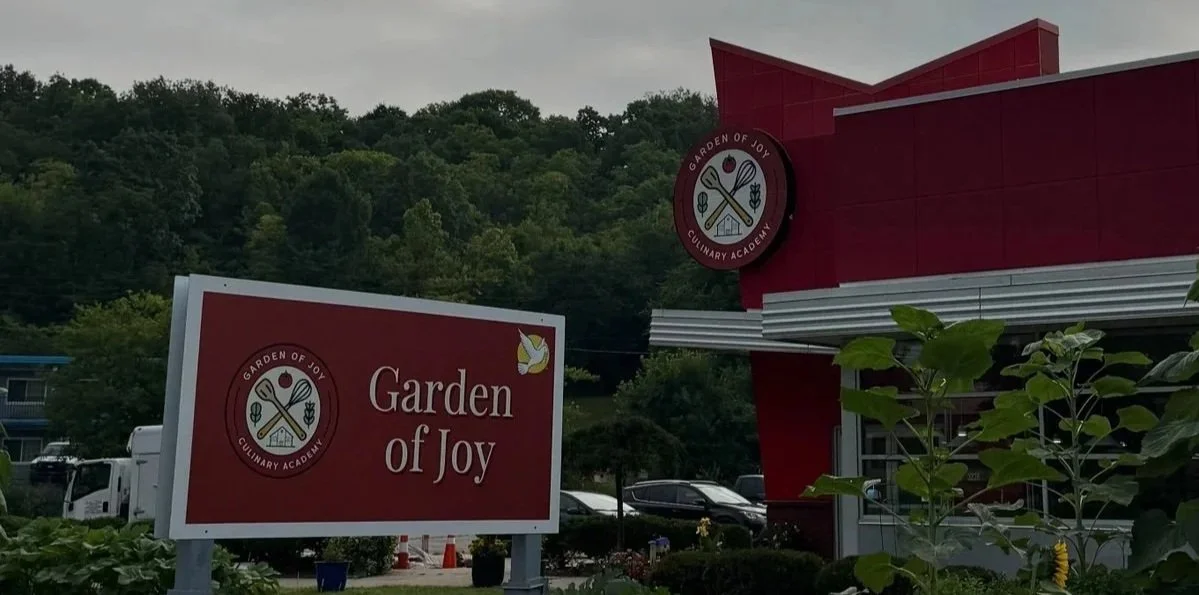
Garden of Joy Culinary Academy, 3226 Central Parkway, is a community-powered program serving youth across Greater Cincinnati through garden-to-table education model.
The idea for the program grew out of a friendship between Rev. Todd E. O’Neal, pastor at House of Joy Christian Ministries and Ali Rizvi, a social work with Cincinnati Public Schools.
House in a ormer Frisch’s Big Boy building next to the House of Joy Church, Garden of Joy officially opened in October 2025.
Ahead of the biggest cooking holiday of the we checked in with Rizvi about growing a garden and growing a community.
What inspired the creation of Garden of Joy?
My wife and I moved to Cincinnati in 2023 and started working as school social workers with Cincinnati Public Schools. I never, ever imagined I’d be part of a team running a culinary school.
In November 2024, Domonic Davis, an 11-year-old from the West End who attended a local charter school, was shot and killed. Domonic didn’t attend Hays-Porter, but many of his friends did, and some Hays-Porter students were there when he was shot. In the same shooting, one of our Hays-Porter parents was shot, and her fourth-grade son helped save her life by applying tourniquets to her bullet wounds.
Mayor Aftab Pureval visited Hays-Porter and spent time with the students. He asked them to raise their hands if they had witnessed gun violence or knew someone close to them who had been a victim. Nearly every student in grades three through six raised a hand. I was familiar with gun violence, but I was particularly concerned by how many Hays-Porter students and families had been exposed to it.
At Hays-Porter, we had implemented restorative practices in how we addressed conflict, behavior issues, and discipline incidents. In restorative conversations, we asked what happened, who was harmed, how the student could repair the harm, and what they could do to prevent it from happening again. I saw firsthand the difference those conversations could make, and we saw our suspension and expulsion rates plummet.
We had also seen many young people face chronic suspensions or expulsions. We know that when those patterns go uninterrupted, they often lead to incarceration or death. For us, that is not an option.
Reverend O’Neal, CCPA, members of the West End community, Domonic’s family, and I organized a Walk to End Gun Violence in his honor, with a town hall and a concert for peace. After the walk, Rev. O’Neal and I talked about how we could support young people, especially those facing chronic suspensions or expulsions, or those without safe, engaging opportunities after school.
When a former Frisch’s Big Boy building went up for sale, Rev. O’Neal said he wanted to turn it into a culinary school. I said, “Rev, you can’t cook. How are you going to run a culinary school?” He told me, “Don’t worry about it. Just trust me.” He had shown up for our community during the walk, so I told him, “Anything you need, I’m here to help.”
We began building a free, garden-to-table program where young people can learn culinary arts, gardening, and practical life skills in a safe, supportive community. We wanted everything at Garden of Joy to be rooted in restorative practices. We help students learn to handle conflict, understand the impact of their actions, and repair harm while staying connected to people who care about them. We want young people to build confidence and purpose, develop skills for adulthood and future careers, and stay on the path to graduation. We believe they deserve to feel safe, valued, and connected, and to know they are never disposable.
How does gardening and preparing meals together change a community?
There’s something special about being together around a meal. I think we’ve lost some of the ritual of family dinner, and the comfort of knowing that even after a hard day, there’s a place to sit down together. A couple of times a week at Garden of Joy, we put our phones away, turn off the TV, and share dinner. We laugh, pass food around, and catch up with one another. Even when a student has had a hard day, they know they can come sit down and share a meal with us. We hope they can carry that ritual home to their families, too.
Gardening adds another layer. It’s amazing to watch our students run out into the garden in the summer and early fall to harvest produce they’ll use to make dinner for their family and friends. They’re learning patience and mindfulness, and they get to see the results of their own work. There’s real pride in making a meal with something they grew, even if it’s as simple as adding a pickle made from a cucumber they helped harvest.
Do the students bring in family and friends to join the program?
We’ve had students bring friends from school. I think many of them want to share this part of their lives with their friends.
For a lot of our students, it matters to be good at something. School and life can be hard, and they hear a lot about where they’re falling short. At Garden of Joy, they can make a beautiful meal and share it with their families and friends by saying, “I made this.” That gives them a sense of confidence and agency, and I think it helps keep them coming back.
How has the collaboration with House of Joy helped both organizations thrive?
Garden of Joy is a ministry of House of Joy, and the church community’s support is what makes our work possible. Garden of Joy also gives the church a way to extend its ministry of care and compassion to young people and families, including students facing chronic suspensions or expulsions.
Restorative practice is central to how we do that. When conflict or harm happens, we ask what happened, who was affected, and what is needed to repair the harm. We hold students accountable while helping them stay connected to their community and the people supporting them. Some Garden of Joy students have been suspended dozens of times or expelled multiple times. Since joining the program, many have seen a significant decrease in suspensions or expulsions, and some have had no further suspensions or expulsions. Our goal is never to exclude a young person who has already experienced repeated exclusion. Accountability and support need to go together.
Where would you like to see the programming go next?
I’d like us to reach more students, expand our pay-what-you-can dinners, and grow the services we can offer students and families. My long-term goal is for Garden of Joy to become a CPS school, similar to the Cincinnati Zoo Academy but for culinary arts and horticulture. I want every CPS high school student to have the opportunity to experience our program.
I hope every student who leaves Garden of Joy carries confidence, a belief in their own dignity and self-worth, and the understanding that their future can be whatever they want it to be. They might become a chef, a gardener, a doctor, or something else entirely. Our goal isn’t for every student to become a five-star chef. It’s for them to graduate and build a life of dignity that they choose for themselves.