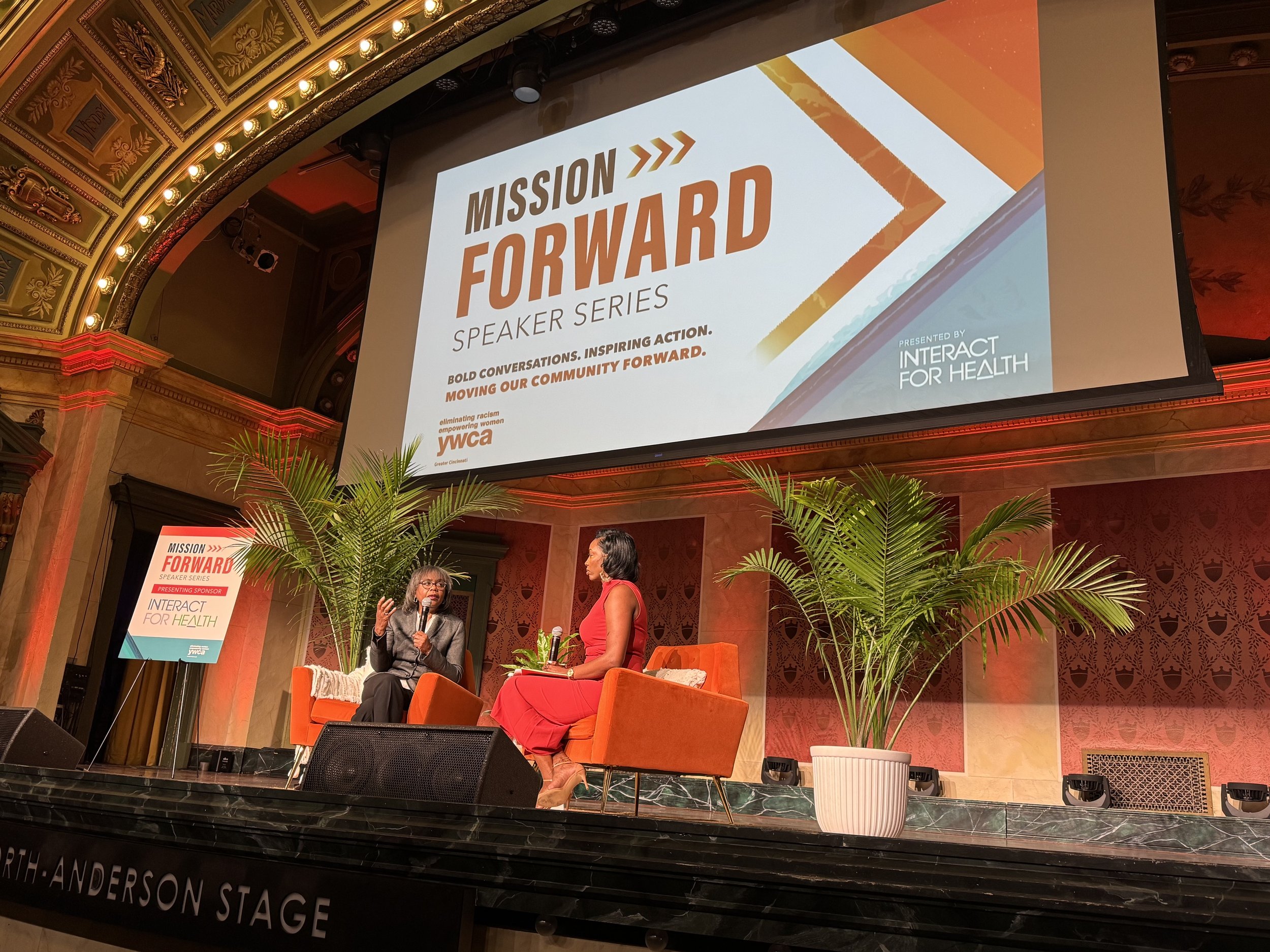
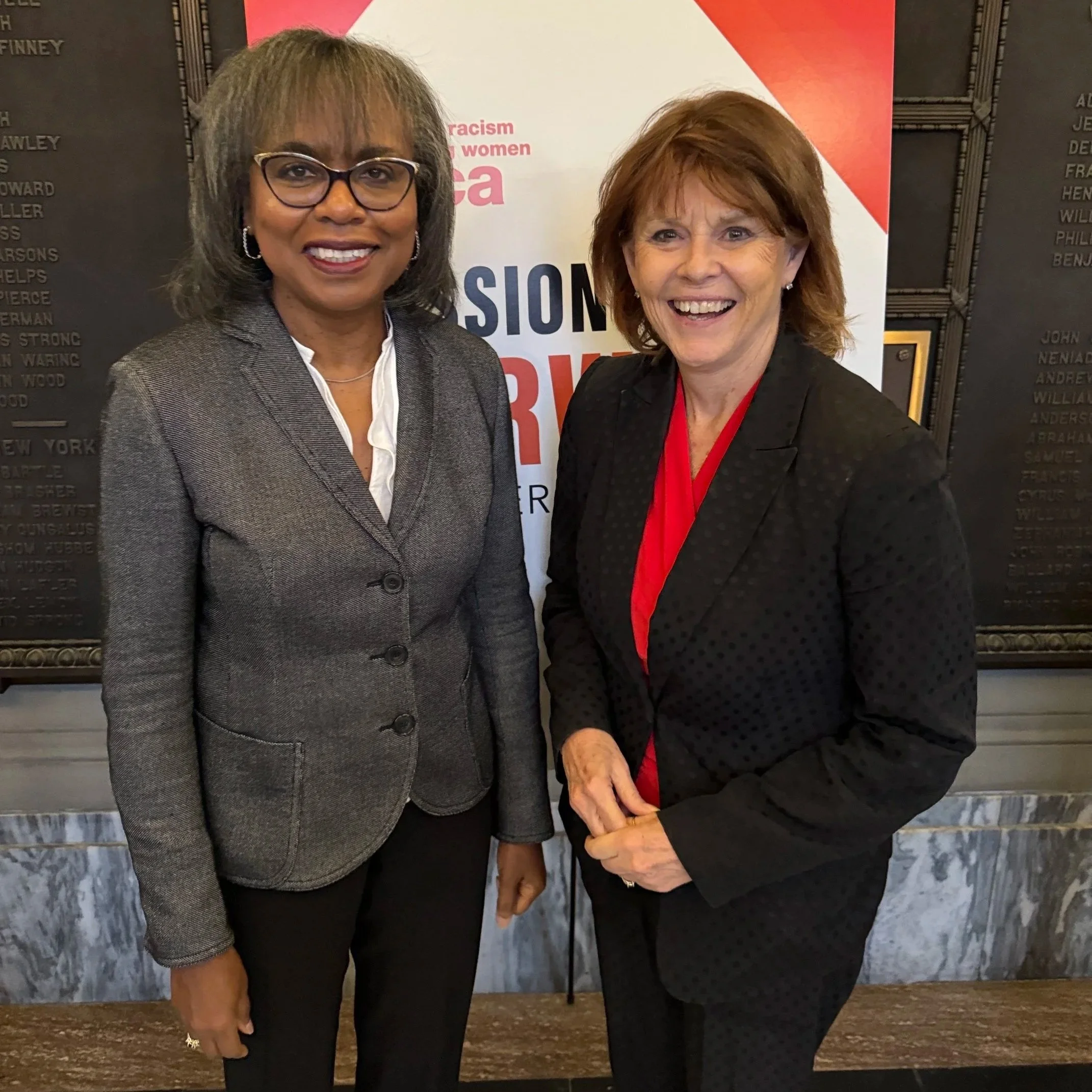
More than three decades after her historic testimony before the United States Senate changed the national conversation about sexual harassment, Professor Anita Hill delivered a powerful message of accountability, resilience and hope Wednesday evening at Memorial Hall during YWCA Greater Cincinnati’s inaugural Mission Forward Speaker Series.
Hill, an attorney, author, educator and professor at Brandeis University, challenged the audience to recognize that ending gender-based violence requires more than legislation. It demands cultural change, economic opportunity, institutional accountability and sustained community engagement.
Reflecting on her 1991 testimony, Hill recalled a time when many Americans did not understand sexual harassment or recognize the legal protections available to victims.
Following the hearings, she remembered a media commentator declaring that nothing had been learned from her testimony.
“He was wrong,” Hill said.
Thirty-five years later, Hill acknowledged meaningful progress, including increased representation of women in government, greater public awareness and the global impact of the #MeToo movement. Yet she emphasized that systemic challenges remain deeply embedded in American institutions and culture.
“Much has changed, not enough has changed,” she observed.
Economic Security and Personal Safety Are Connected
Throughout her remarks, Hill praised YWCA Greater Cincinnati for recognizing the interconnected nature of economic security, women's leadership, equity and freedom from violence.
She challenged the audience to consider how child care, family leave, pay equity and gender representation contribute to preventing gender-based violence.
The answer, she emphasized, is all of them.
For women experiencing domestic violence, financial independence can determine whether they can safely leave an abusive relationship. Housing costs, child care responsibilities and limited economic resources often create barriers that cannot be addressed through legal protections alone.
Hill stressed that these challenges require coordinated solutions involving nonprofit organizations, businesses, educational institutions, philanthropists and community leaders.
She also warned that violence begins affecting individuals at young ages, underscoring the importance of families and schools in establishing expectations of safety, respect and accountability.
From #MeToo to Institutional Accountability
Drawing on her leadership with the Hollywood Commission, Hill discussed efforts to transform workplace culture following the #MeToo movement.
She explained that meaningful reform must protect everyone within an organization, not simply its most visible or influential employees.
Hill called for consequences when harmful behavior occurs, challenging the tendency of institutions to excuse misconduct because an individual has otherwise achieved professional success.
She also addressed the distinction between accountability and what critics sometimes describe as cancel culture.
Without consequences, Hill argued, harmful behavior will continue.
Her message extended to organizations that publicly embrace equity while failing to examine their own hiring practices, leadership structures and workplace cultures.
Businesses, she suggested, must welcome perspectives that challenge established practices rather than repeatedly selecting individuals who resemble existing leadership.
A Challenge to Cincinnati's Leaders
Following her keynote, Hill joined Ashlee Young, vice president of strategic partnerships at Interact for Health, for a fireside conversation exploring how individuals and organizations can translate awareness into meaningful action.
Hill encouraged participants to study the issues they care about, listen to people working directly within affected communities and resist relying exclusively on internet searches or artificial intelligence for answers to complex social problems.
“You can't rely on algorithms,” she cautioned, emphasizing the importance of human relationships, lived experiences and understanding institutional systems.
Asked about advice for emerging women leaders, Hill encouraged them to pursue work that genuinely motivates them while remaining open to unexpected opportunities.
“Do what moves you,” she said.
She reminded younger professionals that meaningful careers rarely follow perfectly predictable paths and that leadership requires preparation, persistence and a willingness to grow.
Hope as a Call to Action
Despite acknowledging political and cultural challenges, Hill concluded with optimism about the ability of local communities to create lasting change.
Quoting poet Pauli Murray, Hill reminded the audience, “Hope is a song in a weary throat.”
Her closing message was both a challenge and an affirmation: lasting progress requires people willing to confront difficult questions, support organizations doing the work and accept responsibility for building safer, more equitable communities.
For YWCA Greater Cincinnati, the inaugural Mission Forward Speaker Series established a platform for precisely those conversations, connecting nationally influential voices with the community leaders positioned to turn ideas into action.
Hill's message was clear: The work continues, and everyone has a role to play.
– Betsy Ross
The Mission Forward Speaker Series is designed to spark important conversations that inspire action and move our community forward.
For more information about the Mission Forward Speaker Series, visit ywcacincinnati.org/missionforwardspeakerseries.