

Big Shoes to Fill
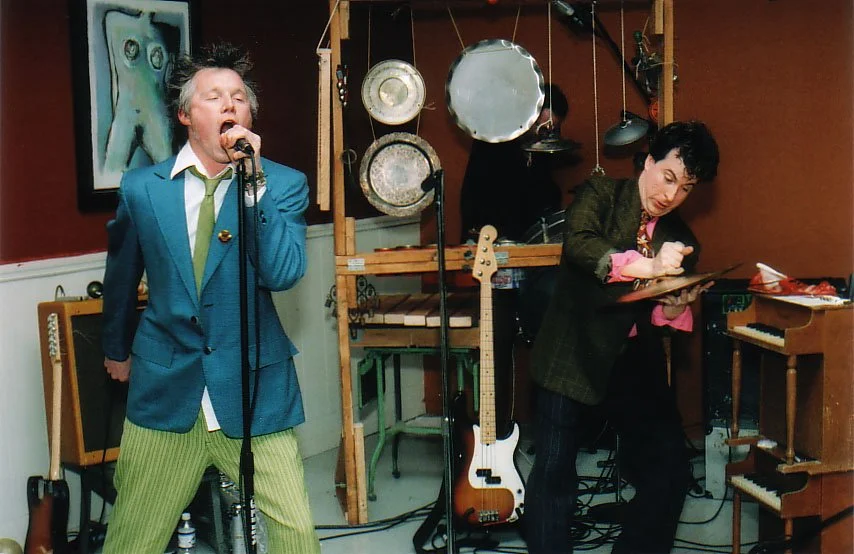
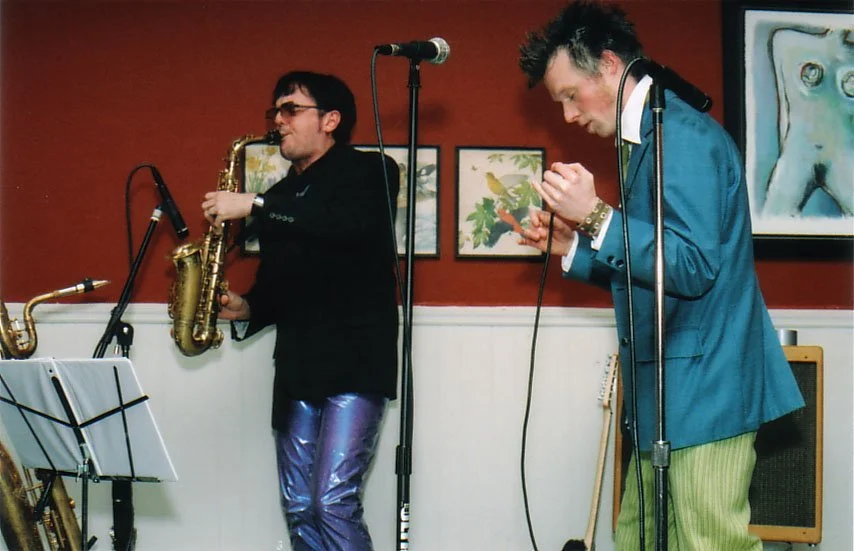
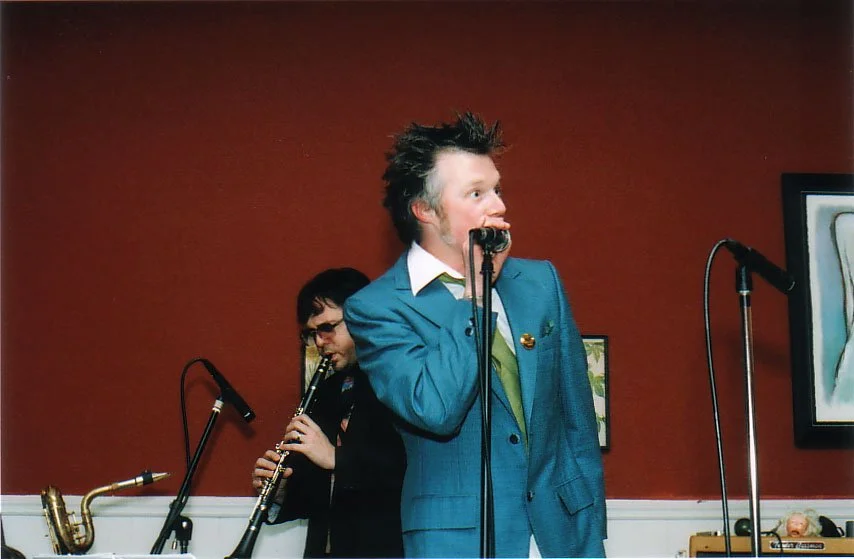
Photos: Andy Dobson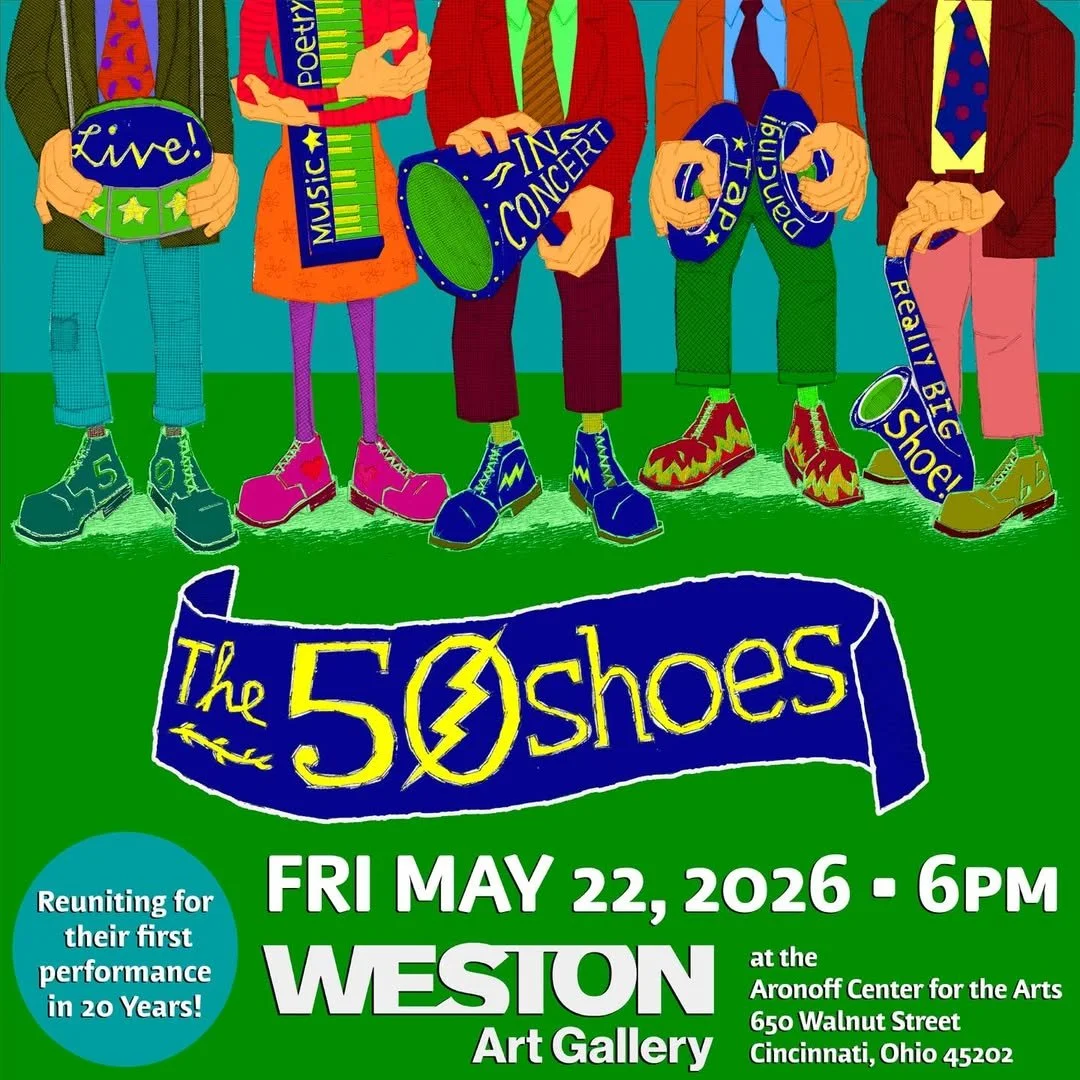
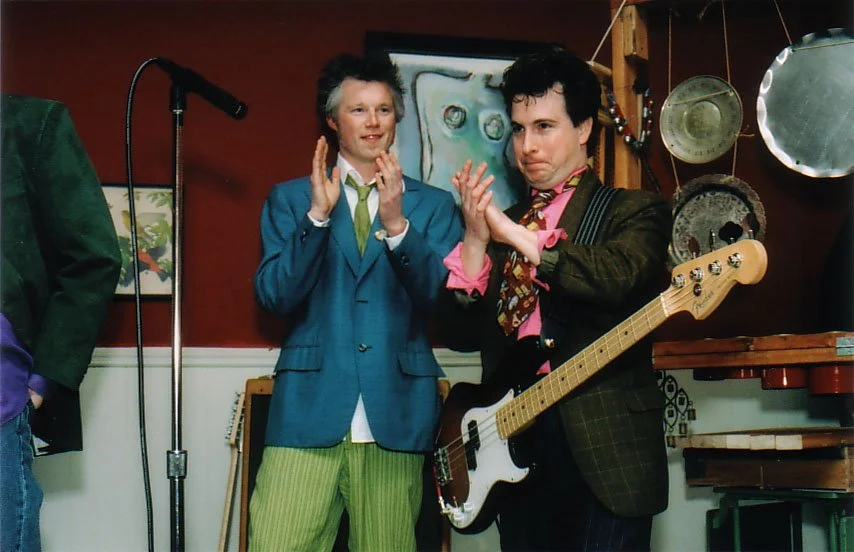
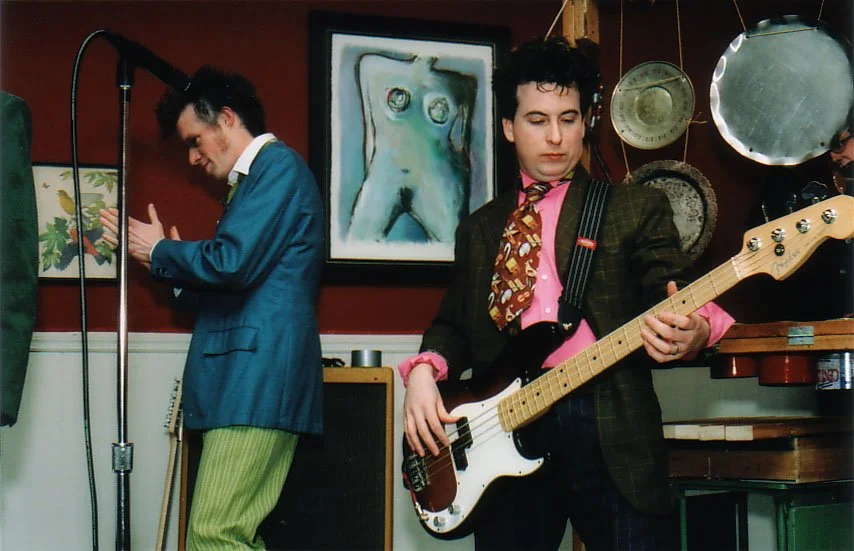
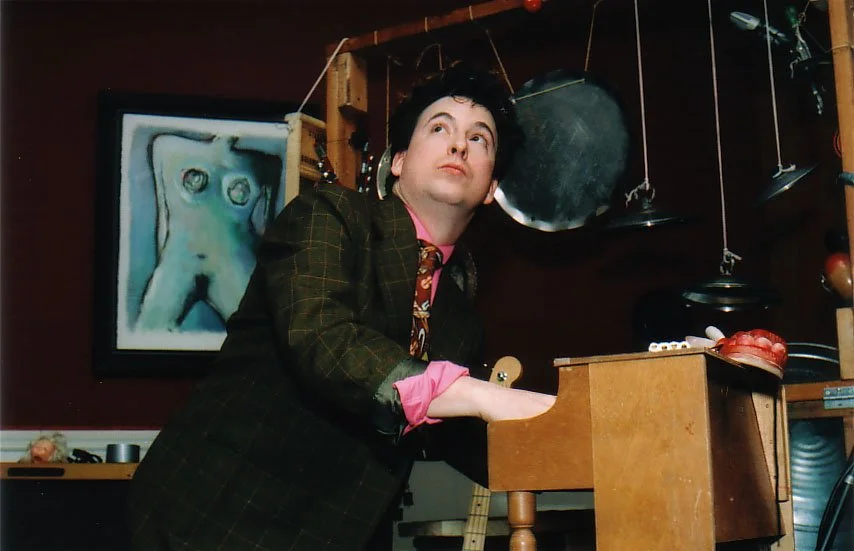
Eric Appleby (bass, keyboards, toy piano, tap) was a co-founder, publisher, and designer of “Forklift, Ohio: A Journal of Poetry, Cooking & Light Industrial Safety.” He has designed poetry books and chaps for authors including Dean Young, Charles Wright, Paul Violi, Chad Sweeney, Adam Fell, Russell Dillon, and Matt Hart. A graduate of Ball State University, he works as a Computer Whisperer Marketing Hack for a regional wholesaler. He plays in the bands Nevernew, 7 Speed Vortex, and TRAVEL.
Nick Barrows (narrator) is the host of the Inhailer Radio's programs, “Kinda Early” and “In.Local.” He is a vocalist in the bands Jack Burton Overdrive and Hare Hunter Field. He has been performing poetry for more than 25 years, from Kaldi’s Coffee House to Word of Mouth at MOTR Pub. His words have appeared in “Forklift, Ohio: A Journal of Poetry, Cooking, & Light Industrial Safety” and several Aurore Press anthologies.
Jane Carver (keyboardist, vocals), a graduate of the Art Academy of Cincinnati, she is an adjunct professor at Bowling Green State University. Her artistic practice includes fabrication in wood, ceramics, metal, plastics, and found objects, drawing, photography, set design and construction, as well as writing, music composition, and production.
Matt Hart (vocals, guitar) was a co-founder of “Forklift, Ohio: A Journal of Poetry, Cooking, & Light Industrial Safety” and editor-in-chief from 1994–2019. The head of creative writing at the Art Academy of Cincinnati and faculty mentor in the PNCA/Willamette University Low-Residency Creative Writing MFA Program, his awards include a Pushcart Prize, a grant from The Shifting Foundation, and fellowships from the Bread Loaf Writers' Conference. Hart’s music has been featured on MTV and in major motion pictures, including Kevin Smith’s “Mallrats.” He plays in the post-punk/indie rock bands Nevernew and Travel.
Jay Reynolds (multi-instrumentalist) has been playing woodwinds since he was 12 years old and he’s loved every minute of it. A graduate in saxophone studies from both the prestigious Interlochen Arts Academy and The University of Cincinnati College-Conservatory of Music. From playing as a session musician alongside artists like Bootsy Collins, to touring with bands like 10-time Grammy Award winners Asleep At The Wheel, he has played either sax, flute, or clarinet in literally every style of music.
Christian Schmit (percussion and sound effect specialist) is a graduate of the Art Academy of Cincinnati in 1994 and has a master of fine arts from the College of Design, Architecture, Art and Planning (DAAP) at the University of Cincinnati. He has served as an adjunct faculty member at U.C. – DAAP’s School of Art and AAC. His work has featured in exhibitions in venues including Eva G. Farris Art Gallery at Thomas More College, the Carnegie Arts Center, Wave Pool, and Weston Art Gallery. His work is represented in numerous private collections.
(Note: For the purposes of his story, a “Shoe” can be a poem, a musical composition, or a performer. Just go with it.)
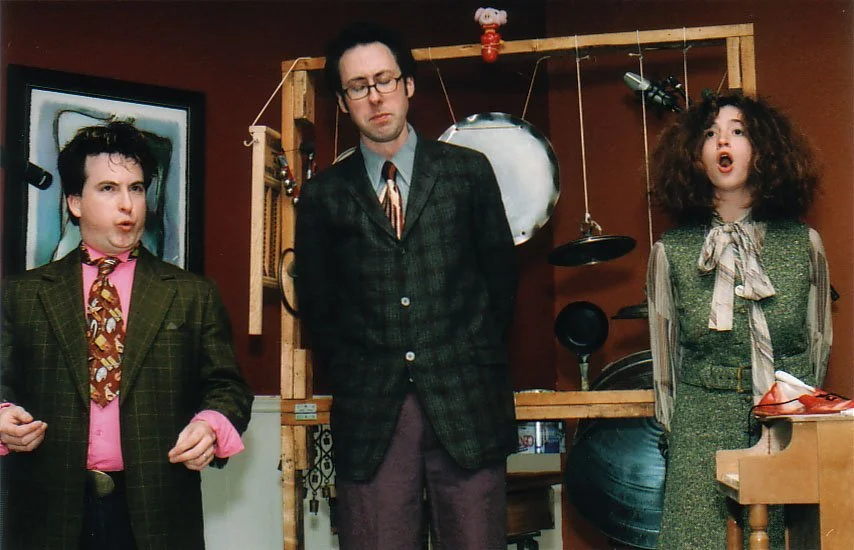
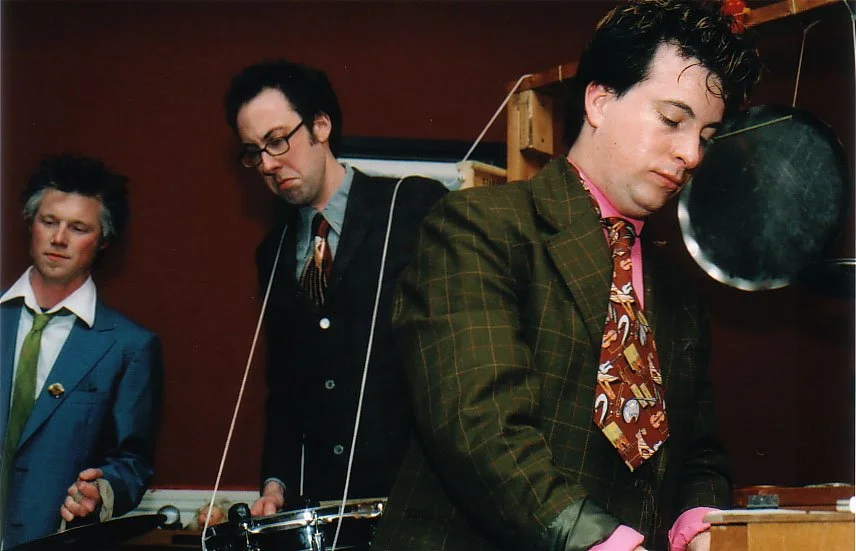
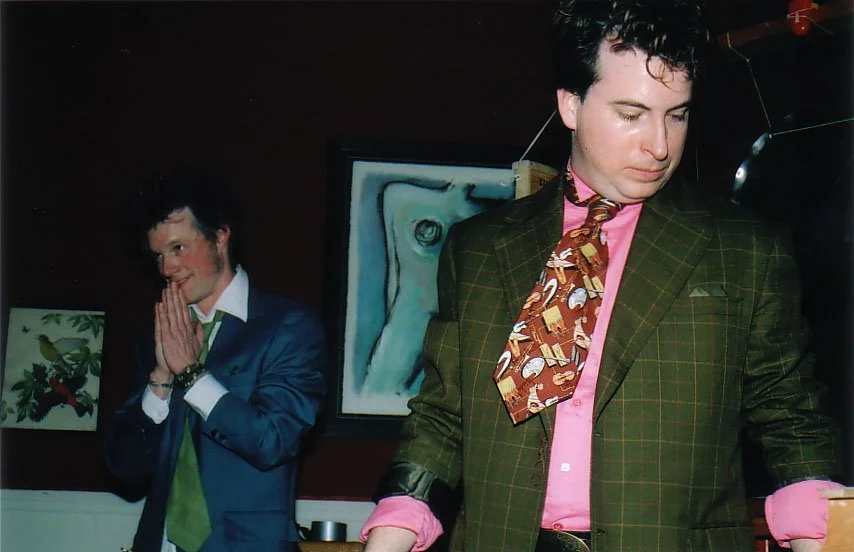
Founded in the late ’90s by longtime collaborators Eric Appleby and Matt Hart, The 50 Shoes are a mix of spoken-word poetry, genre-defying music, dance performance, and visual art.
On Friday, for the first time in more than 20 years, The 50 Shoes are reuniting for a one-night-only performance at the Weston Art Gallery.
Michael Goodson, director of the Weston Art Gallery, has begun to bring in more performances including the Mark Lomax Quartet playing John Coltrane’s “A Love Supreme” in honor of its 60th anniversary and Puzzle of Light playing a set including massive sound sculptures.
“Hart’s poetry was suggested to me as I spoke to people about including writers and poets to the programming,” says Goodson “Our first conversation made it clear that we had similar interests in music as well. The 50 Shoes seemed a clear interstitial moment between punk and poetry. It also seemed to be an interesting portal into Cincy’s historied punk and alternative scene.”
Hart and Appleby have played in bands together – punk and otherwise – for more than 30 years, and also published “Forklift, Ohio: A Journal of Poetry, Cooking, & Light Industrial Safety,” for 20 years. The other band members – Jane Carver, Jay Reynolds, and Christian Schmit – have played with both Hart and Appleby in other bands, as well as in numerous other musical projects on their own. (See sidebar.)
“We’ve all known each other for decades, and it's fun doing something out-of-the-ordinary, which is itself beyond-out-of-the-ordinary,” says Hart.
The origin story of The 50 Shoes dates back to a discussion about the artistic process between Hart and Schmit, a visual artist and Shoes’ percussionist.
Schmit recounted his thoughts about drawing the perfect shoe. Even if he got it right the first time, he still needed to erase and re-draw the shoe another 49 times because as an artist he wanted to try every idea.
Inspired by that concept and tribulation, Hart wrote 50 short poems that, he says, were all trying to do the same thing but couldn’t. Then Appleby, in a spirit of collaboration – and, admittedly, a bit of one-upmanship – decided to set each poem to music.
“It's been fascinating, sometimes humbling, to try on these pieces we originally wrote and performed in our 20s, and wear them at our current age,” says Appleby. “A Shoes performance always felt precarious – if only by the numbers – doing 35 pieces, trading off among a dozen instruments, and each one a different mood, style, or genre.”
Every performance includes a recitation of the poem by Hart before exploding into a song – melodic, noisy, jangly, shanty – composed by Appleby.
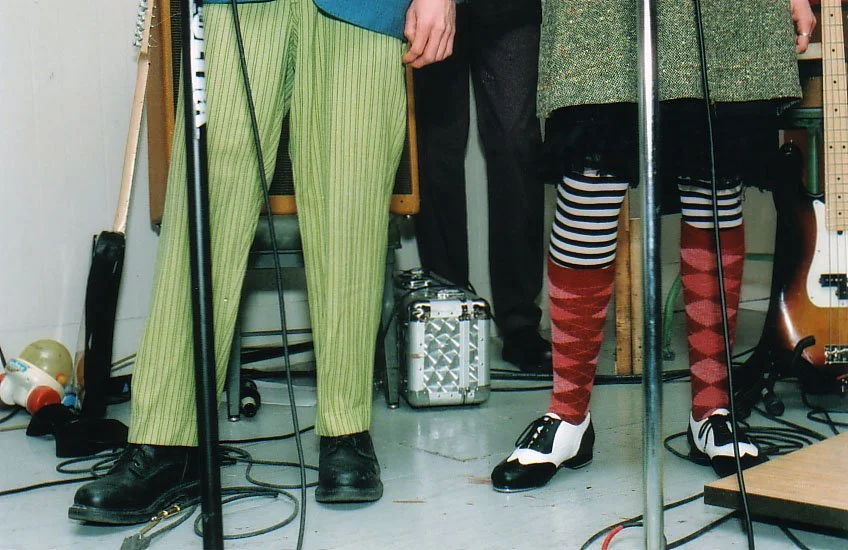
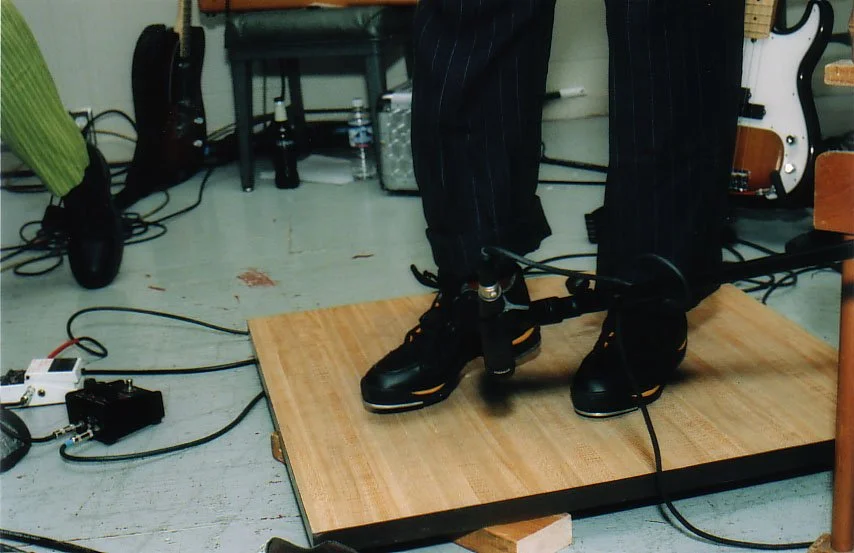
The musical elements include Schmit’s hand-assembled percussion rig, tap dancing, toy piano, accordion, saxophone, bass, and guitar. The players often switch instruments and on occasion abandon them completely.
“As with all art, these pieces are significantly a record of their own making, and each performance of them is a demonstration of the process,” says Hart. “The pieces are in many ways still alive, evolving moment to moment.”
While poetry and music can be often solitary endeavors, a group of dedicated musicians and friends, contributed music and sounds to Appleby’s original concepts. Through improvisation and, of course, trial and error, the Shoes created the final songs the audience hears.
“The words of a Shoe often don’t ‘make sense’ in any conventional way, so what follows their recitation is our best effort at making sense, illuminating, underlining, erasing, re-drawing, or transforming them,” says Appleby. “It’s a bit like that old saw that in musical theater – when itts too much to say, you sing; and when it's too much to sing, you dance. But with the Shoes, we try to do all of these at once, or in rapid succession. Also, there’s one where Christian actually plays a saw.”
– Tricia Suit