
In a New Light
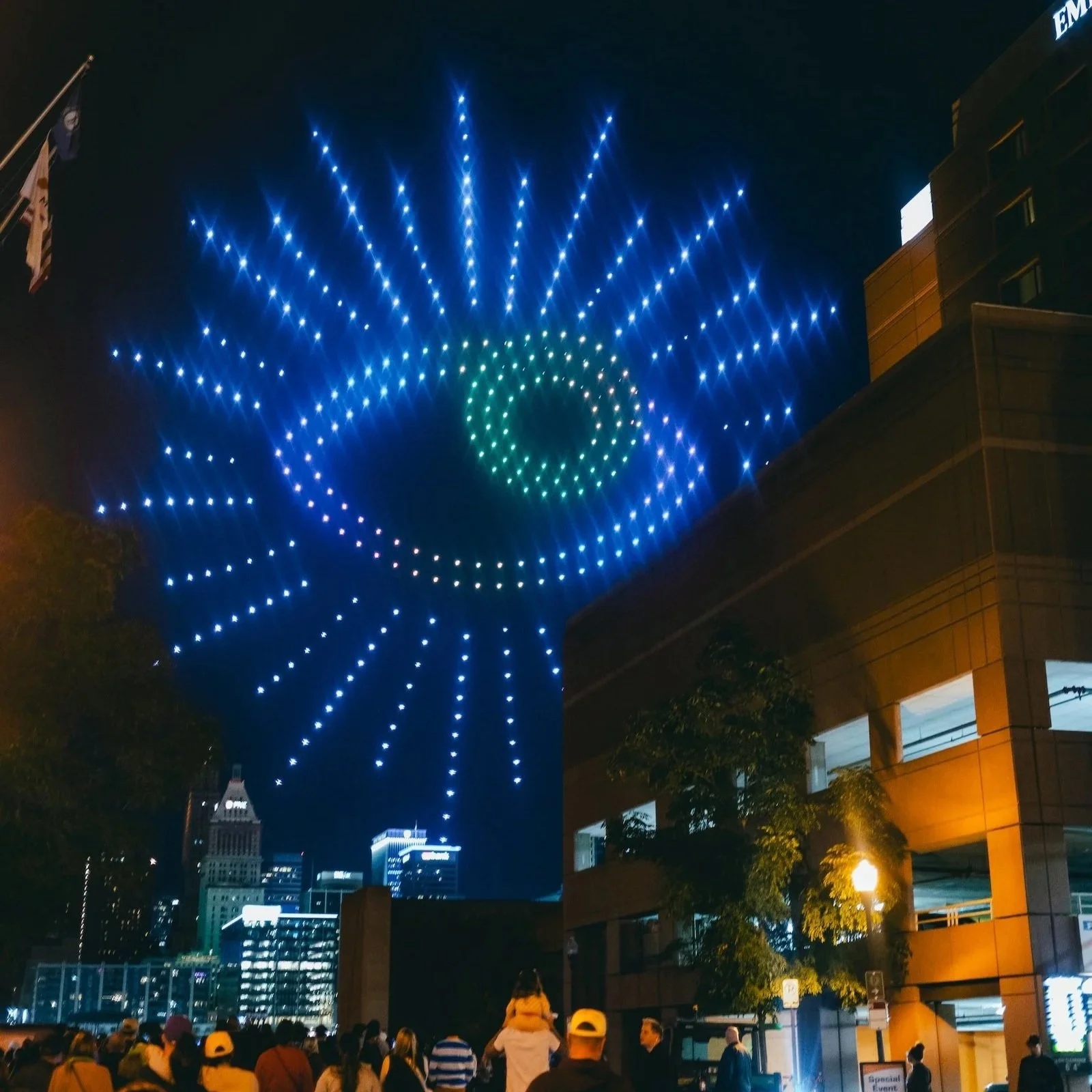
For four nights during BLINK, Cincinnati becomes a canvas. Light, projection, sound and technology transform familiar landmarks into something entirely new. We look at how BLINK stack sup against other similar festivals around the world.
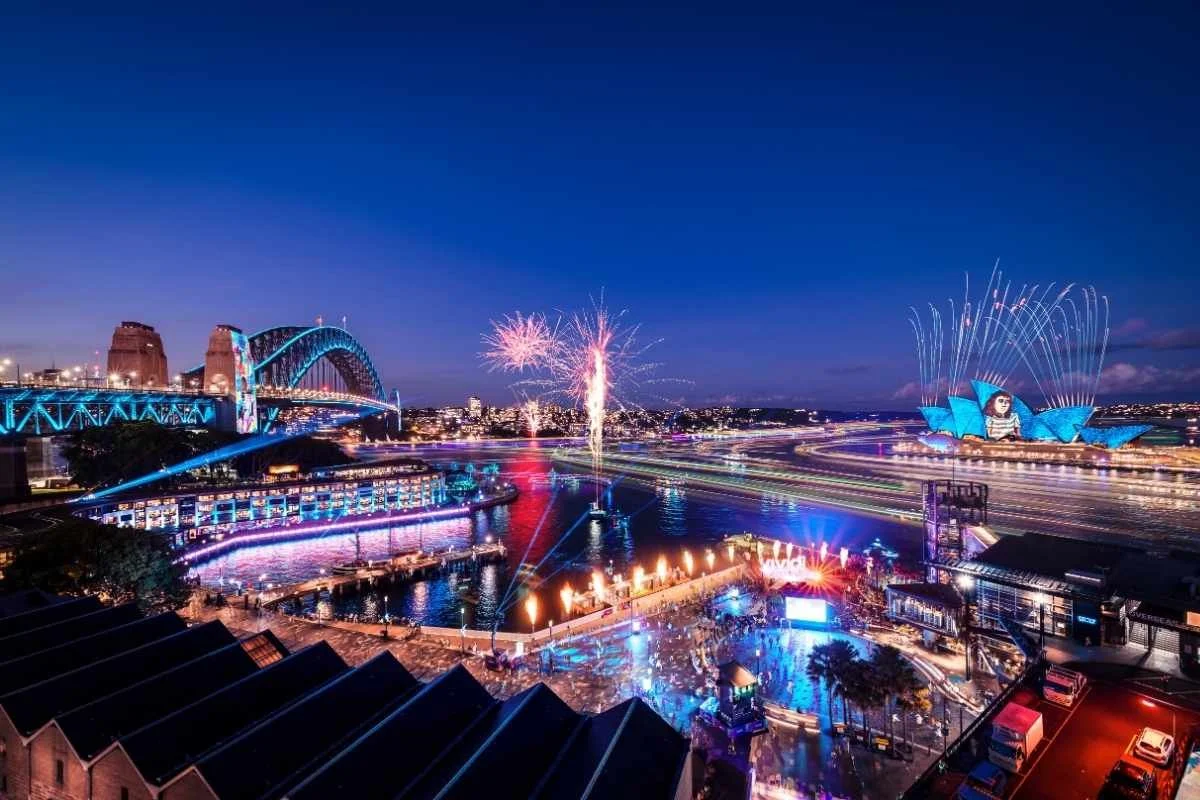
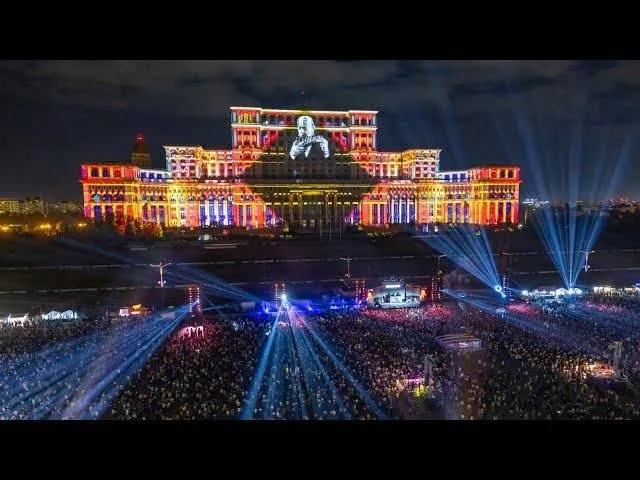
For four nights, Cincinnati becomes a canvas.
Buildings move. Murals come alive. Streets become galleries. Light, projection, sound and technology transform familiar landmarks into something entirely new.
BLINK Cincinnati returns Oct. 8-11, 2026, and what began as a local experiment in 2017 has grown into one of the world's largest light and projection-mapping experiences.
More than 2 million people attended BLINK in 2024, with organizers estimating a $205 million economic impact. This year's festival features 92 artists representing 20 countries, including 30 from Cincinnati and Northern Kentucky.
How does Cincinnati compare with the world's other great light festivals?
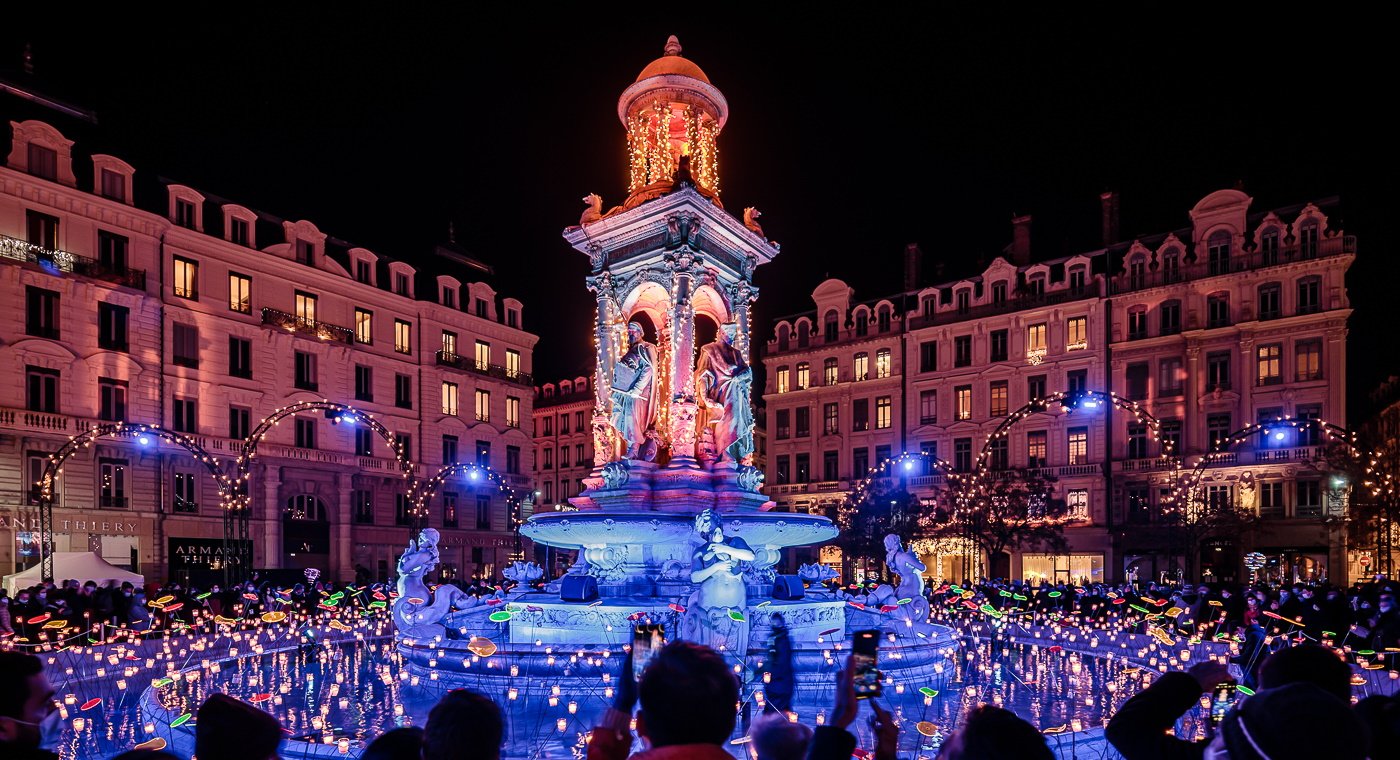
Lyon: Make It Part of the City's Identity
France's Fête des Lumières has roots dating to 1852 and today attracts more than 2 million visitors during four nights. Like BLINK, historic buildings become enormous projection canvases and the city itself becomes the gallery.
Sydney: Turn Visitors Into a Tourism Economy
Australia's Vivid Sydney attracted 2.54 million attendees in 2025 and generated approximately $164 million in visitor spending. Its secret is programming beyond light. Vivid combines Light, Music, Ideas and Food, while hundreds of restaurants, hotels and businesses participate in an official festival business program.
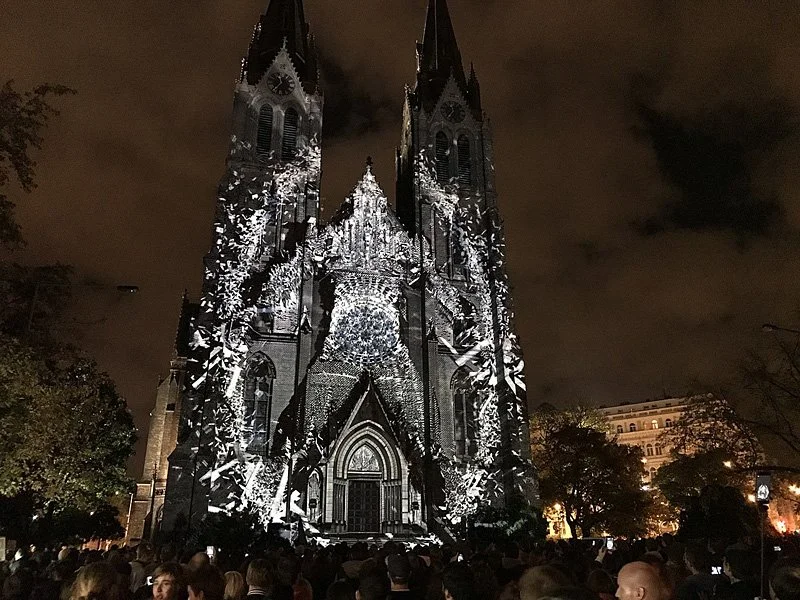
Prague: Become a Creative Technology Laboratory
The Signal Festival combines projection mapping with digital art, artificial intelligence and interactive technology. In 2025, artists transformed
Prague landmarks and even projected digital artwork onto a wall of water.
Bucharest: Turn Projection Mapping Into Competition
Romania's iMapp Bucharest transforms the massive Palace of Parliament into a 23,000-square-meter projection canvas. International artists compete before a jury and spectators, essentially turning projection mapping into a creative sport.
Could BLINK Become A Year-round Attraction and Economic Driver?
BLINK has already proven it can attract millions of people. Its next opportunity may not be getting bigger, but becoming more valuable to Cincinnati as a new tourist attraction and economic driver.
Borrowing from the world's leading festivals could mean creating an official BLINK hotel, year-round BLINK experience in a downtown museum setting, attracting technology companies to demonstrate emerging creative tools by moving their studios here; developing an international projection competition; and marketing BLINK globally as a reason to spend several days in Cincinnati, all year round.
Cincinnati also has something many light festivals don't: permanence. More than 70 murals have been created through BLINK, leaving a public-art legacy long after the projections disappear.
Sydney has its harbor. Lyon has centuries of tradition. Prague has its historic architecture.
Cincinnati has a compact urban landscape stretching across a river, filled with murals, historic buildings, bridges and public spaces.
For four nights, BLINK connects them all. The result isn't simply art in the city – The city becomes the art.
– Jackie Reau

Growth Economy
The opportunity sounds almost too simple: use food to improve health, then make sure more of the food and services are purchased in Ohio. See how Ohio could build a $257 million food is medicine economy and how Cincinnati could lead they way.
Ohio could create $257.4 million in annual revenue for small and midsize farmers and support 16,120 jobs if Food is Medicine reaches scale, according to a new report recently published in USA Today. Getting there will require something bigger than another nutrition program: Ohio must deliberately build a market.
The opportunity sounds almost too simple: use food to improve health, then make sure more of the food and services are purchased in Ohio.
The Rockefeller Foundation estimates that scaling locally sourced Food is Medicine programs could create $257.4 million in potential annual revenue for Ohio farmers and support 16,120 jobs. Nationally, the model could generate more than $45 billion in economic activity.
But the $257 million is not a grant waiting for Ohio. It is a market Ohio would have to create.
First, Build the Buyers
The first step is not planting more crops. It is creating reliable demand.
Food is Medicine includes produce prescriptions, medically tailored groceries and medically tailored meals for people with diet-related conditions. To reach meaningful scale, those services need sustainable payment from the health-care system.
That means Ohio should build on existing Medicaid and waiver pathways where nutrition services are covered, while bringing Medicaid managed-care plans, commercial insurers, self-insured employers and health systems into the market. Philanthropy can fund pilots and infrastructure, but the long-term goal should be reimbursement and contracts, not permanent charitable subsidy.
A simple progression should guide the strategy: grant to pilot, pilot to evidence, evidence to reimbursement, reimbursement to scale.
Create One Ohio Marketplace
Ohio should establish an Ohio Food is Medicine Collaborative, a public-private partnership that brings health care, agriculture, business, universities and philanthropy to one table.
Its role should not be to become another food provider. It should organize the market: establish standards, aggregate demand, certify suppliers, connect buyers with Ohio producers and publicly measure results.
Ohio could also create a purchasing exchange where hospitals, insurers and other buyers can source medically appropriate food from qualified Ohio growers, processors, kitchens and distributors. The state should track one number relentlessly: how much Food is Medicine spending stays in Ohio.
“Clinical decisions should determine who receives Food is Medicine. Economic-development strategy should determine how much of that spending benefits Ohio.”
Build an Ohio Supply Chain Around Health
The economic impact extends far beyond farms. Food has to be aggregated, processed, stored, prepared, packaged, transported and delivered. Programs also need software, nutrition services, enrollment systems and health-outcome measurement.
That creates opportunities for commercial kitchens, food manufacturers, cold storage, trucking, last-mile delivery, technology companies and entrepreneurs.
Ohio should create a Food is Medicine supplier certification and technical-assistance program so small and midsize farms can compete for health-care contracts rather than leaving the emerging market primarily to large national vendors.
Finance the Infrastructure
Ohio will also need capital before it can capture the full opportunity. Farms may need equipment. Food businesses may need larger kitchens. Regional networks may need aggregation facilities, refrigeration, vehicles and technology.
A proposed Ohio Food is Medicine Growth Fund could combine philanthropy, impact investment, health-system participation and eligible economic-development resources to finance that infrastructure.
The principle should be straightforward: use one-time capital to build the system, then use recurring health-care revenue to sustain it.
Manage It Regionally, Measure It Statewide
Food is local. Ohio should therefore operate through regional hubs rather than one centralized distribution system. Cincinnati, Dayton, Columbus, Cleveland/Akron, Northwest Ohio and Southeast/Appalachian Ohio could each develop networks suited to their growers, health systems and populations.
But measurement should be statewide.
Ohio should publish an annual Food is Medicine dashboard tracking farmer revenue, jobs, Ohio-sourced purchasing, participating farms and businesses, patients served, health outcomes, health-care utilization and dollars retained in the Ohio economy.
Why Cincinnati Could Lead
Cincinnati may be one of Ohio’s strongest places to prove the model.
The region already has major health systems, Kroger and Kroger Health, the University of Cincinnati, food and consumer-products expertise, logistics infrastructure, farmers, food entrepreneurs, Freestore Foodbank and Findlay Market.
A Cincinnati Food is Medicine Innovation Hub could bring those assets together. Health systems and insurers create demand. Ohio growers and food companies supply it. UC measures outcomes. Philanthropy finances early experimentation. Entrepreneurs build the meals, software, logistics and services required to scale.
If it works, Cincinnati becomes more than a beneficiary of the statewide opportunity. It becomes a laboratory for an industry Ohio can expand.
The Bigger Opportunity
The goal should not simply be to ask how Ohio gets $257 million to farmers.
The better question is how Ohio can use health-care spending that produces measurable patient benefit to build a permanent food, agriculture, logistics and health-innovation economy.
The $257 million in potential farmer revenue is the headline. The bigger opportunity is everything that can be built around it.
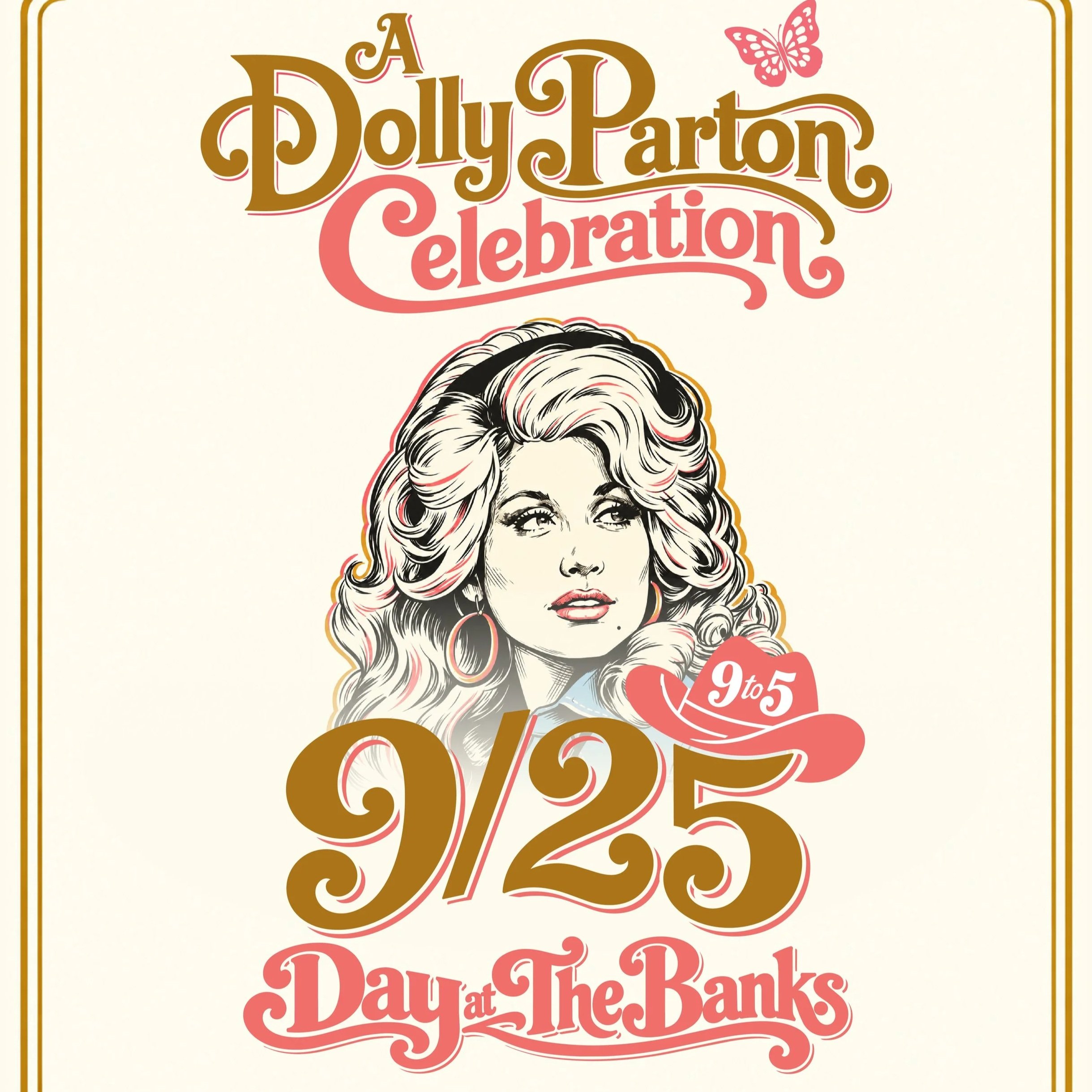
“Two Sides to Every Story”
Having given away more 300 million books, Dolly Parton’s Imagination Library is one of her greatest hits. Close to home, 32,000 Hamilton County children are already participating, and we have a fun and easy way for you to be part of the story.
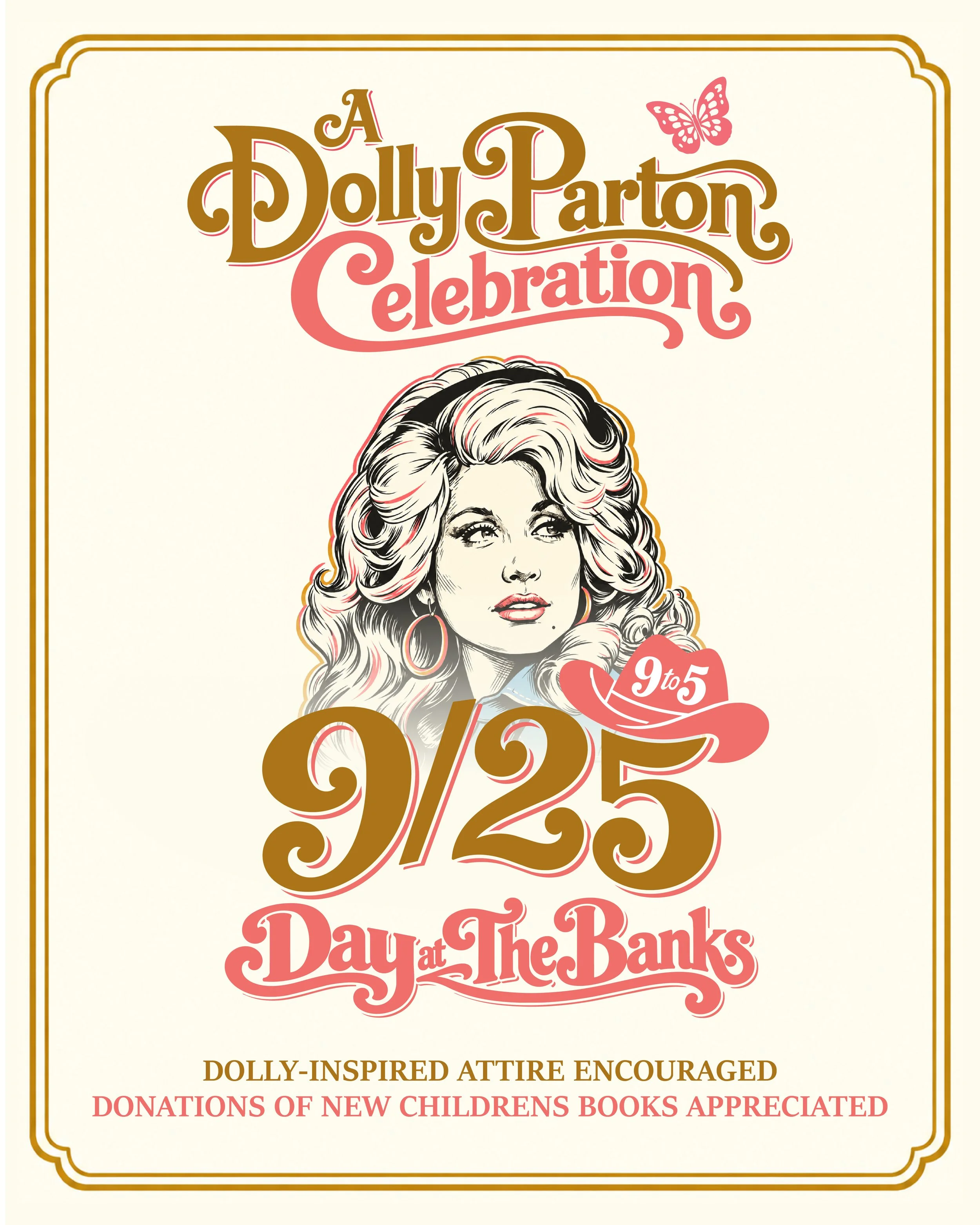
Support Dolly Parton’s Imagination Library this Friday!
Dolly Parton wrote hit songs, sold out arenas, starred in movies and built an entertainment empire. But one of her greatest legacies may be sitting on a bookshelf in a family’s home.
In 1995, Parton had a BIG Idea: What if every child could have books of their own, regardless of how much money their family made?
Inspired by her father, who could not read or write, Parton launched the Imagination Library in Sevier County, Tennessee, where she grew up. The idea was remarkably simple. Enroll a child at birth and mail that child a free, age-appropriate book every month until age 5.
What started in one Tennessee county has become an international early-literacy movement. Today, Dolly Parton’s Imagination Library operates across five countries, has gifted more than 300 million books and mails more than 3 million books every month to children.
And the impact goes well beyond the number of books delivered.
Research compiled by the Imagination Library has found that participating families tend to read aloud more frequently, children own more books and young readers demonstrate greater interest in reading. Some studies have also found stronger early literacy skills among participating children.
A large international study involving more than 86,000 caregivers across five countries found significant differences in reading behaviors and early literacy. After receiving at least 10 books, participating children were at least four times more likely to demonstrate stronger emerging literacy skills, and children in the program were nine times more likely to be read to four or more days a week than children who had not yet begun receiving books.
That is the power of a BIG Idea that scales.
Dolly’s BIG Idea Is Working in Cincinnati
The national story becomes very local when you look at what is happening in Hamilton County.
Today, nearly 32,000 Hamilton County children are enrolled in Dolly Parton’s Imagination Library of Cincinnati/Hamilton County.
That represents approximately 66% of all eligible children under age 5 in the county.
Every enrolled child receives a brand-new book each month, selected specifically for their age and developmental stage, at absolutely no cost to their family.
Think about what happens next.
A baby gets a board book.
A toddler begins recognizing pictures and words.
A preschooler asks for the same story again and again.
A parent and child create a bedtime reading ritual.
A stack of books becomes a home library.
Then a child arrives to kindergarten already knowing that books can be exciting, comforting, funny and full of possibility.
The Imagination Library's book-selection process is intentionally designed around children's developmental stages, progressing from colorful board books and rhyme for babies to vocabulary, storytelling, science, poetry and school-readiness concepts for older preschoolers.
That makes this more than a book-delivery progra – It is an investment in school readiness, family engagement and Cincinnati's future.
32,000 Children Down. Thousands More to Reach.
Cincinnati’s enrollment is impressive. But the BIG Idea isn't finished. If 66% of eligible children are participating, roughly one-third still aren't. The local goal is ambitious and beautifully simple: every eligible child in Hamilton County should have access to books at home.
Getting there will require the same thing that turned Dolly Parton's original idea into a worldwide movement: champions.
Champions who tell parents about the program.
Champions who support early literacy.
Champions who donate.
Champions who put books into the hands of children who need them.
Be a Champion: Give a Child a Book
In honor of Dolly Parton and the Imagination Library, Cincinnati People is encouraging Cincinnatians to support young readers with brand-new books for children from birth through age 5.
The greatest needs include board books for babies and toddlers and engaging picture books for preschoolers. Books reflecting diverse children, families, cultures and experiences are especially welcome, including books by Black authors and books featuring Black characters. Because every child deserves the opportunity to open a book and see a world of possibilities.
Every child deserves the chance to see themselves in that world, Dolly Parton started with one BIG Idea in one small corner of Tennessee. More than 30 years later, millions of children have opened their mailboxes and found a book waiting for them.
That's what champions do.
They dream big enough to change someone else's story.
Learn more about Dolly Parton’s Imagination Library.
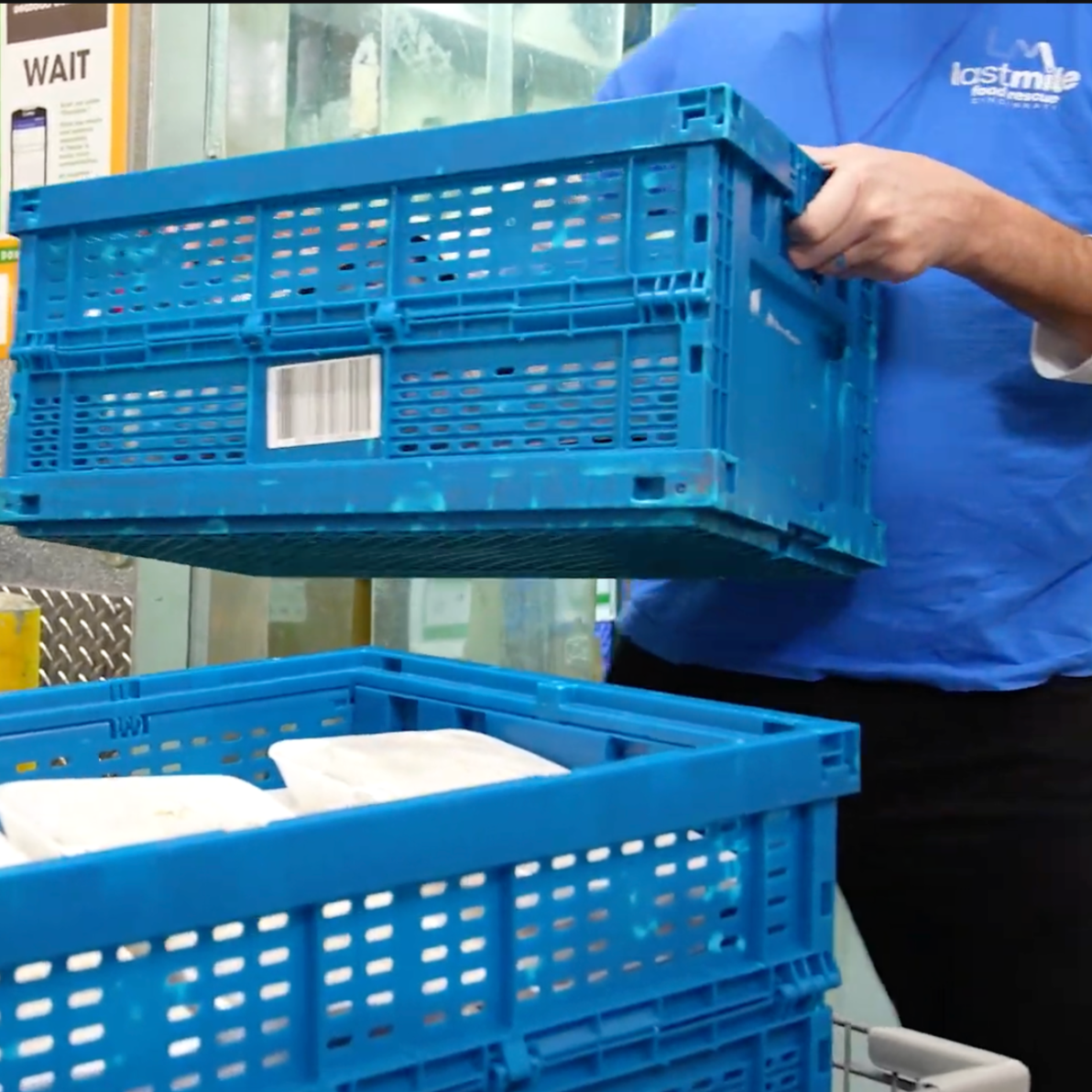
Going the Extra Mile
Cincinnati’s Last Mile Food Rescue is proving that technology, logistics and thousands of small acts can turn wasted food into a national blueprint for fighting hunger.
The National Blueprint
Food Rescue Hero already provides evidence that the underlying technology can travel. Its platform supports food-rescue organizations in communities including Pittsburgh, Philadelphia, Cleveland, Los Angeles, Chicago, Northern Virginia, Denver, Louisville and Cincinnati. The network connects more than 100 food-recovery peers, allowing organizations to share operating practices and solutions.
The national blueprint emerging from Cincinnati centers on five key ideas:
Treat hunger as a supply-chain problem. Identify where usable food exists and where unmet demand exists
Use technology to match the two in real time. Don’t depend on spreadsheets, phone calls and luck.
Turn residents into distributed infrastructure. A smartphone, a car and an hour of someone's time become part of the supply chain.
Measure everything. Pounds rescued, rescues completed, meals created, donors participating and communities reached make performance visible.
Scale the network, not just the organization. Grocery stores, restaurants, corporations, stadiums, schools, volunteers, pantries and food banks become nodes in one interconnected system.
That’s a model almost any metropolitan area could understand.
What if hunger is really a logistics problem?
Every year, Greater Cincinnati throws away an estimated 60 million pounds of food. At roughly the same time, about one in five people in the region faces food insecurity. Put those numbers next to each other and the problem looks different.
What if America doesn’t have only a food problem? What if it has a delivery problem.
That is the Big Idea behind Cincinnati’s Last Mile Food Rescue, a nonprofit that is taking a decidedly businesslike approach to one of America's most persistent social problems.
Its premise is remarkably simple: Hunger is a logistics problem.
And Cincinnati may be proving that it can be solved.
Think Uber, But for Food
Last Mile doesn’t operate like a traditional food bank. It has built a technology-enabled logistics network connecting businesses with excess food, volunteers with cars and community organizations that know where that food is needed.
A grocery store has surplus produce.
A corporate cafeteria has prepared meals left after lunch.
A stadium has food remaining after a game.
Instead of throwing it away, a volunteer receives an opportunity through the Last Mile app, claims the rescue, picks up the food and delivers it to a nonprofit organization. The app provides instructions and connects the volunteer to Last Mile's dispatch operation. Volunteers can choose rescues based on their location and schedule.
In other words, Last Mile has applied the technology and thinking behind modern last-mile commerce to hunger relief.
The concept isn’t unique to Cincinnati, but what Cincinnati has built around that technology offers an important case study in how the model can scale.
From Zero to 20 Million Pounds
The numbers tell the story. Last Mile began operating in November 2020.
Today, its live impact counter shows that the organization has rescued more than 20.7 million pounds of surplus food.
In 2025 alone, Last Mile rescued 5.4 million pounds, the equivalent of approximately 4.4 million meals, working with 606 food donors, 268 partner agencies and more than 900 volunteers.
Those volunteers completed more than 21,000 individual rescues.
And the organization says the food it has moved represents more than $70 million in free food delivered into the community.
The operation has grown approximately 30 percet annually since its launch. That’s not simply charitable growth. It's scale.
The P&G Idea Behind Last Mile
One reason the model is interesting to the business community is the person running it.
CEO and co-founder Eileen Budo isn’t a career hunger-relief executive, she is a logistics expert.
Budo began her career as an Air Force officer before spending 28 years at Cincinnati-based Procter & Gamble, where she worked in procurement and supply chain operations. Among her accomplishments, she built P&G's first centralized procurement shared service, helping bring a fragmented global manufacturing network into a more coordinated system.
When Budo co-founded Last Mile, she saw a familiar problem. On one side was supply: enormous quantities of usable food. On the other was demand: people who needed it.
The missing piece was an efficient system connecting the two.
In August, Forbes named Budo to its 2026 “50 Over 50: Impact” list, highlighting her decision at age 57 to apply decades of supply-chain experience to food insecurity.
Her experience raises an interesting question for Cincinnati's business community.
What if some of society’s biggest problems need more operating expertise, not simply more philanthropy?
Don’t Build Another Warehouse. Build a Network
This may be the most important lesson in the Last Mile model. Traditional thinking says that growth requires more infrastructure: more buildings, more trucks, more employees.
Last Mile adds another lever: unused community capacity.
A volunteer already has a car.
A grocery store already has food.
A pantry already knows the people who need it.
Technology connects them.
That changes the economics of growth.
Last Mile says donated food combined with volunteer labor can generate a 10-times return on investment. It also provides transportation that saves recipient agencies money they otherwise would spend on drivers, vehicles and fuel.
The organization has added refrigerated vehicles for large loads, but its secret weapon remains the distributed network of ordinary people making individual rescues.
One carload doesn’t solve hunger, but thousands of carloads begin to change a food system.
Cincinnati Becomes the Laboratory
Last Mile is now setting a much larger goal.
The organization believes rescuing 15 million pounds of food annually could close Greater Cincinnati's hunger gap and is building toward that level by the end of the decade.
Think about what that would mean.
Cincinnati wouldn’t simply have created another successful nonprofit.
It would have demonstrated, at metropolitan scale, how a city can use logistics, technology, corporations, volunteers and existing nonprofits to dramatically reduce the disconnect between wasted food and hunger.
And that makes Cincinnati valuable as a laboratory.
The city already has pieces that other markets could replicate: major food retailers, sophisticated supply-chain expertise, strong corporate philanthropy, neighborhood nonprofits and a community accustomed to public-private partnerships.
It also has a broader food-rescue ecosystem. Last Mile and Cincinnati-based La Soupe announced closer coordination this year, combining complementary approaches to getting excess food where it can do the most good.
The goal isn’t to replace food banks, pantries or other hunger organizations. It's to make the entire network work better.
The Bigger Cincinnati Idea
There is another lesson here, and it reaches well beyond food.
Cincinnati is a city filled with people who spent careers solving difficult problems for some of America's largest companies.
Supply chains. Consumer behavior. Branding. Manufacturing. Data. Technology. Finance.
Imagine applying more of that expertise to homelessness, transportation, education, workforce development or other seemingly intractable civic problems. Last Mile Food Rescue offers a case study in what can happen when someone does.
Budo took the principles used to make global supply chains work and applied them to a basic human problem in her own hometown.
The result is not a perfect solution to hunger. Nor is food rescue by itself a substitute for addressing the economic conditions that cause food insecurity.
But Cincinnati is demonstrating something important – Food can be rescued instead of discarded.
Technology can mobilize thousands of people.
Existing community resources can become infrastructure.
And an enormous social problem can become more manageable when somebody changes the question.
Instead of asking how do we find enough food to feed everyone, Last Mile Food Rescue is asking how to get the food we already have to the people who need it?
That is a logistics question. And Cincinnati is working on the answer with Last Mile Food Rescue.
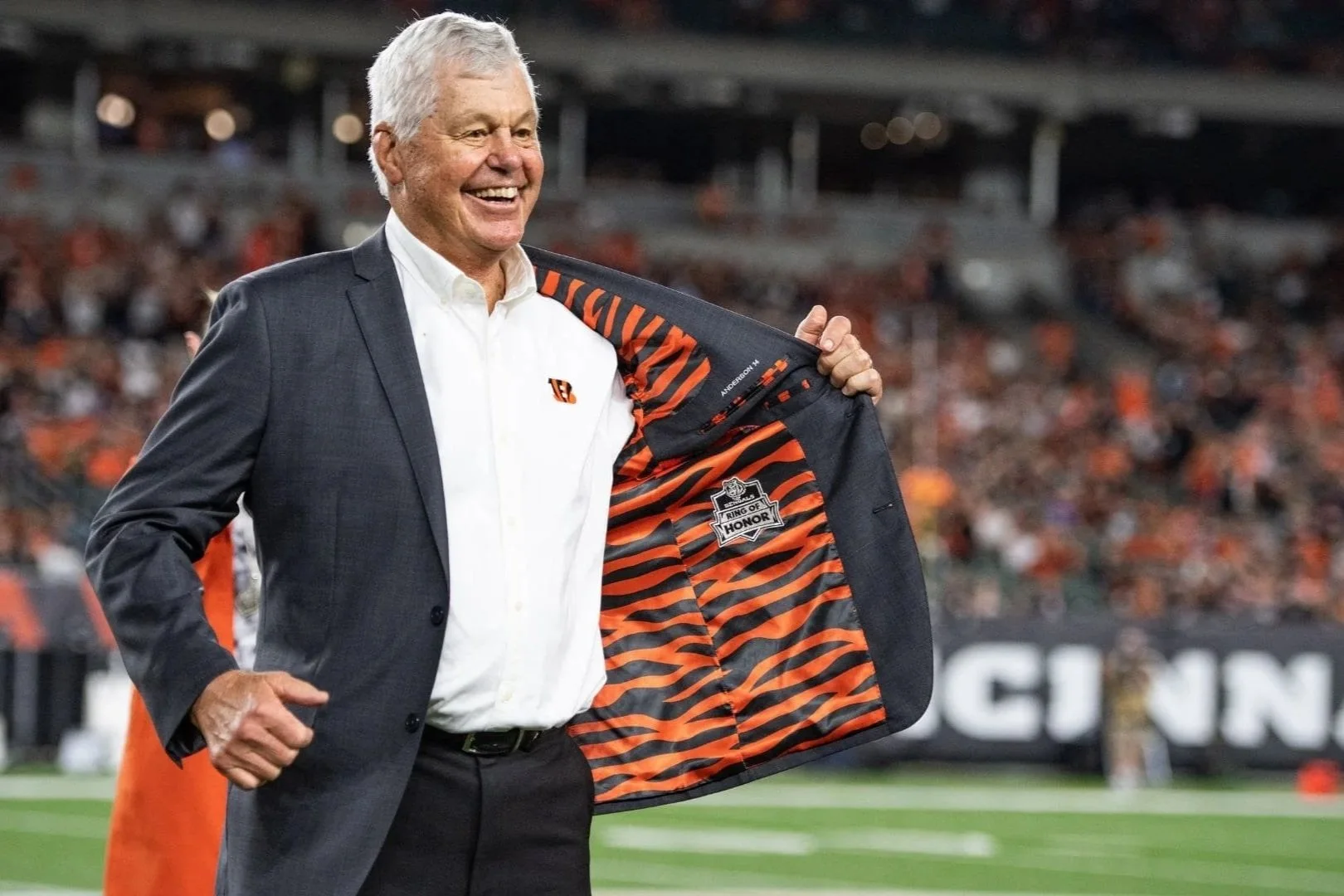
Leading by Example
Making the Hall of Fame case for Kenny Anderson. The Pro Football Hall of Fame has changed the way it will select the Class of 2027, which is a great opportunity to look at his career with fresh eyes.
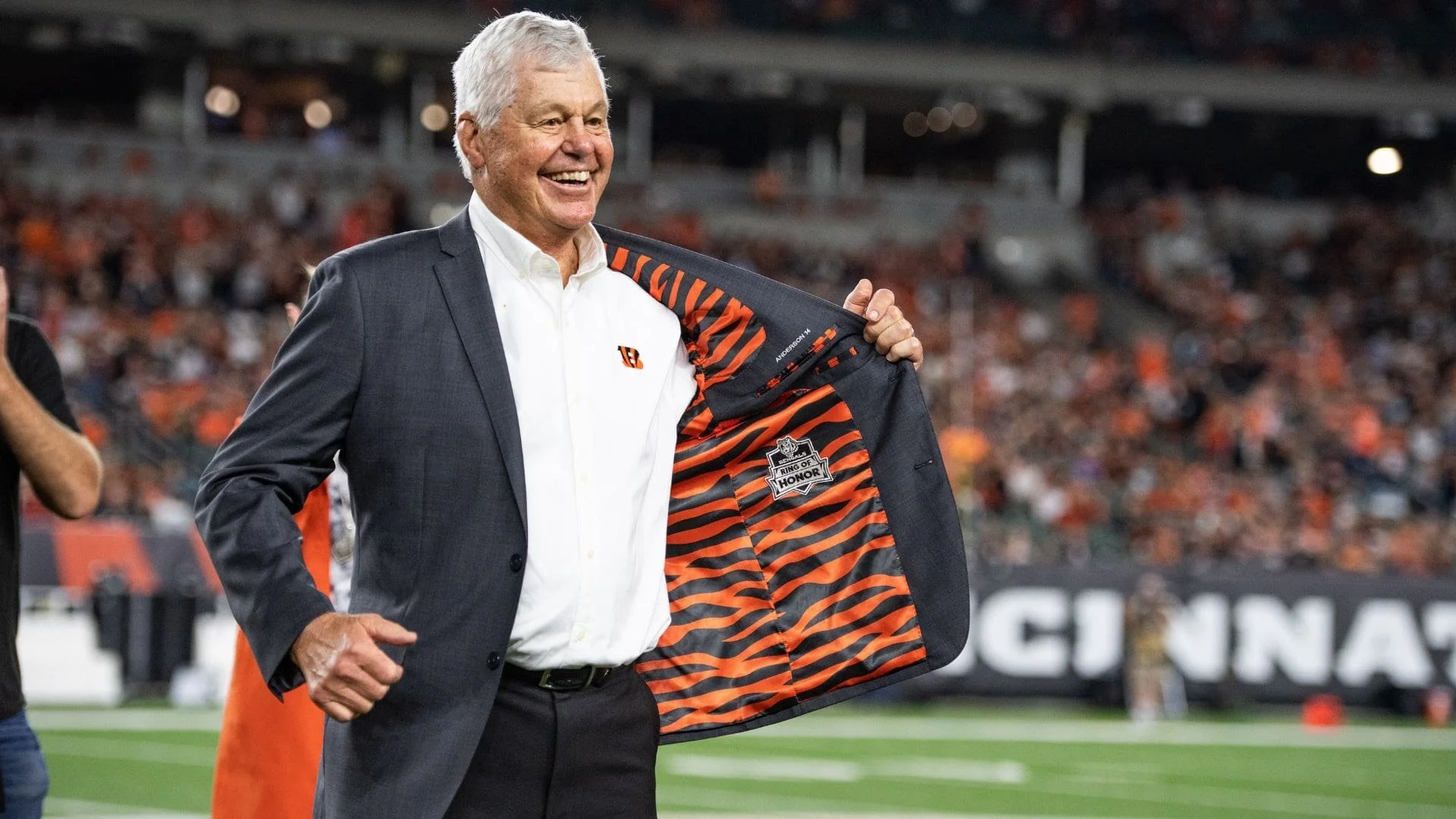
The Pro Football Hall of Fame has changed the way it will select the Class of 2027. Maybe that’s the perfect opportunity to look at Ken Anderson’s career with fresh eyes.
And the simplest way to do that is to put his numbers beside quarterbacks who already have bronze busts in Canton. The comparison is compelling.
Start with the résumé
Anderson played 16 seasons with the Cincinnati Bengals and finished with:
32,838 passing yards
197 touchdown passes
59.3% completion percentage
91 career wins as a starter
4 Pro Bowls
1 First-Team All-Pro selection
1981 NFL Offensive Player of the Year
1981 NFL MVP
He also led the NFL in passer rating four times, passing yards twice and completion percentage three times.
Then consider some of the quarterbacks already in Canton.
Anderson vs. Hall of Famers
Ken Anderson vs. Ken Stabler
Anderson: 32,838 yards | 197 TDs | 59.3% completions | 4 Pro Bowls | 1 MVP
Stabler: 27,938 yards | 194 TDs | 59.8% completions | 4 Pro Bowls | 1 MVP
Anderson threw for nearly 5,000 more yards and slightly more touchdowns.
Ken Anderson vs. Joe Namath
Anderson: 32,838 yards | 197 TDs | 59.3% completions
Namath: 27,663 yards | 173 TDs | 50.1% completions
Anderson finished with 5,175 more passing yards, 24 more touchdowns and a significantly higher completion percentage.
Ken Anderson vs. Bob Griese
Anderson: 32,838 yards | 197 TDs | 59.3% completions
Griese: 25,092 yards | 192 TDs | 56.2% completions
Anderson had 7,746 more passing yards, more touchdowns and a higher completion percentage.
Ken Anderson vs. Len Dawson
Anderson: 32,838 yards | 197 TDs
Dawson: 28,711 yards | 239 TDs
Anderson threw for more than 4,100 additional yards. Both quarterbacks led their league in passer rating four times.
Ken Anderson vs. Dan Fouts
Fouts’ 43,040 passing yards and 254 touchdowns exceed Anderson’s totals.
But Anderson finished with a better career completion percentage, 59.3% to Fouts’ 58.8%, and Anderson won an NFL MVP award.
Fouts never reached a Super Bowl.
Anderson did.
The comparison isn’t about proving Anderson was better than every Hall of Fame quarterback.
It’s about showing that he belongs in their company.
One number was decades ahead of its time
Perhaps nothing illustrates Anderson’s greatness better than 70.6. That’s the percentage of his passes Anderson completed in 1982. More than four decades ago.
Anderson completed 218 of 309 passes, setting an NFL single-season completion percentage record that stood for decades. It was precision passing before precision passing became the norm. And it wasn’t a one-year anomaly.
Anderson led the NFL in completion percentage three times and passer rating four times.
An MVP résumé
Then there is 1981.
Anderson completed 62.6% of his passes for 3,754 yards, 29 touchdowns and only 10 interceptions.
He led the Bengals to a 12-4 record.
He won the AFC Championship.
He took Cincinnati to its first Super Bowl.
And he was named First-Team All-Pro, NFL Offensive Player of the Year and NFL MVP,
That’s a Hall of Fame season inside a Hall of Fame career.
One modern measure makes the comparison even clearer
Pro Football Reference’s Hall of Fame Monitor attempts to compare Hall résumés by combining career performance, honors, championships and other accomplishments.
Anderson scores 82.99.
That puts him ahead of several quarterbacks already enshrined in Canton:
Ken Anderson: 82.99
Ken Stabler: 82.20
Sonny Jurgensen: 78.57
Bob Griese: 73.00
Warren Moon: 71.30
Joe Namath: 70.00
Len Dawson: 69.74
The metric isn’t a Hall of Fame ballot, but it provides important context. Anderson’s career doesn’t sit outside the statistical neighborhood of Canton.
He’s already living in it.
More than No. 14
Anderson’s story extends beyond football. In 1975, he was named the NFL’s Man of the Year, the honor now known as the Walter Payton NFL Man of the Year Award.
Today, through the Ken Anderson Alliance, he continues working to improve opportunities for adults with disabilities. That community leadership doesn’t make his Hall of Fame case. His football career does. It simply tells us more about the man behind No. 14.
Put the numbers side by side
An NFL MVP.
A First-Team All-Pro.
Four Pro Bowls.
Four seasons leading the NFL in passer rating.
Three completion-percentage titles.
Two passing-yardage titles.
A record-setting 70.6% completion season.
An AFC championship.
A Super Bowl appearance.
And a Hall of Fame Monitor score higher than several quarterbacks already enshrined.
The Hall of Fame has a new selection process for 2027.
It also has an opportunity.
Look at the numbers.
Compare the careers.
Remember the era.
And recognize what those who watched Ken Anderson play already know.
No. 14 belongs in Canton.
– Jackie Reau
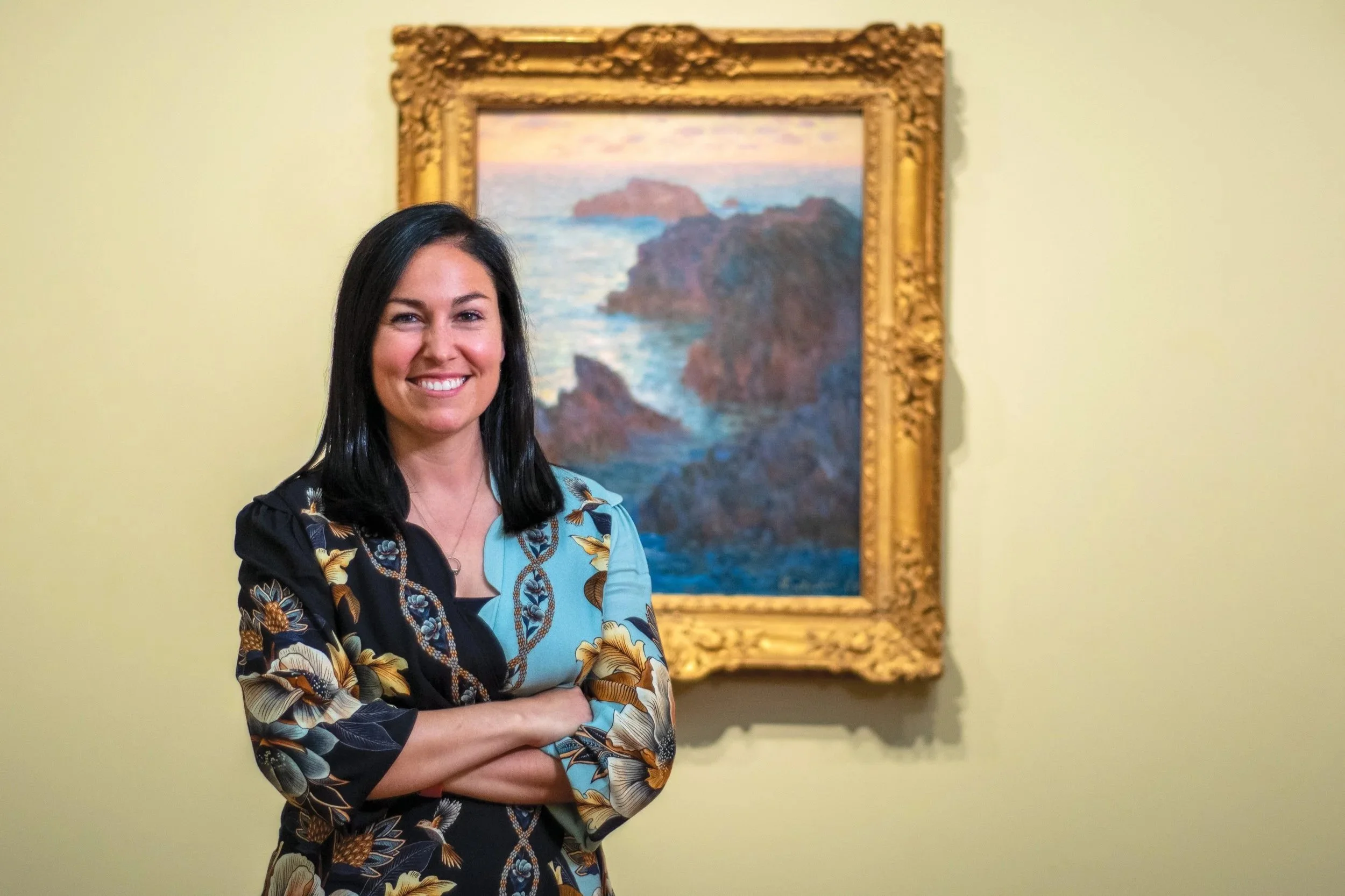
Creativity Means Business
What If Cincinnati made creativity its next big industry? Cincinnati already has one of America’s great arts communities. Now imagine treating it as an economic development strategy.
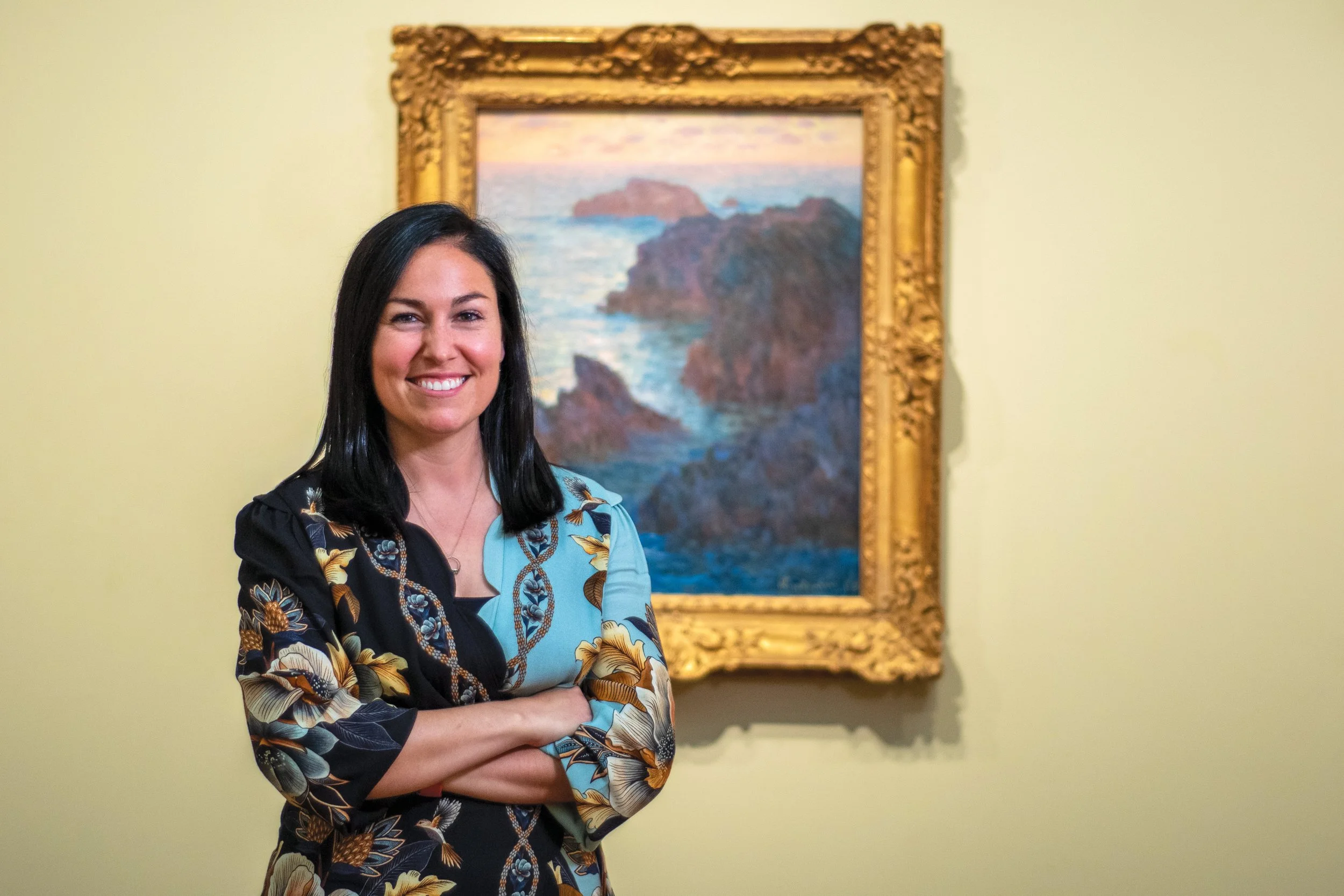
Meet Julie Ribits.
She came to Cincinnati for a professional conference. While she was here, she experienced the city, its museums and its cultural life. She liked Cincinnati enough that she kept watching for the right job opportunity.
Eventually, one appeared.
Today, Ribits is Head Conservator at the Cincinnati Art Museum, overseeing conservation of the museum’s collection and helping preserve works of art for generations to come.
One convention attendee became a Cincinnati resident, employee, taxpayer and participant in our cultural community.
So here is Cincinnati People’s BIG Idea: Let’s find 49,999 more Julies.
Give Creative Companies a Reason to Come
If we’re serious about doubling this economy, marketing isn’t enough.
Cincinnati needs an incentive strategy.
Could Ohio’s film incentives be leveraged more aggressively to create permanent production jobs rather than simply attracting individual shoots?
Could vacant commercial space become subsidized studios?
Could historic tax credits help create creative business districts?
Could artists receive relocation incentives?
Could Cincinnati create a Creative Business Accelerator?
Could companies receive incentives for moving creative headquarters or divisions here?
Could P&G, Kroger and Cincinnati’s extraordinary brand-building ecosystem become a living laboratory where creative startups test products and ideas?
Could our universities build a unified creative talent pipeline?
Those are economic-development questions, not arts questions.
Greater Cincinnati should set an audacious economic development goal:grow our creative economy from approximately 50,000 workers today to 100,000 within five years.
Not simply because we love the arts.
Because it could be good business.
Think Bigger Than Museums and Theaters
When we say “creative economy,” we mean something much larger than traditional arts organizations.
It is the graphic designer building a brand. The musician playing Music Hall on Saturday and recording in the studio on Monday. The architect designing a new neighborhood. The filmmaker shooting a movie in Over-the-Rhine. The content creator building an audience from a studio in Walnut Hills. The software entrepreneur developing technology for concerts. The photographer, fashion designer, illustrator, animator, podcaster, gamer, esports producer, copywriter, curator and industrial designer.
And yes, it is also the dancer, actor, painter, musician and museum professional. These are exactly who Cincinnati needs more of.
Creative people start things. They make things. They challenge conventional thinking. They fill old buildings with new businesses. They create restaurants, studios, festivals, companies and experiences.
And they make a city more interesting.
We Already Have a Head Start
This isn’t a proposal to invent an identity Cincinnati doesn’t have. It is a proposal to capitalize on one we have spent nearly a century building.
Greater Cincinnati consistently ranks among America’s most arts-vibrant large communities. Cincinnati ranks in the top 1% nationally for earned program revenue among arts organizations and the top 2% for compensation of arts workers.
Those are extraordinary economic-development credentials.
ArtsWave-supported research found Greater Cincinnati’s arts and culture sector generated $1.6 billion in economic impact between 2019 and 2022. In 2022 alone, the sector supported 6,518 jobs and generated $15.7 million in tax revenue. Add BLINK that year, and the economic contribution reached approximately $737.7 million.
The same research found something even more remarkable: arts organizations return approximately $42.47 to the regional economy for every $1 ArtsWave invests.
We have already built the infrastructure.
Now what if we scaled it? 50,000 → 100,000
Doubling Cincinnati’s creative workforce sounds wildly ambitious.
Good.
Big civic ideas should make people uncomfortable at first.
But doubling the creative economy cannot mean simply doubling the staffs of museums, orchestras and theaters. It requires thinking about creativity as an industry cluster.
Cincinnati could deliberately recruit and grow:
Advertising + Marketing
Film + Television
Music + Live Entertainment
Design + Architecture
Gaming + Esports
Digital Content + Media
Creator Economy Companies
Creative Technology
Fashion + Industrial Design
Independent Artists + Creative Entrepreneurs
Imagine Creative Economy Districts in places such as Over-the-Rhine, Walnut Hills, the West End, Uptown and Covington with studios, affordable live/work spaces, accelerators, production facilities and incentives for creative businesses.
Imagine Cincinnati becoming the easiest city in America to start a creative company.
Recruit the Convention. Then Recruit the Attendee.
This is where Visit Cincy could play a fascinating role.
Cincinnati should aggressively pursue the national meetings of the people we want living here.
Museum professionals. Designers. Musicians. Filmmakers. Performing arts executives. Conservators. Festival producers. Creative entrepreneurs.
Get them here first.
Then give them an extraordinary Cincinnati experience:
A museum visit
A concert
Dinner in OTR
BLINK
The Cincinnati Ballet
FC Cincinnati
Findlay Market
The Contemporary Arts Center
Then don’t say goodbye when their convention ends. Stay in touch. Show them jobs. Show them houses. Introduce them to employers. Invite them back. Connect entrepreneurs with investors.
Give companies considering relocation an economic-development concierge.
The convention becomes the top of a talent-attraction funnel.
Visit Cincinnati → Experience Cincinnati → Return to Cincinnati → Work in Cincinnati → Build in Cincinnati → Stay in Cincinnati.
Julie isn’t simply a nice story. She could be the prototype.
More Creative People Means More Arts Patrons
There is another important reason to pursue this strategy.
Cincinnati’s arts institutions need their next generation of audiences and donors.
ArtsWave’s economic-impact research projects its Community Campaign could reach approximately $13.5 million by 2027 if current trends continue. But the number of gifts has not returned to its mid-2010s peak.
Recruiting 50,000 creative workers potentially changes that equation.
These are people likely to attend performances, visit museums, discover galleries, support independent artists and introduce their children to creative experiences.
They become ticket buyers.
Subscribers.
Members.
Volunteers.
Board members.
ArtsWave donors.
And eventually major philanthropists.
Instead of asking only, “How do we find more donors for the arts?” ask a bigger question:
“How do we build a region filled with more people who inherently value creativity?”
And more kids who grow up loving the arts The generational impact may be even greater.
Creative people have families. Their children attend Cincinnati schools. They take ballet classes. Learn instruments. Visit museums. Audition for plays. Make films. Paint murals. Design games. Attend concerts.
ArtsWave already identifies “fuel creativity and learning” as one of the objectives of its regional arts strategy.
Imagine connecting economic development directly to that objective.
The child attending a Cincinnati arts program today could become the designer, filmmaker, architect, creative director or entrepreneur Cincinnati recruits tomorrow.
Or better yet, Cincinnati won’t have to recruit her.
She will already want to stay.
The Arts Are Economic Infrastructure
For decades, cities have treated arts and culture primarily as amenities.
You build a strong economy, the conventional thinking goes, and then a prosperous community can afford great arts.
Maybe Cincinnati should reverse the equation.
Great arts help build a great economy. They attract talent. They create tourism. They activate neighborhoods. They generate jobs.They help employers recruit.They make young professionals want to stay.They give families reasons to put down roots.
And they differentiate Cincinnati in a competition for talent where every midsize American city is claiming to be affordable, innovative and a great place to live.
Our arts actually prove it.
Cincinnati Doesn’t Need to Become Austin
Austin has SXSW.
Nashville has music.
Los Angeles has entertainment.
New York has almost everything.
Cincinnati shouldn’t try to become any of them.
Our opportunity may be different – Become America’s most livable creative economy.
A city where talented people can actually afford a house. Where an artist can have a career. Where a creative entrepreneur can build a company. Where world-class cultural institutions are minutes away. Where corporations need creative talent. Where neighborhoods provide inspiration. Where children grow up surrounded by creativity.
And where success doesn’t require a New York or Los Angeles cost of living.
The message becomes wonderfully simple – In some cities, creativity is a dream. In Cincinnati, it’s a career.
The BIG Idea
Imagine Cincinnati in 2031.
There are 100,000 people working in our creative economy.
New companies have moved here.
Creative entrepreneurs have started businesses here.
National conventions bring thousands of creative professionals to experience the region.
Film, media and content production have become meaningful economic sectors.
Our museums, theaters, galleries and performance venues have larger audiences.
ArtsWave has thousands of new donors.
Our tax base has grown.
Neighborhood storefronts are filled.
And tens of thousands more Cincinnati children are growing up believing that creativity isn’t simply something they enjoy.
It can be what they do with their lives.
That’s economic development. That’s talent attraction. That’s tourism. That’s education. That’s philanthropy.
And that’s a Cincinnati worth building – 50,000 creative people today. 100,000 tomorrow.
Why not us?
– Jackie Reau
Sense of Adventure
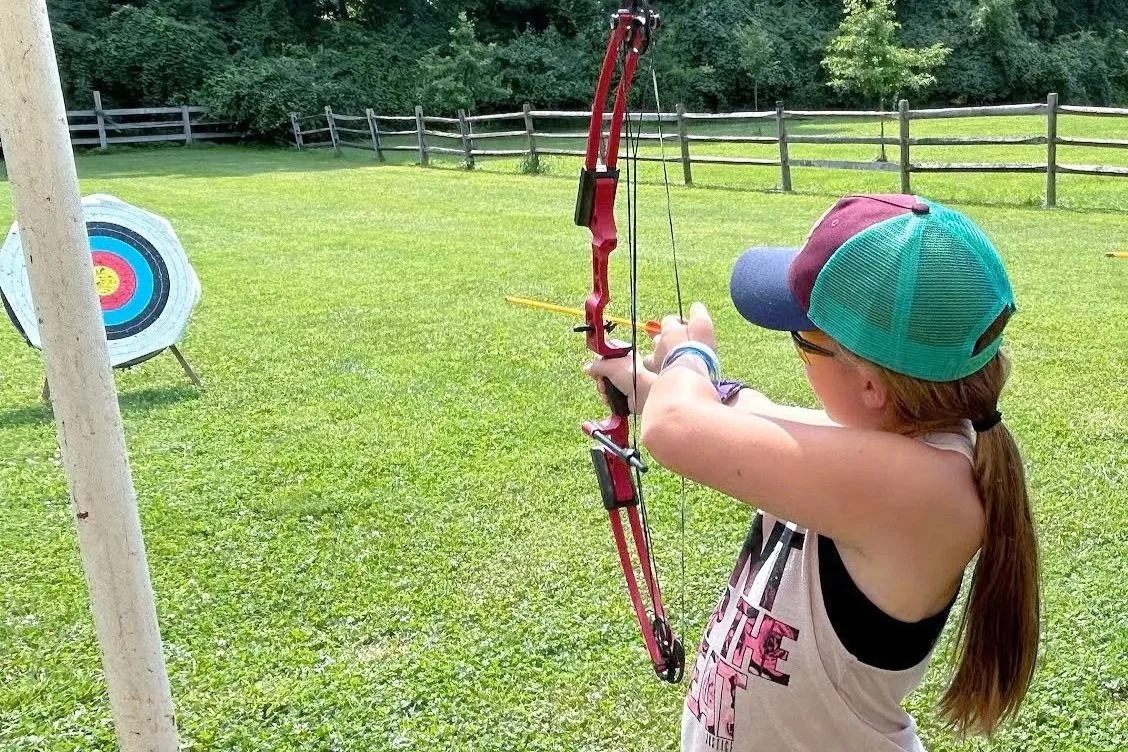
Add Scouting to your back-to-school schedule, with enrollment through the Dan Beard Council now open for boys and girls, from kindergarten to 20.
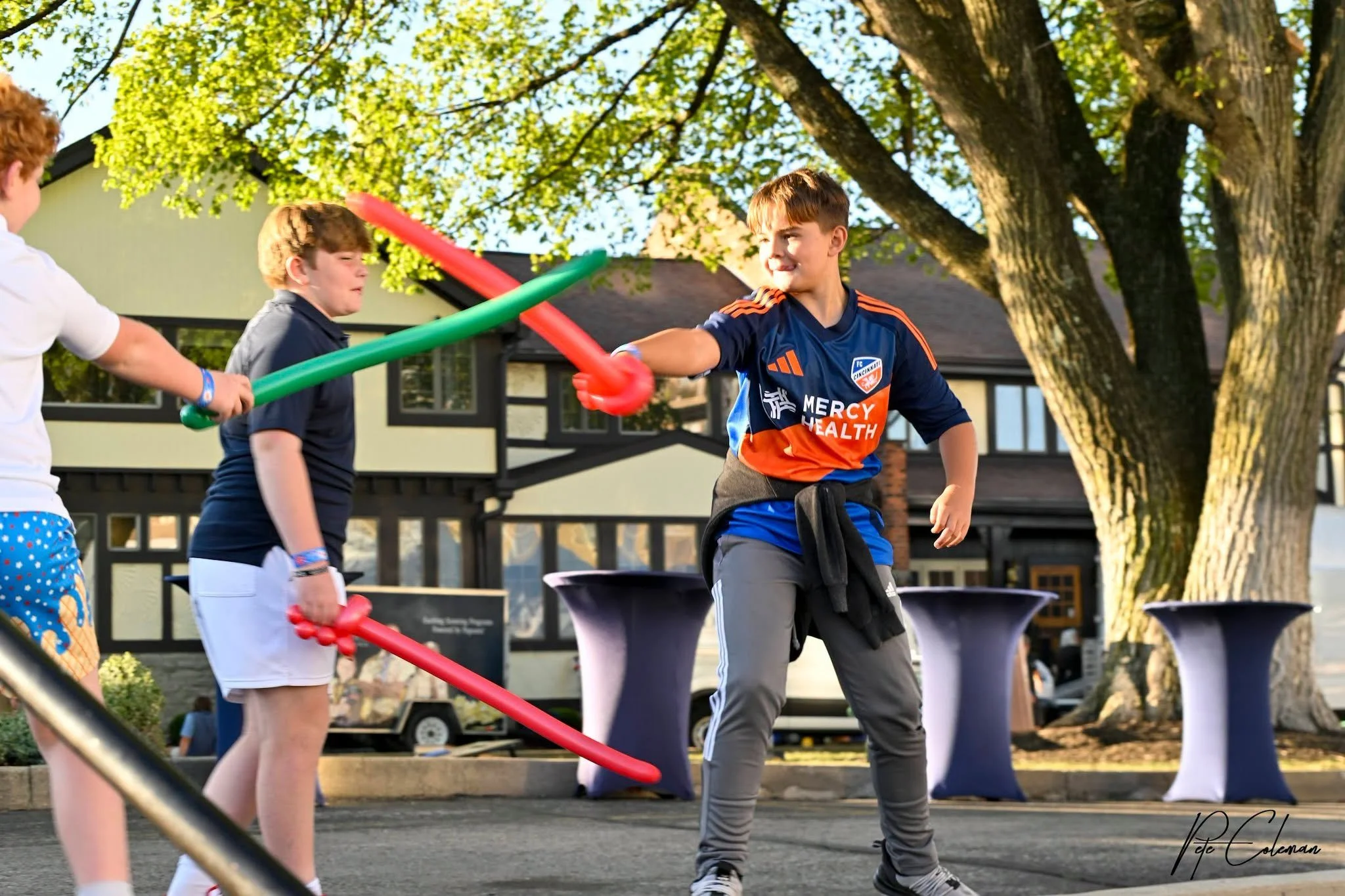
Enrollment is open now for the 2026-2027 program year.
Families can find a local pack or troop by visiting www.BeAScout.org.
As students head back to the classroom this month, Dan Beard Council, Scouting America, is inviting kids and families across the region to start the year with a new kind of adventure. The back-to-school season is one of the best times to join Scouting, a proven way for youth to make new friends, build lifelong skills, and give back to their community.
“Scouting gave me the friendships, the outdoor experiences, and the leadership skills that shaped who I am today, and I see that same transformation happen in kids across our council every single year,” said Andy Zahn, Scout Executive, President and CEO of Dan Beard Council, and an Eagle Scout himself. “The start of the school year is the perfect time for a family to give Scouting a try. In just a few months, you’ll see a child who is more confident, more capable, and surrounded by great friends.”
Scouting programs from Cub Scouts to Scouts BSA, Venturing, and Sea Scouts welcome boys and girls in kindergarten through age 20. Members camp, hike, and explore alongside peers who become lasting friends, while adult volunteers guide them through hands-on activities that build confidence, leadership, and character. Along the way, Scouts complete community service projects that make a real difference where they live.
Dan Beard Council’s impact across the region speaks for itself:
Serves more than 11,000 youth and families each year across 12 counties in Southwest Ohio and Northern Kentucky.
Operates throughout local school districts, supported by hundreds of Cub Scout Packs, Scouts BSA Troops, Venturing Crews, and Sea Scout Ships.
Maintains four camp properties Camp Friedlander, Camp Craig, Cub World, and Camp Michaels, giving Scouts year-round access to the outdoors.
Produced 257 new Eagle Scouts in 2025, including a council-record 27 young women earning Scouting’s highest rank.
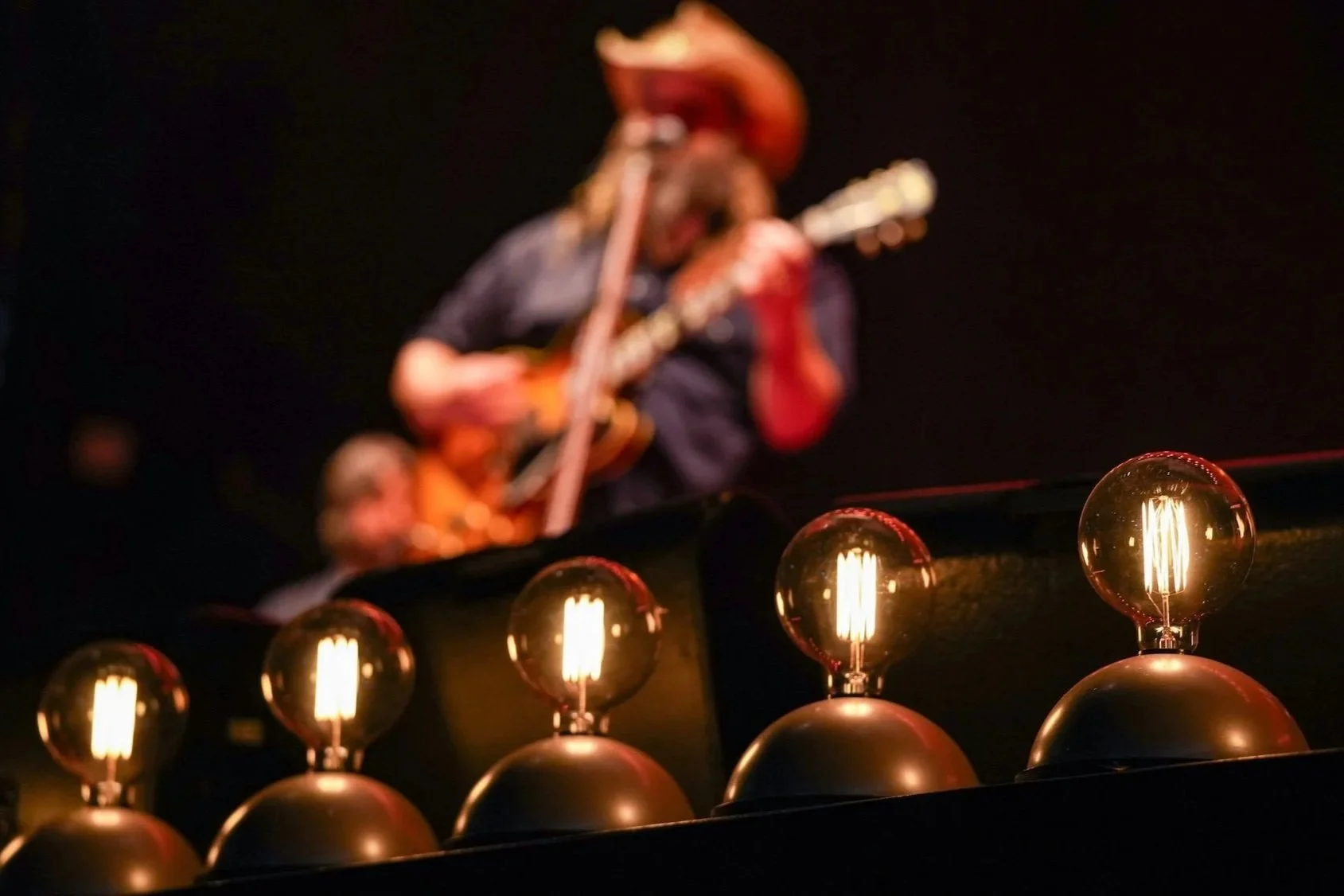
Joy of My life
Fans of Chris Stapleton didn’t let a little rain dampen their fun last Saturday night! A packed house at Paycor Stadium enjoyed the All-American Road Show, with great performances and few surprises.
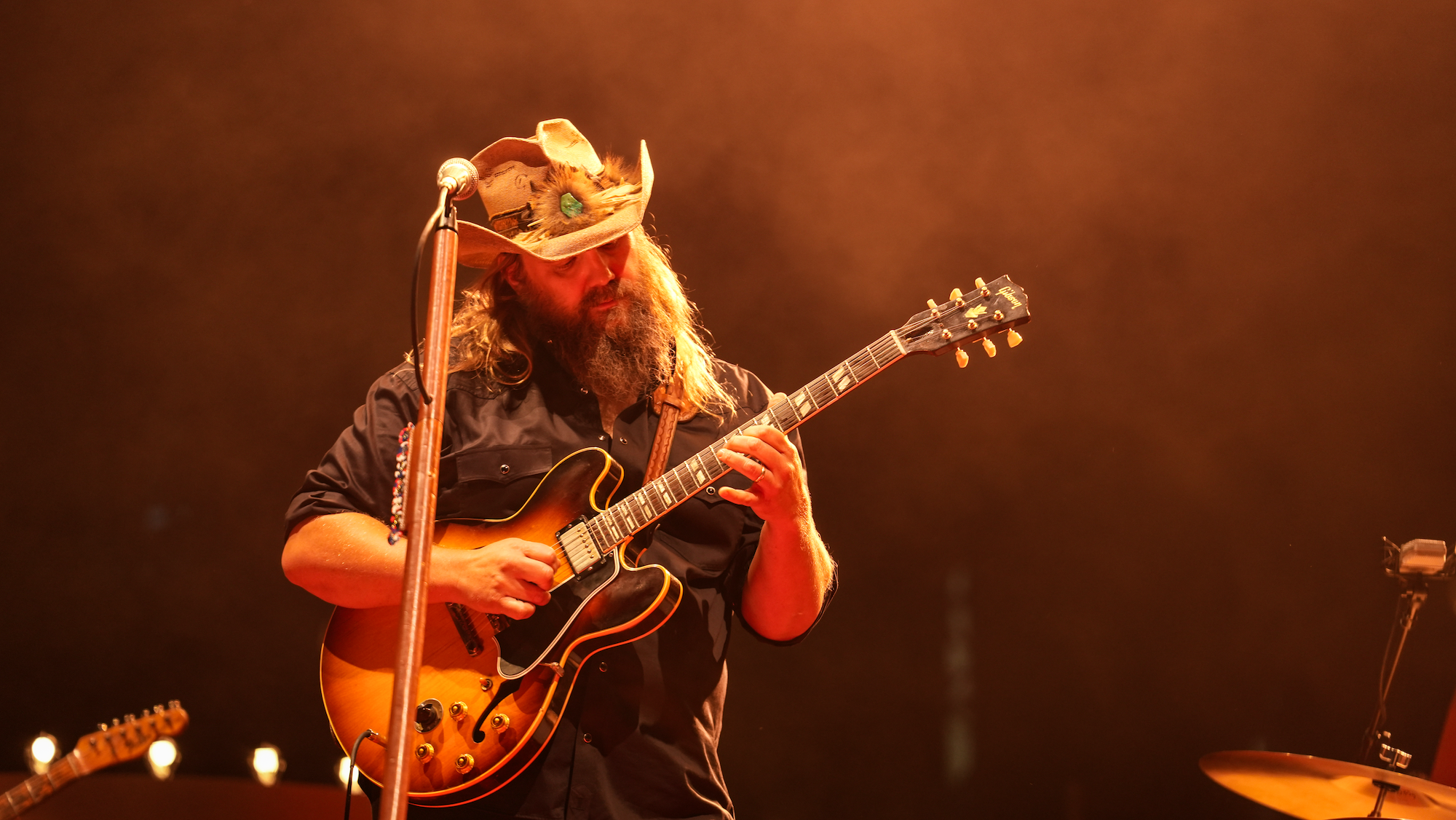
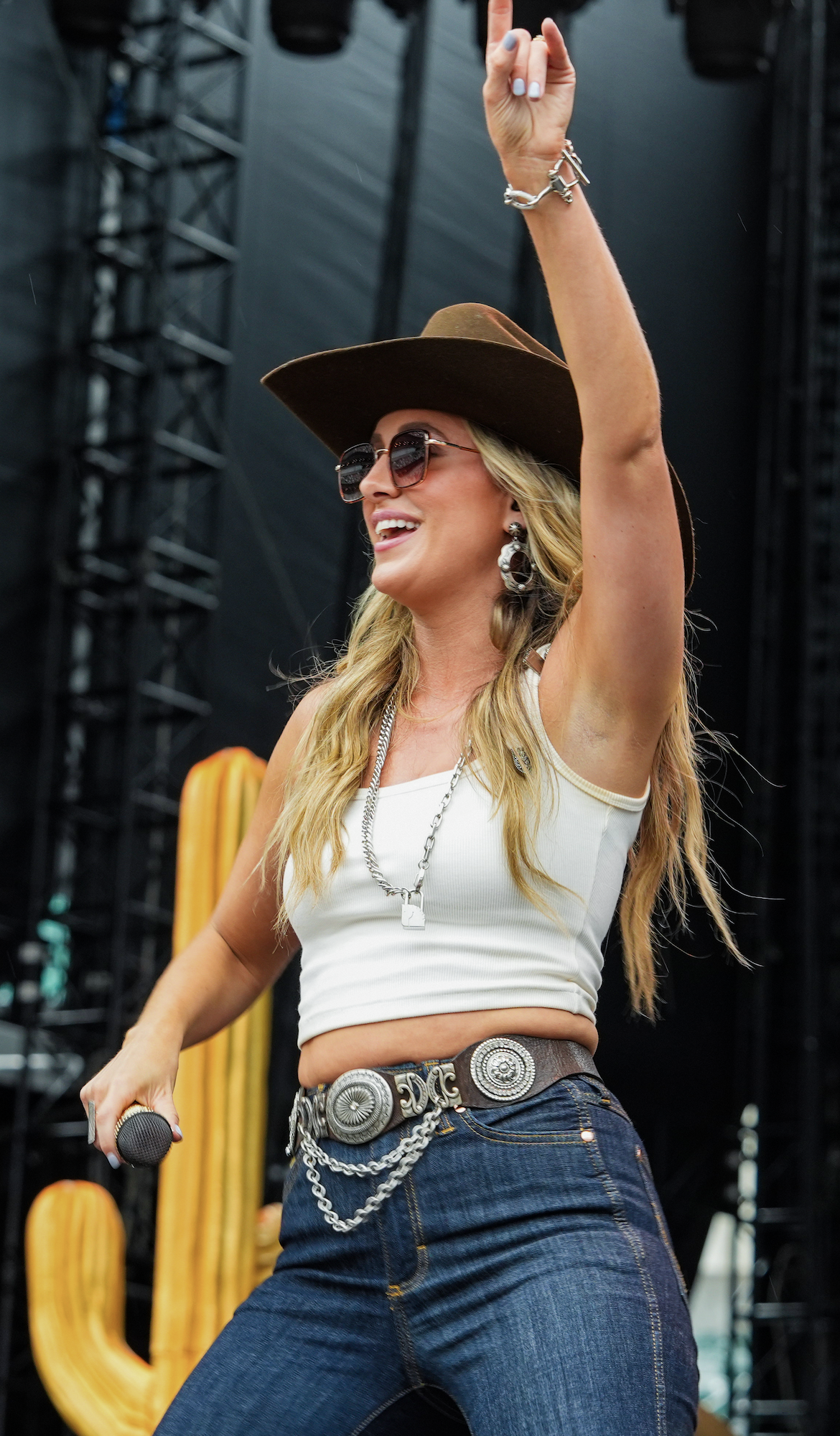
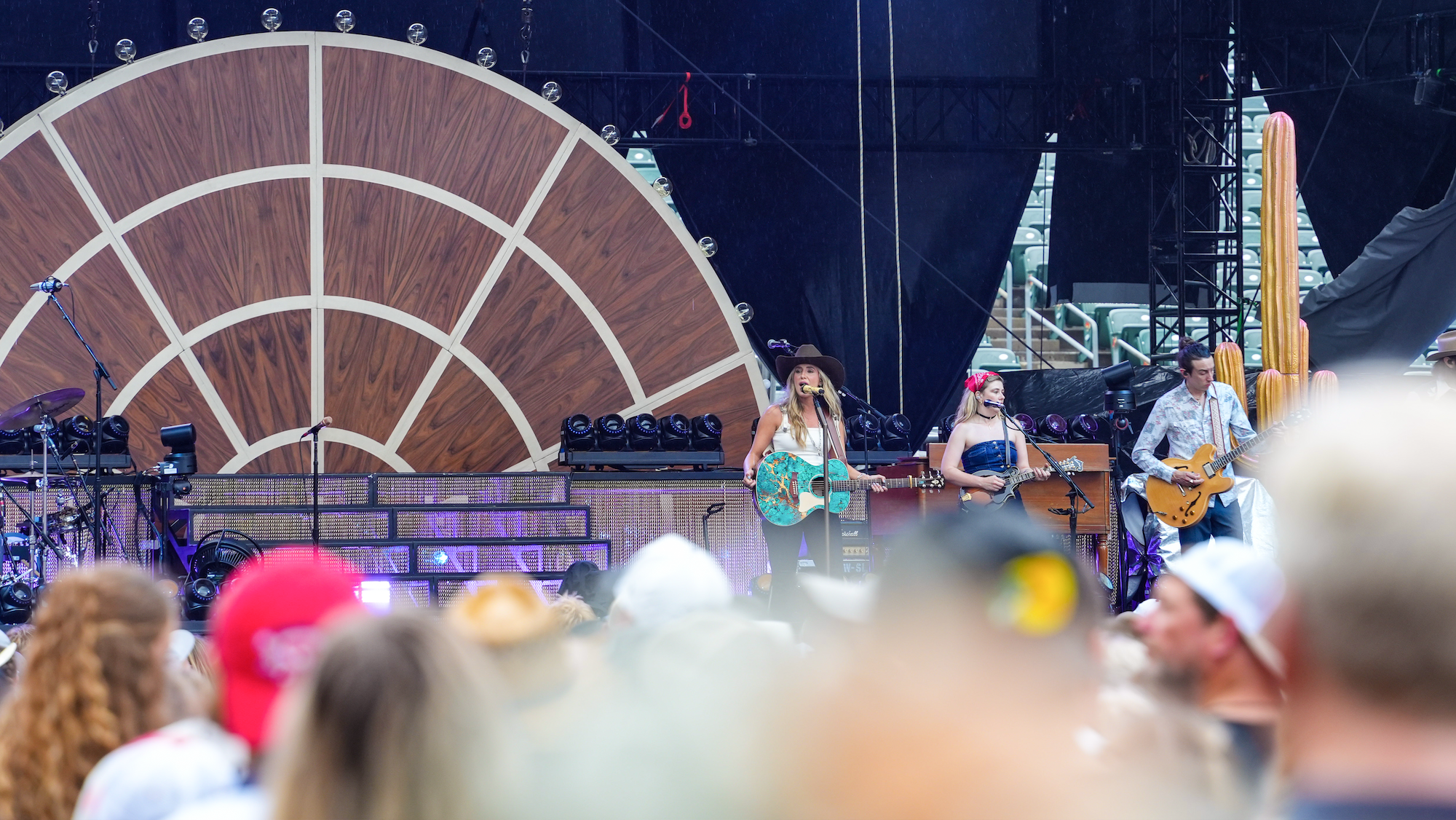
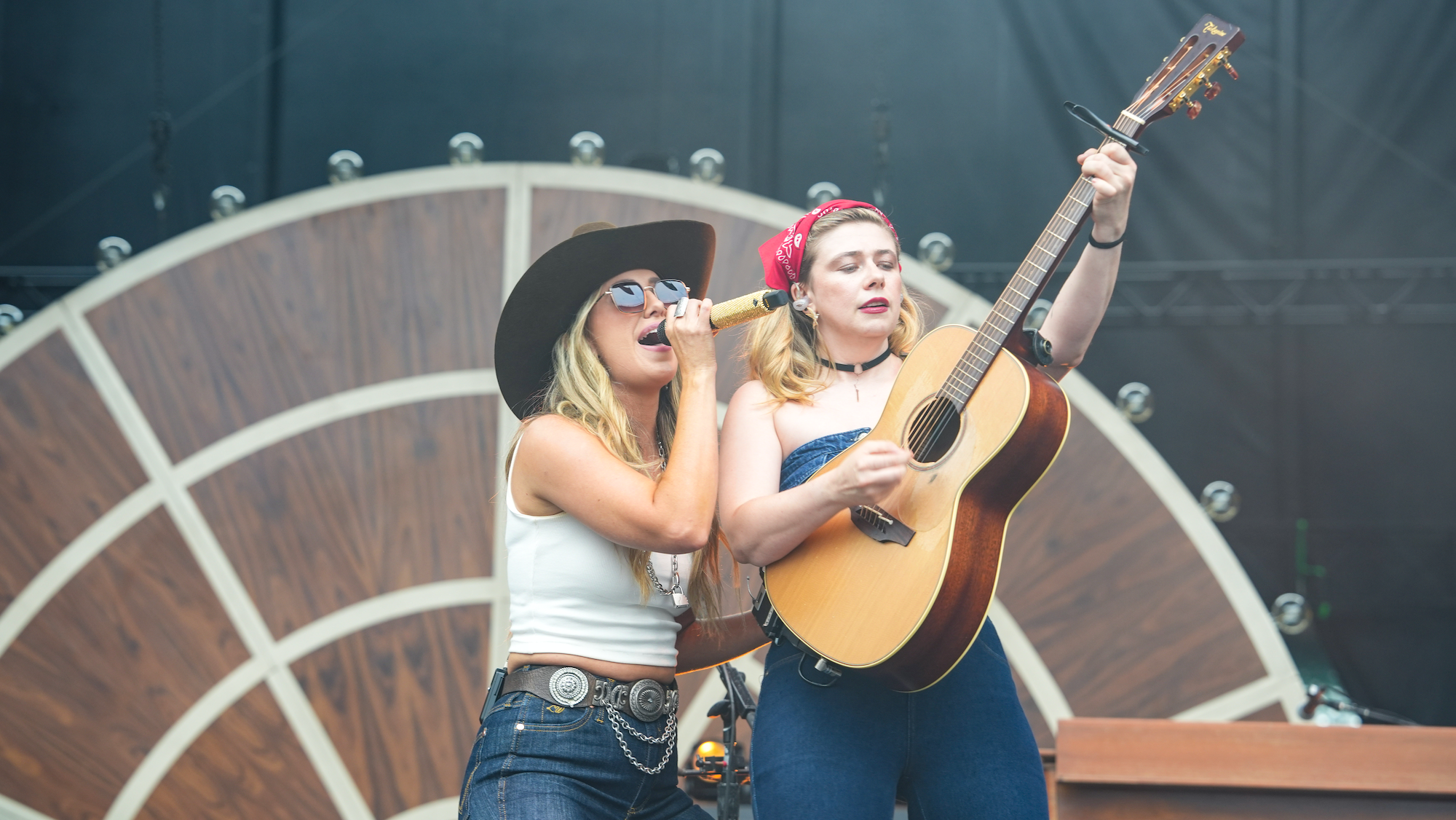
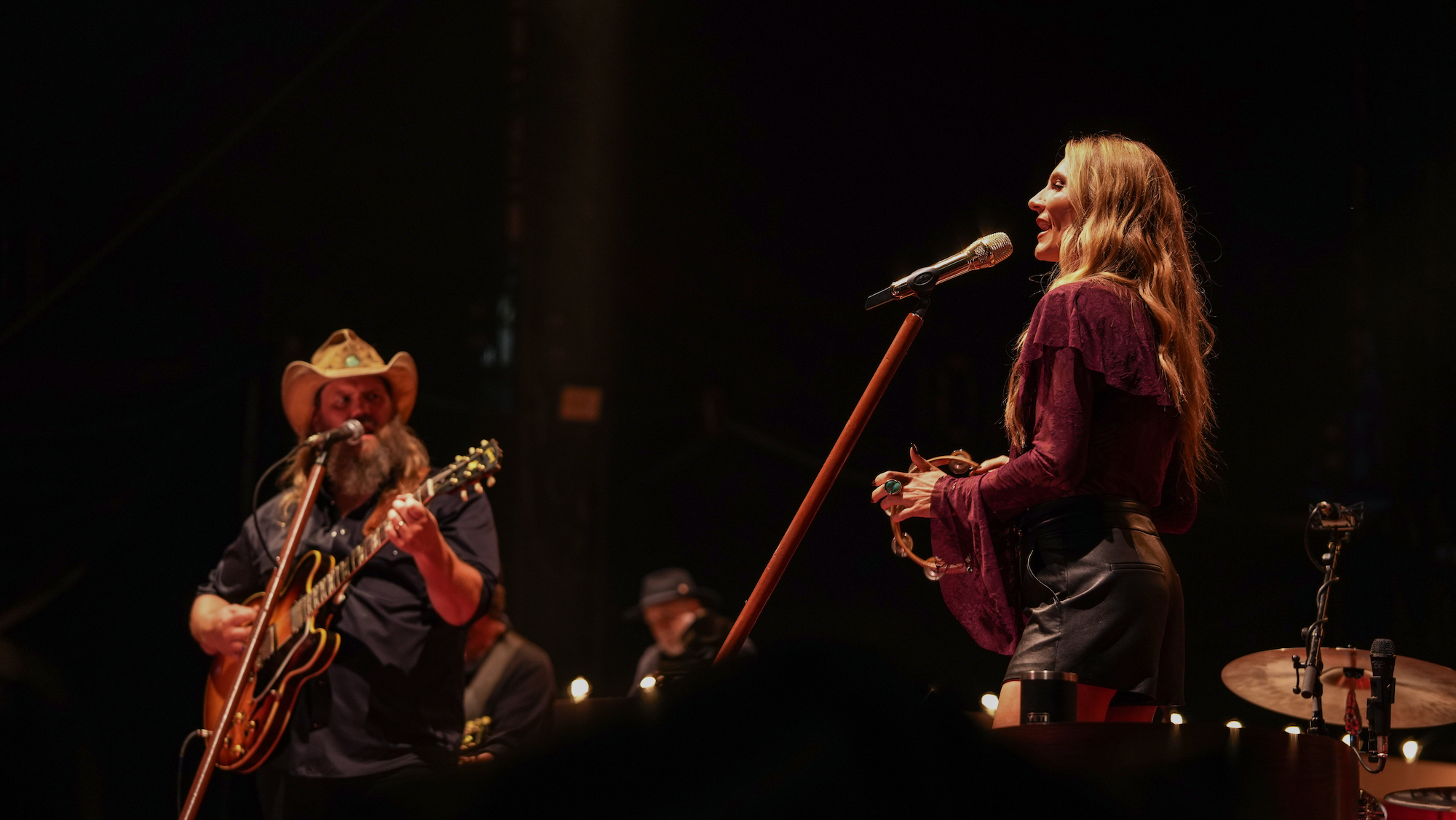
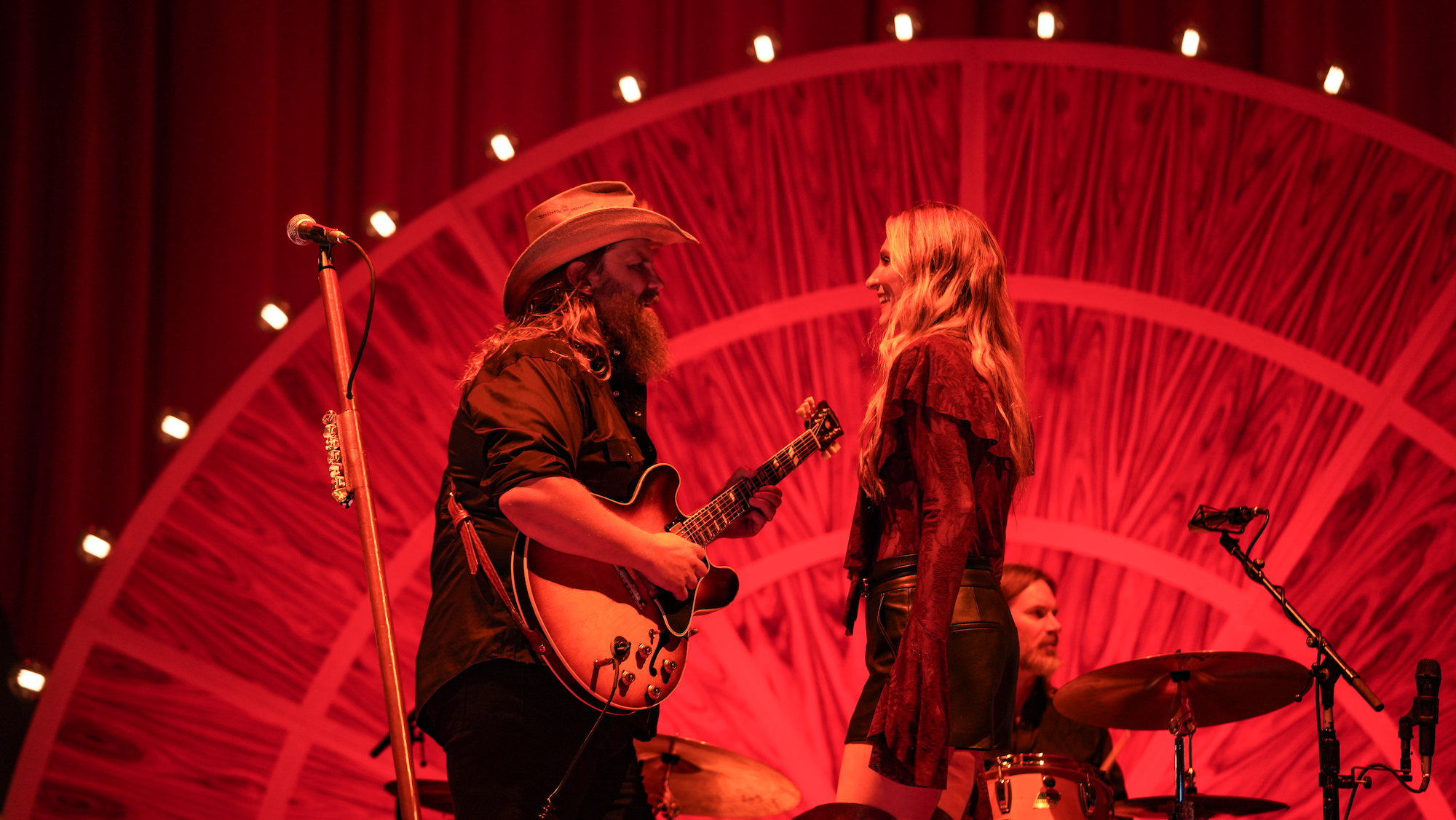
Photo: Megan CoffeyCincinnati never lets weather stop a good time. Despite a thunderstorms and a delay, Chris Stapleton fans at Paycor Stadium on Saturday night never thought “You Should Probably Leave,” one of the singer/songwriter’s classics.
Lainey Wilson’s set was moved up to 6:45 p.m., and she took the stage in her signature Wrangler jeans, white tank top, and cowboy hat. She energized the crowd with fan favorites including “Heart Like a Truck,” “Watermelon Moonshine,” and “Wildflowers and Wild Horses.”
The most memorable moment of Wilson;s set came when she stepped off the stage to perform “4x4xU” with a local 10-year-old fan, creating an emotional moment that had the entire stadium cheering.
As severe weather approached, Paycor Stadium was evacuated. Once the storms passed and the skies cleared, after lengthy delay, a visibly emotional Stapleton took the stage just after 10 p.m. He thanked the crowd for sticking it out.
“This place does not look like anyone left, and I love you all for it,” Stapleton said to the fans. “You guys are what keeps me going!”
Stapleton opened with “Bad as I Used to Be” before delivering a set packed with hits, including “Fire Away,” “White Horse,” “Millionaire,'“ and “Parachute.” He also performed “I Think I’m in Love With You” alongside his wife, Morgane Stapleton, with signature harmonies that are the heart of his live shows.
He closed the unforgettable night just after midnight with two of his biggest songs, “Tennessee Whiskey” and “Outlaw State of Mind,” rewarding the diehard fans who weathered the storm to see him perform that night.
– Megan Coffey
Rhythm of the Night
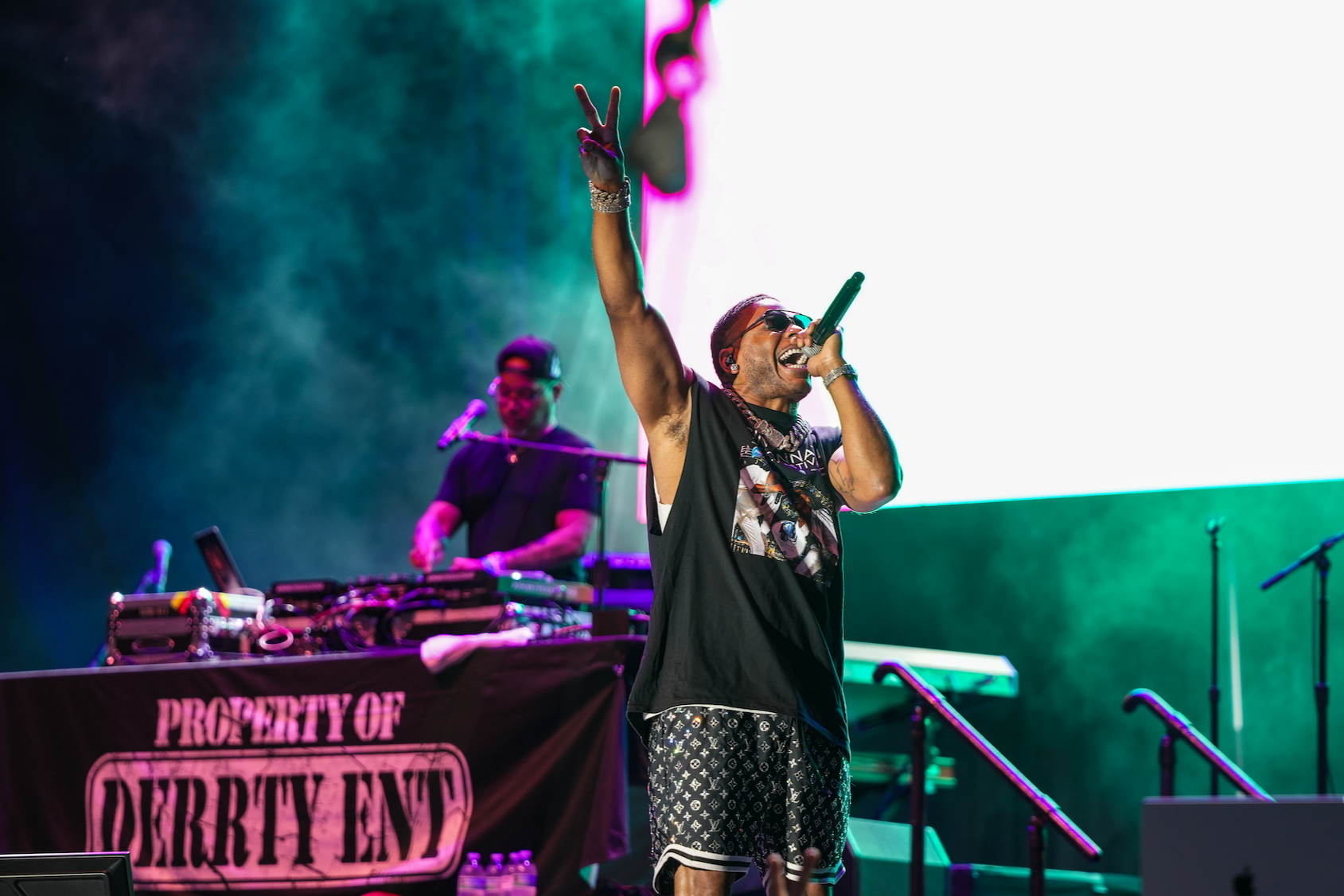
This past weekend, the Cincinnati Music Festival presented by P&G brought Mary J. Blige, Charlie Wilson, Nelly and more to the Paycor Stadium stage, for one of the region's largest annual tourism times of the year.
Last weekend, Cincinnati Music Festival, presented by P&G, and the Cincinnati Black Music Walk of Fame Induction Ceremony put Cincinnati in the national spotlight celebrating Black music and culture. According to Visit Cincy, hotels reached an average of 89% occupancy rate over the weekend, maintaining the record of being one of the region's largest annual tourism times of the year.
“The 2026 Cincinnati Music Festival presented by P&G was a powerful celebration of R&B music and culture, bringing together more than fans,” said Joe Santangelo, producer of the festival. “It was inspiring to see people from across the country travel to Cincinnati to experience the music and support our vibrant tourism economy.”
The Cincinnati Black Music Walk of Fame celebrated its annual induction ceremony on Saturday, July 24 with the 2026 Class: Heatwave: Famed R&B/funk group behind “Always and Forever” and “Boogie Nights,” WCIN: A pioneering, historic Black-formatted radio station founded in 1953 and Regina Belle: 2026 Recipient of the Legacy Award. Additional signature events held during Cincinnati’s largest tourism weekend of the year, included: The Rickey Smiley Show Live on Fountain Square and Festival 513.
“The Cincinnati Music Festival is one of the events that makes our city shine on a national stage,” said Andrea Wilkerson, P&G Vice President, Brand & Consumer Insights. “As a Cincinnati-based company, P&G is proud to support a festival that celebrates incredible musical talent and creates lasting benefits for our local businesses, neighborhoods, and community. We're grateful to help make this incredible weekend possible year after year.”
As one of the largest urban music festivals in the United States, CMF featured live performances by Mary J Blige, Charlie Wilson, Nelly, Trey Songz, SWV, Doug E Fresh, Talib Kweli and more at Paycor Stadium.
The 60th Cincinnati Music Festival will return in 2027 from July 22–24. The full lineup of performances will be announced at a later date.
“The Cincinnati Music Festival Weekend is a true reflection of our city’s soul,” said Julie Kirkpatrick, Interim President & CEO of Visit Cincy. “Beyond the incredible performances, the festival brings people together, celebrates our cultural vibrancy, and fuels economic impact across the region. From the community events to the energy of our visitors, this weekend showcased Cincinnati’s heritage and our standing as a premier destination on the global stage.”
Official sponsors of the Cincinnati Music Festival are P&G, Visit Cincy/Meet NKY, AARP and Life Center.

Scout’s Honor
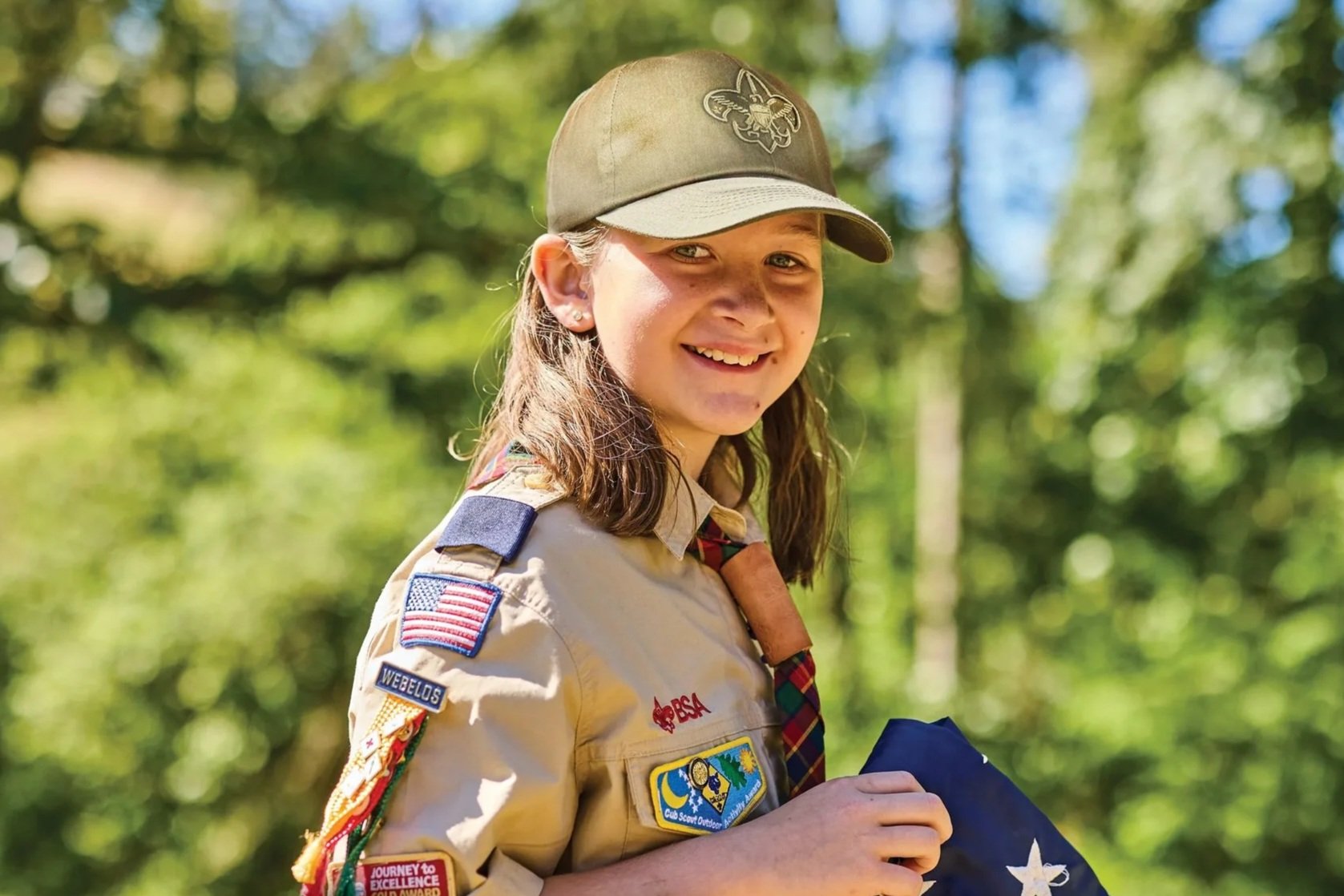
As America celebrates its 250th anniversary, Scouting America is making it easier for military families to get involved, waiving national joining fees for active-duty military families.
About Dan Beard Council
Dan Beard Council, Scouting America serves over 11,000 youth and volunteers across Southwest Ohio and Northern Kentucky. Through outdoor adventure, leadership development, community service, STEM education, and workforce readiness programs, Scouting helps young people build character, develop leadership skills, and prepare for success in life.
To learn more about Scouting programs or to find a local pack, troop, or crew, visit www.danbeard.org.
As the United States celebrates its 250th birthday in 2026, Dan Beard Council, Scouting America is invites families across Southwest Ohio and Northern Kentucky to honor America’s legacy by investing in the next generation of leaders, citizens, and community servants through Scouting.
In recognition of the sacrifices made by military families, Scouting America offers a national joining fee waiver program for active-duty military families, helping reduce barriers to participation and ensuring more youth can experience the benefits of Scouting.
“America’s 250th birthday is an opportunity to reflect on the values that have shaped our nation and to invest in the young people who will carry those values forward,” said Andy Zahn, Scout Executive and CEO of the Dan Beard Council. “Scouting helps young people develop character, leadership, citizenship, and a commitment to service. We are proud that Scouting America continues to support military families through programs that make participation more accessible.”
Through outdoor adventure, leadership development, community service, STEM education, and workforce readiness programs, Scouting provides youth with opportunities to build confidence, learn practical skills, and become active, engaged citizens.

Driving Ahead
Youth on Course– a California-based nonprofit organization providing youth with access to life-changing opportunities through golf – just announced a new partnership with the Cincinnati Regional Sports Commission.
The purpose of Cincy Sports is to:
Grow the Regional Economy: To grow the Cincinnati regional economy (hotel bed tax revenue and visitor spending at restaurants, hotels and retail outlets) through professional, collegiate, amateur and community sports events.
Increase Brand Awareness: To increase the visibility of the Cincinnati region through organic and intentional direct, digital and word-of-mouth sports marketing. It is a complimentary organization to Visit Cincy and Northern Kentucky CVB, the region’s leading Destination Marketing Organizations (DMO).
Promote Healthy Living: To drive social and community engagement, promote health and well-being, advance cultural exchange and educational opportunities, enable long-term investment in sports and recreational facilities and support sustainable practices.
See more at www.visitcincy.com/cincysports.
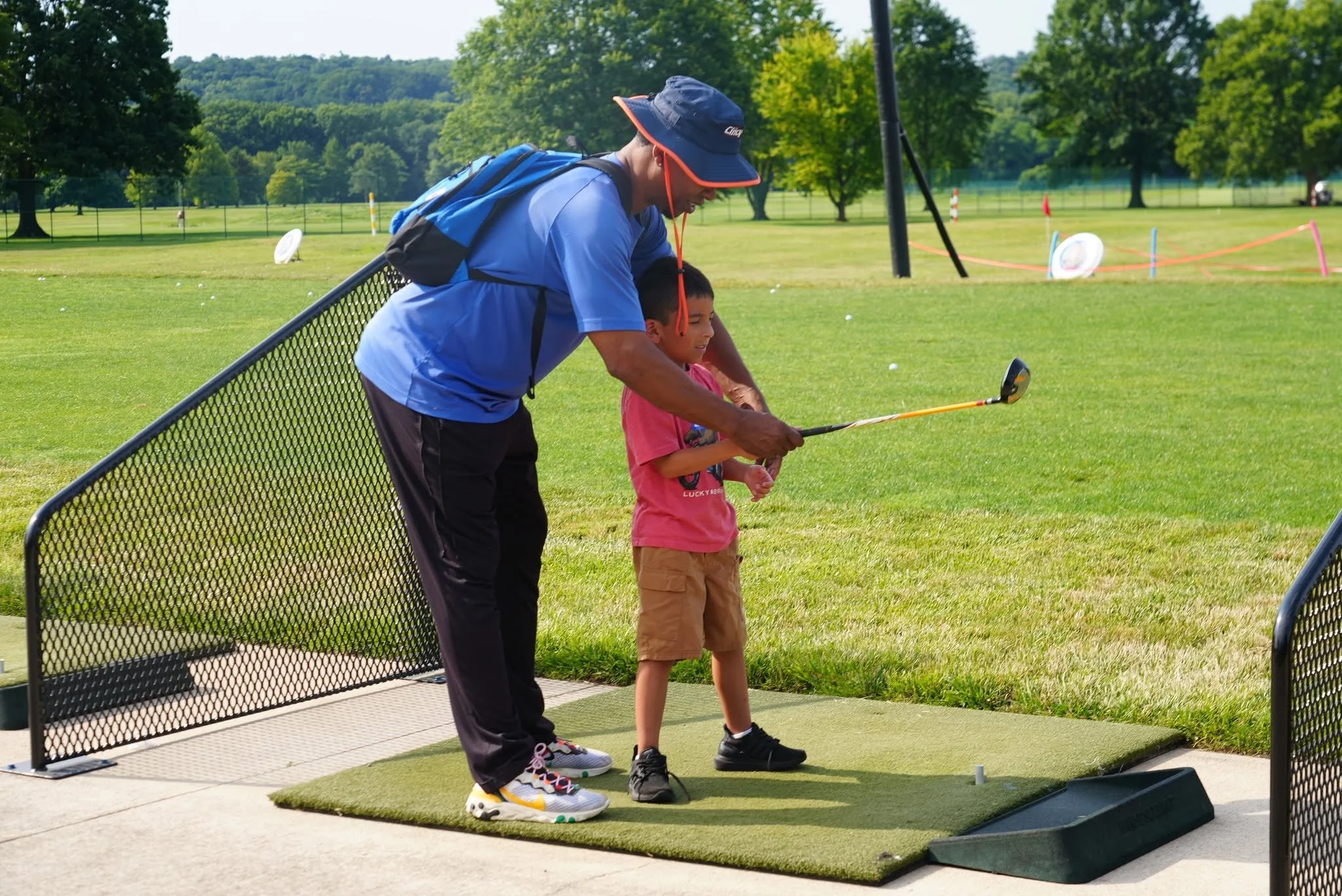
This summer, a new partnership is helping more kids go green. Youth on Course, the Cincinnati Regional Sports Commission, and the Cincinnati Recreation Commission (CRC) have joined forces to expand access to affordable golf around the region.
Youth on Course, a national nonprofit organization providing youth with access to life-changing opportunities through golf, is partnering with the Cincinnati Regional Sports Commission at 11 CRC courses throughout the Greater Cincinnati area.
By combining resources, community relationships and a passion for youth development, these organizations are expanding access to golf through a growing network of participating courses that offer rounds for $5 or less, providing a timely opportunity for youth to get outdoors as summer begins and continue enjoying the game throughout the year.
Through the partnership with the Cincinnati Regional Sports Commission, the Greater Cincinnati footprint has expanded, significantly increasing access and ensuring more consistent opportunities for local youth to play golf. This expansion comes at a time of rising demand across the region, with Youth on Course membership in Southern Ohio growing by 6.4% in the first half of 2026, underscoring the need for continued investment in accessible entry points to the sport.
“Partnering with the Cincinnati Regional Sports Commission marks an exciting step forward in expanding youth access to golf,” said Youth on Course CEO Adam Heieck. “We’re incredibly proud of this collaboration because we believe in golf’s ability to transform lives, build confidence, friendships, community, and create new opportunities. We are eager to see how this partnership will inspire and positively impact the youth of Cincinnati.”
New course partners for 2026 are:
Avon Fields Golf Course, 4081 Reading Road
California Golf Course, 5924 Kellogg Ave.
Glenview Golf Course, 10965 Springfield Pike
Neumann Golf Course, 7215 Bridgetown Road
Reeves Golf Course, 4757 Playfield Lane
Woodland Golf Course, 5820 Muddy Creek Road
In addition to providing affordable access to the sport, Youth on Course helps young people build meaningful relationships, foster a sense of belonging, and support overall well-being through golf. A recent member survey highlights the positive impact participation can have on mental and emotional health:
41.4% built friendships or social connections through golf
32.1% felt like they belonged in the golf community
27.1% said their mental health improved
18.8% felt more emotionally balanced or better able to manage feelings
The Cincinnati Regional Sports Commission has long championed youth development through sports, advocating for active and healthy lifestyles. This collaboration will help accelerate Youth on Course’s reach across the state, building on a strong foundation to empower the next generation of players.
Today, the Youth on Course network spans over 2,300 golf courses and more than 400,000 members across the U.S., Canada, and Australia. With members recently surpassing 5million rounds played, the organization continues to demonstrate its meaningful impact on young golfers and the communities it serves. Beyond affordable rounds, Youth on Course members gain access to college scholarships, internship programs, and leadership opportunities designed to support their growth on and off the course.

Banks for the Memories
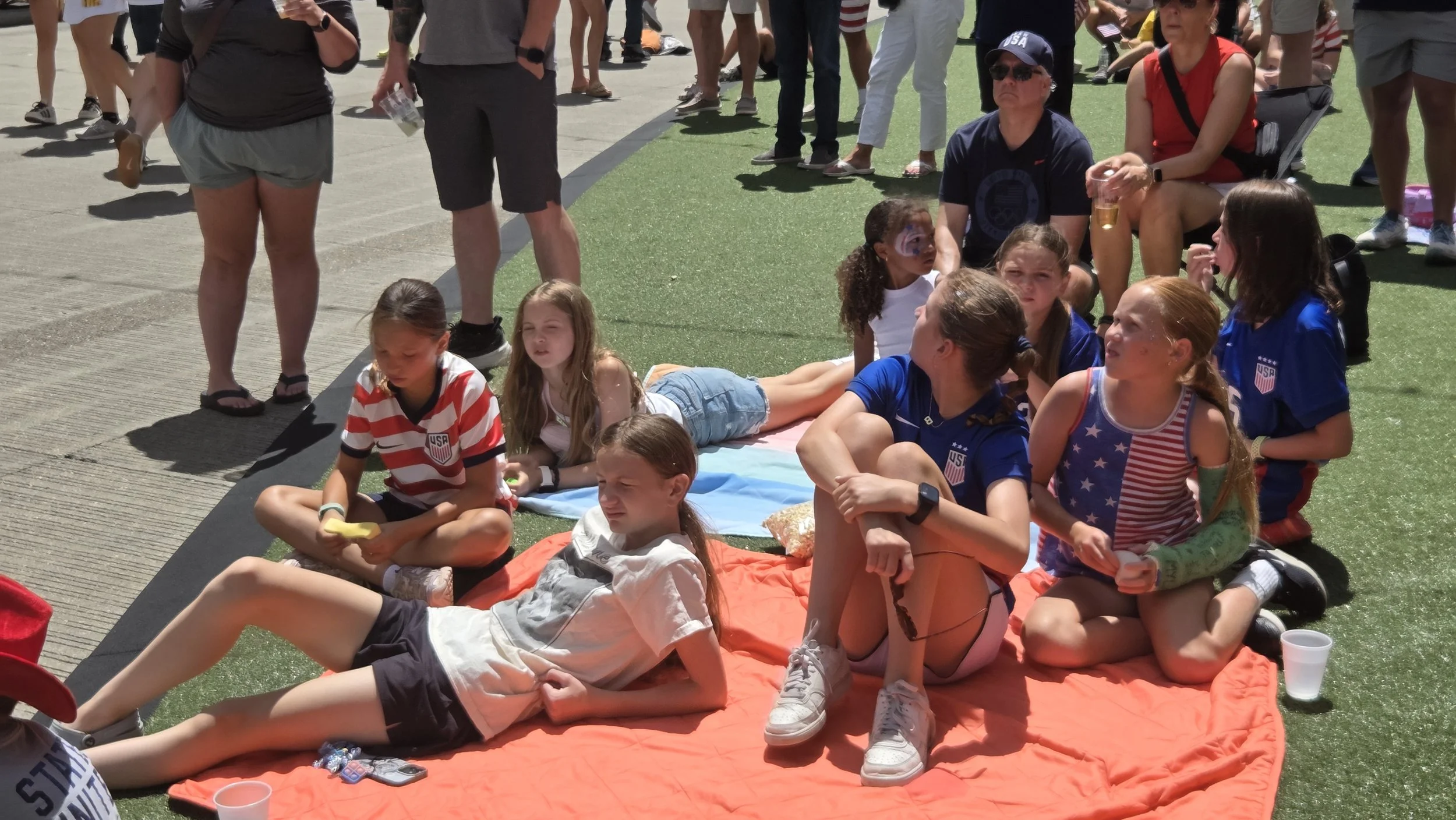
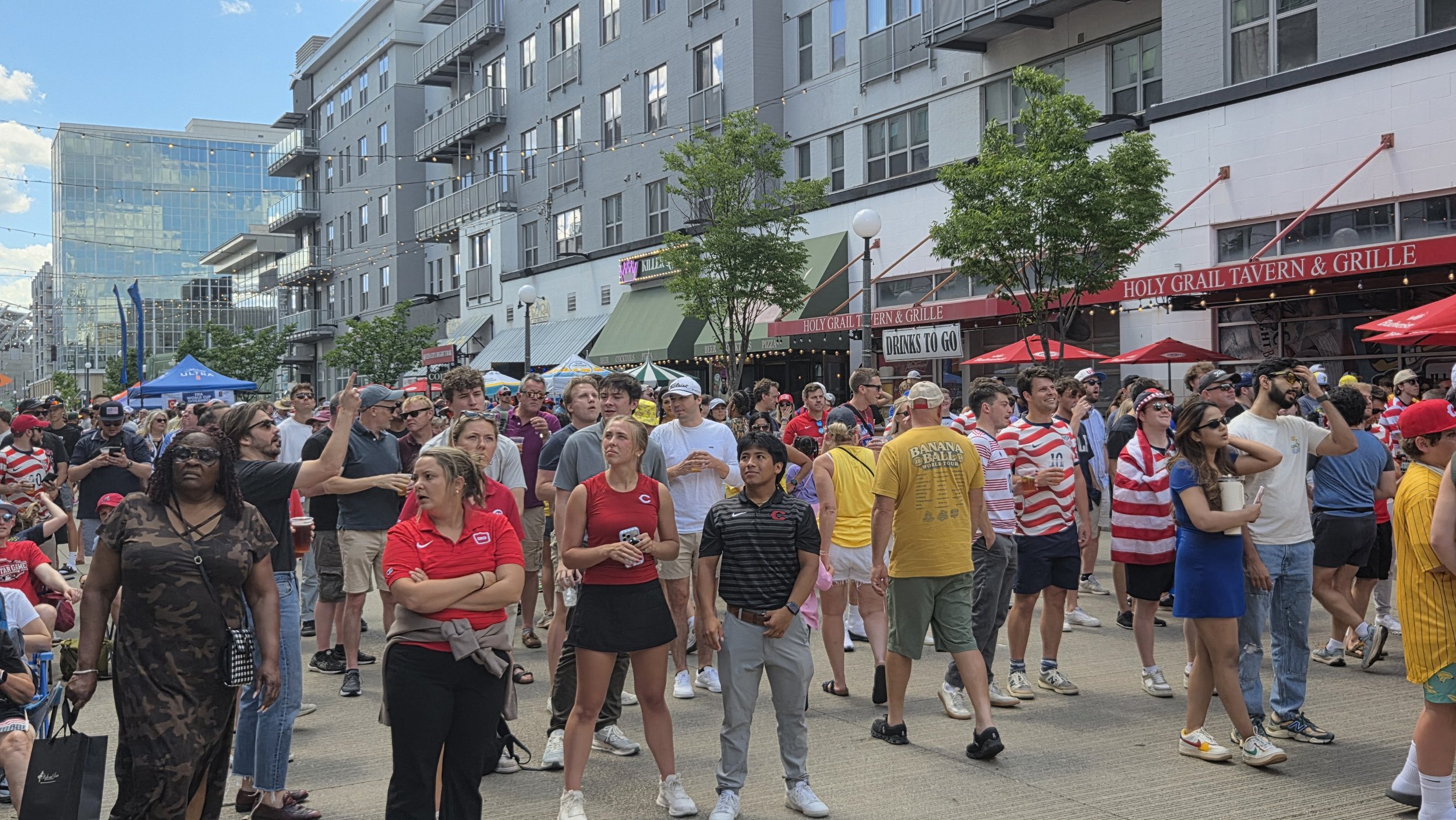
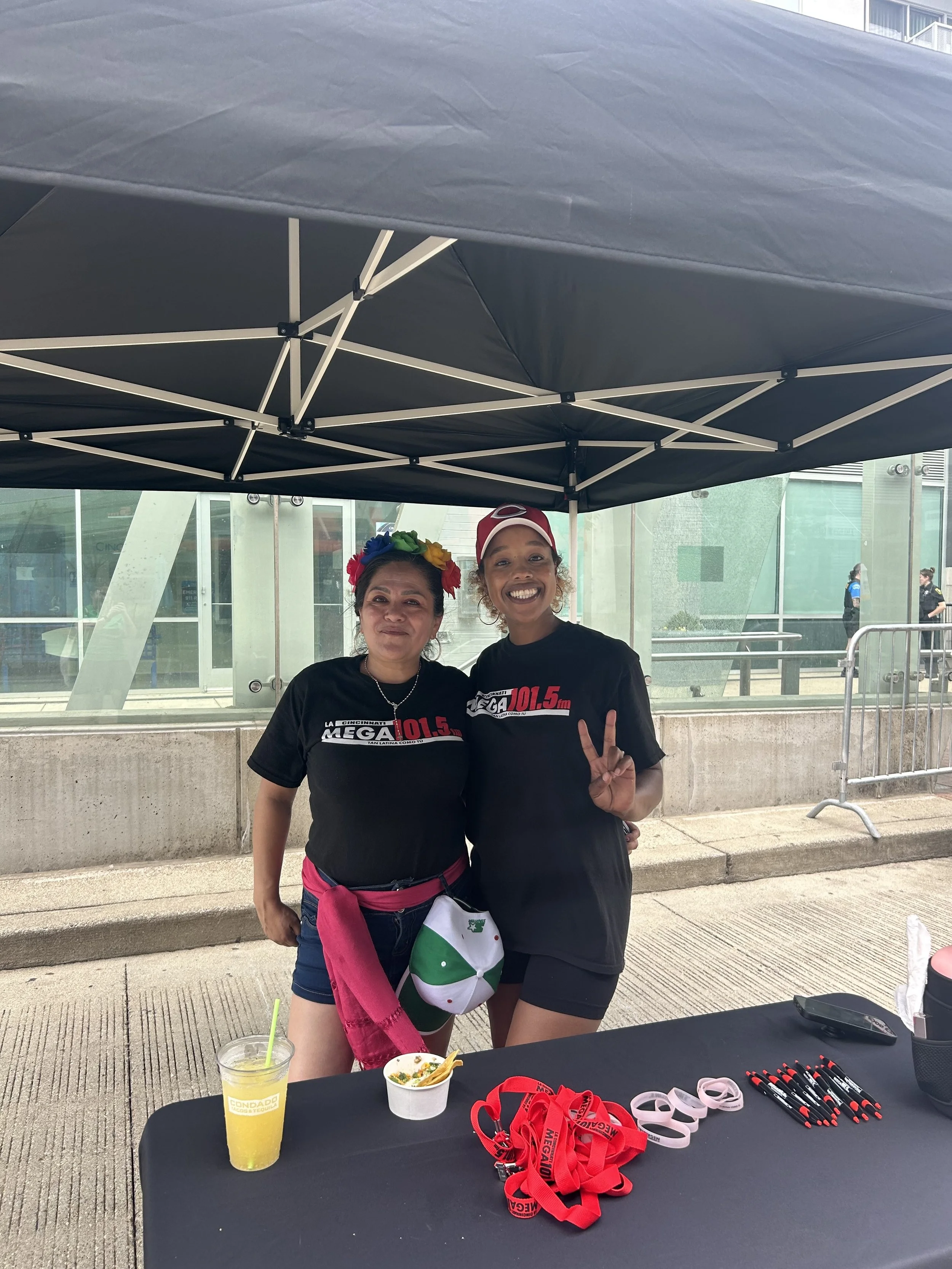
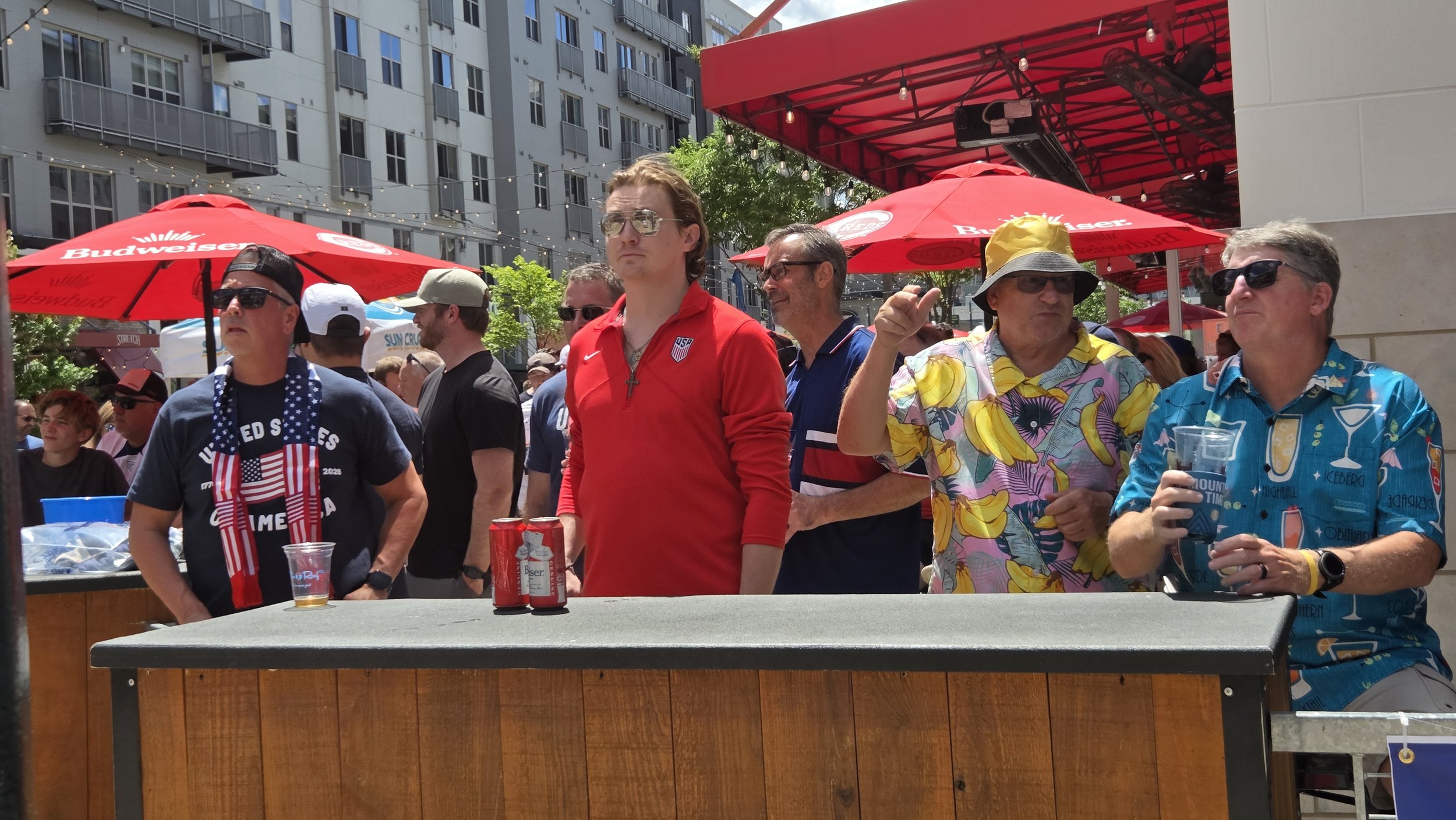
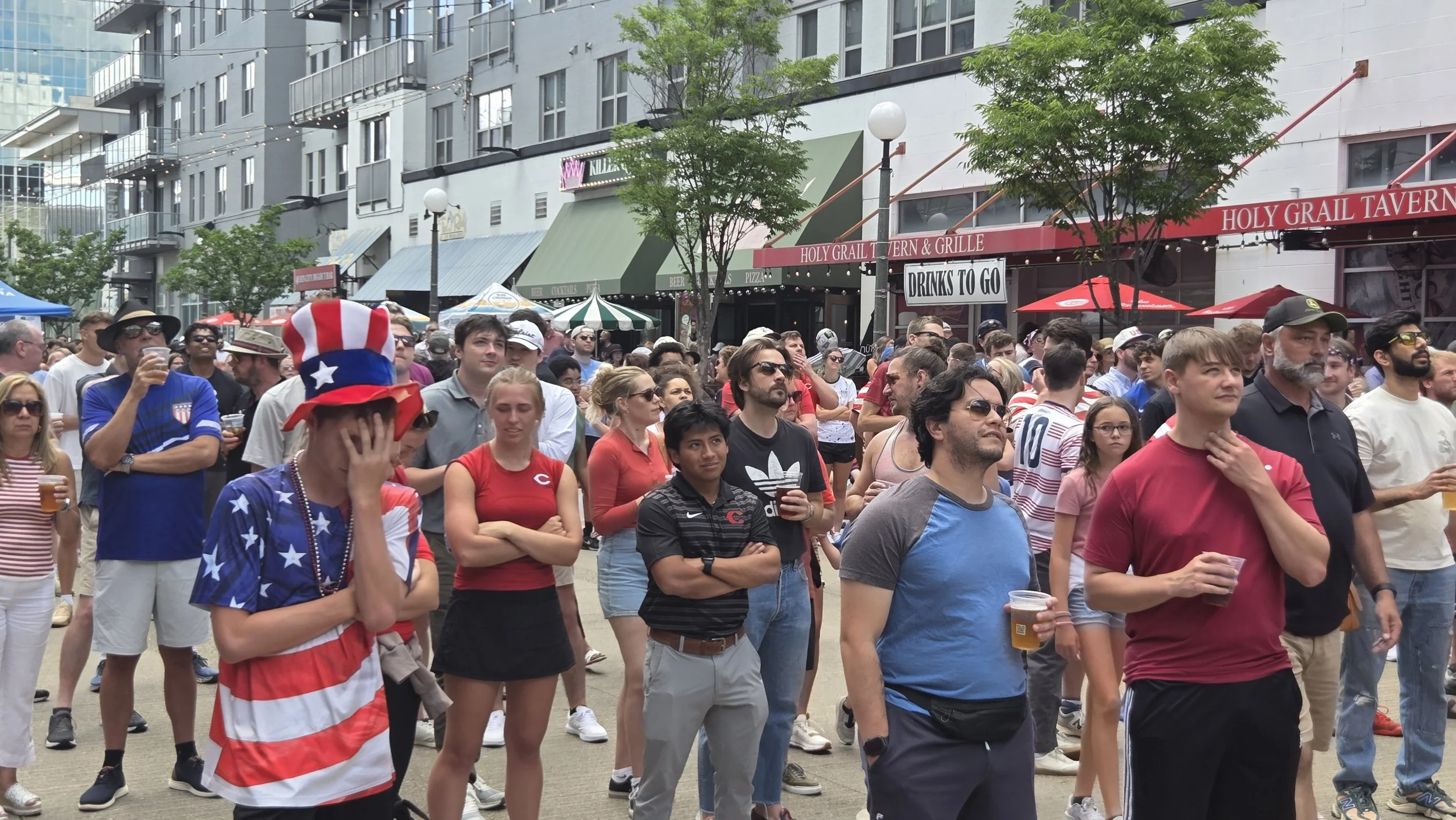
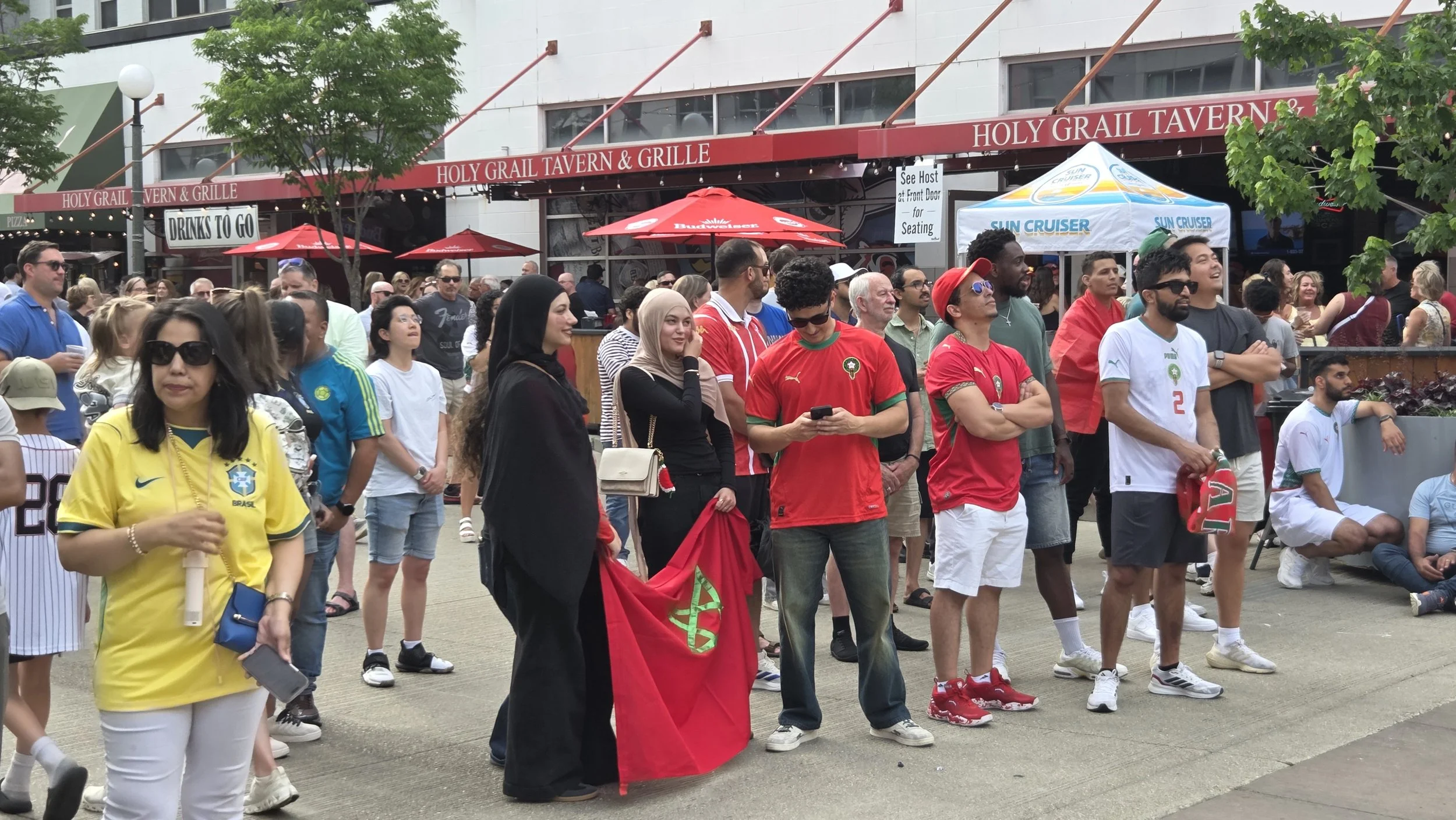
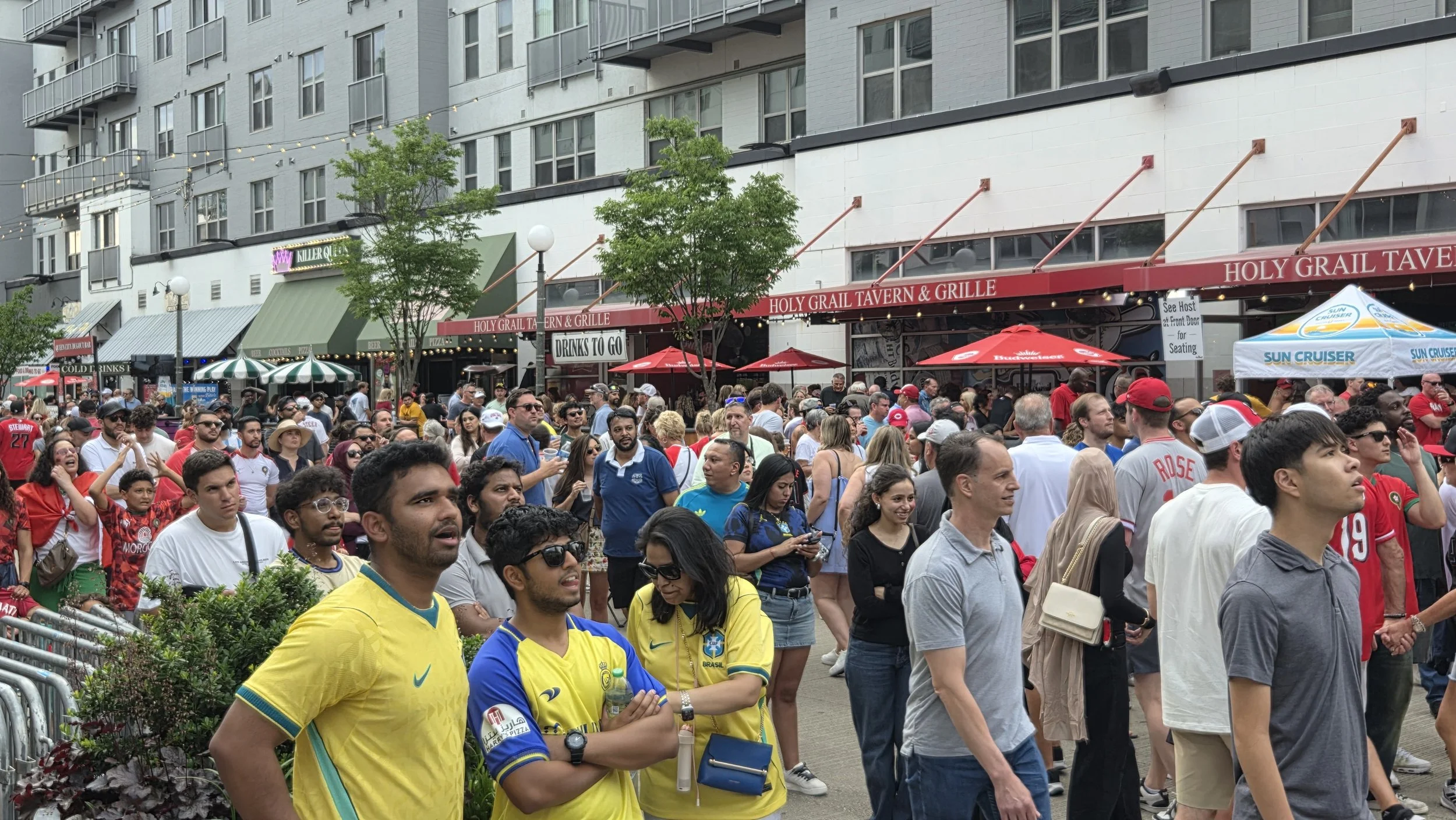
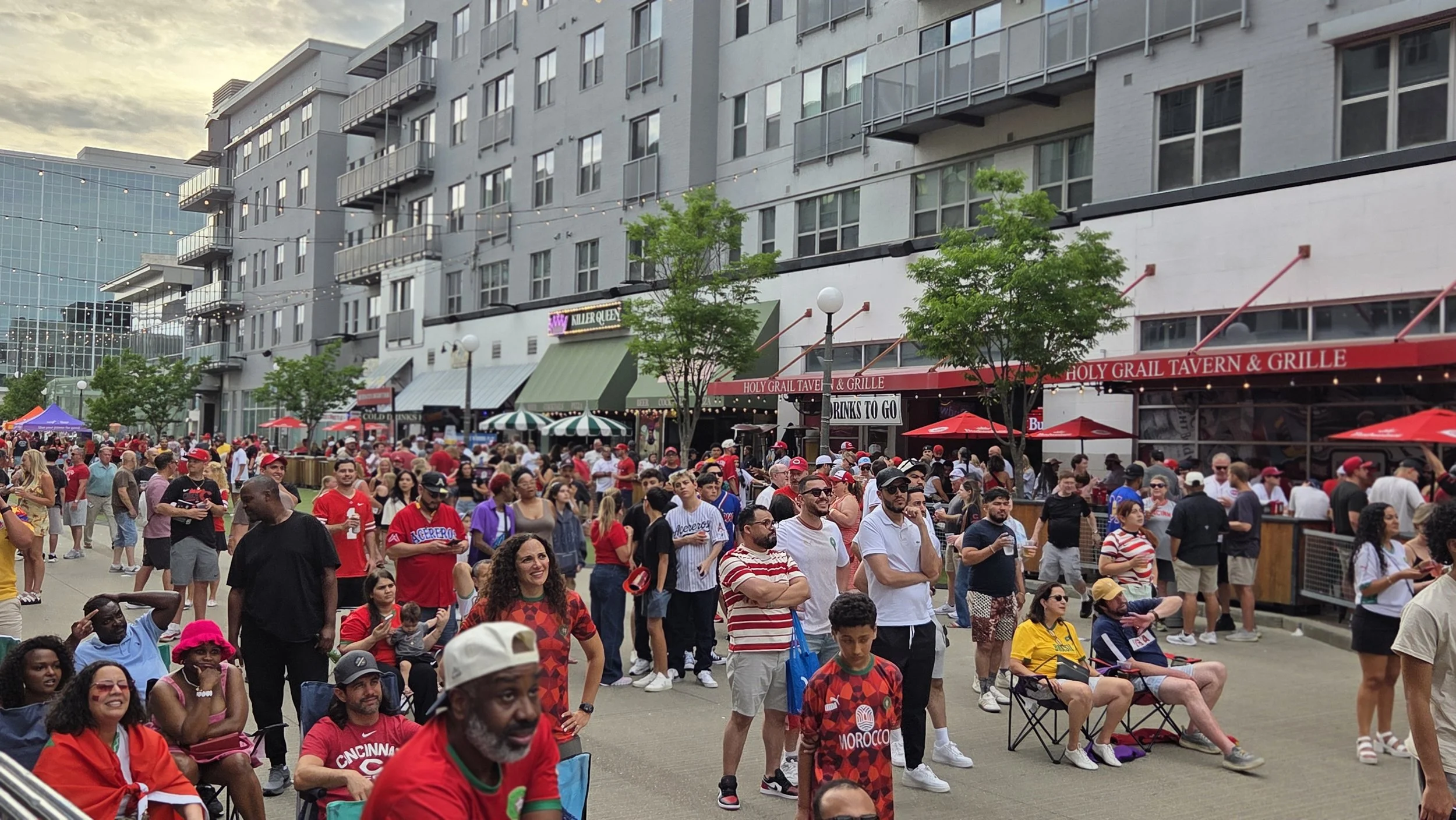
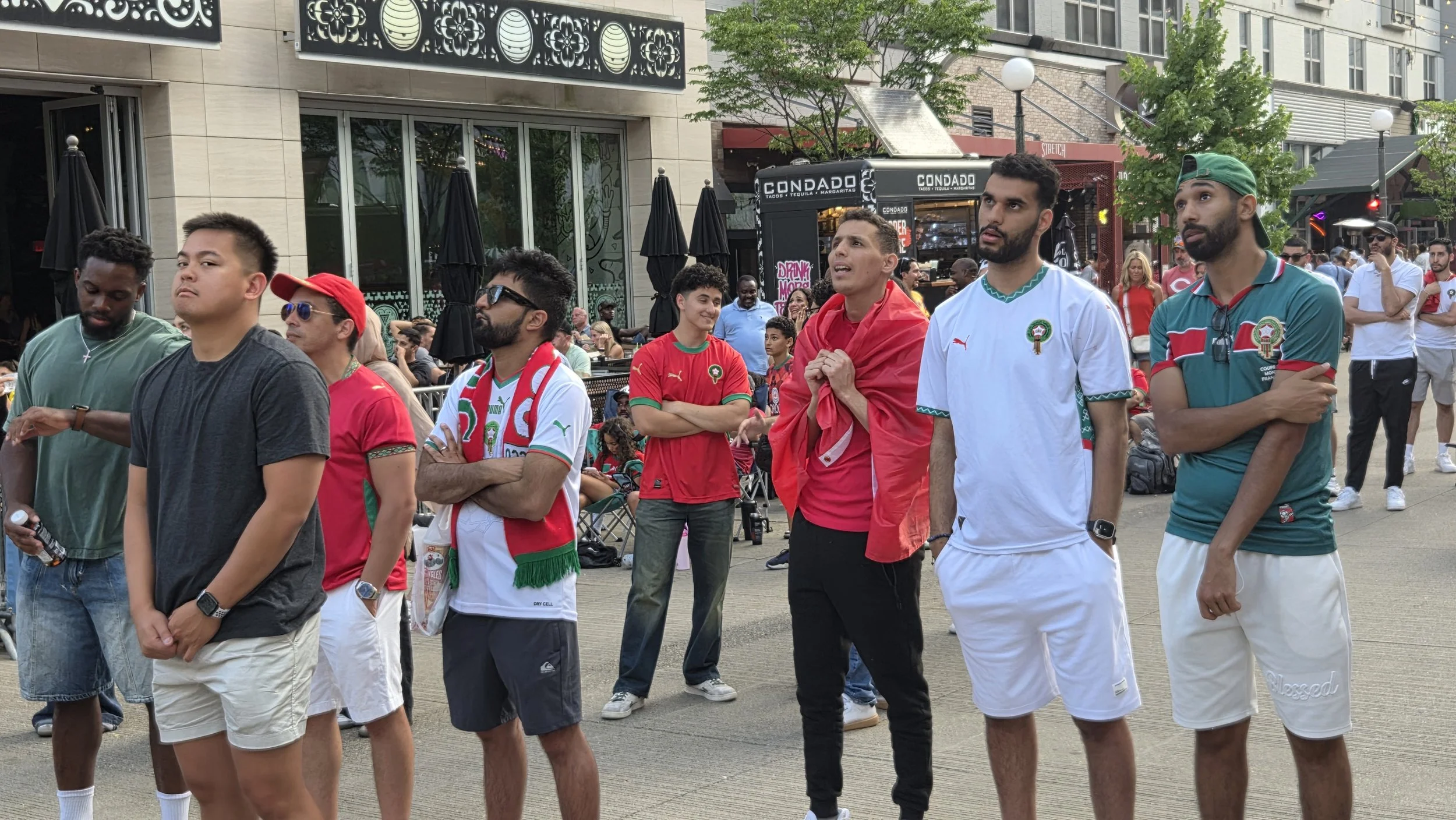
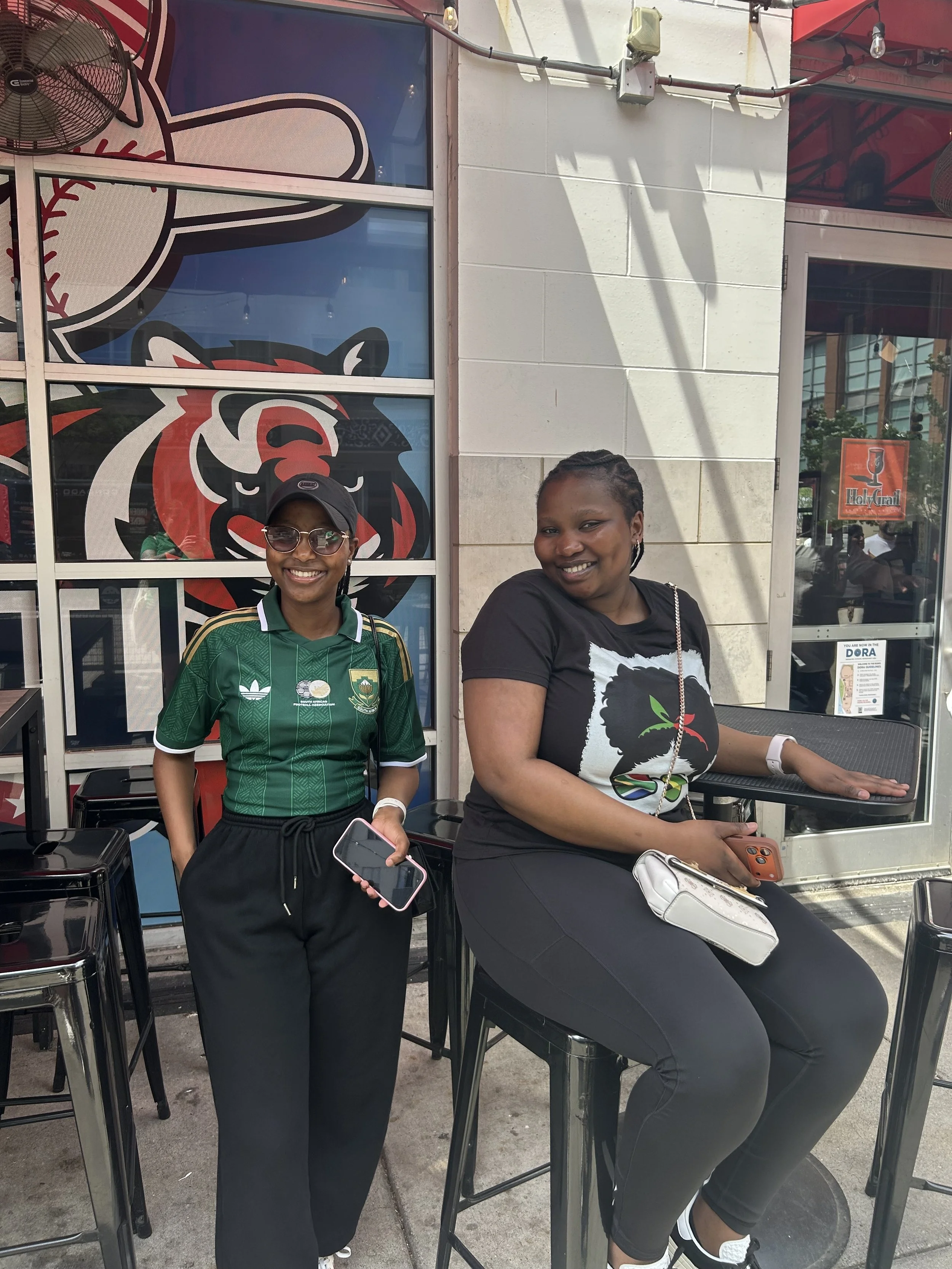
As the FIFA World Cup play heats up, the best place to catch the action is at The Banks. Check out the fun and head to the Viewing Village for the Round of 32.



Thursday, July 9
4 p.m. – France v. Morocco
Friday, July 10
3 p.m. – Spain v Belgium
Saturday, July 11
5 p.m. – Norway v England
9 p.m. – Argentina v Switzerland
Tuesday, July 14
3 p.m. – Semi-final
Wednesday, July 16
3 p.m. – Semi-final
Saturday, July 18
5 p.m. – Third place playoff
Sunday, July 19
3 p.m. – Final
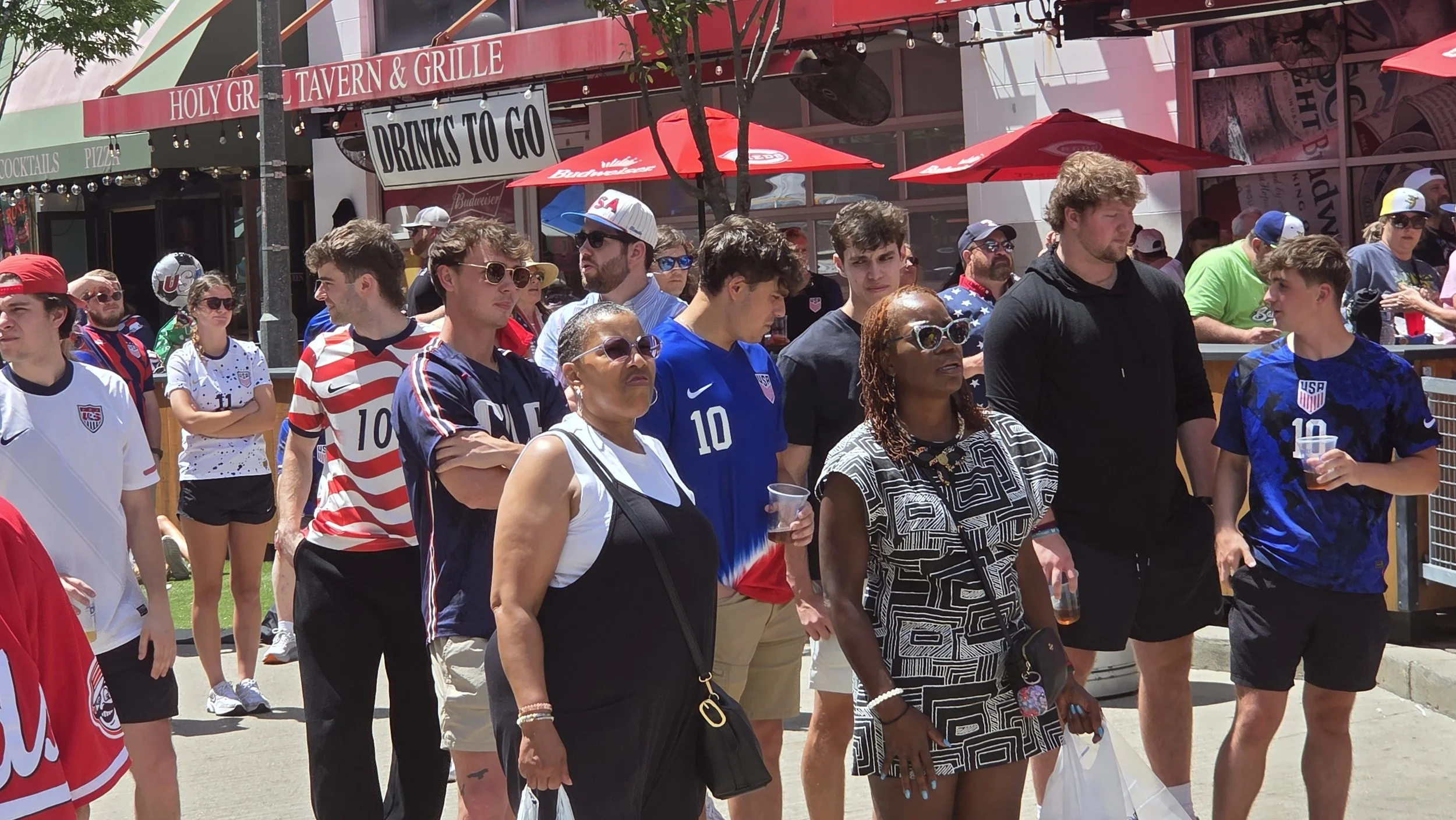
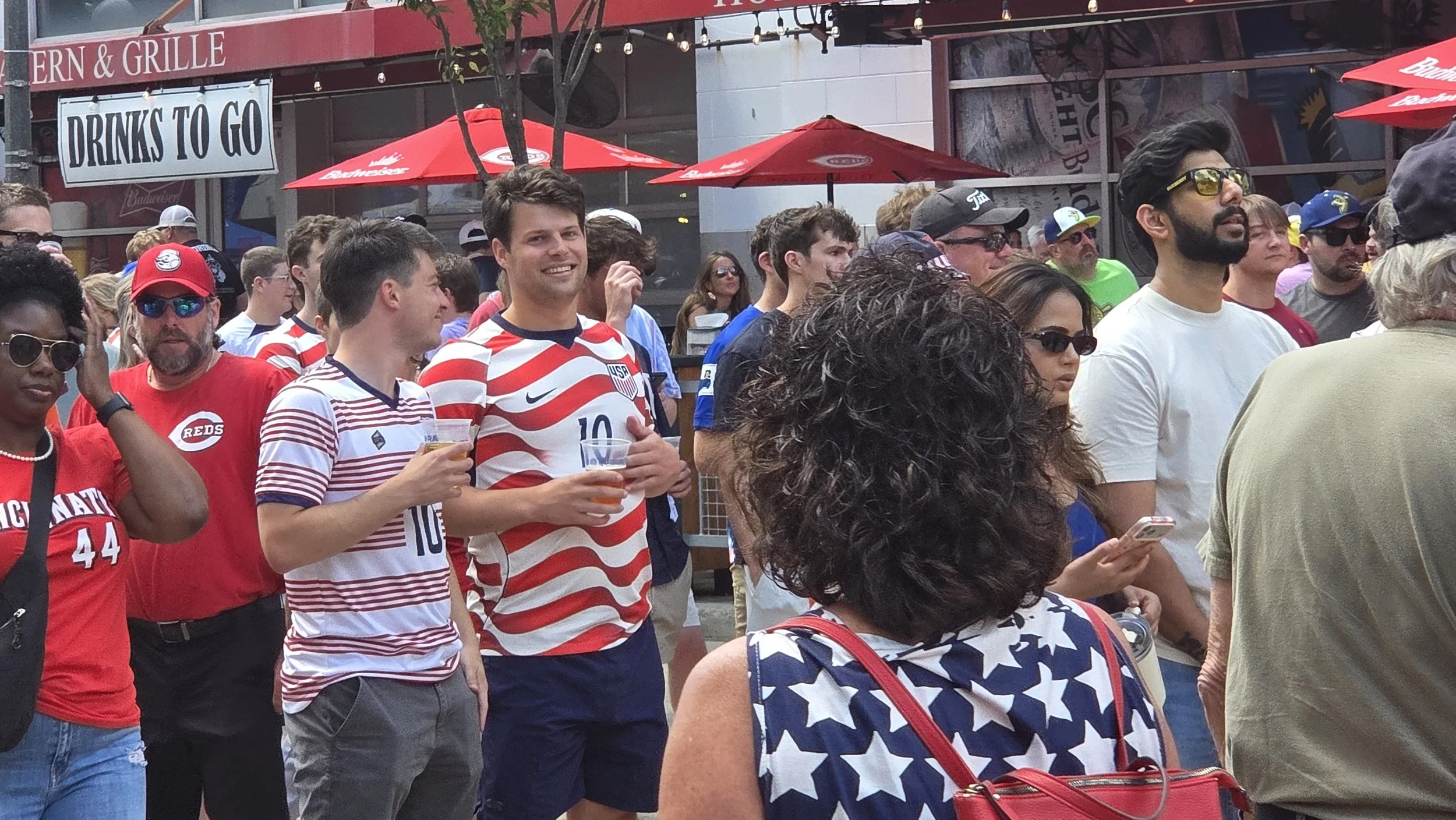
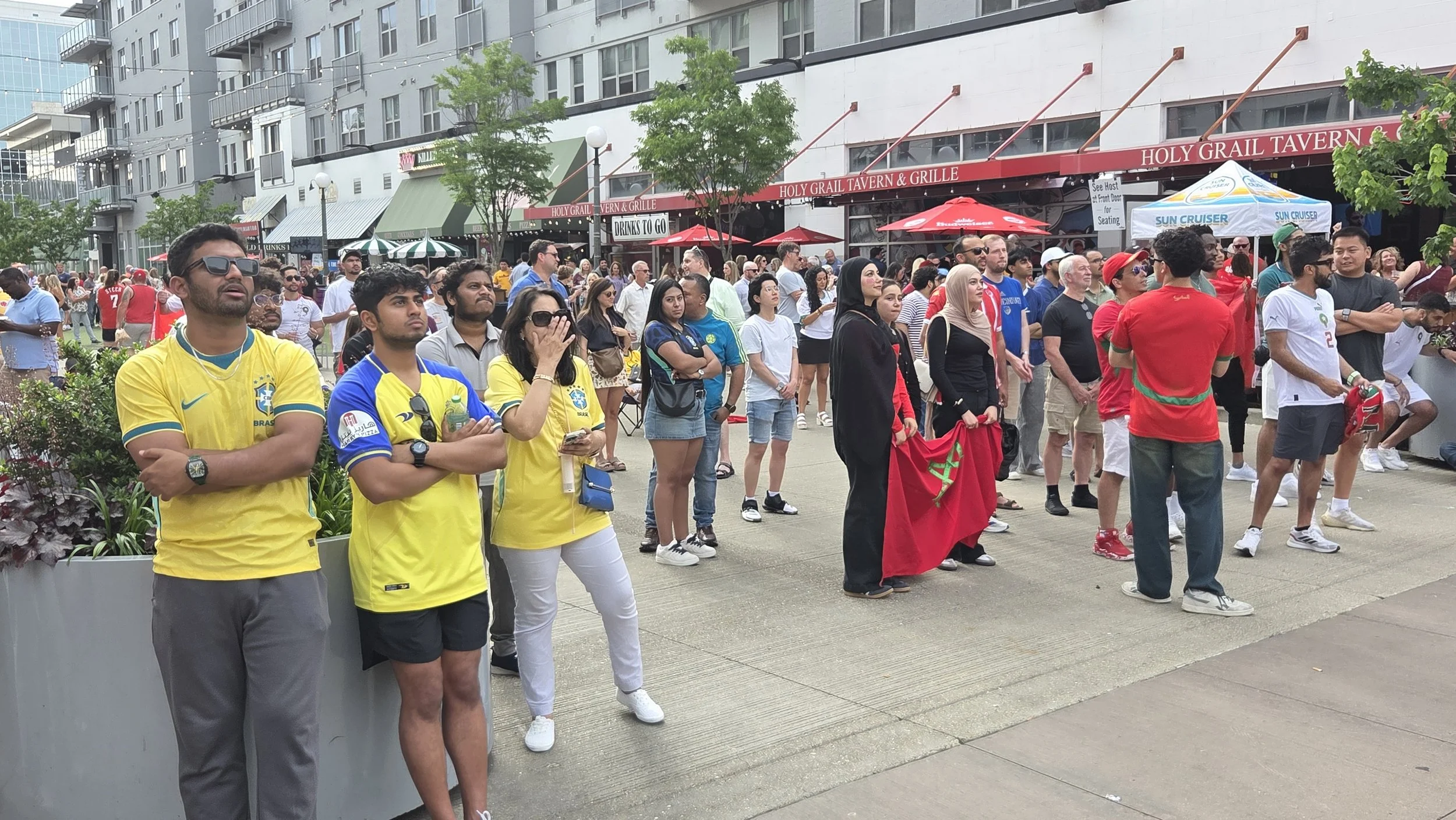
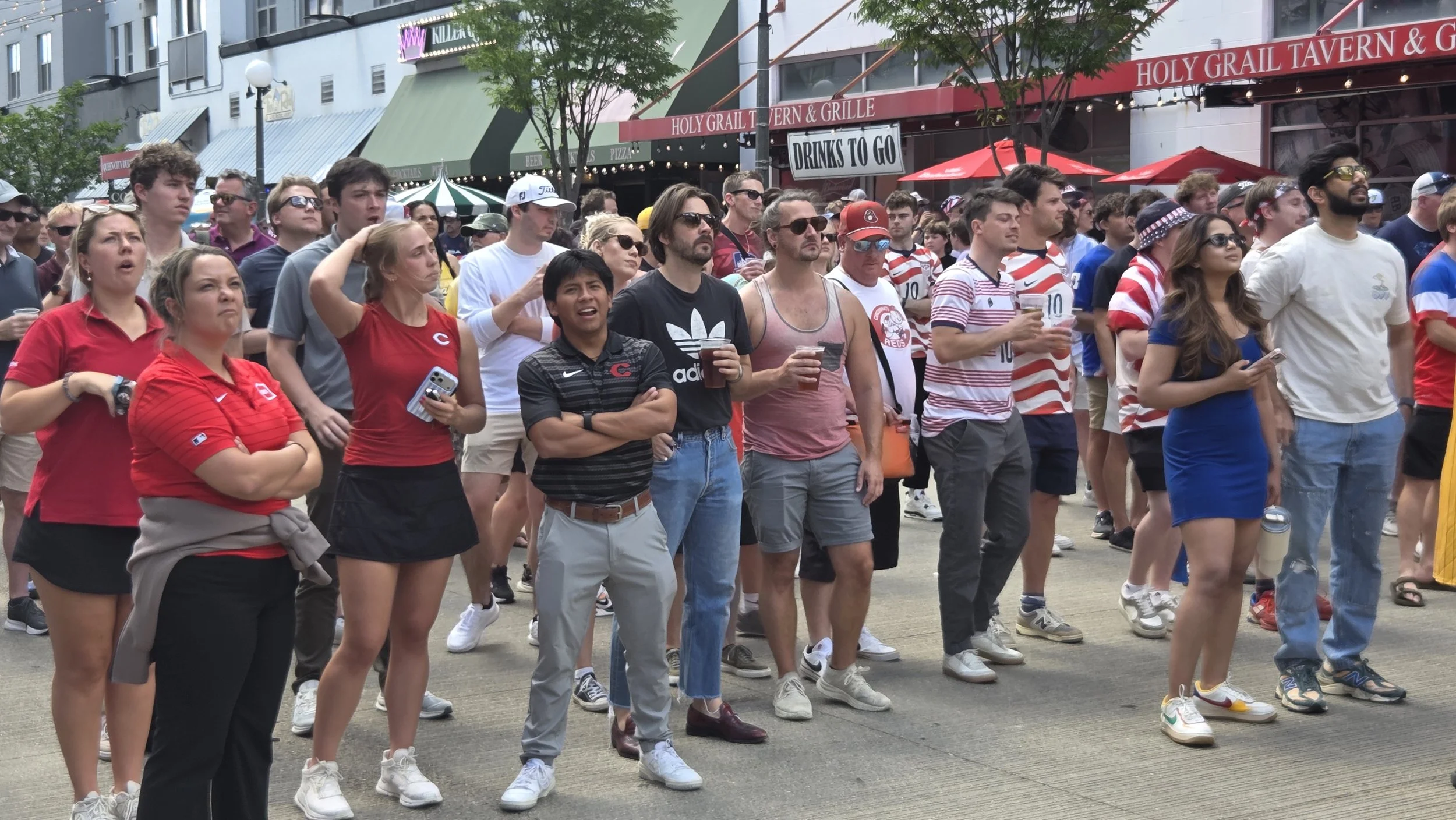
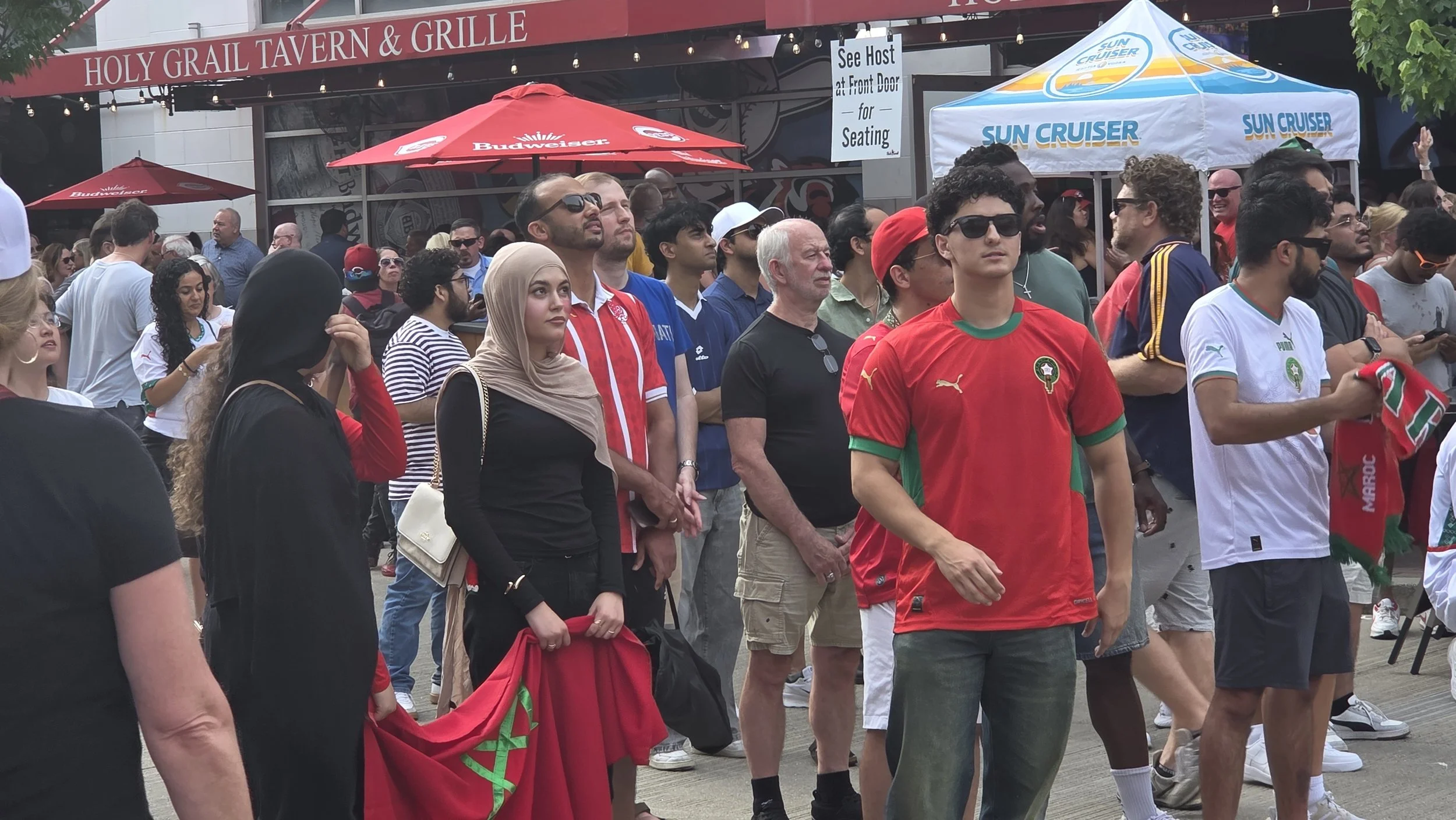
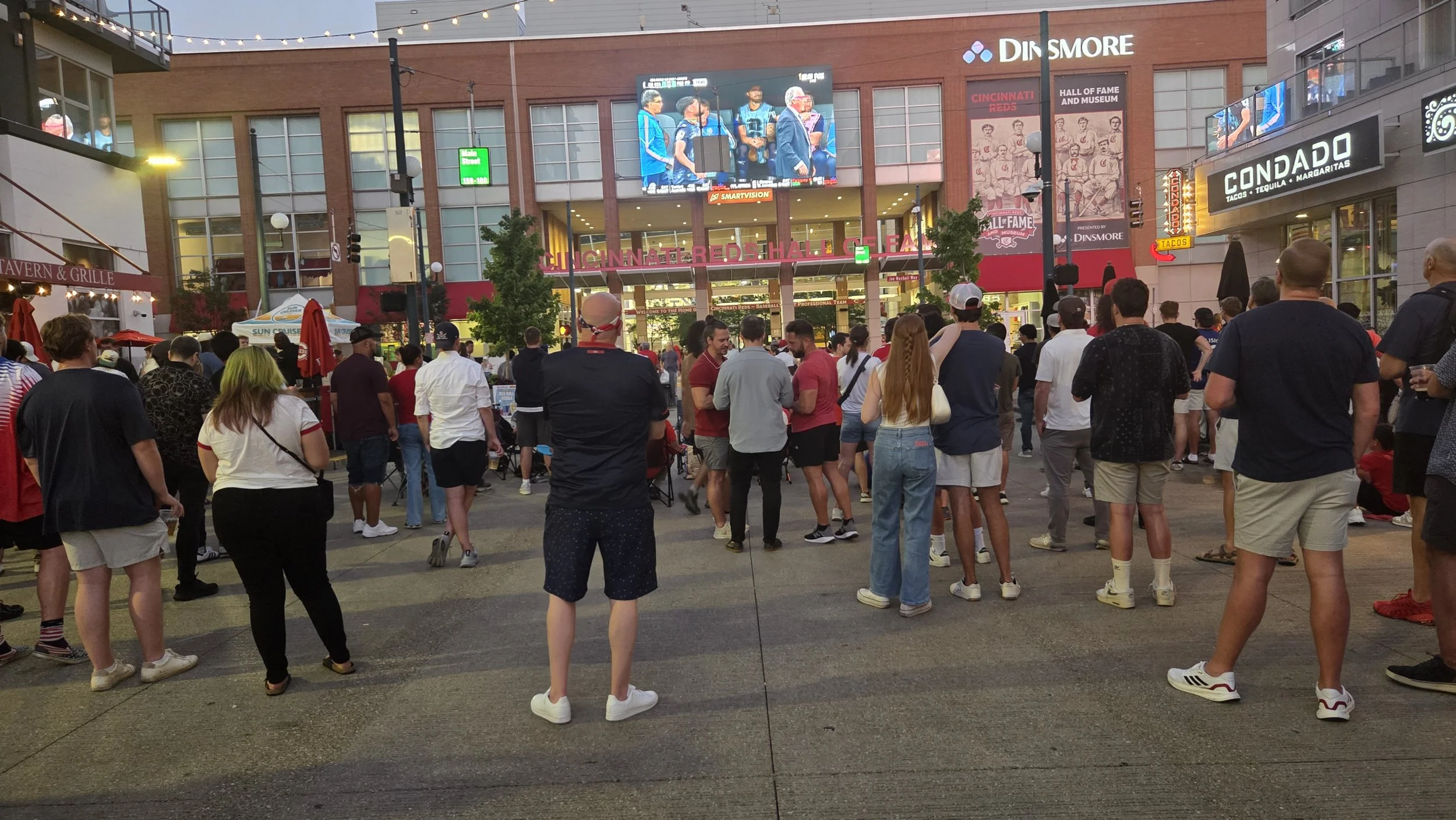
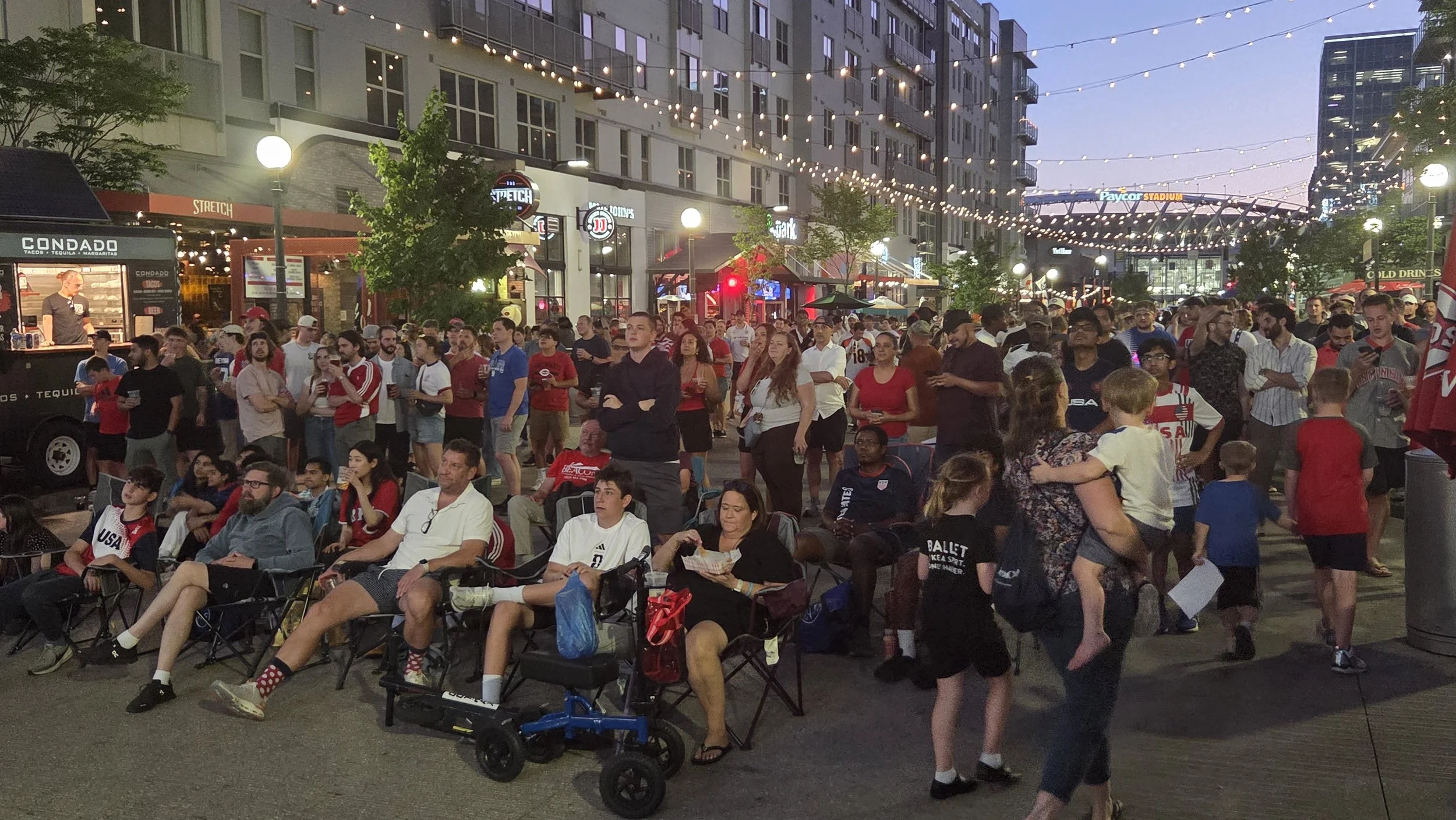
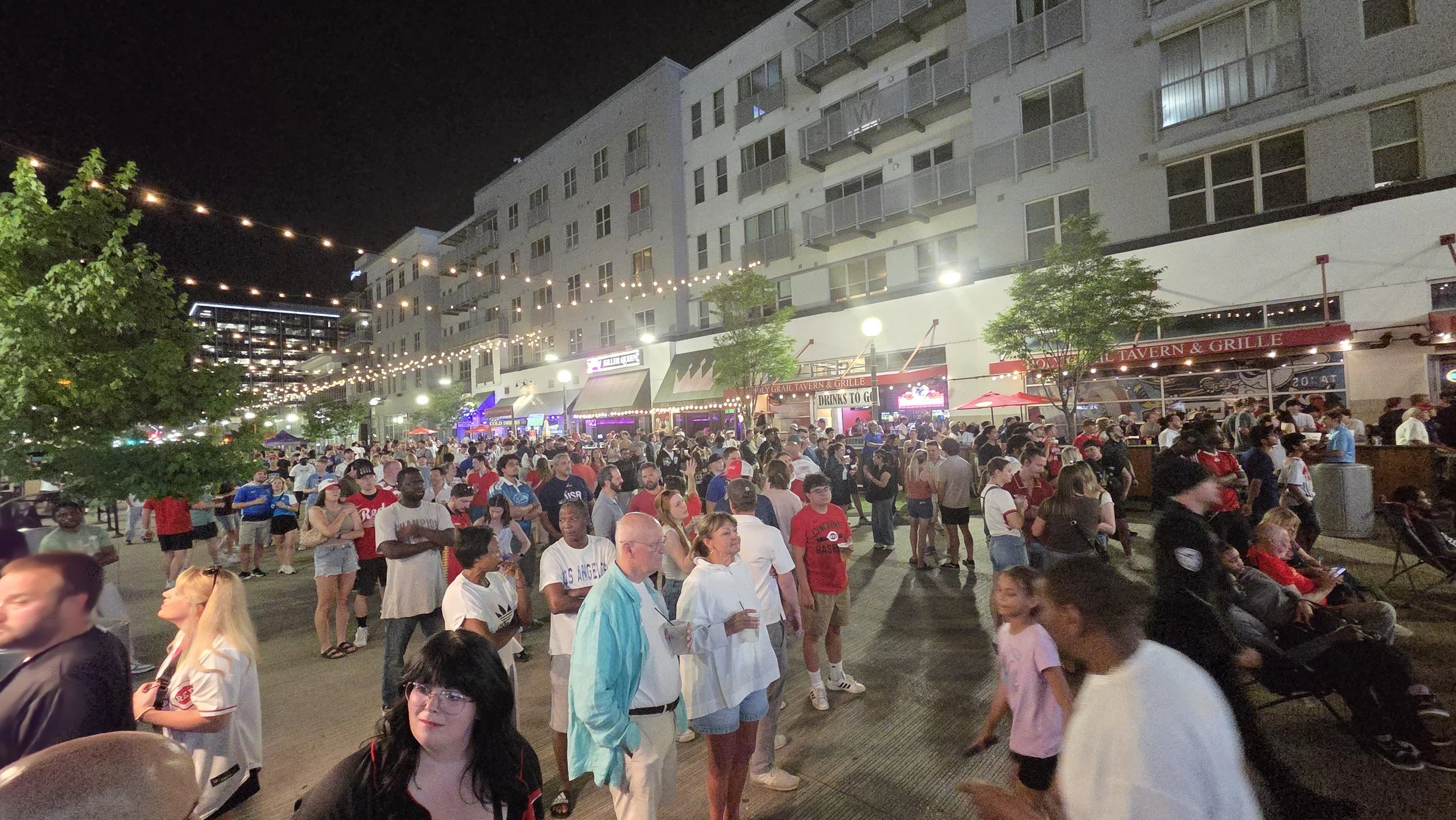
There are nights when downtown just feels different, and Friday, June 12, was one of those. As the clock crept toward 9 p.m., the stretch of riverfront between Great American Ball Park and Paycor Stadium had quietly transformed into one enormous living room, and a few thousand of our closest neighbors had claimed their patch of The Banks to watch the United States kick off its home World Cup.
If you haven’t yet wandered down to The Banks this summer, consider this your nudge. Through the July final, the city’s riverfront entertainment district is doing double duty as the 2026 Soccer Viewing Village, a free, all-ages fan zone built around a giant outdoor screen, full match sound, and food and drinks from the restaurants right next door.
And what a night to show up! Opening matches can be nerve wracking even for the fans, but the U.S. Men’s Team opened with a bang. Barely seven minutes in, a Weston McKennie cross caused enough chaos that Paraguay's Damián Bobadilla turned it into his own net, and the crowd at The Banks erupted in cheers. From there, striker Folarin Balogun took over, burying a Christian Pulisic cross in the 31st minute and then weaving through two defenders in first-half stoppage time to make it three. That second goal made Balogun the first American to score twice in a single World Cup match since 1930, a stat that drew a commotion from the folks watching beside me near the screen.
Paraguay pulled one back midway through the second half, briefly quieting the riverside party, but Cincinnati got its exclamation point deep into stoppage time when Gio Reyna curled a shot off the outside of his right foot and into the corner. 4-1. It was the most goals the U.S. men have ever scored in a single World Cup game, and for a few glorious minutes The Banks was bustling with U.S. pride for a sport that has taken Cincinnati by storm since FCC.
You could have caught the same match on your couch, but you’d have missed the stranger in a full-blown USA overalls with a matching hat, high-fiving everyone and the collective gasp before every American shot. There’s a reason people keep choosing to watch the big ones together, and on Friday, downtown made the case better than any person could.
The good news is that the party is far from over. The Village runs way through the World Cup final in July, with the most popular matches, Team USA and global heavyweights like Spain, England, France, Brazil, and Argentina among them, shown on the big screen with festival style energy.
So bring your friends, your flags, and your country’s jersey. Cincinnati has spent this summer reminding the world that it knows how to throw a party, and down at The Banks, the whole world is invited.
– Tim David

Community Values
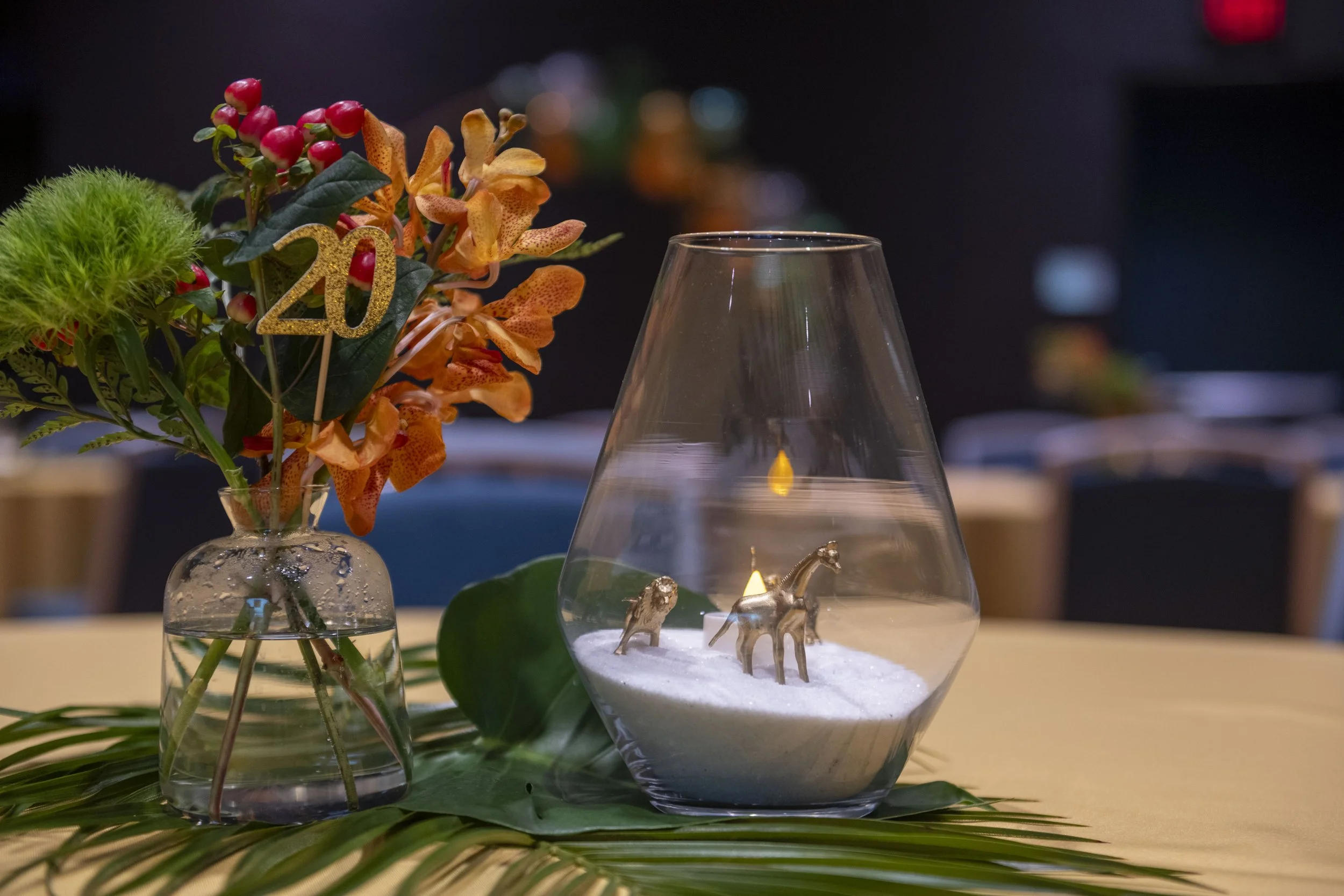
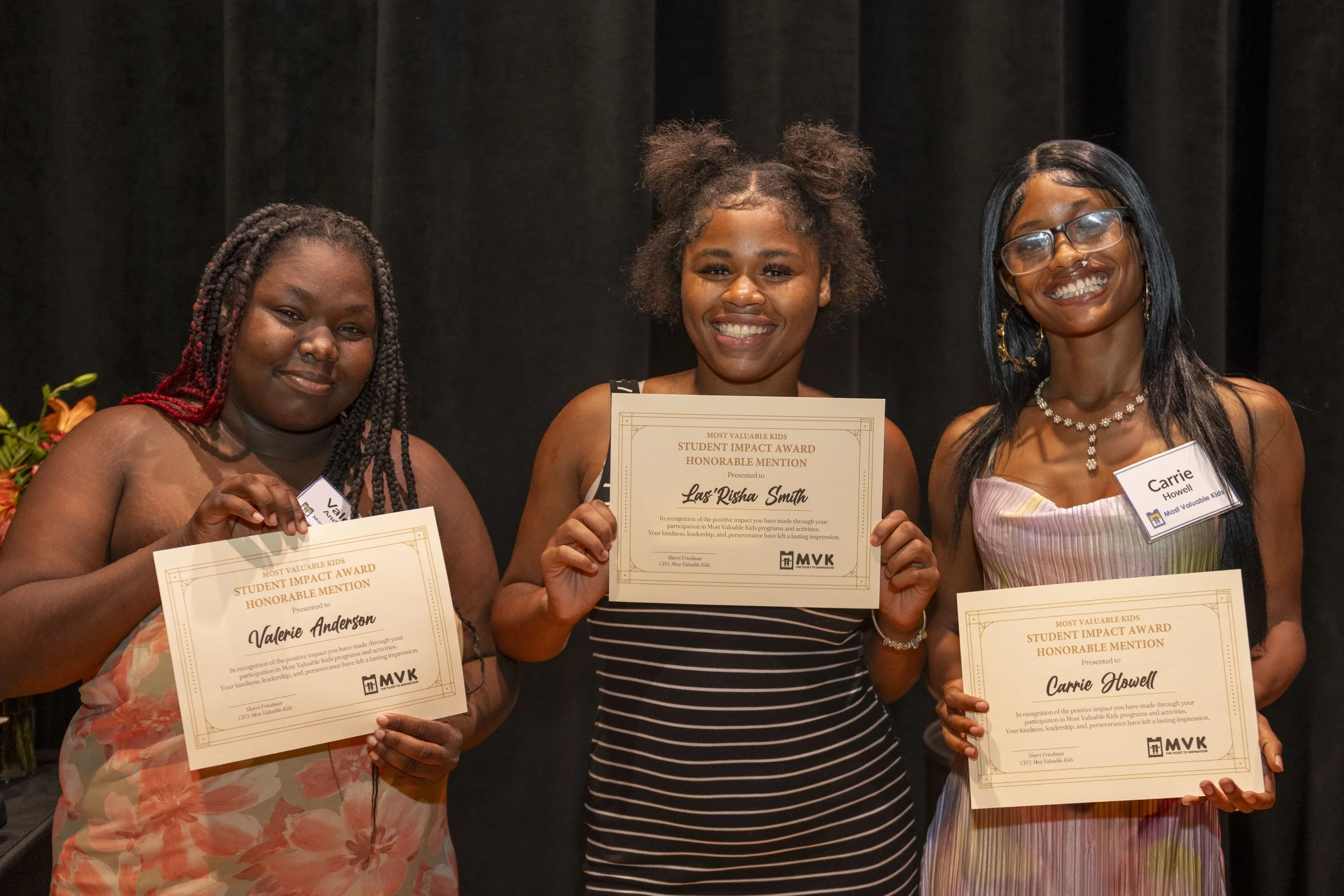
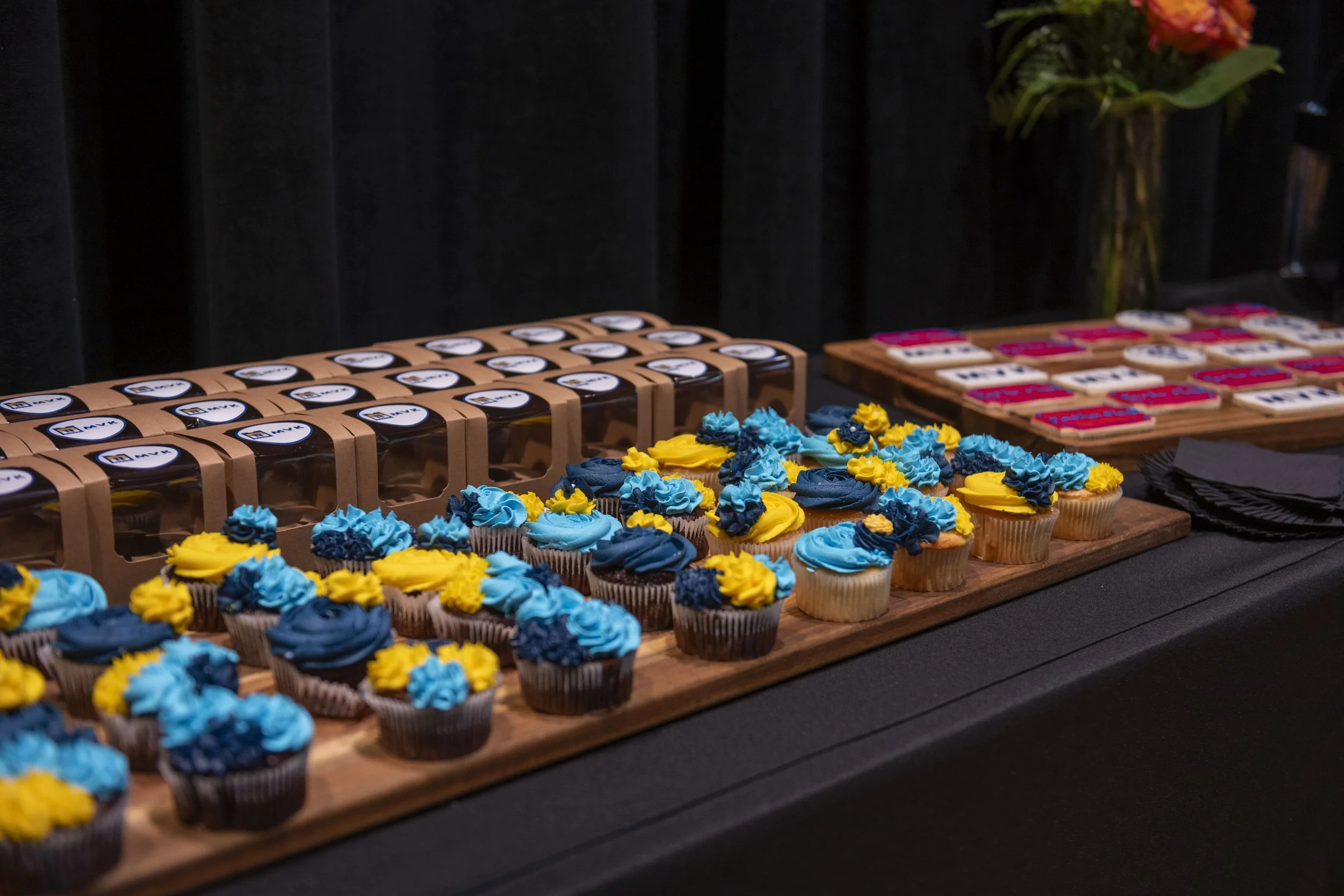
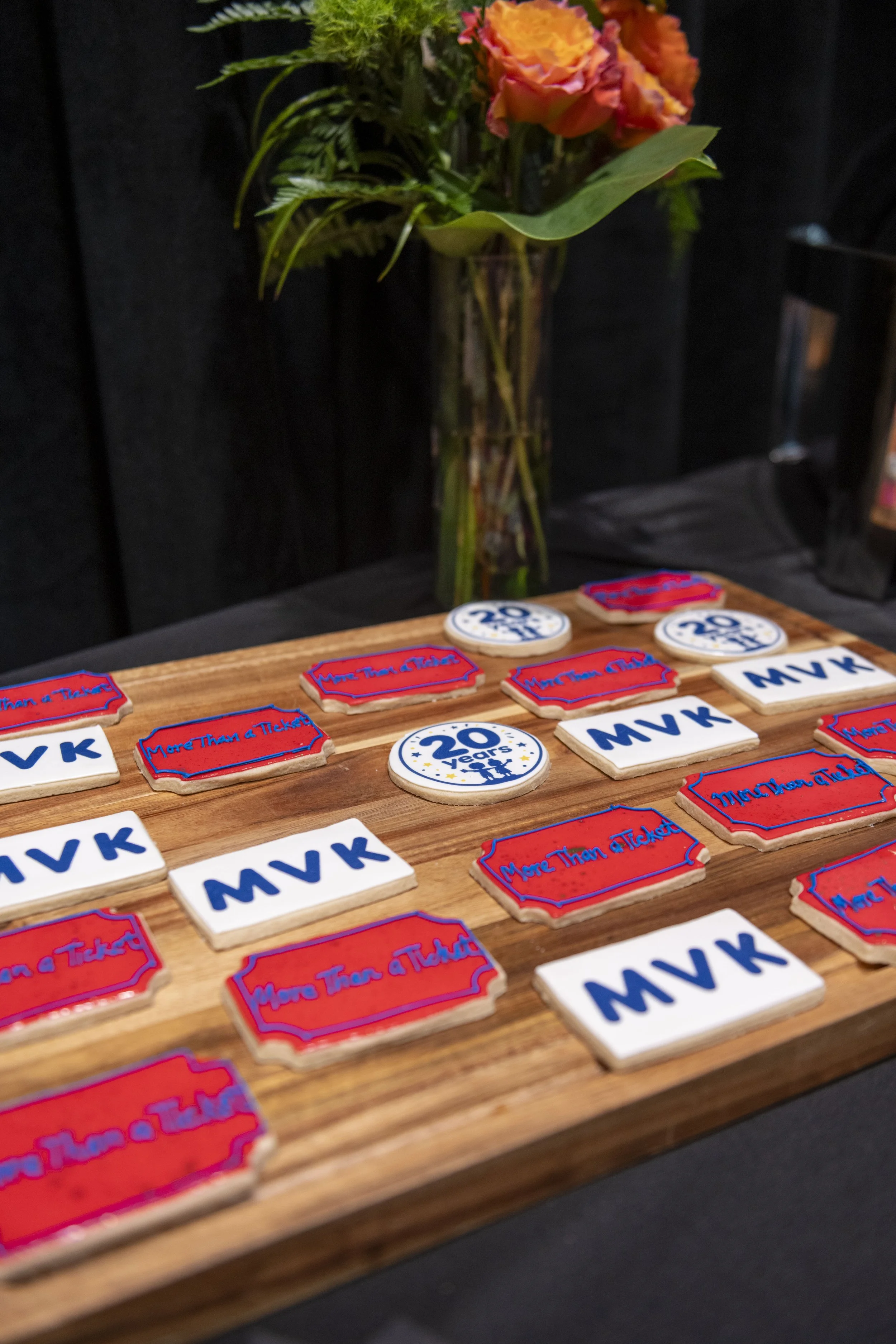
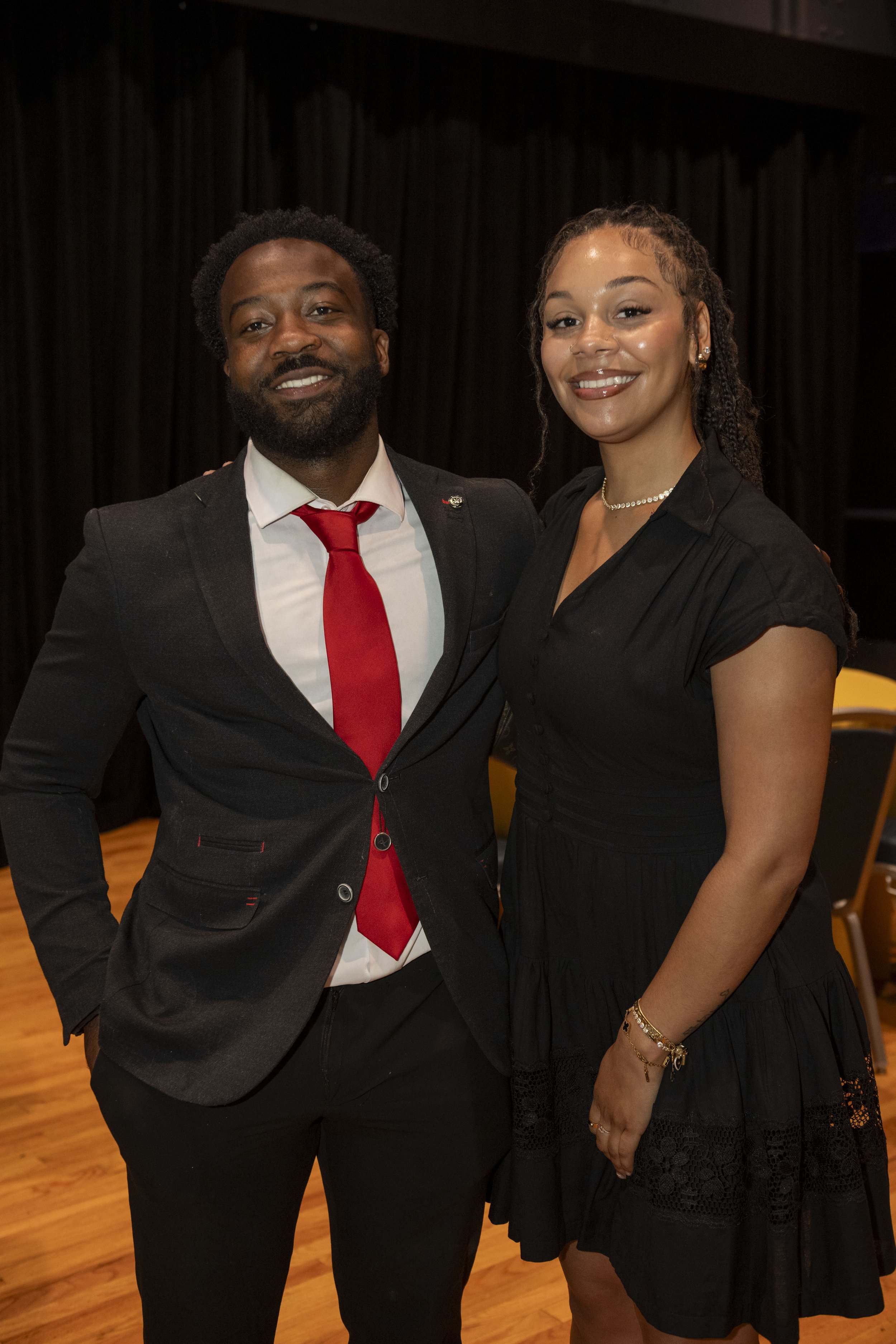
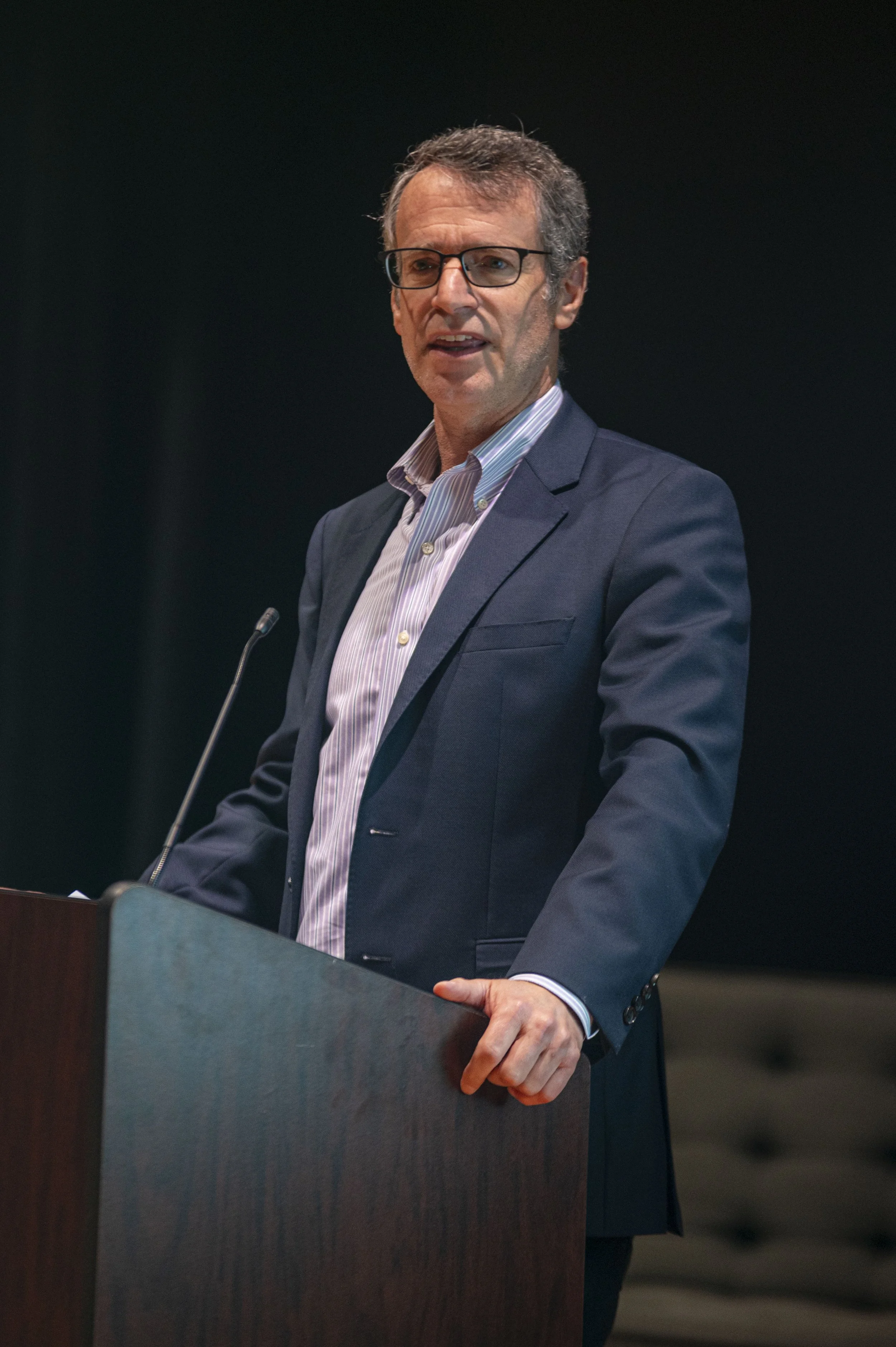
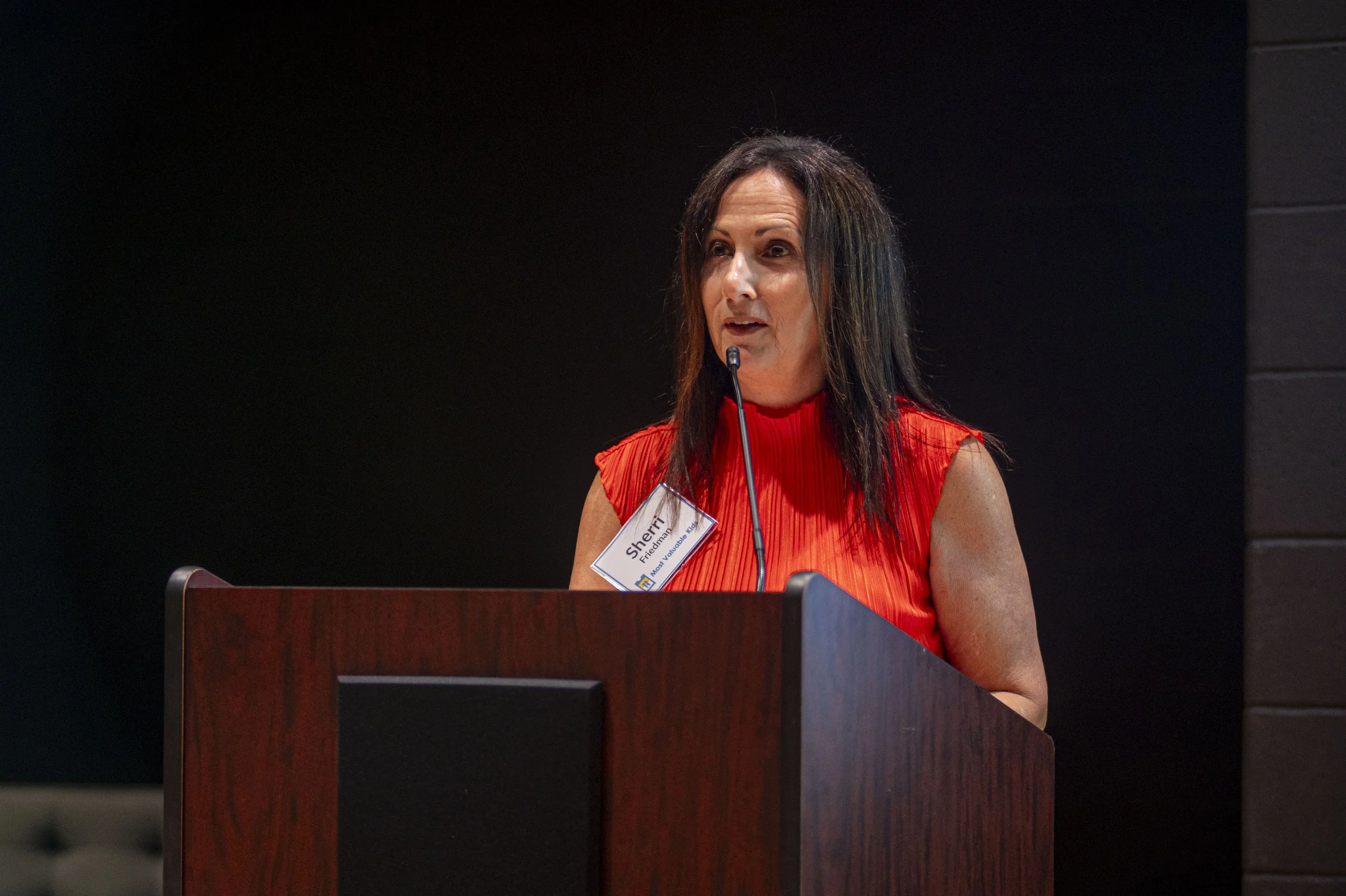
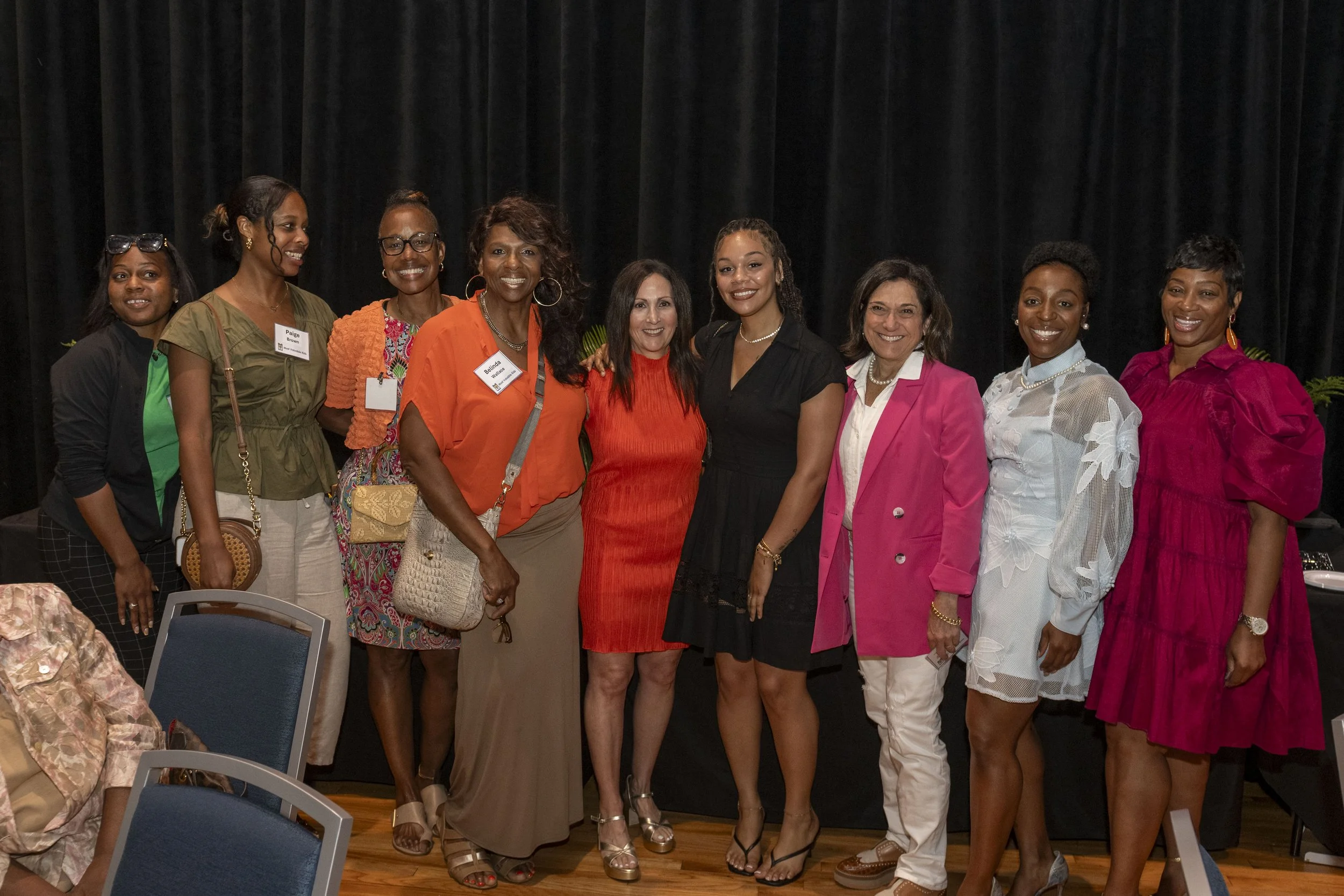
Most Valuable Kids celebrated its 20th anniversary, honoring alumni and celebrating the volunteers and partners who have helped create countless memories and opportunities for local youth.


Interested creating life-changing opportunities for local kids?
Every ticket, experience, volunteer, and donation helps ensure more young people have access to moments that inspire confidence, build connections, and create lasting memories.
Learn more about MVK’s mission, become a supporter, or find ways to get involved by visiting Most Valuable Kids of Greater Cincinnati.
For 20 years, Most Valuable Kids (MVK) has helped remove financial barriers so children from underserved communities can experience the inspiration, excitement, and life lessons that come from live sports, entertainment, and cultural events. Since launching in 2005 with just five partner agencies and 6,100 distributed tickets, MVK has grown into a network of more than 80 nonprofit partners, providing over 10,000 tickets and unique experiences each year to children throughout Greater Cincinnati.
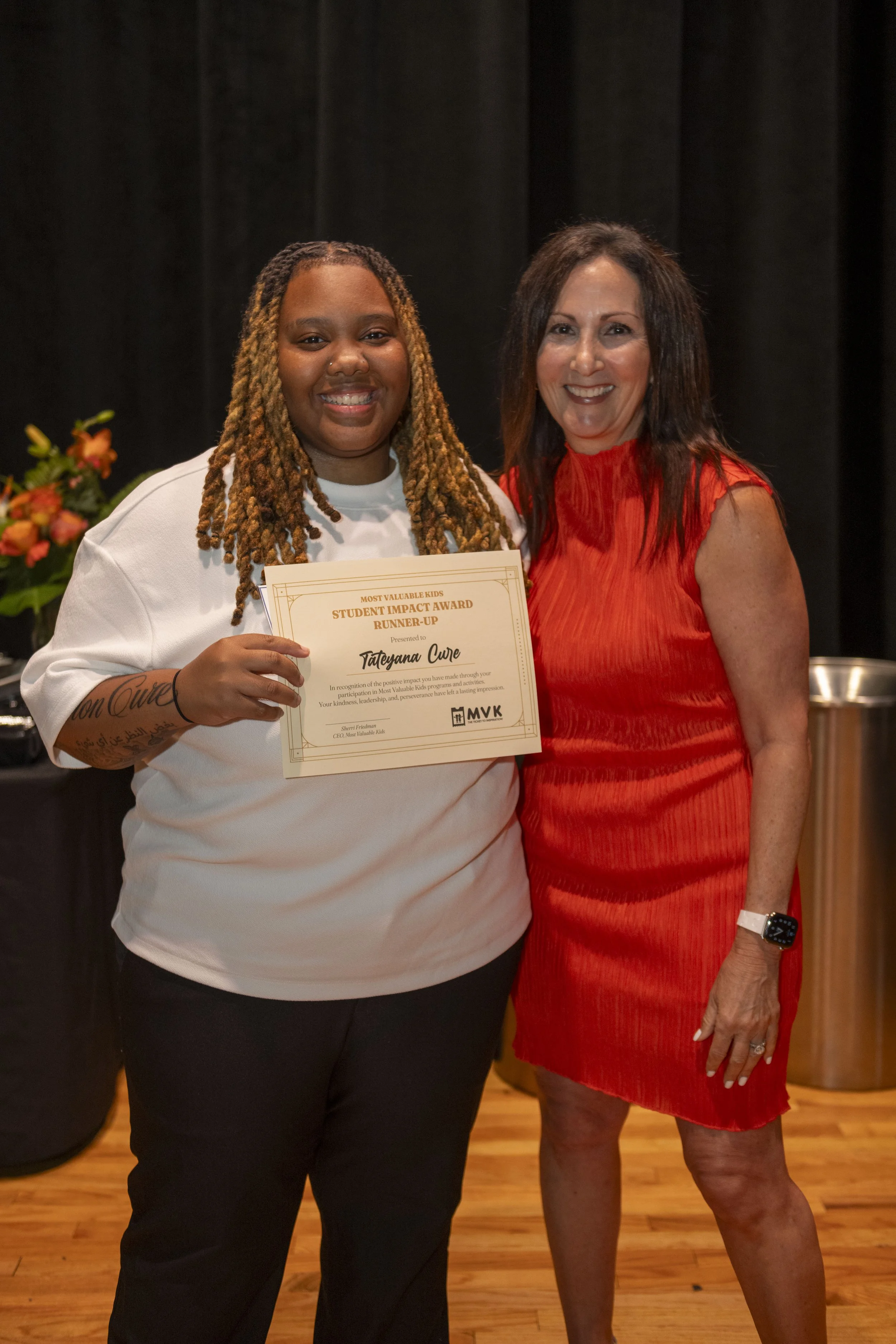
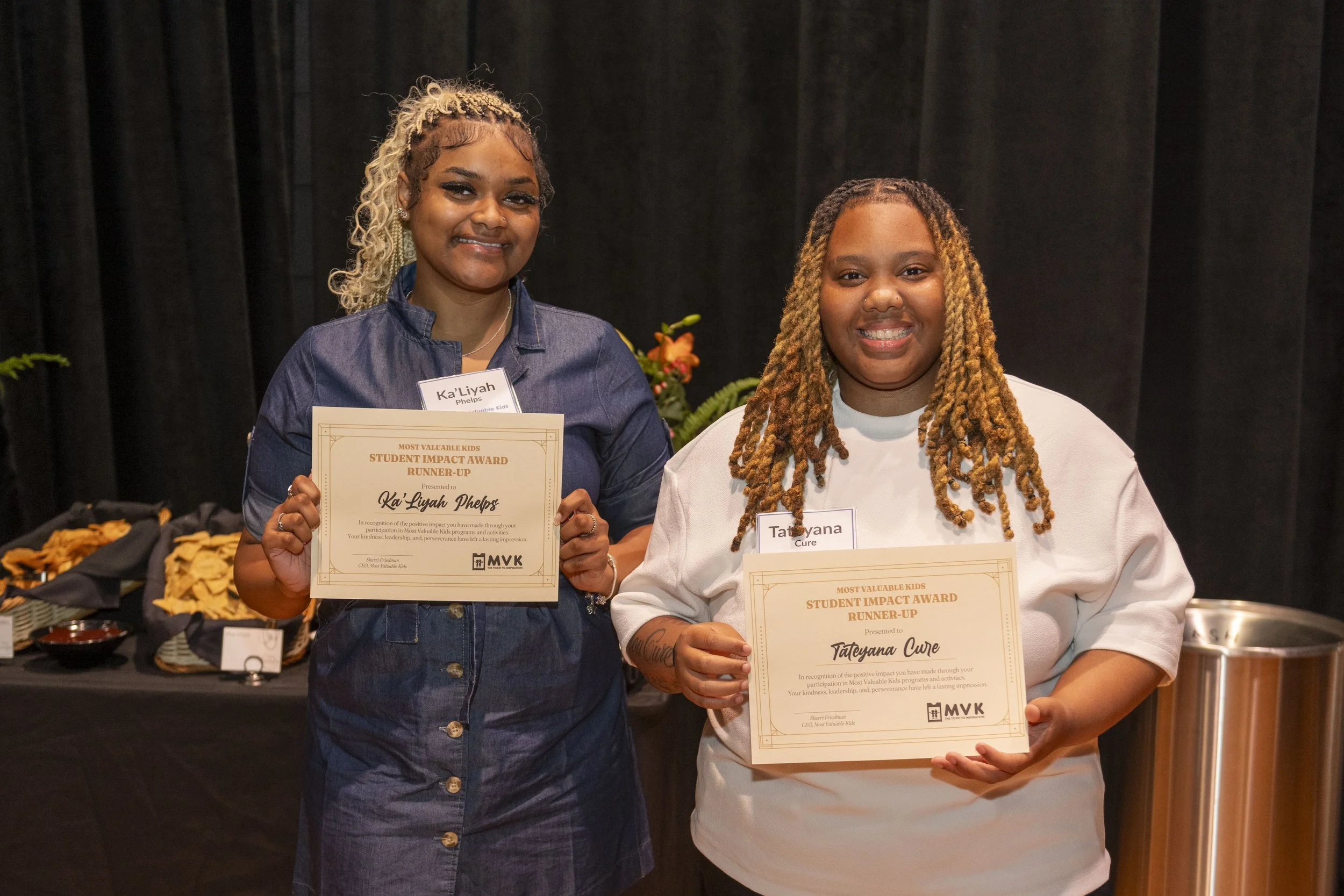
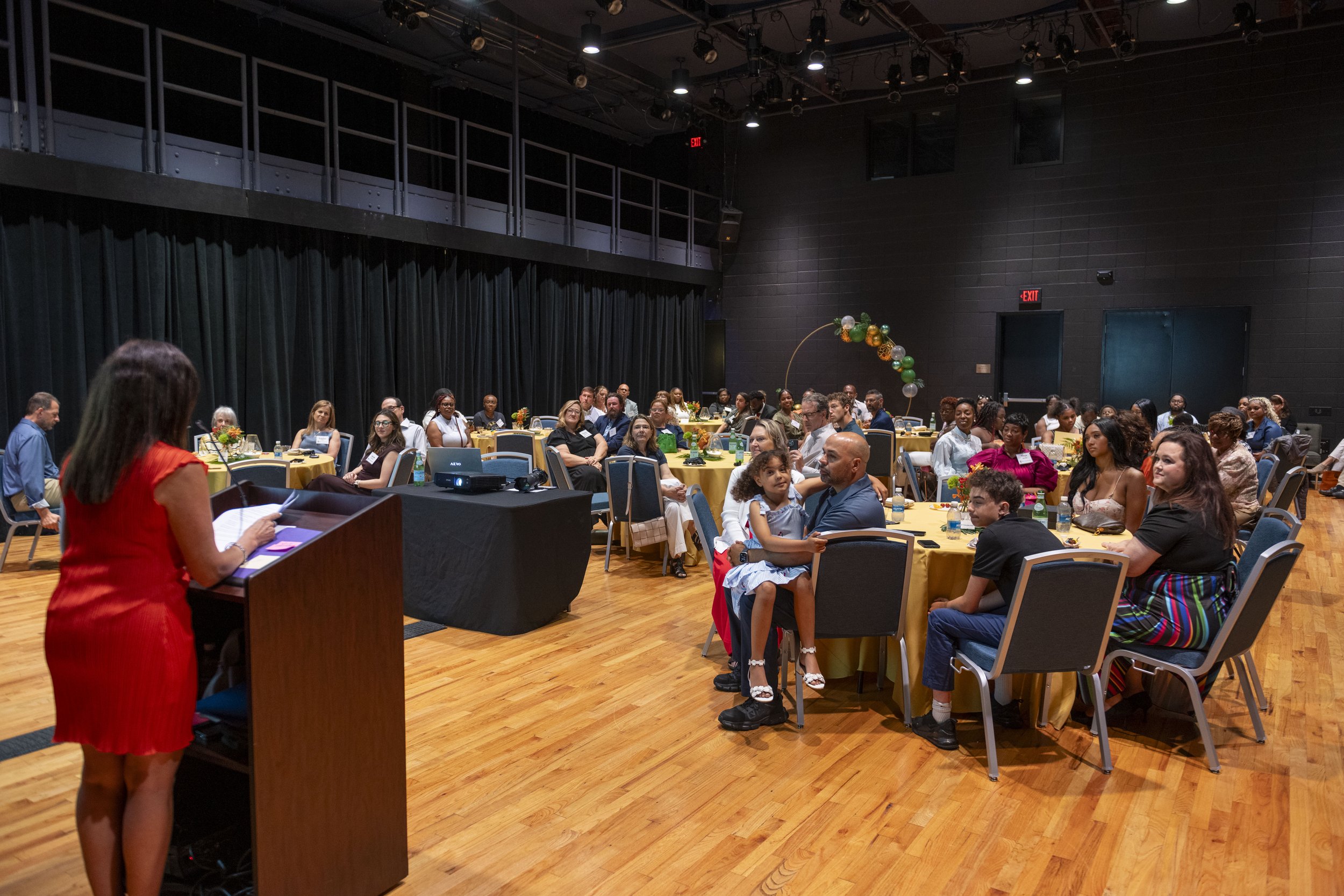
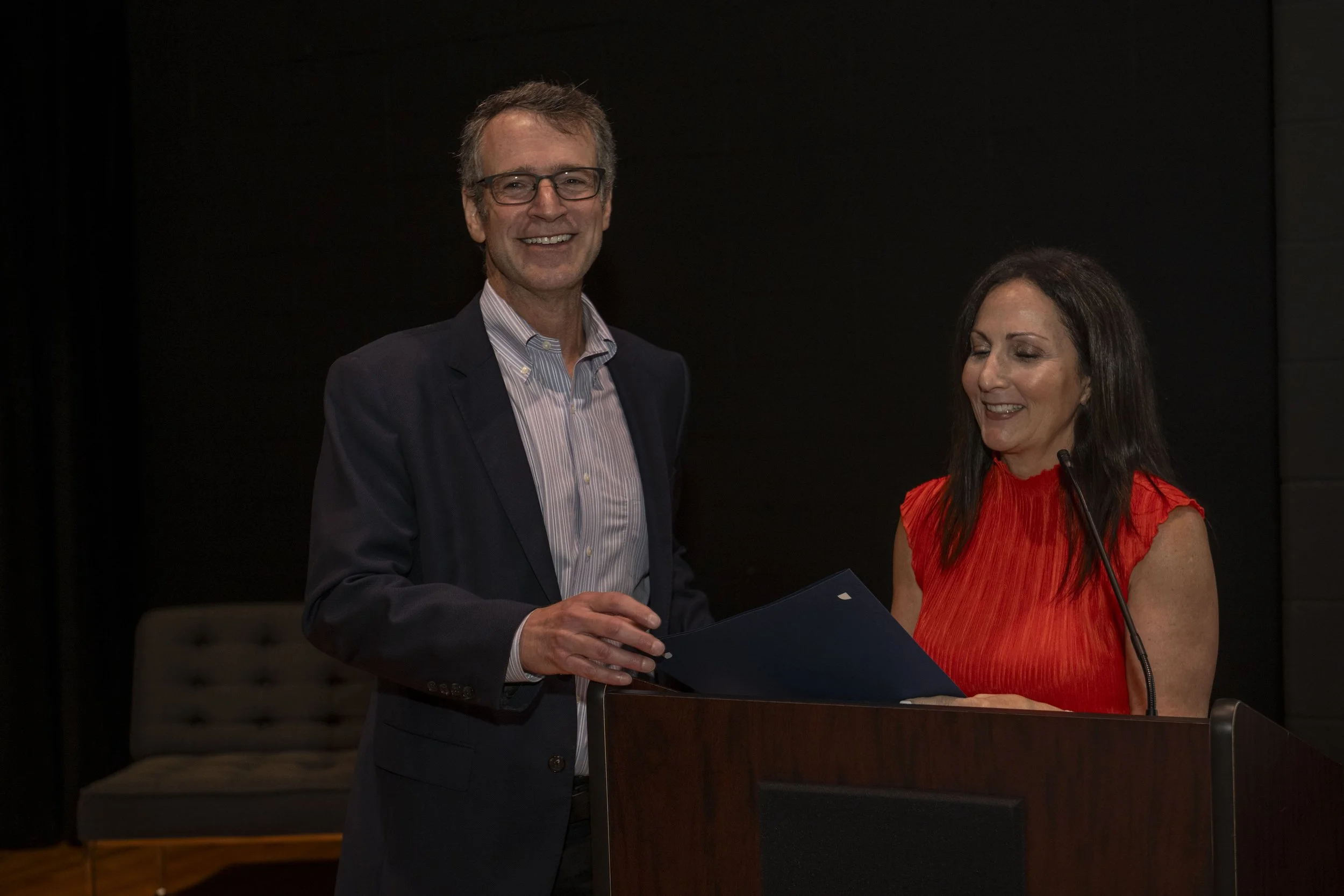
On June 10, supporters, volunteers, board members, agency partners, and alumni gathered at the Fifth Third Bank Theater in the Aronoff Center before “Disney’s The Lion King” to celebrate MVK's 20th Anniversary. The evening reflected on two decades of impact, honoring the dedicated individuals whose passion and commitment have helped create countless memories and opportunities for local youth.
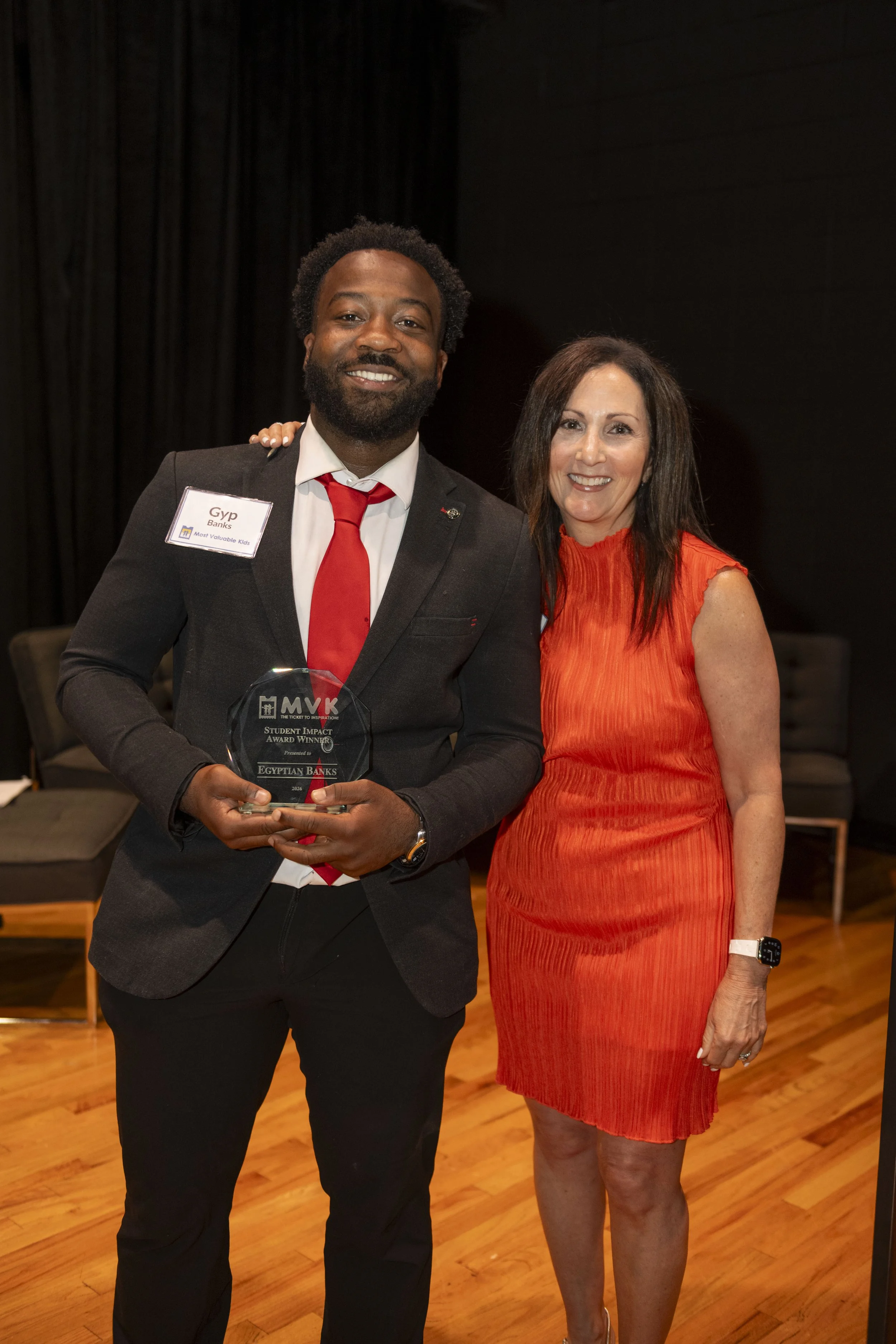
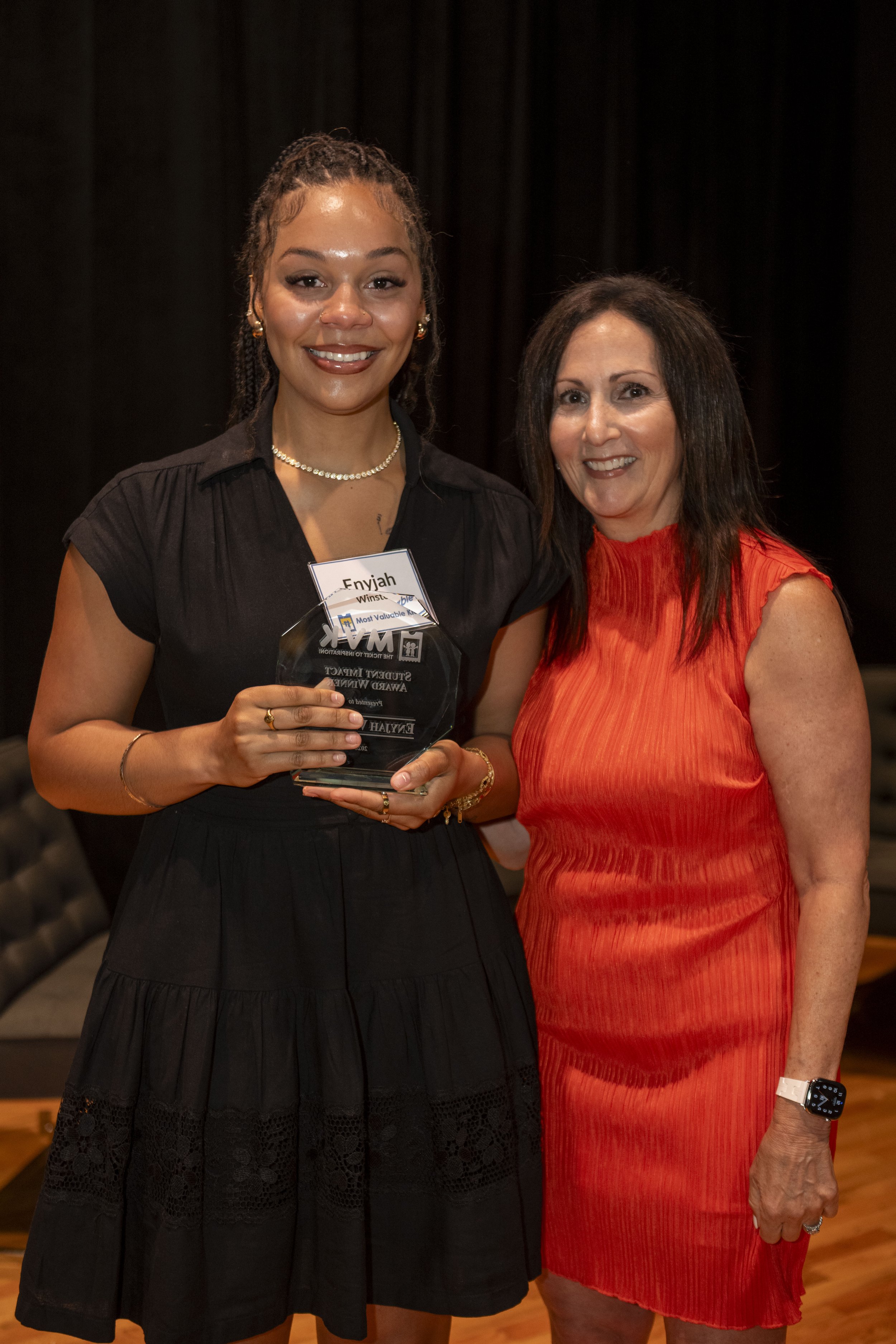
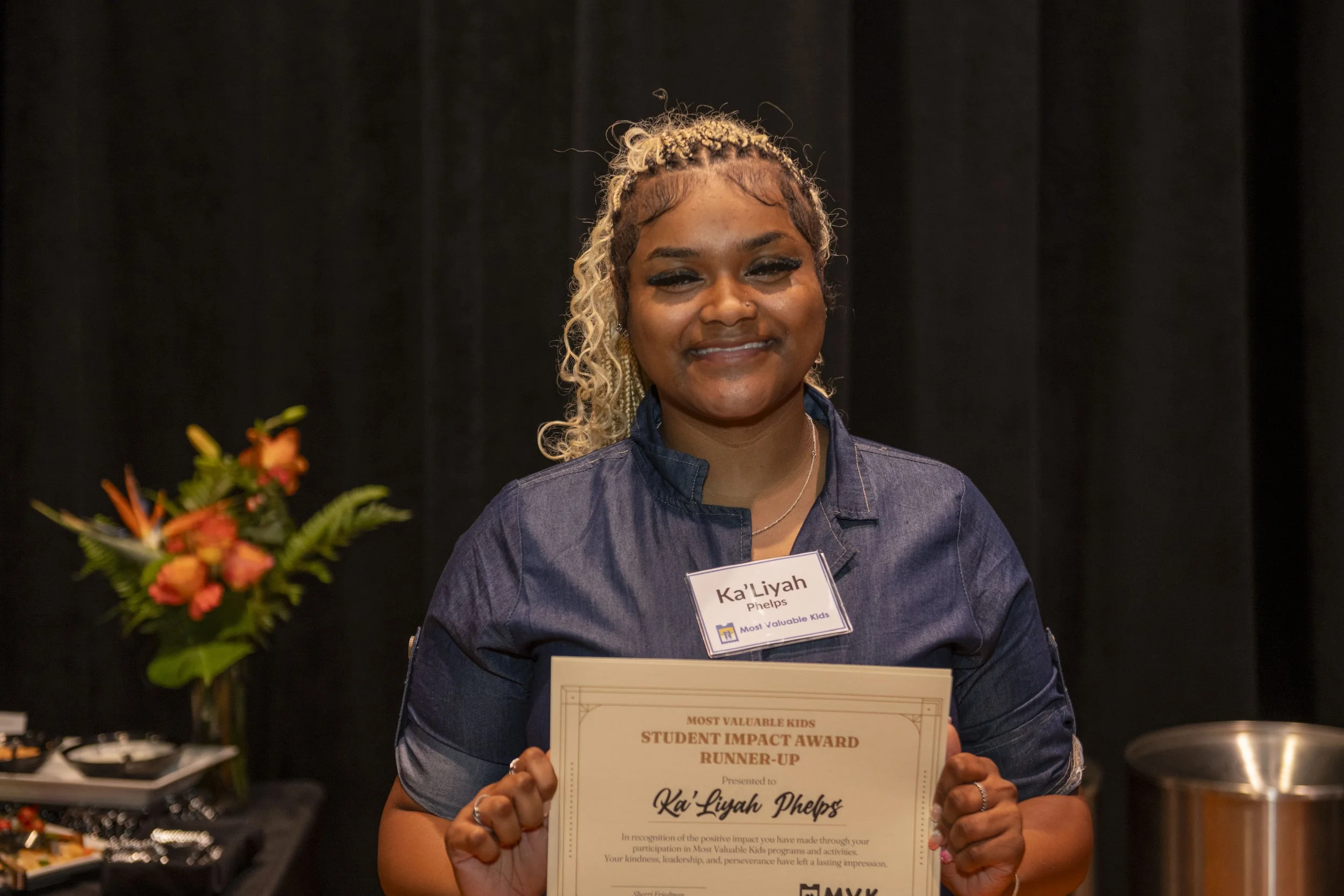
A highlight of the evening was the presentation of MVK's Student Impact Awards. Nominated by their mentors for the impact they have made in their communities and continued pursuit of their goals, this year's top honorees were:
Enyjah Winston, a pre-med psychology major at the University of Cincinnati
Gyp Banks, a psychology major at the University of Cincinnati
Enyjah and Gyp were awarded a transformative support package valued at $10,000. The award includes one year of on-campus housing, personalized mentorship, assistance with financial planning and savings, and career guidance designed to help them thrive during their college journey.
Several additional alumni were also recognized with support tailored to their individual needs. The honorees, Tateyana Cure, Ka’Liyah Phelps, and Brandon Cupp received mentorship and assistance in securing housing, along with resources to support their educational and personal goals, including computers, furnishings, and other essential items.
As MVK looks toward its next chapter, the organization remains committed to creating opportunities that inspire, empower, and uplift young people. The anniversary celebration served as both a reflection on two decades of impact and a reminder that the best is yet to come.
– Courtney Tomasetti

Ready to Glow
BLINK, illuminated by ArtsWave, returns Oct. 8–11, and just announced the more than 90 artists joining the fifth edition of the country’s largest celebration of public art and light.
Open you eyes to new possibilities, as BLINK, illuminated by ArtsWave, returns Oct. 8–11, with more than 90 artists participating in its fifth edition, which will be free and open to the public across Cincinnati and the Northern Kentucky area. (Full list below.)
Since 2017, BLINK has biennially transformed the urban core of Cincinnati and Northern Kentucky into a massive, immersive art festival spanning more than sixty downtown city blocks. This year’s renowned local, national and international artists will continue to shed light on the area and encourage new ways of looking at the familiar, through This year’s iteration features the latest technology and digital art techniques, a record number of women artists, and marks the first time many of the participating artists are exhibiting at BLINK, underscoring the festival’s role as both a global showcase and a launchpad for emerging and established talent alike. The biennial highlights the city’s creative economy and growing arts ecosystem, utilizing local cultural workers and emerging artists while also showcasing artists who regularly exhibit at international festivals and cultural institutions.
BLINK welcomes audiences of all ages and interests, and creates space for experimentation, play and discovery. In its last iteration, BLINK was attended by over 2 million people and is estimated to have had a $205 million impact on the city. Past installations from 2024 can be seen here.
The Ready. Set. BLINK! opening ceremony on Thursday, Oct. 8, 4 – 9 p.m., marks the evolution of BLINK’s traditional opening parade into a larger, more immersive opening celebration that brings the community together. From 4 to 9 p.m., the area surrounding TQL Stadium will transform into a five-block, block party-style experience featuring live music from local DJs and performers, interactive and collaborative art installations, hands-on light art creation stations, community activations, and food and beverage vendors throughout the event footprint.
“First Financial Bank is proud to sponsor the new ‘Turn On the Lights’ Contest,” said Mandy Neeley, Chief Consumer Bank and Corporate Strategy Officer at First Financial Bank. “This region-wide community engagement experience will build excitement and anticipation for BLINK 2026 while inviting participants to play a meaningful role in one of the festival’s signature and most anticipated moments — the opening night celebration. By extending the campaign directly into communities across the region, First Financial is helping broaden the festival’s impact, encourage public participation, and reinforce our commitment to supporting vibrant, thriving communities.”
The evening centers around an activated stage built over the steps of TQL Stadium. Community groups, artists, and attendees become part of the experience through participatory light art and interactive installations that celebrate the creativity and inclusivity at the heart of BLINK.
As the sun sets, the event transitions into BLINK’s opening ceremony. At sundown, there will be a collective moment to “turn the lights on,” officially launching the 2026 festival, followed by a spectacular drone and pyrotechnic show that illuminates the stadium and surrounding skyline. Blending music, technology, art, and community participation, Ready. Set. BLINK! serves as the opening chapter of the four-day festival and sets the stage for the immersive experiences that await throughout BLINK.
For BLINK 2026, visitors will enjoy art, architecture, live performance, food and beverage, enhancing Cincinnati’s already rich cultural landscape. Details about programming, including talks and additional community events, will be announced at a later date. More information can be found on BLINK’s website.
BLINK 2026 PARTICIPATING ARTISTS:
Kyle Eli Ebersole, Cincinnati
LeMonde Studio*, Austin
Leslie Epsztein*, France
Lightborne, Cincinnati
Lindsay Glatz & William Nemitoff*, LA
Liv Cassinelli, Cincinnati
Marc Phelps*, Northern Kentucky
Marie Ajras*, New York, NY
Max Sansing, Chicago
Medianeras*, Barcelona
Miami University - Emerging Technology in Business & Design,
    Oxford, OH
Mike Stasny*, Atlanta
Mindscape Studio*, Romania
Napoleon Maddox, Cincinnati
Northern Kentucky University Art Students, Erlanger, KY
Onda Studio*, Italy
Paper Acorn, Cincinnati
Paper Massacre*, Italy
Parker Heyl*, England
Pastel*, Argentina
Polina Soloveichik*, Berlin
Radius Concepts, School for Creative and Performing Arts*,
   Cincinnati
Scott Pennington*, Baltimore
Sean Van Praag, Cincinnati
Sew Valley, Cincinnati
Shahzia Sikander*, New York
Silent Partners Studio, Montreal
Smash Studio*, Sweden
SnellBeast, Cincinnati
Sofles*, Australia
Spencer Sterling*, California
Strangeloop*, Los Angeles
Structurals*, Switzerland
Susan Kosti, Australia
The Mz.Icar Collective, New York
The University of Cincinnati College-Conservatory of Music≠
   Lighting Design & Technology, Cincinnati,
This is Loop, England
Truly Design Crew*, Italy
Vamos Animation*, Germany
Vigas*, Brazil
Vince Fraser, England
Wayne Horse*, Amsterdam
Xavier University Art Students*, Cincinnati
*Denotes an artist who is new to BLINK.0H10M1ke*, New York
1001 Colors, Cincinnati
2Looking Up Arts*, San Francisco, CA
577 Studio, Los Angeles, CA
Aérosculpture*, France
Ana Tomashvili*, Georgia
Art Academy of Cincinnati, Cincinnati
Asha AMA, Cincinnati + New York
Asianati, Cincinnati
Beamhacker*, Australia
Big Art, Canada
Black Art Speaks, Cincinnati
Brett Bolton, Las Vegas
Cedric Michael Cox & Studio 181 Brent Keltch*, Cincinnati
Chase Melendez*, Covington, KY
Chaske Haverkos, Cincinnati
Christian Reichle & Squid Kohut, Reno, NV
Christo Squier & Thomas Blackburn*, England
Cincinnati Skatepark Project, Cincinnati
Columbus College of Art & Design, Columbus, OH
Custom Fibre Optics*, England
Daniel Rossa*, Germany
Daniel Shields, Cincinnati
DecideKit, Thailand
Drew Merritt*, NM
Dulk*, Valencia, Spain
Elléna Lourens*, New York
Felix Frank, Germany
Fifth Third Design, Cincinnati
Filip Roca, Barcelona
Forealism, Northern Kentucky
Gera 1*, Greece
Greg D’Amico, Cincinnati
Inka Kendzia, South Africa
James Bullough*, Berlin
Jérémie Bellot, France
Jérémy Oury*, France
Jim Tucker and Frank Young*, Cincinnati
Jonas Denzel*, Germany
JP Jackson & Brian Havener, Nashville, TN
Juan Fuentes*, Madrid
Justin Boh, Cincinnati
Kasumi Art Studios*, Cleveland
Ke Jyun Wu*, Los Angeles
Keep Cincinnati Beautiful, Cincinnati
Kemper Sauce Studios, Cincinnati
Koros Design Studio*, Hungary
A Bright Spot
The picture perfect weather last weekend brought the crowds out to Summerfair Cincinnati, with artists from around the country.
Summerfair Cincinnati celebrated its 59th anniversary May 29 to 31 at Coney Island.
More than 350 artists from across the country brought their fine art and crafts, where arts lovers from around the region shopped for ceramics, paintings, metal works, wood sculpture and more. The weekend also included music from great regional bands and the popular Youth Arts area, where budding artists got a jump on creating for a future Summerfair!

Sign Me Up
On Saturday, Cincinnati honored the legacy of William “Dummy” Hoy, a Deaf player, and bringing renewed attention to his lasting impact on the game.
On Saturday, Deafinitely For All Entertainmen teamed up with the Reds Hall of Fame to share the story of Deaf baseball player William “Dummy” Hoy for a special celebration at The Banks centered on his birthday, May 23.
DFA Entertainment is a Deaf founded production company that promotes inclusivity and empowers Deaf/hard of hearing talent through film, TV and media.
With help from Hall of Famer Marty Brennaman, along with ASL-interpreters and Jon-Jon, the event brought renewed attention to Hoy’s legacy and contributions to the game. Hoy played 14 professional seasons in the late 1800s and became one of the era’s most respected leadoff hitters. His presence in the game helped influence the use of hand signals for balls, strikes, safe, and out calls – a system that remains central to baseball more than a century later.
The birthday party waw part of a larger push to have Hoy inducted into the National Baseball Hall of Fame and Museum.
You can add your name to the petition at signforhoy.com today!

Get the Pig Picture
The Flying Pig Marathon delivered a history-making weekend, with a record 45,197 participants across all the event, energizing a hometown crowd that turned out in force across neighborhoods and the Finish Swine.
By the Numbers
2026 Registration Numbers per Race: 45,197
Full Marathon: 6,202
Paycor Half Marathon: 13,750
City Dash 4-Person Relay: 1,600
Toyota 10K: 5,300
Queen City Running Co. 5K: 8,300
Children’s 26th Mile: 2,598
Pigabilities presented Goodwill Industries: 1,558
First Watch Flying Piglet: 727
Flying Fur Dog Walk/Run presented by Bounce: 630
Fifty West Mile: 3,199
In a weekend that saw a record number of participants, the 20-year-old event record for the Flying Pig Marathon fell on Sunday as Zach Kreft, 26, from Sunbury, Ohio, won the marathon in a time of 2:17:40.
Kreft’s time was 2:44 faster than the previous event record, set by Cecil Franke in 2006 in 2:20:24.
Kreft’s running resume goes back to Buckeye Valley High School, where he set the Ohio High School 5K record and won four state titles, two in cross country and two in track. In college, he ran for the University of Notre Dame, where he placed first at the Winrow Valparaiso Open and set a personal best time in the 2021 Blue & Gold Invitational.
“I wanted to go into it pretty conservative and then really work the back half,” Kreft said. “I was targeting the course record and everything executed really well. The crowd really brought us home, and the energy of Cincinnati was special.
Ohio marathons have been good to Kreft, as he now has won Columbus (2023), Cleveland, Air Force (both in 2025) and now the Flying Pig in 2026.
Second in the men’s division was Emerson Wells, 24, of Cincinnati in 2:23:52 and third was Garang Madut, 30, of Dayton, OH, in 2:25:38. In the new handcycle division, Steve Chapman, 61, of Cedar Springs was first in a time of 1:41:33. Second was Yoshinori Tomoyasu, 52, of Oxford in 1:48:54 and third was Jason Wilke, 32, of Lexington in 2:28:07. James Garman, 47, of Danville, KY won the men’s wheelchair in 3:01:42.
In the women’s division, Katie Hallahan, 32, of Cincinnati, a former runner-up in the Flying Pig Marathon, took first place this year in a time of 2:48:43. The Indian Hill High School graduate came in second in the marathon in 2023 and won the Queen Bee Half Marathon that same year.
“The Cincinnati running community is so awesome,” Hallahan said. “You’re out on a Saturday and see lots of people running around, everyone’s so positive and encouraging other people. The support for the Pig is special. You’re running through all the neighborhoods, and the energy and positivity are great.”
Second for the women was Daniella Townsend, 38, of Cincinnati in 2:49:46. Townsend was the winner of the Paycor Half Marathon in 2021. Third was Morgan Gaskins, 24, also of Cincinnati, in 2:53:28.
This was the largest field in Flying Pig weekend history, with 45,197 registered over the three days of events. The previous record field was in 2018, when 43,127 participated in the “Pig.”
In the Paycor Half Marathon, Simon Heys, 24, from Wilmington, Ohio, won the men’s division in 1:09:58. Second was Eric Gruenbacher, 34, of Loveland in 1:10:21. Gruenbacher was third in the event last year and second the two years before that. Third was David Riddle, 44, of Cincinnati in 1:12:12. On the women’s side, Amanda Zerhusen, 20, of Cincinnati won in her second Paycor Half Marathon in 1:19:50. Second was the 2025 half marathon winner, Madeline Trevisan, 28, of Cincinnati in a time of 1:21:34. Third was Christina Sharp, 37, of Olathe, KS, in 1:23:08.
In the Paycor Half Marathon handcycle division, Bart Burgess, 41, of Hillsboro won in the men’s division with a time of 1:11:25. In the women’s handcycle division, Mikiahya Greene, 23, of Erlanger won in 1:35:20 after winning the Toyota 10K on Saturday.
Also in Saturday’s Toyota 10K, former Flying Pig Marathon winner Jack Randall, 31, of Cincinnati took the title in the men’s division with a time of 32:37. Second in the men’s division was Ben Merk, 29, of Cincinnati in 33:08 and third was Sean Smith, 21, of Newport, KY, in 33:56. For the women, Alisha Detmer, 22, of Patriot, IN, won in a time of 36:55. Second in the women’s division was Sophia Delisio, 25, of Covington in 37:45 and third was Sam Mikula, 27, of Cincinnati in 38:08.
In the Toyota 10K handcycle division, Brayden Bastin, 19, of Okeana, OH was first with a time of 32:17. In the women’s handcycle division, Mikiahya Greene, 23, of Erlanger won in a time of 39:05.
In the Queen City Running 5K, William Doering, 32, of Fort Thomas defended his men’s division title in a time of 15:24, nearly 20 seconds better than his winning time in this event last year. Second was Jersson Pachar, 30, of Cincinnati, in 15:27. Pachar finished second in the Toyota 10K last year and also won the Flying Fur event in 2025. Third was Nolan Hefferman, 25, of Burlington, in 15:37.
For the women, Katie Ruhlman, 36, of Dayton, Ohio, won in 17:37, also defending her title from 2025. She also won the Thanksgiving Day Chick-fil-A 5K this past November. Second for the women was Hannah Wyler, 21, of Mineral City, Ohio, in 18:30 and third was Melanie Pliskin, 41, of Cincinnati, in 18:48. Among many other area races where she’s placed, in 2015 Pliskin won both the Flying Pig Friday Mile event and the Saturday 5K.
In this year’s Fifty West Mile Friday night, Mark Shannon, 26, of Twinsburg, OH won the elite men’s division in 4:15. Second was Elliot Rodstrom, 24, of Cleveland Heights in 4:17 and third was Nicky Alexander, 25, of London, OH in 4:17. In the women’s elite division, Liz Gurko, 26, of Cincinnati won in 5:05. Second was Shelby Nolan, 28, of Burlington in 5:07 and third was Katie Ruhlman, who won Saturday’s Queen City Running 5K. Ruhlman’s time in the mile was 5:07.

In the Paint
ArtsWave celebrated the inaugural artist-in-residence exhibition at the OneNKY Center with works by, Susan Byrnes, showcasing how creativity shapes place and strengthen communities.
When it opened last fall, the OneNKY Center was designed to be home regional growth organizations, aligning economic development, business support, innovation, tourism, and place enhancement services to businesses, local government, and the community.
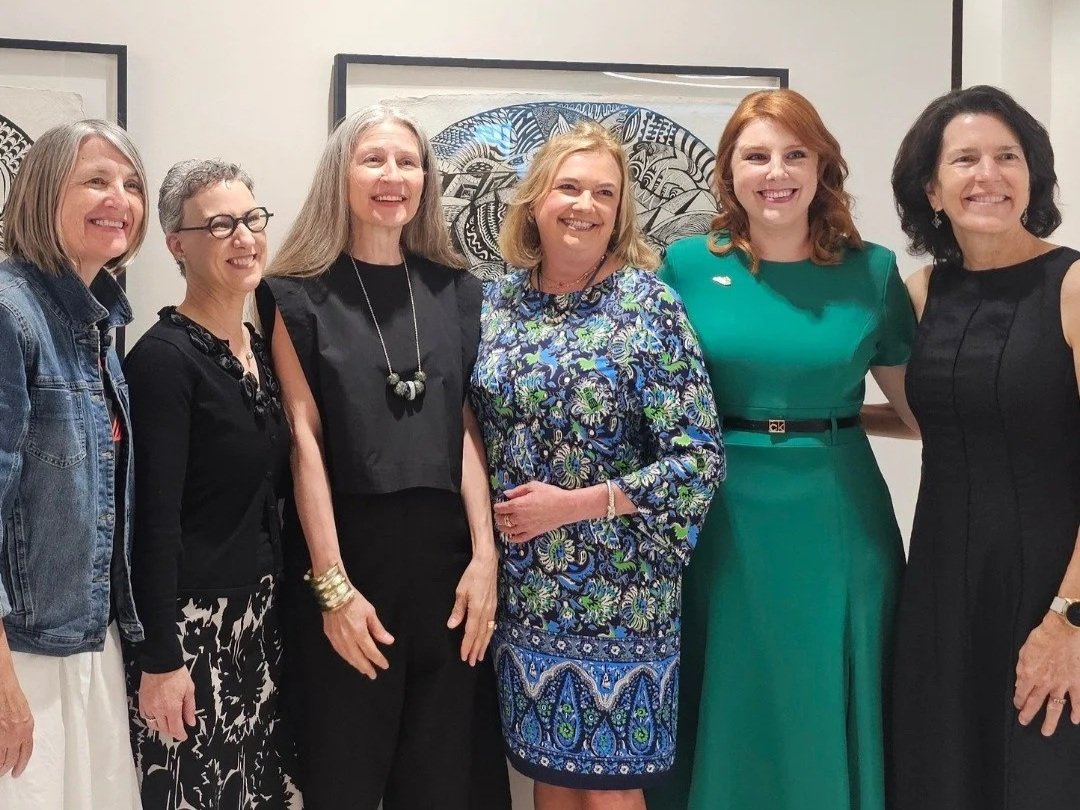
Julie Kirkpatrick, Christine Russell, Susan Brynees, Alecia Kintner, Rachael Parker, and Lisa Sauer at the opening of “Streams of Consciousness: Fields/Clouds/Bubbles” at OneNKY Center Gallery Fueled by ArtsWave.
At the entrance of the building is the OneNKY Center Gallery Fueled by ArtsWave, centering the importance of art to transform public space into a vibrant destination, reflecting the unique spirit of NKY and creating new opportunities in the creative economy.
The inaugural artist-in-residence program with artist Susan Brynes is now on view. This exhibition, on view through the summer, builds on the formal collaboration between ArtsWave, MeetNKY and the Northern Kentucky Port Authority.
“This exhibition and residency serve our goal to ensure that the arts are central to how we design spaces, grow our economy and build connection in Northern Kentucky,” says Rachael Parker, ArtsWave’s director of Northern Kentucky creative placemaking
Byrnes is a multidisciplinary artist whose work includes painting, sculpture, multimedia installation, radio broadcasts and writing. Her work exhibits close attention to detail and an interest in how ordinary objects and materials contextualize human history.
“I’m thrilled to participate in this brand new residency program, and proud to be part of an arts community that truly values what artists provide for the region,” says Byrnes, “I look forward to creating new work in support of the project, and inspiring fellow artists to seek out this incredible opportunity in the future.”
Byrnes’ work has been exhibited in galleries and museums in Cincinnati, Dayton, Cleveland, Chicago, Minneapolis, Albuquerque and Amarillo. Her works of public art appear in regions across Ohio, and her audio pieces have been broadcast on public radio stations in Ohio and Kentucky.
“The arts are an essential part of creating a welcoming space,” adds Christine Russell, executive director of the Northern Kentucky Port Authority. “This residency and the gallery itself reflect their important role in economic development and community building.”
Running through Sept. 10, “Streams of Consciousness: Fields/Clouds/Bubbles” consists of works made through an intuitive, continuous approach, similar to how writers use “stream of consciousness” as a literary device. Events for the general public, including Artist Talks, will take place over the summer.

Fore a Good Time
Putt-putt fans joined 18 (ok, 20) local arts organizations at The Acres for the kick-off of “Cincy Arts Shirt Week,” a limited-time initiative created by ArtsWave and Cincy Shirts to support arts organizations through the sale of custom-designed shirts.
There was nothing “mini” about the support at the “Cincy Arts Shirt Week” event at The Acres on Thursday, April 16.
Fans and supporters joined arts organizations from around the region, including Cincinnati Opera, Fitton Center for the Arts, Pones, and Taft Museum of Art to putt-putt for great prizes and a good time.
If you missed the fun on the course, you can still order a shirt and support your favorite arts group at https://artswave.org/shirts.

Smart Moves
The Flying Pig Community Scholars Program awarded scholarships to 24 area high school athletes during a celebration breakfast at Music Hall last week.

From its beginnings in 2018, the Flying Pig Scholars program has grown from a one-time scholarship of $2,500 in 2018 to $20,000 for 24 students. Starting this fall, the scholarship will have committed $1.32 million toward the education of 66 students from this area.
The student-athletes were honored at the annual Flying Pig Community Scholars breakfast at Music Hall on Thursday, April 9.
This year’s scholarship winners and their schools are:
Colin Albers, St. Xavier
Silas Baird, Madeira
Bianca Dills, Walton-Verona
Daniel Egelston, Middletown
Malcom Faison, Seven Hills School
Megan Fedor, Notre Dame Academy
Alexander Filippi, Sycamore
Ruby Fries, Beechwood
Chaseton Gamble, Hughes STEM
Liz George, Indian Hill
Mason Haffey, Highlands
Jayonna Johnson, Aiken
James Kirby, Harrison
Ava Kohlhaas, Lakota East
Joseph Mayer, Covington Catholic
Jash’i Revels, Spencer Center
Nathan Sommers, Ross
Parker Tan, Lakota West
Londyn Walls, Purcell Marian
Hailey Wendling, Felicity-Franklin
Kelly Wiesman, Ursuline Academy
Claire Wiltshire, Summit Country Day
Kennedy Woods, Aiken New Tech
Andrew Wyckoff, Connor
Started by Flying Pig Marathon founder Bob Coughlin, the program is supported by the Bob and Jeanne Coughlin Foundation, Jeff Clark, Steve Haussler, Oxford Financial, Chuck Schmalz, Stacey Browning, Bobby Slattery, Iris Simpson-Bush, Barbara Hauser, Skyline Chili, and Chiquita.
Also at the breakfast, the annual Spirit of the Pig award was given to former board member and long-time volunteer Mary Enzweiler. Pig Works Board Chair Mark Ramler was the keynote speaker.